
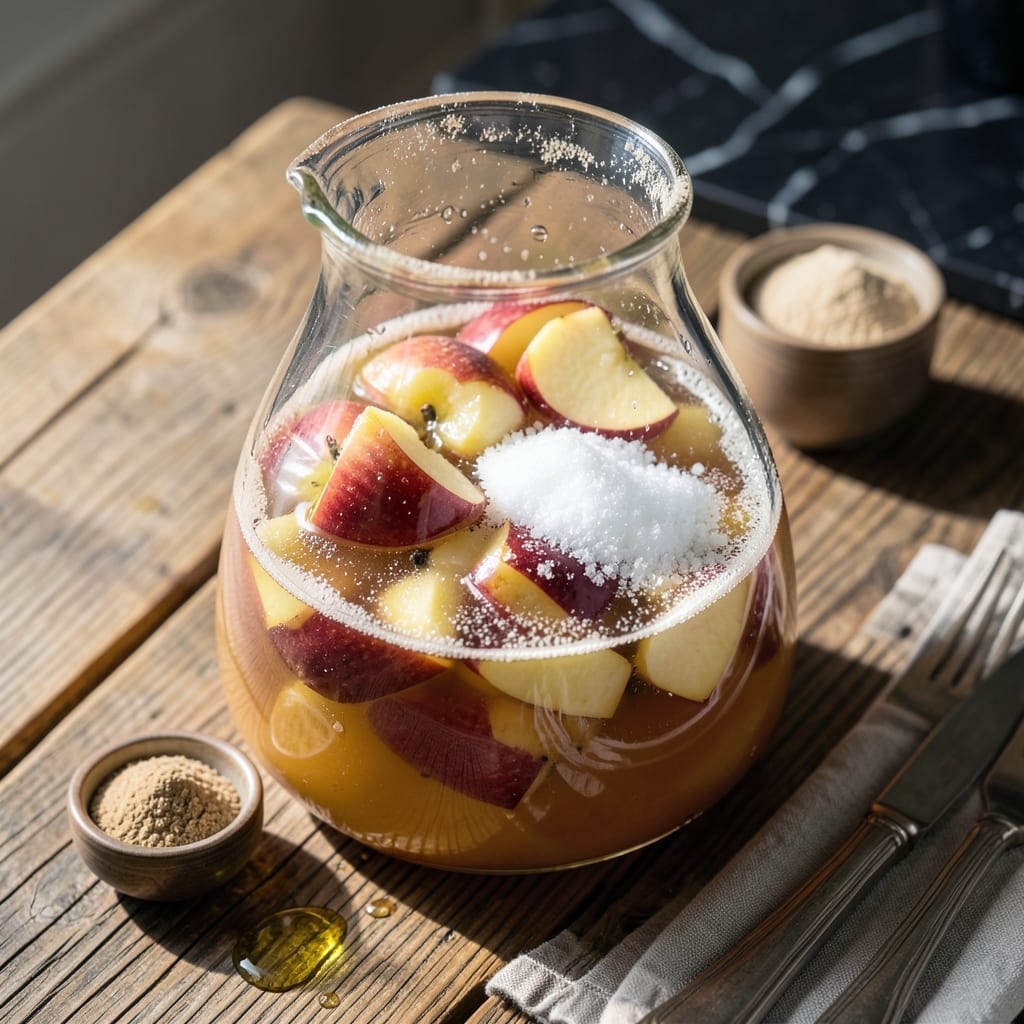
Transform fresh apples into a smooth, aromatic wine with this proven fermentation method. This process captures the natural sweetness of the fruit while developing complex flavors over time.
With simple ingredients and patience, you’ll create a homemade wine that rivals commercial varieties. The key is proper sanitation and consistent temperature during fermentation.
Ingredients for Apple Wine Recipe from Apples
Fresh apples, sugar, and patience create this smooth, aromatic homemade wine with depth.
| Ingredient | Amount | Notes |
|---|---|---|
| Fresh Apples 🍎 | 10 lb | Sweet varieties preferred, washed and chopped |
| Granulated Sugar 🍚 | 2 ½ lb | White or raw cane sugar works best |
| Water 💧 | 1 cup | Filtered or spring water recommended |
| Wine Yeast 🍷 | 1 package | Champagne or EC-1118 strain preferred |
| Acid Blend 🍋 | 2 tsp | For balancing flavor profile |
| Pectic Enzyme 🧪 | 1 tsp | Helps with juice extraction |
| Yeast Nutrient 🧫 | 1 tsp | Supports yeast activity |
| Raisins 🍇 | ½ cup | Optional for additional body |
| Campden Tablets 💊 | 1 pieces | Crushed for sterilization |
| Citric Acid 🍋 | ½ tsp | Adjusts acidity if needed |
| Oak Chips 🌳 | ¼ cup | Optional for aging complexity |
The apples are everything here. Gala, Fuji, or Honeycrisp offer the best balance of sweetness and acidity. Avoid tart varieties like Granny Smith—they’ll make the wine too sharp. Whole Foods or local orchards often have the freshest picks. Organic isn’t mandatory, but wash thoroughly to remove wax. For yeast, Lalvin EC-1118 is a reliable choice (find it at brew shops or online).
No Campden tablets? Potassium metabisulfite at 1/4 tsp does the same job. Short on fresh apples? Frozen apple juice concentrate works in a pinch (thaw and dilute first). Skip the raisins if you prefer a lighter body. The pectic enzyme is optional but helps clarify the wine. For yeast nutrient, a pinch of tomato paste can substitute—it’s a classic winemaker’s trick.
Fermentation starts within 24-48 hours. Store the batch in a dark place at 68-75°F for best results. Rack the wine after 3-4 weeks to separate it from sediment. Aging improves flavor—aim for at least 3 months before tasting.
Why You’ll Love This Recipe
- One-Bowl Wonder: I just dump chopped apples, sugar, and water in a fermenter—no fancy steps, just mix and wait.
- Sweet-Tart Magic: The acid blend balances the apple sweetness perfectly, like fall in a glass.
- Party Starter: Between us, this is my go-to for holiday gifts or cozy nights in.
- Budget-Friendly Batch: Honestly, it’s cheaper than store-bought wine and uses up my orchard overflow.
Step-by-Step Instructions for Apple Wine
This method ensures proper fermentation and a balanced, flavorful finished product.
Step 1: Sanitize Equipment and Prepare the Must
Begin by thoroughly sanitizing all equipment that will contact the wine. Crush the 10 lb Fresh Apples to extract juice, then transfer the pulp and juice to your primary fermentation vessel. Add the 1 cup Water to help release more juice from the pulp.
Stir in the 2.5 lb Granulated Sugar until fully dissolved. This high sugar content will provide the necessary food for the yeast to convert into alcohol. The mixture should have a specific gravity reading between 1.090 and 1.100 for optimal results.
Step 2: Add Stabilizers and Enzymes
Crush the 1 pieces Campden Tablets and add to the must. This will sterilize the mixture and prevent unwanted bacterial growth. Wait 24 hours before proceeding to allow the Campden tablets to work effectively.
After 24 hours, add the 1 tsp Pectic Enzyme, 2 tsp Acid Blend, and 1 tsp Yeast Nutrient. The pectic enzyme will help break down the apple pectin for better juice extraction, while the acid blend balances the flavor profile. The yeast nutrient ensures a healthy fermentation.
Step 3: Pitch the Yeast and Begin Fermentation
Sprinkle the 1 package Wine Yeast over the surface of the must. I recommend using Champagne or EC-1118 strain for consistent results. Cover the vessel with a sanitized cloth or lid with an airlock to allow gases to escape while preventing contaminants from entering.
Stir the mixture daily for the first week to help the yeast distribute evenly and prevent the fruit from compacting. You should see active fermentation within 12-24 hours, indicated by bubbling in the airlock. The temperature should remain between 60-75°F for optimal yeast activity.
Step 4: Rack and Age the Wine
After 7-10 days of primary fermentation, when bubbling slows significantly, siphon the liquid into a sanitized secondary fermentation vessel, leaving the sediment behind. Add the 0.5 cup Raisins at this stage for additional body if desired.
Attach an airlock and let the wine ferment for an additional 4-6 weeks. During this time, the wine will clarify and develop more complex flavors. If needed, add the 0.5 tsp Citric Acid to adjust acidity to taste.
Step 5: Optional Oak Aging and Bottling
For added complexity, transfer the wine to a vessel containing the 0.25 cup Oak Chips and age for an additional 2-4 weeks. This step is optional but recommended for those who enjoy a subtle oak flavor in their wine.
Once fermentation is complete and the wine has cleared, siphon it into sanitized bottles. Store the bottles in a cool, dark place. The wine will continue to improve with age, typically reaching its peak after 3-6 months. Serve chilled for the best experience.
Pro Tips For Making Apple Wine Recipe From Apples
- Sanitize Everything: I learned this the hard way—any bacteria or wild yeast on your equipment can ruin a batch. Scrub all gear with hot soapy water and rinse with a no-rinse sanitizer before touching the must.
- Use Ripe Apples: Skip the green ones. Overripe, sweet apples with soft flesh give up their juice and fermentable sugars more easily, making a smoother wine.
- Keep It Cool: Ferment between 60-75°F—any warmer and the yeast gets stressed, producing off-flavors. I moved my carboy to the basement after my first batch tasted like jet fuel.
- Add Acid Last: Stir in the acid blend only after the yeast is active and bubbling, about 12-24 hours in. Adding it too early can inhibit fermentation and leave your wine weak.
Storing and Reheating This Dish
Short-Term Storage
Once fermentation is complete, store your wine in a cool, dark place at 55-65°F. I use a dedicated wine fridge, but a basement or interior closet works well too. Keep bottles upright for the first 3 days to allow any sediment to settle. 💡
Long-Term Aging
For best results, age your wine for at least 3-6 months before drinking. The longer it ages, the smoother it becomes. I’ve found that 12 months produces exceptional complexity. Store bottles on their sides to keep corks moist if using corked bottles.
Refrigeration After Opening
Once opened, recork and refrigerate at 40°F or below. Your wine will stay fresh for 3-5 days—I recommend using a vacuum pump to extend this period. The flavors will be most vibrant when consumed within this window. ❄️
Serving Temperature
Serve your apple wine chilled to 45-50°F for the best experience. I like to pull it from the fridge 15-20 minutes before serving to let it warm slightly. This temperature range enhances the fruit-forward notes of your creation.
Avoiding Common Issues
Prevent oxidation by ensuring bottles are full to the neck before sealing. If you notice cloudiness, it’s usually harmless sediment—simply decant before serving. For corked bottles, store them horizontally to maintain the seal.
Frequently Asked Questions
What’s the best apple type for this?
Sweet varieties like Gala, Fuji, or Honeycrisp work best. Avoid tart ones like Granny Smith as they can make the wine too sharp.
Can I use store-bought apple juice instead?
Yes, but use 100% pure, no-preservative juice. You’ll need about 3-4 gallons to match the fresh apple yield. Skip the added sugar if the juice is already sweetened.
How long until it’s ready to drink?
Fermentation takes 4-6 weeks, but aging improves flavor. Wait at least 3 months for a smoother taste, or 12 months for full complexity.
Why is my wine cloudy?
Cloudiness is usually harmless sediment. Let it settle for a few days, then siphon off the clear wine. If it persists, try adding fining agents like bentonite.
Nutrition Facts

- BBQ Sausage Recipe Oven: Smoky Depth Without the Grill - September 28, 2026
- BBQ Chicken Bowl Recipe Rice: Smoky Sweetness Over Fluffy Grains - September 28, 2026
- Beef Cutlet Recipe Ideas: Crispy Breaded Patties With Bold Seasonings - September 28, 2026