
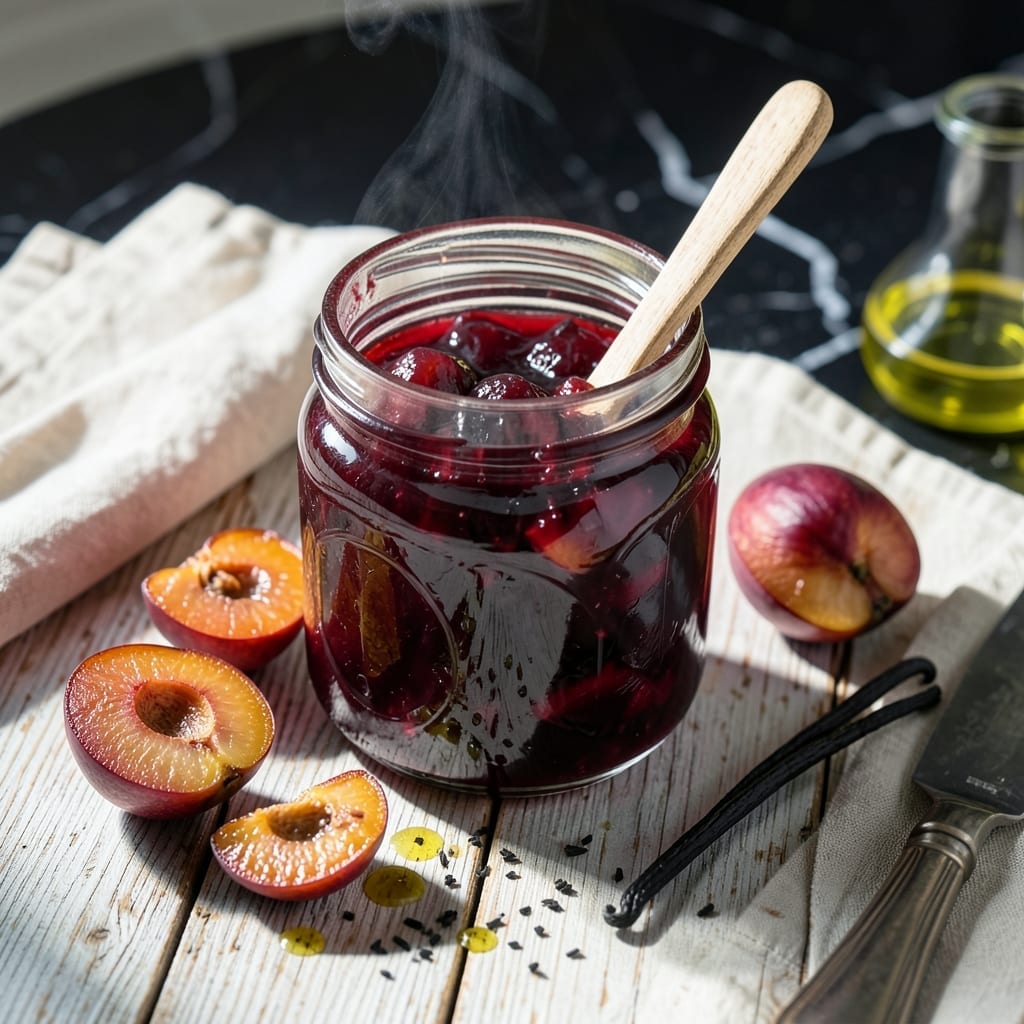
This homemade plum spread achieves perfect thickness without added pectin by relying on the fruit’s natural gelling properties. The key is precise cooking time and fruit-to-sugar ratio.
You’ll end up with a glossy, spoonable jam that captures peak plum flavor. It stores beautifully for months, making it ideal for gifts or pantry staples.
Ingredients for Plum Jam Recipe Without Pectin
Seven ingredients transform ripe plums into a glossy, pectin-free spread with natural thickness.
| Ingredient | Amount | Notes |
|---|---|---|
| Fresh Plums 🍑 | 2 lb | Ripe but firm, pitted and chopped |
| Granulated Sugar 🍚 | 1 ½ cups | White or raw cane sugar |
| Lemon Juice 🍋 | 2 tbsp | Freshly squeezed for acidity |
| Lemon Zest 🍋 | 1 tsp | Finely grated for brightness |
| Water 💧 | ¼ cup | Helps dissolve sugar initially |
| Vanilla Bean 🌿 | 1 whole | Split and scraped, optional |
| Ground Cinnamon 🌿 | ¼ tsp | Optional for warm spice note |
Plum selection matters here. Farmers markets often have the best heirloom varieties with deep flavor—look for plums that give slightly when pressed (not rock-hard or mushy). Stanley plums are classic for jam, but any ripe plum works. The sugar is key for both sweetness and gelling, so don’t reduce it. Organic sugar gives a cleaner taste if you’re avoiding additives.
No vanilla bean? Vanilla extract at one-fourth the quantity (so 1/4 tsp) works fine. Skip the cinnamon if you prefer pure fruit flavor. The lemon juice isn’t negotiable—it’s what helps the jam set without pectin. If your plums are extra tart, increase sugar by 2-3 tbsp. For a smoother jam, run the chopped plums through a food processor first.
This keeps for 12 months in sterilized jars at room temperature. Once opened, refrigerate and use within 3 weeks. The flavor deepens over time—tastes even better after a month. Perfect for gifting in cute jars with ribbon.
Why You’ll Love This Recipe
- No-Fuss Cooking: I just pit the plums, toss everything in one pot, and let it simmer—no special tools or pectin required.
- Bright & Zesty: The lemon zest and juice cut through the sweetness, giving that perfect tangy kick.
- Endless Uses: Honestly, I slather it on toast, stir it into yogurt, or even glaze chicken with it.
- Pantry Staple: One batch makes jars to last for months, and it’s way cheaper than store-bought.
Step-by-Step Instructions for Plum Jam Without Pectin
This method relies on natural fruit pectin and careful cooking for the perfect set every time.
Step 1: Prepare and Macerate the Plums
Pit and chop all 2 lb Fresh Plums into roughly ½-inch pieces. The size doesn’t need to be perfect, but uniform pieces ensure even cooking. Place them in a large, heavy-bottomed pot.
Add the 1.5 cups Granulated Sugar, 2 tbsp Lemon Juice, and 1 tsp Lemon Zest to the plums. Stir well to combine. The lemon juice is critical here—it provides the acidity needed to help the natural pectin in the plums gel properly. Let this mixture sit for 15-20 minutes to allow the sugar to begin drawing out the juices from the fruit.
Step 2: Add Aromatics and Initial Cook
After macerating, pour in the 0.25 cup Water. If using, split the 1 whole Vanilla Bean lengthwise, scrape out the seeds, and add both the seeds and the pod to the pot. Stir in the 0.25 tsp Ground Cinnamon if desired. The vanilla and cinnamon add depth, but the plums will shine on their own if you prefer a simpler flavor.
Place the pot over medium heat and stir until the sugar is fully dissolved. This should take about 3-4 minutes. You’ll notice the mixture becoming more liquid as the sugar melts and the plums release their juices.
Step 3: Simmer to Thicken the Jam
Increase the heat to medium-high and bring the mixture to a rolling boil. Stir frequently with a wooden spoon to prevent sticking. Once boiling, reduce the heat to medium-low to maintain a gentle, steady simmer.
Cook for 30-40 minutes, stirring often, especially as the mixture thickens. You’ll need to watch it closely toward the end to prevent scorching. The jam is ready when it thickens enough to coat the back of a spoon and sheets off in a slow, heavy drizzle. For a more precise test, place a small plate in the freezer for 5 minutes, then spoon a bit of jam onto it. If it wrinkles when you push it with your finger, it’s set.
Step 4: Test, Adjust, and Jar
Remove the vanilla bean pod if you added one. Give the jam a final stir and taste it. If it’s too tart, add a bit more Granulated Sugar, but remember it will sweeten slightly as it cools. If it’s too thick, stir in a splash of water and cook for another 2-3 minutes.
Ladle the hot jam into clean, sterilized jars. Seal them while the jam is still hot to create a proper vacuum seal. Let the jars cool to room temperature, then refrigerate for up to 3 weeks or process for longer storage. The jam will continue to thicken slightly as it cools.
Pro Tips For Making Plum Jam Recipe Without Pectin
- Cook Down Slow: Use medium-low heat and let the plums simmer for 45-60 minutes, stirring often—rushing with high heat burns the sugar before the jam thickens naturally.
- Pit and Chop Evenly: Cut plums into uniform 1/2-inch pieces so they cook at the same rate; leaving skins on adds pectin but removes pits completely to avoid bitter bites.
- Test for Set: After 45 minutes, chill a spoonful on a cold plate—if it wrinkles when pushed, it’s ready; if not, keep reducing (I learned this the hard way after jars of runny jam).
- Use Ripe Plums: Slightly overripe plums break down faster and release more natural pectin, so skip the firm ones—sounds obvious, but it actually changes the outcome.
Essential Equipment for This Dish
Heavy Pot Essentials
I always use a 5-6 quart enameled cast iron Dutch oven like Le Creuset for jam making. The heavy base prevents scorching during the long simmer, and the high sides contain splatters as the mixture boils. A wide, shallow pot also works well for faster evaporation. 🔥
Wooden Spoon Advantage
A wooden spoon is my go-to for stirring—it won’t scratch your pot and handles the thick mixture better than metal. Look for one with a long handle to keep your hands safe from steam. I’ve found bamboo spoons hold up best over time.
Accurate Thermometer
While not strictly necessary, a candy thermometer clipped to the pot helps monitor temperature. Aim for 220-222°F for perfect set point. I use a Taylor digital thermometer for precise readings without the glass hazard.
Sterilization Tools
Clean jars are a must for safe storage. I keep a large stockpot with rack for boiling jars and lids. For small batches, a 12-quart pot works. Tongs come in handy for handling hot jars safely.
Testing Equipment
A small white plate stored in your freezer is perfect for the wrinkle test. Also keep sterile spoons nearby for tasting. I always have a ladle ready for filling jars neatly.
Optional Upgrades
A jam funnel makes filling jars mess-free, and canning jar lifter is safer than regular tongs. For gift-giving, Ball or Mason jars with new lids look most professional. These tools make the process smoother. ✨
Frequently Asked Questions
Why do I need lemon juice in the recipe?
The acidity in lemon juice helps activate natural pectin in plums, which is essential for thickening without added pectin. It also brightens the flavor.
How can I tell when the jam is done?
Use the plate test: Place a spoonful on a chilled plate. If it wrinkles when pushed with a finger, it’s ready. This takes about 30-40 minutes of cooking.
Can I reduce the sugar?
Sugar is key for gelling and preservation. Reducing it may result in a runny or short-lived jam. For best results, stick to the 1.5 cups called for.
How long does it keep?
In sterilized jars, it lasts 12 months unopened. Once opened, refrigerate and use within 3 weeks. The flavor improves with time.
Nutrition Facts

- BBQ Sausage Recipe Oven: Smoky Depth Without the Grill - September 28, 2026
- BBQ Chicken Bowl Recipe Rice: Smoky Sweetness Over Fluffy Grains - September 28, 2026
- Beef Cutlet Recipe Ideas: Crispy Breaded Patties With Bold Seasonings - September 28, 2026