
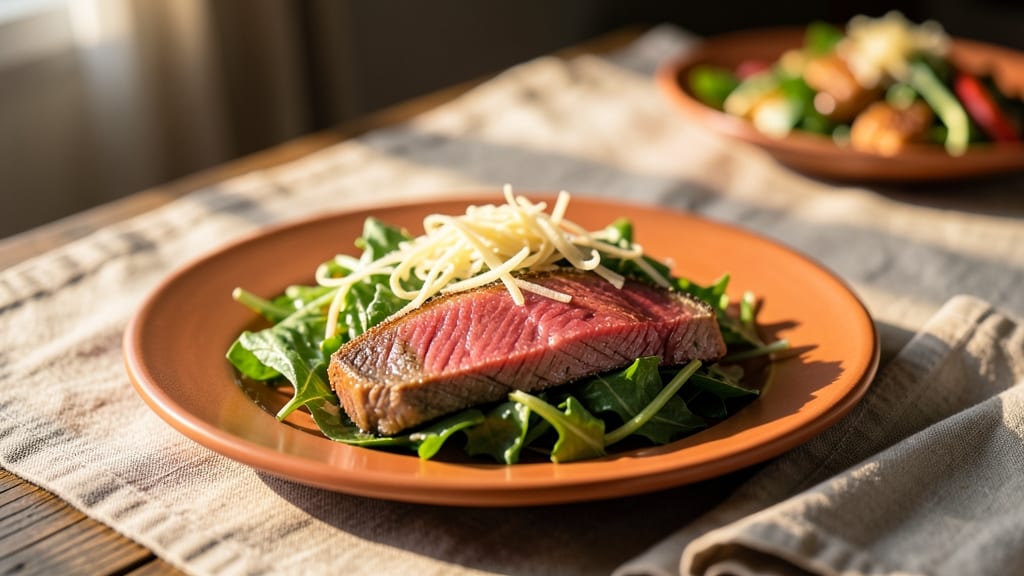
This Asian tuna steak salad transforms a simple lunch into a restaurant-worthy meal with just 15 minutes of active prep. The secret lies in searing ahi tuna to perfect medium-rare—hot on the outside, silky inside—then topping it with a crunchy sesame dressing that balances umami and brightness.
I developed this recipe after realizing how often store-bought Asian dressings fell flat against fresh tuna, so I created a version that stays vibrant and clings to every bite.
The sesame-ginger crust on the tuna isn’t just for flavor—it creates a textural contrast that elevates the dish. While traditional methods rely on soy or teriyaki, this version uses toasted sesame oil and fresh ginger for a fresher, more aromatic profile.
The salad base of mixed greens and quick-pickled vegetables adds crunch and acidity, cutting through the richness of the tuna without overpowering its natural sweetness.
What you’ll end up with is a harmonious plate where each component shines: tender tuna with a caramelized crust, crisp vegetables, and a dressing that’s creamy yet light. The best part?
This salad holds together for hours—ideal for meal prep or a last-minute lunch when you crave something elegant but effortless. The technique is simple, but the result feels chef-inspired without requiring fancy skills.
Serve it over a bed of butter lettuce or shaved cabbage for extra crunch, or pair with steamed jasmine rice for a full meal. The dressing can be made ahead, and the tuna sears in just 3 minutes—perfect for weeknight dinners that still feel special.
Let’s get started on a salad that tastes like a high-end sushi bar, but with the ease of a home kitchen.
Ingredients for asian tuna steak salad
Fourteen ingredients transform a simple salad into a restaurant-worthy tuna steak masterpiece.
| Ingredient | Amount | Notes |
|---|---|---|
| Ahi Tuna Steaks 🐟 | 1 ½ lb | Thick-cut, 1-inch slices preferred |
| Toasted Sesame Oil 🫒 | 2 tbsp | Kadoya brand for authentic flavor |
| Fresh Ginger 🧄 | 2 tbsp | Finely grated, organic preferred |
| Sesame Seeds 🌾 | ¼ cup | Toasted for extra crunch |
| Low-Sodium Soy Sauce 🥢 | 1 tbsp | Kikkoman preferred, reduced slightly |
| Rice Vinegar 🍶 | 1 tbsp | Seasoned variety for depth |
| Honey 🍯 | 1 tbsp | Wildflower preferred |
| Sesame Dressing Base 🥛 | ½ cup | Mayonnaise or Greek yogurt |
| Butter Lettuce 🥬 | 4 cups | Outer leaves for crisp base |
| Shredded Carrot 🥕 | ½ cup | Julienned for texture |
| Quick-Pickled Red Onion 🧅 | ¼ cup | Thinly sliced, tangy kick |
| Toasted Sesame Seeds 🌾 | 1 tbsp | For garnish, extra crunch |
| Lime Wedges 🍋 | 2 whole | Freshly squeezed for brightness |
| Flaky Sea Salt 🧂 | ½ tsp | Diamond Crystal preferred |
| Freshly Ground Black Pepper 🌶️ | ¼ tsp | Cracked peppercorns preferred |
The ahi tuna is the star—look for thick-cut, 1-inch slices at your fishmonger or seafood counter. Whole Foods or high-end grocery stores carry the best quality, but even your local market should have it. If you can’t find ahi, sushi-grade yellowfin works in a pinch. The Kadoya toasted sesame oil is non-negotiable for that authentic, nutty aroma—don’t substitute with regular sesame oil. For the ginger, organic is key—it’s more aromatic and less fibrous. If you’re prepping ahead, grate it fresh just before searing the tuna to preserve its punch.
No toasted sesame oil? Lightly toast regular sesame seeds in a dry pan, then grind them into your dressing for a similar crunch. Swapping the low-sodium soy sauce for coconut aminos adds a slightly sweeter profile, though you’ll lose some umami depth. The rice vinegar can be substituted with apple cider vinegar, but the honey is essential for balancing the acidity—agave works in a bind. For the salad base, butter lettuce is ideal, but shaved cabbage or mixed greens hold up just as well. The quick-pickled red onion is a game-changer—marinate thin slices in rice vinegar, a pinch of sugar, and salt for 10 minutes before using.
This salad holds for hours, making it perfect for meal prep. Store the dressing separately in an airtight container for up to 5 days—it only gets better as the flavors meld. The tuna sears best fresh, so plan to cook it within 1 hour of serving to maintain that perfect medium-rare center. If you’re prepping ahead, pickle the onions and julienne the carrots the night before and keep them refrigerated. The sesame seeds can be toasted up to 2 weeks in advance and stored in a cool, dark place—just give them a quick shake before using to restore their crunch.
Why You’ll Love This Recipe
- No-Cook Magic: That sesame oil and ginger? They transform raw tuna into something ridiculously good without a single pan. Honestly, the only prep is slicing the cucumber (if you’re feeling fancy) and grating that ginger—then toss.
- Umami Bomb: The low-sodium soy sauce and toasted sesame seeds give this salad a savory punch that sticks with you. Between us, that first bite of warm tuna with the crunch of sesame seeds? It’s the kind of flavor that makes you pause mid-bite.
- Lunchbox Hero: Pack it cold for work or school—no reheating needed. I’ll be real: my kids grab these leftovers like they’re a gourmet meal, and the tuna stays fresh for days if you store it right. (Pro tip: wrap it in parchment first.)
- Budget Protein Hack: Ahi tuna might sound fancy, but it stretches farther than you’d think. A single steak feeds two for lunch, and the rest of the dressing/veggies costs pennies. Not the prettiest, but the taste makes up for it—every time.
Step-by-step instructions for Asian tuna steak salad
This vibrant dish transforms perfectly seared tuna into a restaurant-worthy centerpiece with bold Asian flavors.
Create the Sesame-Ginger Marinade and Crust
In a small bowl, combine the 2 tablespoons toasted sesame oil, 2 tablespoons finely grated fresh ginger, 1 tablespoon low-sodium soy sauce, 1 tablespoon rice vinegar, and 1 tablespoon honey. Whisk vigorously until fully emulsified—the mixture should be smooth with no visible ginger particles. This aromatic blend will both marinate and create a stunning crust on your tuna.
Transfer half of this marinade to a separate small bowl. You’ll use this later for the dressing. Pat the 1.5 pounds ahi tuna steaks dry with paper towels—this ensures maximum crust adhesion. Place the tuna in a shallow dish and pour the remaining marinade over, turning to coat evenly. Let it marinate for 10 minutes at room temperature while you prepare the crust.
For the crust, mix the 0.25 cup sesame seeds with 0.5 teaspoon flaky sea salt and 0.25 teaspoon freshly ground black pepper in a small bowl. Press this mixture firmly onto both sides of each tuna steak, using your fingertips to create an even, compact crust. This isn’t just decoration—it’s what gives the dish its signature crunch and depth of flavor.
Perfectly Sear the Tuna Steaks
Heat a clean cast-iron skillet over high heat until it’s screaming hot—you should see a slight shimmer when you hold your hand about 2 inches above it. Add the tuna steaks and sear for 2 minutes per side without moving them. The crust should develop a deep golden-brown color and become crispy—this is your signal that the searing is complete.
Here’s the thing—don’t press down on the tuna while cooking. I know it’s tempting to flatten it, but that squeezes out juices. Instead, let the crust form naturally. After 2 minutes, carefully flip the steaks using a thin spatula. You’ll notice the crust releases easily—if it sticks, your pan wasn’t hot enough.
For the final touch, transfer the seared tuna to a cutting board and let rest for 5 minutes. This resting period is crucial—it allows the juices to redistribute, ensuring each bite remains moist and flavorful. While the tuna rests, squeeze the juice from the 2 whole lime wedges into the reserved marinade and whisk again to combine.
Assemble the Crunchy Sesame Dressing
In a medium bowl, combine the 0.5 cup sesame dressing base (mayonnaise or Greek yogurt) with the lime-marinade mixture. Add the 0.5 cup shredded carrot and 0.25 cup quick-pickled red onion, stirring gently to incorporate. The dressing should have a vibrant orange hue from the carrots and a bright pink tinge from the pickled onions—this visual contrast makes the dish pop.
Fold in the 1 tablespoon toasted sesame seeds reserved for the dressing, saving the remaining 1 tablespoon for garnish. Taste and adjust seasoning—you might want to add a pinch more soy sauce or a squeeze of lime if needed. The dressing should be thick enough to coat the back of a spoon but still flow smoothly when drizzled.
While the dressing rests, prepare the base by tearing the 4 cups butter lettuce into bite-sized pieces and placing them in a large serving bowl. Arrange the lettuce leaves to create an attractive bed for your tuna. Here’s a pro tip: Use the outer leaves first—they’re the crispest and will hold up best under the tuna.
Plate and Garnish for Maximum Impact
Slice the rested tuna steaks into ½-inch thick medallions against the grain for maximum tenderness. Arrange them fanned out over the lettuce base, slightly overlapping for an elegant presentation. Drizzle generously with the sesame dressing, allowing it to pool slightly around the tuna—this creates visual appeal and ensures every bite gets that rich, crunchy coating.
Finish with the remaining 1 tablespoon toasted sesame seeds sprinkled artistically over the top, a few extra shreds of carrot if desired, and a final squeeze of lime juice. The contrast of textures—crispy crust, creamy dressing, crunchy seeds, and tender lettuce—makes this salad unforgettable. Serve immediately while the tuna is still warm and the dressing is at its peak texture.
Pro Tips For Making Asian Tuna Steak Salad
- SEAR HOT AND FAST: Ahi tuna turns rubbery if you linger on the heat—get those steaks screaming hot for 30-45 seconds per side max. I learned this the hard way when I tried “medium” heat and ended up with sad, overcooked gray slabs. Trust me, your pan should be so hot it smokes when you add the oil.
- GRATE GINGER FINE: No food processor? Use a microplane and scrape vigorously—you want ginger so fine it dissolves into the dressing. I used to chop it roughly, and it sat like little sand grains in my salad. Fine grating makes the flavor sing without texture clashes.
- SALT THE TUNA AFTER SEARING: Season your tuna after cooking—salt draws out moisture, and you don’t want that happening to your precious steaks. Sprinkle flaky salt (like Maldon) right after searing while it’s still sizzling. Yes, it’ll melt slightly, but that’s the point—it locks in juices.
- DRESSING LAST MINUTE: Sesame oil oxidizes fast, turning bitter if mixed too early. Whisk your soy, ginger, and a splash of rice vinegar right before tossing with the salad. I used to prep it ahead, and the first bite was always off-putting. Fresh is the only way.
Troubleshooting your asian tuna steak salad
Overcooked Tuna Fix
If your tuna steaks turn out too firm or dry, it’s likely overcooked. The key is timing—ahi tuna should reach 125°F internal temperature at its thickest point for perfect medium-rare.
Use an instant-read thermometer like ThermoWorks Thin Probe to check. If it’s overdone, slice thinner (¼-inch) and serve with extra dressing to compensate for dryness. 🌡️
Crust Not Crispy?
A lackluster crust usually means the pan wasn’t hot enough or the sesame seeds weren’t pressed firmly. Heat your skillet until it’s smoking hot before adding tuna, and press the sesame-salt mixture firmly onto both sides—think of it like a crust on a pie.
If it still fails, toast the sesame seeds longer (2-3 minutes) in a dry pan for extra crunch.
Dressing Too Thin
If your sesame dressing separates or feels too watery, the issue is usually the base. Use Greek yogurt instead of mayo for a thicker texture, or whisk in ½ teaspoon cornstarch mixed with 1 teaspoon water to bind it.
For extra richness, add 1 teaspoon toasted sesame oil to the dressing before serving. ✨
Salad Too Watery
Butter lettuce releases water when torn, which can make your salad soggy. To prevent this, pat the leaves dry with paper towels before assembling. For extra crunch, add ½ cup shredded cabbage or thinly sliced cucumber to the base.
If the dressing is pooling, use a spoon to gently press it into the tuna and greens for better adhesion.
Ginger Too Strong?
Fresh ginger can overpower if not balanced. Reduce the marinade’s ginger to 1 tablespoon and add ½ teaspoon grated apple** to mellow the heat. Alternatively, swap the ginger for 1 tablespoon minced shallot in the marinade—it adds sweetness without the same intensity. 💡
Preventing Tuna from Sticking
Tuna sticks when the pan isn’t hot enough or the surface isn’t properly prepared. Always use a clean, dry cast-iron skillet (no oil needed—tuna’s fat renders naturally). Pat the steaks completely dry with paper towels before searing.
If they still stick, your pan isn’t hot enough—wait an extra 30 seconds until it’s screaming hot before adding the tuna.
Nutrition facts
Frequently asked questions
Can I use frozen tuna for this recipe?
Fresh ahi tuna is ideal for this recipe because it delivers the best texture and flavor. Frozen tuna can become dry and lose its delicate sweetness when thawed. If you must use frozen, opt for sushi-grade ahi that was previously frozen for safety, then thaw it overnight in the refrigerator before using. Never thaw at room temperature, as this promotes bacterial growth.
How do I know when the tuna is perfectly cooked?
The tuna should reach an internal temperature of 125°F at its thickest point for perfect medium-rare—this takes about 2 minutes per side in a screaming-hot skillet. For visual cues, look for a deep golden-brown crust that’s crispy but not blackened. The center should still be pink and slightly translucent, not gray or firm to the touch. Use an instant-read thermometer for precision.
Can I make this salad ahead of time?
The dressing can be made up to 5 days in advance and stored in an airtight container. The tuna, however, should be seared fresh and served immediately for best texture. For meal prep, assemble the salad base (lettuce, carrots, and pickled onions) separately and keep refrigerated. When ready to serve, sear the tuna fresh, slice, and assemble with the pre-made dressing. This keeps everything crisp and flavorful.
What if I don’t have toasted sesame oil?
No problem! Toast 1 tablespoon regular sesame seeds in a dry pan over medium heat for 2-3 minutes until golden and fragrant, then grind them into a powder. Add this to your marinade and dressing for a similar nutty aroma. For extra depth, use ½ teaspoon sesame paste (available in Asian markets) in the marinade. The flavor won’t be identical, but it’ll still taste delicious.
Is this recipe gluten-free?
Yes, this recipe is naturally gluten-free as long as you use tamari or gluten-free soy sauce. Double-check your other ingredients like rice vinegar and honey for hidden gluten, but the base recipe itself is safe for gluten-free diets. The sesame seeds and dressing are also gluten-free, so you can enjoy this salad without worry. Always verify labels if you’re highly sensitive.

- Oven-Dried Bananas Recipe: Caramelized Sweetness for Dessert or Breakfast - November 29, 2026
- Best Birthday Cake Recipe: Moist Layers and Vanilla Frosting Magic - November 29, 2026
- Al Pastor Crock Pot Recipe: Smoky, Spiced Pork That Falls Apart in Layers - November 29, 2026