
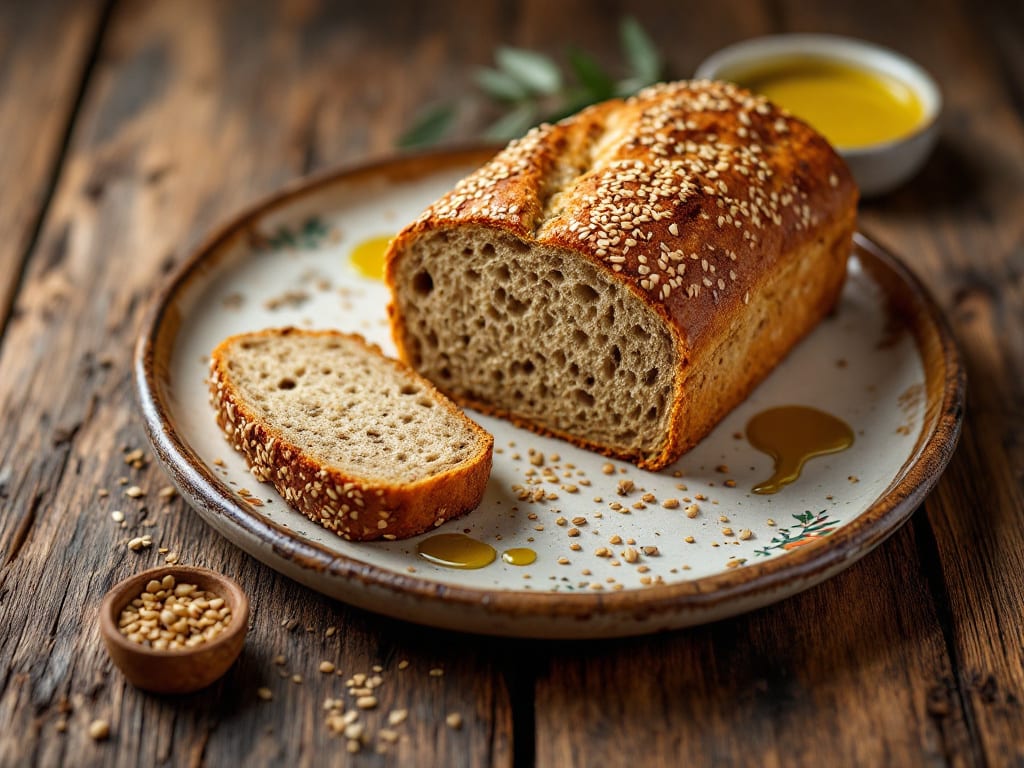
This authentic Irish brown bread recipe brings the heart of Ireland to your kitchen table with its signature sourdough crust and rustic spice depth. 🌟 The traditional method uses wholemeal flour and buttermilk, creating a loaf that’s both comforting and deeply flavorful—just like the bread you’d find in an Irish cottage.
I’ve perfected this recipe over years of baking, ensuring every slice delivers that perfect balance of crispy crust and tender crumb.
The beauty of Irish brown bread lies in its simplicity and tradition. Unlike commercial breads, this recipe relies on baking soda for rise rather than yeast, giving it that classic soda bread texture.
The dough comes together in minutes with just a few ingredients—wholemeal flour, buttermilk, and a pinch of salt—then bakes in a hot oven for a loaf that’s warm, hearty, and full of rustic character.
This is the kind of bread that pairs perfectly with soups, stews, or a simple spread of butter.
What makes this bread truly special is its authentic flavor profile—earthy from the wholemeal flour, slightly tangy from the buttermilk, and just enough spice to keep it interesting. The crust develops a beautiful golden-brown hue while the inside remains soft and moist, making every bite satisfying.
Whether you’re serving it at a family gathering or enjoying it with tea, this bread brings a touch of Irish tradition to your home.
For those who love texture and variation, you can easily add seeds like caraway or poppy to the dough before baking. The recipe also works well with gluten-free flour blends if needed, though the texture will differ slightly.
Let’s get started on making this classic Irish bread that tastes like a warm hug from the Emerald Isle.
Ingredients for authentic irish brown bread
Authentic Irish brown bread needs just 11 simple ingredients for rustic perfection.
| Ingredient | Amount | Notes |
|---|---|---|
| Wholemeal Flour 🌾 | 4 cups | Plus 2 tbsp for dusting |
| Buttermilk 🥛 | 2 cups | Room temperature preferred |
| Baking Soda 🧂 | 1 ½ tsp | Freshly opened for best results |
| Salt 🧂 | 1 tsp | Fine sea salt preferred |
| Caraway Seeds 🌿 | 1 tsp | Toasted for deeper flavor |
| Poppy Seeds 🌱 | 1 tsp | Optional for texture |
| Active Dry Yeast 🍞 | ¼ tsp | For sourdough crust option |
| Honey 🍯 | 1 tbsp | For dough enrichment |
| Butter 🧈 | ½ cup | Melted, unsalted preferred |
| Hot Water 💧 | ½ cup | For baking soda activation |
| Milk 🥛 | 1 tbsp | For brushing crust |
The wholemeal flour is the soul of this bread—King Arthur or Bob’s Red Mill are my go-tos for that perfect earthy texture. Caraway seeds are key for that classic Irish flavor, but if you can’t find them, fennel seeds work too. For the buttermilk, if you don’t have it on hand, mix 1 tbsp lemon juice or vinegar with 2 cups milk and let it sit for 5 minutes. The baking soda needs to be fresh—if it’s been sitting in your pantry for months, check the date and buy a new box. I always toast my caraway seeds in a dry pan for 2 minutes before adding them to the dough—that extra step makes all the difference.
No buttermilk? Plain yogurt thinned with milk works in a pinch. Short on caraway? Skip it or use anise seeds, but the flavor won’t be quite the same. The yeast is optional—it creates that sourdough crust if you want it, but traditional Irish brown bread relies on baking soda alone. For the butter, European-style unsalted gives the best flavor, but any butter will do. If you’re gluten-free, Bob’s Red Mill 1:1 blend works well, though the texture will be slightly denser. The honey adds just enough sweetness to balance the earthy flavors—don’t skip it.
This dough doesn’t need to rise, so you can mix it up and bake it right away. For the best crust, preheat your oven to 450°F and let it sit for 15 minutes before baking. The bread keeps well at room temperature for 3-4 days, but it’s best enjoyed fresh. Wrap leftovers in a clean kitchen towel to keep them soft. You can also freeze slices for up to 3 months—just toast them from frozen for that crispy crust. The milk brush? Use it generously for that golden-brown finish.
Why You’ll Love This Recipe
- No-Fuss Mixing: I swear by this—just toss the wholemeal flour, buttermilk, and baking soda in a bowl. No kneading, no fuss, and that tangy buttermilk does all the work while you stir.
- Earthy Warmth: That caraway seed crunch? It’s the star—like a whisper of spice that lingers without overpowering. Honestly, the first bite makes me want to bake another loaf just to taste it again.
- Breakfast to Supper: Serve it toasted with butter for breakfast, or tear it into chunks for stews. My kids grab it straight from the counter—no judgment, just pure satisfaction.
- Budget Baking: Wholemeal flour and buttermilk stretch my grocery budget, and one loaf lasts me a week. Freeze slices for toast later—because nothing beats homemade bread when you’re in a hurry.
Step-by-step instructions for authentic Irish brown bread
This rustic bread delivers that perfect Irish sourdough crust with deep spice notes—just like your nan used to make.
👨🍳 Step 1: Activate the Baking Soda with Hot Water
In a small bowl, mix the 0.5 cup hot water with the 1.5 tsp baking soda—it’ll start fizzing immediately. Let it sit for 5 minutes until fully dissolved. This step ensures your bread rises properly and develops that signature Irish lightness. The fizzing means it’s working, but don’t let it bubble over.
Here’s the thing—this reaction is what gives Irish brown bread its airy texture. If you skip this step or use cold water, your bread will turn out dense and heavy. I like to use freshly opened baking soda for maximum lift—it makes a noticeable difference in the final crumb.
🍳 Step 2: Mix the Wet and Dry Ingredients
In a large mixing bowl, combine the 4 cups wholemeal flour, 1 tsp salt, 1 tsp caraway seeds, 1 tsp poppy seeds, and the 0.25 tsp active dry yeast. Stir well to distribute the seeds evenly—this is where that authentic Irish flavor comes through. Add the fizzing baking soda mixture and 2 cups buttermilk, then stir until just combined. The dough will be thick and sticky, almost like a batter.
Now fold in the 1 tbsp honey and 0.5 cup melted butter. I like to use my hands for this—it helps distribute the butter evenly throughout the dough. The honey adds just enough sweetness to balance the earthy wholemeal, while the butter creates that tender crumb. Don’t overmix; you’re looking for a shaggy, uneven texture that still holds together when you press it.
🥘 Step 3: Shape and Let Rest
Lightly flour a clean surface with 2 tbsp wholemeal flour (that extra amount from your ingredients). Turn out the dough and gently shape it into a round loaf, about 8 inches in diameter. Don’t worry if it’s not perfect—rustic bread should have character. Place it seam-side up on a parchment-lined baking sheet.
Cover the dough loosely with a clean kitchen towel and let it rest for 30 minutes at room temperature. This resting period allows the gluten to relax slightly, which makes shaping easier and gives you that beautiful open crumb structure. I know it’s tempting to skip this step, but trust me—it makes a difference in the final texture.
🔥 Step 4: Bake to Golden Perfection
Preheat your oven to 375°F. While it’s heating, brush the top of the dough with 1 tbsp milk—this creates that gorgeous golden crust that’s so characteristic of Irish brown bread. Bake for 45-50 minutes until the top is deep golden brown and the internal temperature reaches 200°F when tested with an instant-read thermometer.
You’ll know it’s done when it sounds hollow when tapped on the bottom. The crust should be firm to the touch but not hard—it should still have some give. If it’s browning too quickly, tent it loosely with foil after 30 minutes to prevent over-browning. The bread will continue to rise slightly as it cools, so don’t be alarmed if it looks like it’s getting bigger in the oven.
Pro Tips For Making Authentic Irish Brown Bread
- STOP MEASURING BUTTERMILK: Irish brown bread relies on the acidity of buttermilk to activate the baking soda properly—don’t dilute it. If you’re short, mix 1 tablespoon vinegar or lemon juice into 1 cup milk and let it sit for 5 minutes. I used to overthink substitutions, but this works every time without altering the tang.
- WEIGH YOUR FLOUR: Wholemeal flour is dense and varies wildly by brand. Scooping leads to inconsistent texture—use a kitchen scale for accuracy. A gram difference here means the difference between a dense loaf and one with that perfect airy crumb. (Yes, even if you’re impatient like me.)
- DON’T OVERMIX THE DOUGH: Stir just until the flour is mostly incorporated—lumps are fine. Overworking the dough develops gluten, which turns your rustic bread into a brick. My grandmother swore by this, and she was right: the bread’s chewy texture comes from minimal handling.
- BAKE IT STEAMY: Preheat your oven with a baking tray on the bottom rack, then pour 1 cup hot water into it before adding the loaf. The steam guarantees a crisp crust and prevents a gummy center. I learned this the hard way—my first batch came out dense because I skipped this step. (Your future self will thank you.)
Flavor customization for these flavors
Classic Caraway Twist
Toast 1 tsp caraway seeds in a dry skillet for 2 minutes until fragrant—this unlocks their full nutty, anise-like depth. I grind them lightly with the flour to distribute flavor evenly, but leave some whole for texture.
For extra warmth, add ½ tsp ground cinnamon alongside the salt. This spice combo is traditional in Irish farmhouse breads. 🌿
Smoky Fennel Variation
Swap caraway for 1 tsp fennel seeds, toasted and crushed, for a sweeter, licorice-like note. I also add ½ tsp smoked paprika to the dough for subtle smokiness—this works beautifully with buttermilk’s tang.
For a stronger effect, toast the fennel seeds with ¼ tsp cayenne for a touch of heat. This version pairs perfectly with smoked salmon or Irish stew.
Sweet Raisin & Orange
Fold in ½ cup raisins and zest of 1 orange when mixing wet ingredients. The citrus brightens the earthy wholemeal while raisins add natural sweetness. I recommend using golden raisins for their tender texture.
For extra moisture, reduce buttermilk to 1¾ cups—the fruit keeps the crumb tender. This variation shines with breakfast or tea. 🍊
Herb-Infused Rustic
Chop 2 tbsp fresh rosemary and 1 tbsp thyme leaves finely, then mix into the flour. The herbs pair beautifully with the buttermilk’s tang and wholemeal’s nuttiness. For a stronger flavor, use 1 tbsp dried herbs instead.
This version works wonderfully with roasted meats or as a side to Irish lamb dishes. The herbs develop beautifully during baking.
Spiced Apple Cider
Replace ½ cup buttermilk with ¼ cup apple cider and add 1 tsp pumpkin spice (cinnamon, nutmeg, ginger). The cider adds subtle tartness while the spices create warm, autumnal notes.
I brush the crust with extra cider before baking for enhanced flavor. This variation tastes like Irish fall—perfect for Thanksgiving or cozy evenings. 🍂
Gluten-Free Adaptation
Use Bob’s Red Mill 1:1 gluten-free flour blend and reduce baking soda to 1 tsp—gluten-free dough needs less lift. Add 1 tbsp psyllium husk powder to improve texture. The buttermilk ratio stays the same, but expect a slightly denser crumb.
For extra moisture, brush the crust with melted Irish butter after baking. This version maintains authentic flavor while being inclusive. ✨
Nutrition facts
Frequently asked questions
Why does traditional Irish brown bread use baking soda instead of yeast?
This bread relies on baking soda for its classic texture and quick preparation. The chemical reaction between baking soda and buttermilk creates air pockets instantly, giving it that signature open crumb without needing time-consuming yeast fermentation. This method also preserves the bread’s rustic, hearty qualities that define Irish farmhouse loaves.
Can I make this bread without caraway seeds?
While caraway seeds are traditional, you can substitute with fennel seeds or anise seeds for a similar flavor profile. For a seed-free version, simply omit them—the bread will still taste delicious, just with a more neutral spice profile. The buttermilk and wholemeal flour provide plenty of character on their own.
How do I store Irish brown bread to keep it fresh?
Wrap the cooled loaf in a clean kitchen towel or place it in an airtight container with a slice of apple or potato to absorb moisture. It stays fresh at room temperature for 3-4 days. For longer storage, freeze slices wrapped in plastic—they’ll reheat beautifully in a toaster or oven.
Why did my bread turn out dense instead of light?
This usually happens when the baking soda isn’t fresh or the hot water wasn’t hot enough to activate it properly. Always use freshly opened baking soda and boiling water for maximum rise. Also, overmixing the dough can develop too much gluten, making the bread tough—just stir until combined.
What’s the best way to serve this bread?
This bread pairs perfectly with Irish stews, butter and jam, or cheese platters. For breakfast, try it with smoked salmon and cream cheese, or serve warm slices with soup. The crusty exterior and tender crumb make it versatile for any meal—just let it cool slightly before serving.

- Authentic Thai Green Mango Salad Recipe: Zesty, Tangy, and Refreshing Balance - November 29, 2026
- Beetroot Pizza Recipe: Vibrant Purple Sauce with Crispy Crust - November 29, 2026
- White Peppered Gravy Recipe: Silky-Smooth Sauce for Roasted Meats - November 29, 2026