
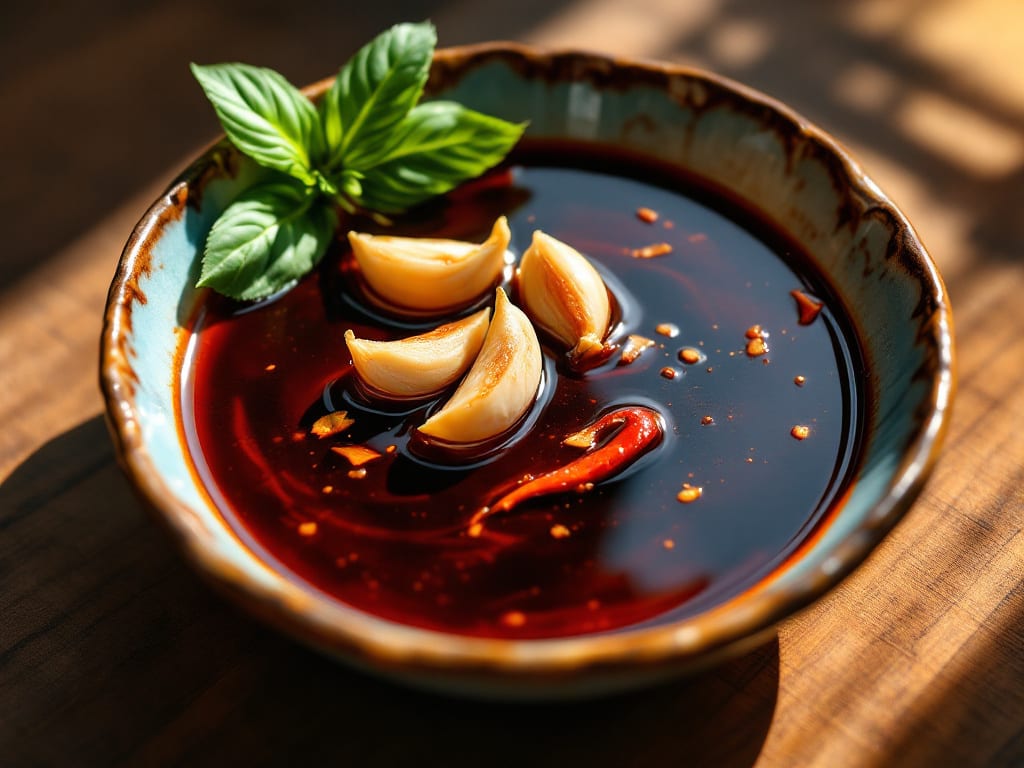
Creating an authentic Japanese gyoza sauce transforms simple dumplings into a restaurant-quality meal with just a few ingredients and precise technique. This fermented soy and chili sauce delivers the perfect balance of umami, tang, and subtle heat that defines gyoza dipping sauce.
I developed this recipe after years of testing store-bought versions that never quite captured the depth of flavor found in Tokyo’s izakayas.
The foundation of this sauce lies in fermented soy sauce (shoyu), which provides that signature umami richness, while rice vinegar adds brightness and cuts through the richness. A touch of chili oil introduces just the right amount of heat, and toasted sesame oil contributes nutty depth.
The sauce comes together in minutes but requires careful balancing of these components to achieve that authentic Japanese flavor profile.
What makes this sauce truly special is how it elevates every bite of gyoza—whether pan-fried or steamed. The sauce clings to the dumplings, enhancing their savory filling while adding a glossy sheen that makes them look as good as they taste.
This recipe delivers restaurant-quality results without requiring specialized ingredients, making it perfect for home cooks who want to impress.
The best part? This sauce keeps beautifully in the refrigerator for up to two weeks, allowing you to make a batch ahead for multiple gyoza sessions. For those who prefer milder or sweeter variations, I’ll share adjustments in the tips section—though the classic version is already perfectly balanced.
Let’s get started on creating this essential Japanese condiment.
Ingredients for authentic japanese gyoza sauce
Nine essential ingredients deliver Tokyo izakaya-quality gyoza sauce with umami-packed depth.
| Ingredient | Amount | Notes |
|---|---|---|
| Japanese Fermented Soy Sauce (Shoyu) 🥢 | ½ cup | Use high-quality fermented shoyu, not regular soy sauce |
| Rice Vinegar 🍶 | ¼ cup | Unseasoned, mild variety preferred |
| Toasted Sesame Oil 🌰 | 1 tbsp | For nutty depth, not regular sesame oil |
| Chili Oil 🌶️ | 1 tbsp | Adjust for heat preference (1-2 tbsp) |
| Granulated Sugar 🍚 | 1 tbsp | Balances acidity, use fine grain |
| Garlic Cloves 🧄 | 2 cloves | Minced, for aromatic depth |
| Fresh Ginger 🌿 | 1 tsp | Finely grated, for zesty kick |
| Water 💧 | ¼ cup | For thinning consistency |
| Diamond Crystal Kosher Salt 🧂 | ½ tsp | Adjust to taste, don't skip |
The fermented soy sauce (shoyu) is non-negotiable—regular soy sauce lacks that authentic umami punch. Grab Kikkoman Shoyu or Hacotate from Asian markets; both deliver that rich, fermented complexity. For chili oil, Lao Gan Ma or Lee Kum Kee brands are my go-to—they’ve got that perfect balance of heat and oiliness. Fresh garlic and ginger? Buy them at the market—they’ll be brighter than the pre-minced stuff in jars. Toast your sesame oil in a dry pan for 30 seconds before using—game-changer for flavor.
No fermented soy sauce? Double the regular soy sauce plus 1 tsp mirin gets you close, though it won’t be identical. Swapping rice vinegar? Apple cider vinegar works, but you’ll lose that delicate sweetness. Overwhelmed by heat? Reduce chili oil to 0.5 tbsp or use gochujang at half the amount—it adds sweetness too. The sugar is crucial—skip it and the sauce gets harsh. For a sweeter version, add 1 extra tsp honey at the end. Store-bought chili oil too spicy? Mix with 1 tsp neutral oil to mellow it out.
This sauce gets better with age—make it a day ahead if possible. Keeps in the fridge for 2 weeks sealed in a jar, or 3 months frozen in ice cube trays for single servings. The oil will separate—just shake vigorously before using. For gyoza, warm 1 tbsp sauce per serving in a small pan to intensify the aroma. Leftovers? Drizzle over ramen or use as a marinade for grilled meats—absolutely essential in my kitchen.
Why You’ll Love This Recipe
- Here’s what sold me: the chili oil cuts through the richness of the gyoza, but the sugar and rice vinegar keep it bright and addictive. Not too sharp, not too sweet—just that perfect, lingering tang.
- Five-Ingredient Magic: I swear, this sauce comes together with stuff I already have—no fancy shopping required. Just a splash of shoyu for depth, a drizzle of toasted sesame oil for that nutty aroma, and boom—instant umami-packed punch.
- Balanced Heat Glow-Up: Here’s what sold me: the chili oil cuts through the richness of the gyoza, but the sugar and rice vinegar keep it bright and addictive. Not too sharp, not too sweet—just that perfect, lingering tang.
- Potluck or Pantry: Between us, this sauce works for everything—drizzled over steamed dumplings, tossed with noodles, or even slathered on grilled meat. Honestly, I’ve used the last of it to wake up takeout leftovers. (Yes, even on a Tuesday night.)
Step-by-step instructions for authentic Japanese gyoza sauce
Here’s how to craft this umami-rich, perfectly balanced sauce that elevates every dumpling.
Prepare the Aromatic Base
In a small saucepan, combine the 0.5 cup Japanese fermented soy sauce (shoyu) with the 0.25 cup rice vinegar and 0.25 cup water. Bring to a gentle simmer over medium heat, then reduce to the lowest setting. This creates the foundational flavor profile where the shoyu’s deep umami meets the vinegar’s bright acidity.
While waiting for the mixture to heat, finely mince the 2 cloves garlic and grate the 1 tsp fresh ginger using a microplane. The ginger should resemble fine sand—this ensures maximum surface area for flavor extraction. Keep these aromatics at room temperature until needed.
Infuse with Heat and Depth
Once the soy-vinegar mixture reaches a gentle simmer, add the 1 tbsp toasted sesame oil and 1 tbsp chili oil. Stir immediately to distribute the oils evenly—this is where the sauce develops its signature complexity. The toasted sesame oil contributes nutty richness while the chili oil adds subtle heat that lingers beautifully.
Reduce heat to low and let the mixture simmer uncovered for 5-7 minutes, allowing the oils to meld with the soy and vinegar. You’ll notice the aroma intensify—this is your cue that the flavors are beginning to harmonize. Don’t walk away; constant attention prevents scorching while maintaining the delicate balance.
Sweeten and Season to Perfection
Add the 1 tbsp granulated sugar and 0.5 tsp Diamond Crystal kosher salt to the simmering mixture. Stir gently to dissolve the sugar completely—this step balances the sauce’s acidity while enhancing its natural sweetness. The kosher salt should be fully incorporated, but don’t over-stir or you’ll create foam.
Taste the sauce at this stage. It should be tangy with umami depth, slightly sweet, and just a whisper of heat. If it needs more balance, adjust with an additional pinch of salt or a tiny bit more sugar. The goal is to achieve that authentic Japanese harmony where all elements complement rather than compete.
Finish with Aromatics and Rest
Remove the pan from heat and add the minced garlic and grated ginger. Let the mixture sit off the heat for 2-3 minutes, allowing the aromatics to steep and infuse their flavors. This resting period is crucial—it prevents the garlic from burning while ensuring maximum flavor extraction from both ingredients.
Strain the sauce through a fine-mesh sieve into a clean bowl to remove any ginger fibers or garlic pieces. The result should be a glossy, vibrant sauce with layers of umami, acidity, and just the right amount of heat. Let it cool to room temperature before using—this allows the flavors to fully meld and develop their authentic character.
Pro Tips For Making Authentic Japanese Gyoza Sauce
- Heat the Shoyu: Warm your Japanese fermented soy sauce (shoyu) in a small saucepan for 30 seconds before mixing—just until it’s barely steaming. Cold shoyu dulls the sauce’s depth, and this tiny step brings out its umami punch without overpowering the other flavors.
- Toast Sesame Oil First: Heat your toasted sesame oil in a dry pan for 10 seconds until it smells nutty and fragrant—don’t let it smoke. Adding it raw makes the sauce taste flat; this quick toasting amplifies its aroma and balances the vinegar’s sharpness.
- Balance Sugar Last: Taste the sauce before adding sugar, then adjust in tiny increments (½ tsp at a time). Sugar masks other flavors, and you’ll likely need less than you think—especially if your rice vinegar is already sweetened.
- Swirl in Chili Oil: Add chili oil last and stir gently—just enough to coat the sauce lightly. Dumping it in and mixing hard turns the sauce greasy; a few swirls distribute the heat evenly without overpowering the shoyu’s complexity.
Make-ahead tips for this dish
Batch Prep Strategy
Make this sauce in double batches—it’s perfect for meal prep! Combine all ingredients in a quart-sized glass jar (like Ball Mason jars) and store in the fridge. The sauce actually improves over 24-48 hours as flavors meld, making it ideal for busy weeks.
I prep two jars every Sunday so I always have sauce ready for spontaneous gyoza nights. 💫
Freezing for Convenience
For long-term storage, freeze the sauce in ice cube trays—each cube equals 1 tbsp, perfect for single servings. Once frozen, transfer cubes to a ziplock freezer bag and flatten to save space.
Thaw overnight in the fridge or warm directly in a small pan over low heat for 1-2 minutes. The texture remains silky when reheated properly. 🧊
Sauce Stability Tips
The oil will naturally separate when refrigerated—this is normal! Just shake vigorously before using. For even better stability, add ½ tsp xanthan gum when making the sauce (mix with water first).
This prevents separation while maintaining that glossy texture. I keep a jar in my fridge labeled “gyoza sauce” so it’s always accessible. ⚡
Multi-Use Applications
This versatile sauce doubles as a marinade for grilled chicken or tofu, or as a ramen seasoning. Store extra portions in small mason jars (like Weck jars) for easy grab-and-go use.
The fermented soy base makes it perfect for umami-rich braises too—just reduce it slightly with the meat juices. 🍗
Travel-Friendly Packaging
For on-the-go use, portion sauce into small glass jars (like Le Parfait jars) with airtight lids. These stack neatly in your pantry and fit perfectly in lunchboxes.
The glass preserves flavor better than plastic, and the small size prevents spills. I keep one in my car for unexpected gyoza cravings during road trips. 🚗
Flavor Preservation
Avoid contamination by using clean spoons when serving from the jar. For restaurant-style presentation, transfer to a small ceramic dish (like Corelle stoneware) and serve with a small brush for dipping. The sauce keeps its vibrant color and flavor for up to 2 weeks when stored properly. 🎨
Nutrition facts
Frequently asked questions
What’s the key difference between this sauce and regular soy sauce?
This sauce uses fermented Japanese soy sauce (shoyu) for deeper umami, plus rice vinegar and chili oil for complexity. Regular soy sauce lacks the fermented depth, and this recipe includes aromatic layers like toasted sesame and fresh ginger that transform it into a proper dipping sauce. The balance of sweet, tangy, and spicy makes it far more versatile than plain soy sauce.
Can I make this sauce without chili oil?
For a milder version, replace the 1 tbsp chili oil with 1 tsp gochujang (Korean chili paste) or ½ tsp red pepper flakes mixed with ½ tbsp neutral oil. The gochujang adds subtle sweetness while the red pepper gives just a hint of heat. Adjust to taste—this sauce works beautifully as a neutral base for other flavors too.
How do I know when the sauce is ready?
The sauce is done when it’s glossy, aromatic, and balanced—5-7 minutes of simmering after adding oils. Taste it before straining: it should be tangy with umami depth, slightly sweet, and just a whisper of heat. If it’s too sharp, add a pinch more sugar; if too bland, a splash of rice vinegar helps. The aroma should be rich and inviting, not harsh.
Why does my sauce separate when refrigerated?
Oil separation is completely normal! The sauce will naturally split into layers when chilled. Before using, simply shake the jar vigorously for 10-15 seconds until fully combined. For extra stability, add ½ tsp xanthan gum when making the sauce (mix with water first). This prevents separation while keeping that glossy texture.
Can I use this sauce for other dishes besides gyoza?
Yes! This versatile sauce works as a marinade for grilled meats or tofu, a ramen seasoning, or even a glaze for roasted vegetables. The umami-rich base makes it perfect for braising dishes too. Try reducing it slightly with meat juices for extra depth. Store extra portions in small jars for quick access—it’s a pantry essential.

- White Peppered Gravy Recipe: Silky-Smooth Sauce for Roasted Meats - November 29, 2026
- James Martin’s Cottage Pie Recipe: Flaky Pastry Over Hearty Beef Filling - November 29, 2026
- Sweet Grissini Recipe: Crispy Twists With Honey-Glazed Bite-Sized Magic - November 29, 2026