
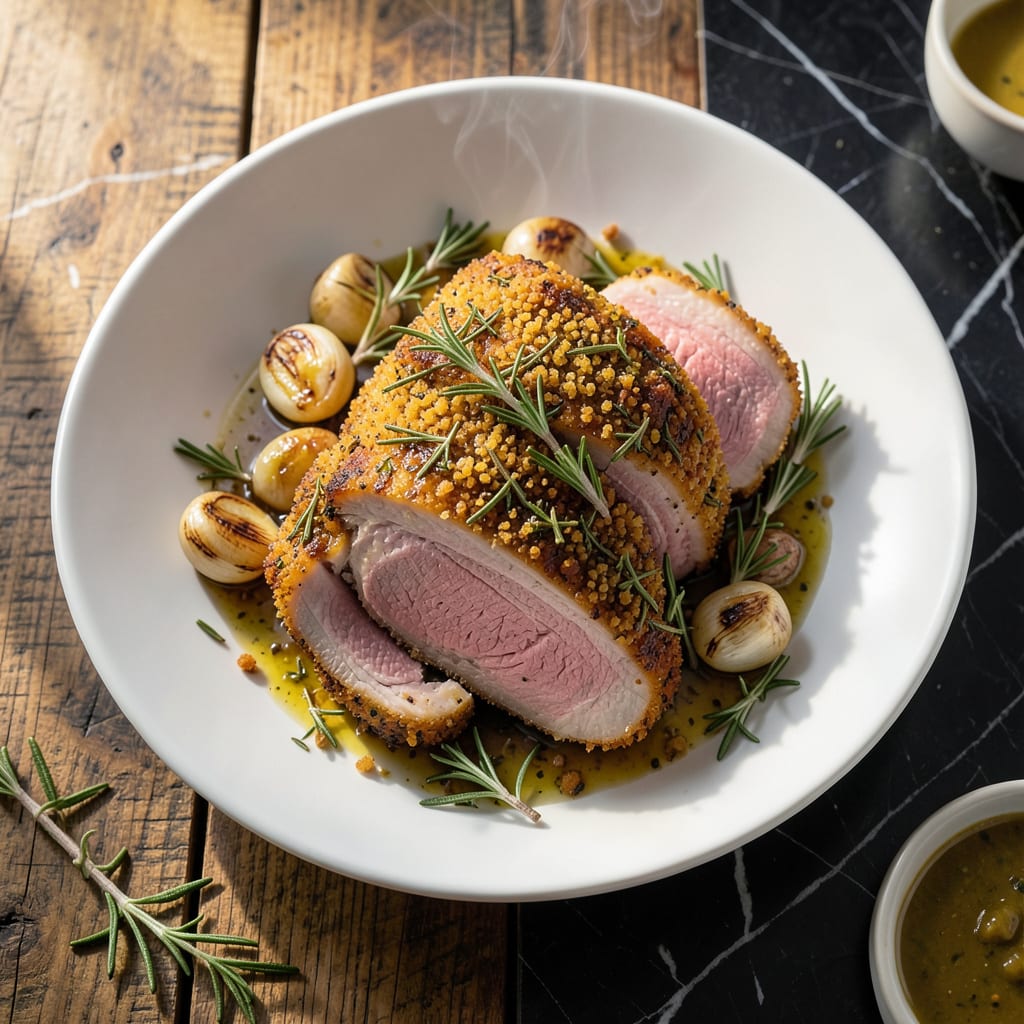
This baked pork tenderloin delivers tender results with minimal effort. A simple herb crust creates maximum flavor while keeping the meat incredibly juicy.
The one-pan method makes cleanup easy. With just a few ingredients and an oven, you’ll achieve perfectly cooked pork every time.
Ingredients for Baked Pork Tenderloin
Minimal ingredients, maximum flavor. Herb-crusted pork with one-pan ease.
| Ingredient | Amount | Notes |
|---|---|---|
| Pork Tenderloin 🥩 | 1 ½ lb | Trimmed of excess fat |
| Olive Oil 🫒 | 2 tbsp | Extra-virgin preferred |
| Dijon Mustard 🟡 | 2 tbsp | Smooth variety |
| Fresh Rosemary 🌿 | 2 tbsp | Finely chopped |
| Fresh Thyme 🍃 | 2 tbsp | Leaves stripped from stems |
| Garlic Cloves 🧄 | 4 cloves | Minced finely |
| Kosher Salt 🧂 | 1 ½ tsp | Diamond Crystal preferred |
| Black Pepper 🌶️ | 1 tsp | Freshly ground |
| Panko Breadcrumbs 🍞 | ¾ cup | For herb crust texture |
| Dry White Wine 🍷 | ¼ cup | For deglazing pan |
| Unsalted Butter 🧈 | 1 tbsp | Melted for crust |
| Fresh Parsley 🌿 | 2 tbsp | Chopped for garnish |
The pork tenderloin itself is the foundation. Look for pieces around 1-1.5 lbs—uniform thickness ensures even cooking. Whole Foods and Costco typically carry excellent quality, but any reputable grocer will do. The herb crust demands fresh rosemary and thyme (the dried versions won’t deliver the same aromatic punch). If your market only has bunches, buy extra—leftover herbs freeze beautifully for future use.
No fresh herbs? Dried at one-third the amount works, though the flavor profile shifts slightly. Panko breadcrumbs can be swapped for regular, but the texture won’t be as crisp. Out of Dijon? Whole-grain mustard adds pleasant texture, while yellow mustard (in a pinch) will work. The wine isn’t strictly necessary—chicken broth with a splash of vinegar mimics the acidity it provides.
This dish holds well—rest 10 minutes before slicing to retain juices. Leftovers keep 3-4 days refrigerated, though the crust softens. Reheat gently in a 350°F oven to revive texture. The herb mixture can be prepped a day ahead (store covered in the fridge).
Why You’ll Love This Recipe
- Set and Forget: I toss the tenderloin with olive oil, mustard, and herbs, then let the oven do the work.
- Herb-Crusted Perfection: The rosemary and thyme form a fragrant crust that seals in juicy, savory flavor.
- Dinner to Lunch: Leftovers slice beautifully for sandwiches or salads the next day.
- Budget-Friendly Feast: One affordable tenderloin feeds my family of four with zero waste.
Step-by-Step Instructions for Baked Pork Tenderloin
This method ensures a perfectly tender result with a crisp herb crust every time.
Step 1: Prepare the Herb Crust Mixture
In a small bowl, combine the 2 tbsp Fresh Rosemary, 2 tbsp Fresh Thyme, 4 cloves Garlic Cloves, 0.75 cup Panko Breadcrumbs, 1 tbsp Unsalted Butter, 1.5 tsp Kosher Salt, and 1 tsp Black Pepper. Mix thoroughly until the herbs and garlic are evenly distributed throughout the breadcrumbs.
The butter should coat the panko evenly, creating a moist mixture that will adhere to the pork. This herb crust is what gives the dish its signature flavor and texture, so don’t skip this step.
Step 2: Sear and Coat the Pork Tenderloin
Pat the 1.5 lb Pork Tenderloin dry with paper towels. Heat 2 tbsp Olive Oil in a large oven-safe skillet over medium-high heat until shimmering. Sear the pork on all sides for about 2-3 minutes per side until golden brown.
Transfer the pork to a cutting board and brush all sides with 2 tbsp Dijon Mustard. The mustard acts as a glue for the herb crust. Press the panko-herb mixture onto all sides of the pork, ensuring an even coating. This step builds layers of flavor and ensures the crust stays put during baking.
Step 3: Bake to Juicy Perfection
Return the pork to the same skillet. Place the skillet in a preheated 400°F oven and bake for 20-25 minutes, or until the internal temperature reaches 145°F on an instant-read thermometer. The crust should be golden brown and crisp.
Baking in the same skillet retains the fond from searing, which enhances the overall flavor. Avoid overcrowding the pan to ensure even cooking and a crispy crust.
Step 4: Rest and Finish with Pan Sauce
Transfer the pork to a cutting board and let it rest for 10 minutes. This resting period allows the juices to redistribute, ensuring a moist and tender result. Tent loosely with foil to keep it warm.
Place the skillet over medium heat on the stovetop. Add 0.25 cup Dry White Wine to deglaze the pan, scraping up any browned bits with a wooden spoon. Simmer for 2-3 minutes until reduced by half, then drizzle this pan sauce over the sliced pork. The sauce adds an extra layer of flavor and keeps the pork moist.
Slice the pork against the grain into 1-inch thick pieces and garnish with 2 tbsp Fresh Parsley before serving.
Pro Tips For Making Baked Pork Tenderloin
- Sear First, Bake Later: I learned this the hard way—always sear the pork tenderloin in a hot pan with olive oil for 2-3 minutes per side before baking at 400°F. It locks in juices and gives that golden crust the mustard glaze clings to.
- Trim the Silver Skin: Sounds tedious, but it works: remove that tough, silvery membrane with a sharp knife before seasoning. It prevents the tenderloin from curling up and ensures even cooking.
- Don’t Overcook Past 145°F: After burning three batches, I finally figured out pork tenderloin keeps cooking after it comes out—pull it at 140-145°F internal temp and let it rest 10 minutes under foil.
- Use Fresh Herbs: My grandmother swore by this, and she was right: fresh rosemary and thyme bruised between your fingers release way more flavor than dried. Just rub them into the mustard glaze before baking.
Serving Suggestions for This Baked Pork Tenderloin
Plating Presentation
Slice the pork into 1-inch thick medallions and fan them slightly across the plate. Drizzle the pan sauce in a zigzag pattern for visual appeal. I like using white plates to make the golden crust pop.
Garnish Ideas
Sprinkle with the 2 tbsp Fresh Parsley for color contrast. Add a few fresh thyme sprigs for continuity with the crust flavors. Lemon wedges on the side brighten the presentation. 💛
Side Pairings
Serve with roasted baby potatoes and steamed green beans for a classic meal. The potatoes soak up the pan sauce beautifully. I toss my potatoes with a bit of the leftover herb mixture.
Family Style
For casual gatherings, place the whole tenderloin on a wooden board. Let guests serve themselves with the pan sauce in a small pitcher. This makes for an interactive and impressive presentation.
Wine Service
Pair with the same dry white wine used in cooking. Serve chilled in white wine glasses to complement the herb notes. I find a crisp Sauvignon Blanc works particularly well.
Bread Addition
Offer crusty bread on the side to mop up every last bit of sauce. A warm baguette or ciabatta adds texture contrast. This turns the dish into a complete, satisfying meal. 🔥
Nutrition Facts
Frequently Asked Questions
What temperature should the oven be?
Preheat your oven to 400°F for even cooking and a crispy herb crust. This high heat helps create a golden exterior while keeping the inside juicy.
How do I know when it’s done?
Use a meat thermometer to check the internal temperature. It should read 145°F for safe, perfectly cooked pork. Let it rest for 10 minutes before slicing.
Can I make this ahead of time?
Prepare the herb crust mixture in advance and store it in the fridge. Sear and bake the pork just before serving for the best texture and flavor.
What if my crust doesn’t stick?
Pat the pork completely dry before applying the mustard. This helps the panko-herb mixture adhere better during baking.

- BBQ Sausage Recipe Oven: Smoky Depth Without the Grill - September 28, 2026
- BBQ Chicken Bowl Recipe Rice: Smoky Sweetness Over Fluffy Grains - September 28, 2026
- Beef Cutlet Recipe Ideas: Crispy Breaded Patties With Bold Seasonings - September 28, 2026