
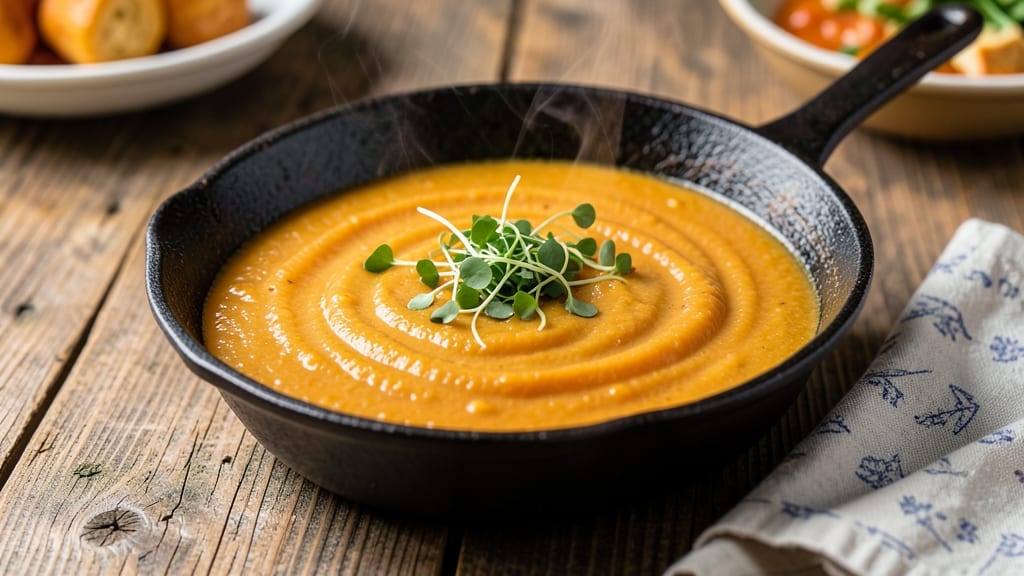
This baked whole pumpkin soup recipe unlocks a depth of flavor that no canned version can ever capture. This baked whole pumpkin soup recipe delivers roasted depth and silky smoothness—perfect for autumn tables when fresh pumpkins are at their peak.
The key lies in roasting the pumpkin whole, which caramelizes the natural sugars and infuses the flesh with a nutty, earthy richness that blends seamlessly into the broth.
What sets this method apart is the hands-off roasting technique, which requires no peeling or chopping before blending. Simply score the pumpkin, roast until tender, then scoop out the flesh directly into your pot.
The result is a soup that’s naturally sweet, deeply aromatic, and packed with seasonal flavor—no artificial ingredients needed. This approach also minimizes waste, using every edible part of the pumpkin.
The process yields a creamy, restaurant-quality soup with just the right balance of pumpkin sweetness and savory spices. The slow-roasted method develops flavors that simmering alone can’t achieve, while the blending technique ensures a silky texture without dairy.
Garnish with toasted pumpkin seeds or fresh herbs to elevate the presentation and add a satisfying crunch.
Perfect for cozy gatherings or meal prep, this soup keeps well in the fridge for up to five days, making it an ideal make-ahead dish. The technique works equally well with sugar pumpkins or small kabocha varieties, giving you flexibility based on what’s available.
Let’s get started on creating a soup that tastes like autumn in every spoonful.
Ingredients for baked whole pumpkin soup
Roasted pumpkin, aromatic spices, and creamy coconut—this soup transforms seasonal abundance into velvety perfection.
| Ingredient | Amount | Notes |
|---|---|---|
| Sugar Pumpkin or Kabocha Pumpkin 🎃 | 4 lb | Whole, unpeeled, scored for roasting |
| Extra-Virgin Olive Oil 🫒 | ½ cup | Cold-pressed, infused with fruity notes |
| Onion 🧅 | 1 ½ whole | Yellow or sweet, finely diced |
| Garlic Cloves 🧄 | 6 cloves | Fresh, minced for aromatic depth |
| Vegetable Broth 💧 | 4 cups | Low-sodium, homemade preferred |
| Coconut Milk 🥥 | 1 can | Full-fat, unsweetened for creaminess |
| Fresh Ginger Root 🌿 | 2 tbsp | Gratched, for zesty warmth |
| Cumin Ground 🌶️ | 1 tsp | Toasted for deeper spice profile |
| Turmeric Ground 🌿 | ½ tsp | Organic for vibrant color |
| Salt 🧂 | 1 ½ tsp | Diamond Crystal, fine grain |
| Black Pepper 🌶️ | ¾ tsp | Freshly ground, coarse |
| Nutritional Yeast 🧀 | ¼ cup | For umami depth, vegan-friendly |
| Pumpkin Seeds 🥜 | ¼ cup | Toasted, for garnish crunch |
The pumpkin is the soul of this dish. Optimal quality requires selecting a firm, heavy sugar pumpkin or kabocha—avoid soft spots or bruises. Professional kitchens prefer organic varieties for their richer flavor profile. Score the pumpkin in an ‘X’ pattern before roasting to maximize caramelization; this step is non-negotiable for achieving the restaurant-quality depth. For best results, source your pumpkin from local farmers’ markets during autumn when varieties are at their peak ripeness.
Coconut milk provides the luxurious creaminess without dairy, but full-fat is essential—light versions lack the necessary body. Substitutions include cashew cream at half the quantity for a nut-based alternative, though texture may vary slightly. Fresh ginger is preferred over powdered, but toasted cumin seeds ground fresh elevate the spice profile dramatically. Nutritional yeast offers that cheesy umami punch, but smoked paprika at 1 teaspoon can mimic a similar depth if unavailable. Always toast spices in a dry pan for 30 seconds to awaken their aromatic compounds.
This soup’s velvety texture relies on proper blending technique—pumpkin flesh should be fully incorporated without over-processing. Store in airtight glass containers for up to 5 days in the refrigerator, or freeze portions for 3 months using ice cube trays for single-serving convenience. Garnish with toasted pumpkin seeds and a drizzle of olive oil just before serving to preserve their crunch. The soup actually improves in flavor after 24 hours as the spices meld further, making it an ideal make-ahead dish for gatherings.
Why You’ll Love This Recipe
- One-Pan Magic: Roasting the pumpkin whole takes less cleanup than chopping it first—just score, oil, and roast. No peeling, no dicing, just scoop out the goodness later. That half cup of extra-virgin olive oil does all the work while you wait, caramelizing the edges for that sweet, nutty depth.
- Umami Bomb: The coconut milk and nutritional yeast turn this into a cheesy, rich soup that’s dangerously satisfying. That ginger and cumin? They wake up the pumpkin’s natural sweetness without overpowering it. My daughter picks out the pumpkin seeds for garnish, but she still asks for seconds—proof it’s not just tasty, it’s addictive.
- Feeds a Crowd (or Me): This makes about 6 cups of soup, so it’s perfect for game day, potlucks, or when you’re too lazy to cook four separate meals. Leftovers? Store them in glass jars for up to 5 days, or freeze portions in ice cube trays for quick reheats. No sad, soggy soup here—just convenience.
- Budget-Friendly Luxury: A whole pumpkin is cheaper than you think, and the spices (cumin, turmeric) last forever in your pantry. That coconut milk and nutritional yeast add depth without breaking the bank. Honestly, it’s the kind of dish that makes you feel fancy without spending a fortune.
Step-by-step instructions for baked whole pumpkin soup
Transforming roasted pumpkin into velvety soup requires precision and patience.
Roast the Pumpkin Until Caramelized
Preheat your oven to 375°F and line a baking sheet with parchment paper. Cut the 4 lb sugar pumpkin or kabocha pumpkin in half lengthwise, scoop out the seeds, and score the flesh in a crosshatch pattern to help it render more flavor. Brush the cut sides generously with ½ cup extra-virgin olive oil and season with 1½ tsp salt and ¾ tsp black pepper. Place the halves cut-side down on the baking sheet.
Roast for 45-50 minutes until the flesh is tender when pierced with a fork and the edges are deeply caramelized. The pumpkin should smell sweet and nutty—this is your cue it’s ready. Let it cool for 10 minutes before scooping out the flesh with a spoon, discarding the skin. You should yield about 6 cups of roasted pumpkin puree.
Sauté Aromatics and Build the Base
Heat ½ cup extra-virgin olive oil in a large Dutch oven over medium heat. Add the 1½ finely diced onion and cook for 8-10 minutes until soft and translucent, stirring occasionally. Add the 6 minced garlic cloves and 2 tbsp grated fresh ginger root, cooking for another 2 minutes until fragrant—this is where the foundation of flavor develops.
Stir in the 1 tsp ground cumin and ½ tsp ground turmeric, toasting for 30 seconds until the spices release their aroma. Pour in the 4 cups vegetable broth and bring to a gentle simmer. Add the roasted pumpkin puree and simmer uncovered for 10 minutes to meld the flavors. Here’s the thing—this step ensures the soup isn’t just sweet but balanced with earthy, spiced depth.
Blend and Incorporate Creaminess
Using an immersion blender, blend the soup directly in the pot until completely smooth. If you prefer a chunkier texture, blend in batches until you reach your desired consistency. Stir in the 1 can full-fat coconut milk and ¼ cup nutritional yeast, warming through over low heat for 3-4 minutes. The nutritional yeast adds a cheesy, umami richness that elevates the soup beyond ordinary.
Season to taste with additional 1½ tsp salt and ¾ tsp black pepper—this is where you fine-tune the balance. The soup should be velvety but not overly thick; if it’s too thick, whisk in 1-2 tablespoons water to loosen it. Here’s what I do: I taste it as I go, adjusting gradually until every spoonful is harmonious.
Garnish and Serve with Crunch
Ladle the soup into bowls and garnish immediately with ¼ cup toasted pumpkin seeds for a satisfying crunch. Toast the seeds in a dry skillet over medium heat for 2-3 minutes until golden, stirring constantly to prevent burning. Their nutty flavor contrasts beautifully with the creamy soup, adding texture and visual appeal.
Serve with crusty bread or a sprinkle of freshly cracked ¾ tsp black pepper for an extra layer of warmth. The roasted depth from the pumpkin, combined with the coconut milk and spices, creates a soup that’s both comforting and sophisticated. Don’t skip the garnish—it’s the final touch that makes this dish exceptional.
Pro Tips For Making Baked Whole Pumpkin Soup
- Score the Pumpkin Deeply: Cutting the crosshatch pattern isn’t just for looks—it’s how you unlock the pumpkin’s sweetness. I used to skip this, thinking it was optional, but the first time I made soup with unscored pumpkin, the flavor was flat. Those deep grooves let the oil and spices seep in, caramelizing the flesh while keeping it tender. Spend the extra 5 minutes—your soup will taste like it simmered all day.
- Toast the Spices First: That 30-second toast for the cumin and turmeric isn’t just a formality. I learned this after a batch tasted dull—turns out, raw spices just sit there. Heat them in the oil until you smell that earthy, toasty aroma before adding broth. It’s the difference between background flavor and the kind that makes you go back for seconds.
- Don’t Rush the Roast: The pumpkin needs those 45–50 minutes at 375°F, even if it looks underdone. I’ve rushed it twice, and both times the flesh was gummy instead of silky. The edges should be caramelized to dark brown, and when you pierce it with a fork, the pumpkin should give way like butter. Patience here means no blending headaches later—trust the time.
- Toast the Seeds Low and Slow: Medium heat in a dry skillet is the sweet spot for pumpkin seeds, but watch them like a hawk. I’ve burned three batches because I walked away for “just a minute.” Stir constantly for 2–3 minutes until they’re golden, not brown. Over-toasted seeds taste bitter and ruin the nutty contrast with the creamy soup. Keep the heat steady and your eyes on them.
Wine and beer pairings for baked whole pumpkin soup
Earthy Reds That Complement
The deep, nutty flavors of this baked pumpkin soup pair beautifully with dry red wines that have bright acidity to cut through the richness. I always reach for a Chianti Classico from Tuscany—its Sangiovese grapes deliver cherry and herbal notes that harmonize with the roasted pumpkin’s caramelized sweetness.
The 12-13% alcohol also warms you up on chilly autumn evenings. 🍷
Spiced Whites for Balance
If you prefer white wine, look for something with spiced or citrusy profiles like a Viognier from California or a Riesling with off-dry sweetness. The Viognier’s floral and peach notes echo the pumpkin’s natural sweetness, while the Riesling’s light acidity keeps the dish from feeling too heavy.
I love a Kendall-Jackson Vintner’s Reserve Riesling for its balance.
Craft Beer Pairings
For beer lovers, amber ales and wheat beers shine here. A Belgian-style witbier with its citrus and coriander flavors cuts through the soup’s creaminess, while an English-style amber ale like Fuller’s London Pride complements the roasted spices. Avoid anything too hoppy—stick to malty, approachable brews. 🍺
Non-Alcoholic Options
For a refreshing non-alcoholic pairing, try sparkling apple cider infused with a cinnamon stick—its effervescence cleanses the palate between bites. Alternatively, a ginger beer with fresh ginger highlights the soup’s zesty warmth. Both options keep the autumnal theme while adding a crisp contrast. 🍏
Herbal Infusions
For a sophisticated touch, serve with rosemary-infused olive oil drizzled over the soup. The piney notes from the rosemary enhance the earthy pumpkin flavors.
I also love adding a dash of smoked paprika to the oil for an extra layer of complexity—it’s a simple trick that elevates the dish instantly. ✨
Nutrition facts
Frequently asked questions
Why does roasting the whole pumpkin create such rich flavor?
Roasting the pumpkin whole allows the natural sugars to caramelize and the flesh to develop a deep, nutty aroma that can’t be achieved by other methods. The crosshatch scoring helps the pumpkin absorb more oil and spices, enhancing its flavor profile. This step transforms bland pumpkin into a complex, restaurant-quality base for your soup.
Can I use a different type of pumpkin for this recipe?
While sugar pumpkins and kabocha work best, you can experiment with other varieties like butternut squash. However, the texture and flavor won’t be identical. Sugar pumpkins are ideal because they’re naturally sweeter and develop more caramelization when roasted whole. For best results, stick to the recommended types.
What if my soup turns out too thick after blending?
Simply whisk in 1-2 tablespoons water at a time until you reach your desired consistency. The coconut milk provides creaminess, but you can also thin it with extra vegetable broth if needed. Taste as you go to maintain the perfect balance of texture and flavor.
How do I store leftovers properly?
Let the soup cool completely before transferring it to airtight glass containers. Store in the refrigerator for up to 5 days. For longer storage, freeze portions using ice cube trays for convenient single servings. This method preserves both texture and flavor beautifully.
Can I make this soup ahead of time?
The flavors actually improve after 24 hours as the spices meld together. Prepare the soup up to a day ahead, store it properly, and reheat gently on the stove. This makes it perfect for meal prep or hosting gatherings.

- Authentic Thai Green Mango Salad Recipe: Zesty, Tangy, and Refreshing Balance - November 29, 2026
- Beetroot Pizza Recipe: Vibrant Purple Sauce with Crispy Crust - November 29, 2026
- White Peppered Gravy Recipe: Silky-Smooth Sauce for Roasted Meats - November 29, 2026