
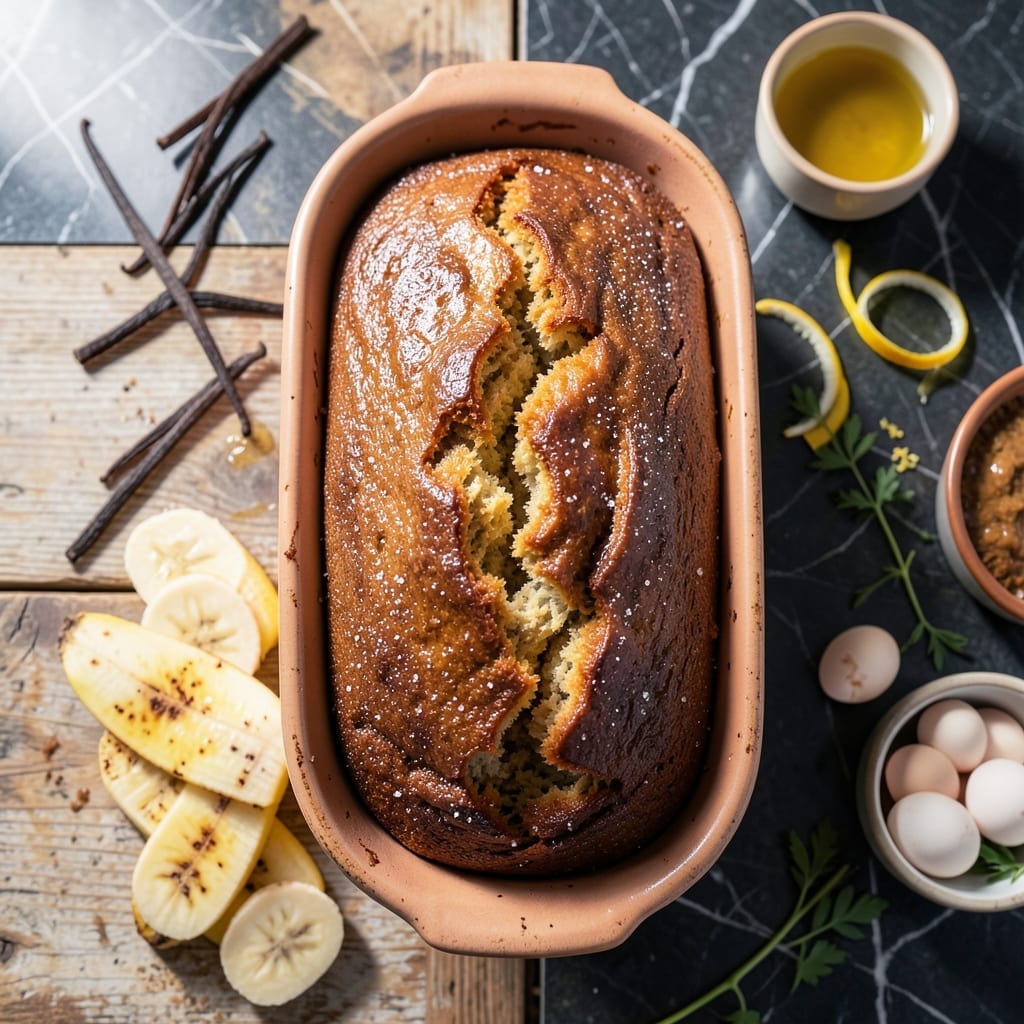
This oil-based banana loaf delivers a moist crumb without any butter. The secret lies in the perfect balance of ripe bananas and neutral oil.
I developed this recipe after countless tests to ensure a tender texture every time. The result is a classic loaf with a soft interior and golden crust.
Ingredients for Banana Loaf Recipe with Oil
Basic pantry staples create a classic loaf with perfect texture every time.
| Ingredient | Amount | Notes |
|---|---|---|
| All-Purpose Flour 🌾 | 2 cups | Sifted for even texture |
| Granulated Sugar 🍚 | 1 ½ cups | Fine white sugar preferred |
| Ripe Bananas 🍌 | 4 whole | Very ripe, mashed (about 2 cups) |
| Large Eggs 🥚 | 2 whole | Room temperature for best results |
| Vegetable Oil 🫒 | ¾ cup | Neutral flavor like canola |
| Vanilla Extract 🌿 | 2 tsp | Pure extract for best flavor |
| Baking Soda 🧂 | 1 tsp | Leavening agent for rise |
| Baking Powder 🧂 | ½ tsp | For additional lift |
| Ground Cinnamon 🌶️ | 1 tsp | Optional for warmth |
| Salt 🧂 | ½ tsp | Fine table salt |
| Chopped Walnuts 🥜 | ½ cup | Optional for crunch (omit if allergic) |
The bananas need to be spotty and soft—this is non-negotiable for sweetness and moisture. Whole Foods and Trader Joe’s often have overripe ones discounted, perfect for baking. Use a neutral oil like vegetable or canola; extra-virgin olive oil’s flavor can be too assertive. For flour, King Arthur is my go-to for consistent results.
No ripe bananas? Thaw frozen ones—they’ll be mushy but work perfectly. Out of vegetable oil? Melted coconut oil (cooled) or any neutral oil works. Want it nut-free? Skip the walnuts or swap in chocolate chips. The vanilla extract can be swapped for almond extract at half the amount for a different flavor profile.
The loaf keeps well wrapped at room temperature for 2-3 days, or refrigerate for up to 1 week. For longer storage, freeze slices for up to 3 months. Thaw at room temperature or toast straight from the freezer.
Why You’ll Love This Recipe
- No-Fuss Mixing: I just dump everything in one bowl—no creaming butter, no separate steps. Honestly, the oil makes it foolproof every time.
- Caramelized Sweetness: Those ripe bananas turn into little pockets of jammy goodness, and the oil keeps it ridiculously moist.
- Breakfast to Snack: Between us, I’ve served this for breakfast, packed it in lunchboxes, and even passed it off as dessert.
- Stays Fresh: I bake it Sunday, and it’s still soft and perfect by Thursday. One loaf, four days of happy.
Step-by-Step Instructions for Banana Loaf
This method ensures a perfectly moist crumb with minimal effort and maximum flavor.
Step 1: Prepare and Mash the Bananas
Peel the 4 whole Ripe Bananas and place them in a large mixing bowl. Using a fork or potato masher, mash them until smooth with only a few small lumps remaining. The bananas should yield about 2 cups of mashed fruit.
I always use very ripe bananas with plenty of brown spots—they’re sweeter and mash more easily. This step is crucial for that signature banana flavor and natural sweetness in your loaf.
Step 2: Combine Wet Ingredients
To the mashed bananas, add the 1.5 cups Granulated Sugar, 0.75 cup Vegetable Oil, 2 whole Large Eggs, and 2 tsp Vanilla Extract. Whisk everything together until the mixture is smooth and fully combined.
The vegetable oil is key here—it keeps the loaf incredibly moist without the need for butter. Make sure your eggs are at room temperature to ensure they emulsify properly with the oil.
Step 3: Incorporate Dry Ingredients
In a separate bowl, whisk together the 2 cups All-Purpose Flour, 1 tsp Baking Soda, 0.5 tsp Baking Powder, 0.5 tsp Salt, and 1 tsp Ground Cinnamon. Gradually add this dry mixture to the wet ingredients, stirring just until combined.
Avoid overmixing—once you no longer see streaks of flour, stop stirring. Overworking the batter can lead to a dense loaf. If using, fold in the 0.5 cup Chopped Walnuts at this stage for added texture.
Step 4: Bake to Golden Perfection
Pour the batter into a greased 9×5-inch loaf pan and smooth the top with a spatula. Bake in a preheated oven at 350°F for 50-60 minutes, or until a toothpick inserted into the center comes out clean or with a few moist crumbs.
Check for doneness around the 50-minute mark—if the top is browning too quickly, tent the pan with aluminum foil. The loaf is done when the center springs back lightly when pressed and the edges have pulled away slightly from the pan.
Step 5: Cool Before Slicing
Remove the loaf from the oven and let it cool in the pan for 10 minutes. Then, transfer it to a wire rack to cool completely. This cooling period is essential—it allows the crumb to set and prevents the loaf from crumbling when sliced.
Once fully cooled, slice and serve. The loaf will stay moist for several days if stored in an airtight container at room temperature. For the best texture, wait at least 1 hour before slicing.
Pro Tips For Making Banana Loaf Recipe With Oil
- Check Banana Ripeness: Use bananas with plenty of brown spots—they’re sweeter and mash easier. I learned this the hard way after a loaf turned out bland with underripe ones.
- Mix Wet First: Whisk the eggs, oil, and sugar together before adding bananas. It blends smoother and prevents dense patches in the loaf.
- Don’t Overmix: Stir the flour in just until combined. After my first few loaves came out tough, I finally realized overmixing develops gluten.
- Test with a Skewer: Start checking at 50 minutes—if the skewer comes out clean, it’s done. I used to rely on time alone and ended up with dry loaves.
Troubleshooting This Dish
Dense or Dry Loaf
Overmixing the batter is the most common culprit for a dense texture. Stir just until the flour disappears—20-30 seconds is plenty. Also, check your leavening agents: baking soda and powder lose potency over time. I replace mine every 6 months to be safe. 💡
Soggy Bottom
This usually happens when the pan isn’t properly greased or the oven isn’t hot enough. Use butter or nonstick spray to coat every crevice of your 9×5-inch loaf pan. Preheat your oven for at least 15 minutes before baking to ensure even heat.
Uneven Baking
If your loaf is raw in the center but burnt on top, your oven likely has hot spots. Rotate the pan 180 degrees halfway through baking. For stubborn ovens, try lowering the temperature to 325°F and extending the bake time by 10-15 minutes.
Loaf Sinks in Middle
This indicates underbaking or opening the oven too early. Wait until the 50-minute mark before checking doneness. If the center seems underdone, tent with foil and bake for another 5-10 minutes. A toothpick should come out with moist crumbs, not wet batter.
Bland Flavor
Use very ripe bananas with plenty of brown spots—they’re sweeter and more flavorful. If your loaf still tastes dull, add ½ tsp more cinnamon or a pinch of nutmeg next time. I also recommend 1 extra tsp vanilla extract for depth.
Crumbly Texture
This often means too much flour or not enough liquid. Measure your flour by spooning it into the cup and leveling off—don’t scoop directly from the bag. If the batter seems thick, add 1-2 tbsp milk or water to loosen it slightly. 🔥
Frequently Asked Questions
Can I use a different oil instead of vegetable?
Yes! Any neutral oil like canola or melted coconut works. Avoid strong-flavored oils like olive, which can overpower the banana taste.
Why does my loaf turn out dense?
Overmixing is the main cause. Stir just until the flour disappears (20-30 seconds). Also check your baking soda and powder aren’t expired.
How do I know when it’s done?
Insert a toothpick into the center—it should come out with moist crumbs, not wet batter. The top should spring back when lightly pressed.
Can I add chocolate chips?
Fold in ½ cup at the end. For extra richness, sprinkle some on top before baking.
Nutrition Facts

- BBQ Sausage Recipe Oven: Smoky Depth Without the Grill - September 28, 2026
- BBQ Chicken Bowl Recipe Rice: Smoky Sweetness Over Fluffy Grains - September 28, 2026
- Beef Cutlet Recipe Ideas: Crispy Breaded Patties With Bold Seasonings - September 28, 2026