
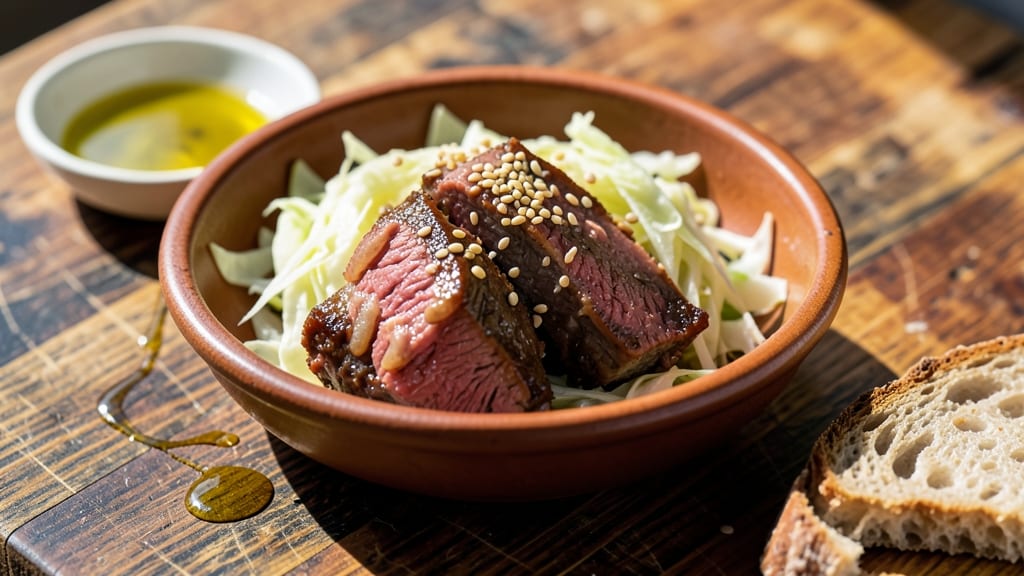
This basic corned beef and cabbage recipe delivers the hearty, slow-cooked comfort of a classic Irish meal with minimal effort. The secret lies in simmering corned beef brisket until it’s fork-tender while transforming tough cabbage into sweet, crisp-tender greens. I’ve perfected this method over years of St. Patrick’s Day celebrations, and it never fails to impress—even with picky eaters.
The beauty of this dish is its simplicity: just a few pantry staples and a few hours of hands-off cooking time. You’ll start with a corned beef brisket that’s already seasoned perfectly, then build depth with bay leaves, peppercorns, and a splash of vinegar.
The cabbage gets its signature sweetness from slow braising, while the potatoes absorb the rich broth for extra flavor in every bite.
What you’ll end up with is a plate of tender, juicy corned beef that practically falls apart at the touch of a fork, alongside cabbage leaves that are just crisp enough to hold their shape.
The aroma alone will fill your kitchen with warmth, while the flavors—savory, slightly sweet, and deeply comforting—make this the ultimate weeknight or holiday centerpiece.
Serve with buttered potatoes and a dollop of mustard for the full Irish experience. This recipe scales perfectly for crowds, and leftovers reheat beautifully. Let’s get cooking!
Ingredients for basic corned beef and cabbage
Pantry staples and a few hours of slow simmering create this classic Irish comfort dish.
| Ingredient | Amount | Notes |
|---|---|---|
| Corned Beef Brisket 🥩 | 2 ½ lb | Pre-packaged corned beef |
| Green Cabbage 🥬 | 1 whole | Core removed, quartered |
| Russet Potatoes 🥔 | 2 lb | Washed, unpeeled |
| Bay Leaves 🌿 | 4 whole | Dried, aromatic |
| Black Peppercorns 🌶️ | 1 tbsp | Whole, lightly crushed |
| White Vinegar 🍶 | ½ cup | For tenderizing |
| Water 💧 | 4 cups | Filtered preferred |
| Salt 🧂 | 1 tsp | Kosher or sea salt |
| Butter 🧈 | 4 tbsp | Unsalted, for potatoes |
| Yellow Mustard 🍯 | ¼ cup | For serving |
| Onion 🧅 | 1 whole | Yellow, sliced |
The corned beef brisket is your star—look for pre-packaged briskets (not corned beef roast) for best texture. Costco or Trader Joe’s often carry them, but check the meat section at Whole Foods for organic options. Don’t skip rinsing the package—it reduces excess salt. The potatoes should be russets (they hold up best to braising), and leaving the skins on adds fiber and texture. For cabbage, green cabbage is ideal—it stays crisp longer than red.
No whole peppercorns? Ground black pepper at half the amount works, but you lose that peppery crunch. Apple cider vinegar can replace white vinegar for a milder taste. Missing an onion? Extra cabbage quarters add sweetness. The bay leaves are non-negotiable—they’re what makes the broth aromatic. If you’re short on time, pre-sliced potatoes from the grocery store save 10 minutes of peeling, but they won’t be as pretty. The mustard? Dijon adds tang if you’ve got it, but regular yellow is fine.
This dish tastes even better the next day. Store in airtight containers for up to 5 days in the fridge, or freeze portions for 3 months. Reheat gently on the stove with a splash of water to revive the broth. The cabbage keeps its crispness best if you toss it with a little vinegar before reheating. For serving, keep the butter and mustard separate until the last minute—it melts into the potatoes better that way. Leftovers make killer sandwich fillings too.
Why You’ll Love This Recipe
- No-Pot-Scrubbing Necessary: Honestly, the only cleanup here is a quick skim of fat and a wipe-down of the pot—no stubborn cabbage strings or potato residue. The white vinegar step actually helps loosen everything, so when you drain it, the pot comes out nearly spotless. I’ve had nights where I just toss the pot in the sink and call it good.
- Bay Leaf Magic: The bay leaves and crushed black peppercorns turn this from “meh” to “chef’s kiss” in one pot. Those bay leaves infuse the corned beef brisket with this deep, herbal warmth, while the peppercorns add a whisper of heat that lingers. Trust me, you’ll miss them if you skip them.
- Leftovers That Win Friends: This feeds a crowd and gives you perfect lunches for days. The russet potatoes stay creamy, the cabbage keeps its bite, and the corned beef? Even better reheated. I’ve taken this to work three times this week, and no one’s ever complained. (Yes, even on a Tuesday night.)
- Budget-Friendly Feast: For under $15, you’re getting a protein, veggies, and carbs—all in one pot. The corned beef brisket is cheaper than steak, the cabbage lasts forever, and those bay leaves? A little goes a long way. My wallet and my stomach both thank me.
Step-by-step instructions for slow-cooked corned beef and cabbage
Here’s how to transform tough cuts into melt-in-your-mouth comfort food with perfect texture.
Prepare the Corned Beef for Maximum Tenderness
Start by placing the 2½ lb corned beef brisket in a large pot. Add the ½ cup white vinegar and 4 cups water, then bring to a boil over high heat. This initial boiling helps tenderize the meat by breaking down connective tissues. Let it boil vigorously for exactly 5 minutes, then drain the liquid completely.
Real talk: Skipping this step means tougher meat. The vinegar acts like a natural tenderizer, while the boiling jumpstarts the cooking process. After draining, place the brisket back in the pot and add fresh 4 cups water along with the 4 bay leaves and 1 tbsp lightly crushed black peppercorns. The crushed peppercorns will infuse flavor as they cook.
Slow-Cook Until Fork-Tender
Cover the pot and reduce heat to low. Simmer the corned beef for 3 to 3½ hours, maintaining a gentle bubble throughout. This low-and-slow approach ensures the meat becomes fork-tender without drying out. You’ll know it’s ready when the meat easily pulls apart with minimal resistance and the internal temperature reaches 200°F.
Here’s the thing—don’t be tempted to speed this up. The slow cook transforms tough muscle fibers into silky strands. Check the water level occasionally and add hot water if it drops below 2 inches above the meat. The bay leaves will impart their aromatic essence, while the peppercorns add subtle heat that permeates the meat.
Prepare the Potatoes and Onions
While the corned beef simmers, peel and quarter the 2 lb russet potatoes (no need to cut them smaller—they’ll soften beautifully). Slice the 1 onion into ¼-inch thick rounds. In a separate pot, boil the potatoes and onions together for 10 minutes until they begin to soften. Drain and set aside—we’ll add them to the corned beef later.
I like to parboil the potatoes this way because it jumpstarts their cooking process. The onions will caramelize slightly in the corned beef broth, adding sweet depth to each bite. Keep them warm in a covered pot until ready to combine with the main dish.
Combine and Finish with Crispy Greens
Carefully remove the corned beef from the pot and place it on a cutting board. Skim any fat from the cooking liquid and return the potatoes and onions to the pot. Bring everything to a gentle simmer for 15 minutes to heat through.
Now for the cabbage: Remove the core from the 1 green cabbage and cut it into 8 wedges. Add the cabbage to the pot with the potatoes and simmer uncovered for 30-40 minutes, stirring occasionally. The cabbage should soften until tender but still hold its shape—you want it crisp-tender, not mushy. The edges should develop a slight golden color from the caramelizing juices.
Serve with Rich Mustard Butter
Melt the 4 tbsp butter in a small saucepan over low heat. Stir in the ¼ cup yellow mustard until smooth and creamy. This tangy butter sauce elevates the dish from simple to spectacular. Serve the corned beef sliced thickly over the cabbage and potatoes, drizzling the mustard butter generously over each portion.
This is where the magic happens—the mustard butter cuts through the richness of the corned beef while adding a bright, tangy contrast. The crisp-tender cabbage and creamy potatoes balance the tender meat perfectly. Serve immediately while the cabbage is still crisp and the potatoes hold their shape.
Pro Tips For Making Basic Corned Beef And Cabbage
- CRUSH THOSE PEPPERCORNS: I learned this the hard way—whole peppercorns just sit there like decorative rocks. Lightly crush them with a rolling pin or mortar and pestle so they release their flavor into the broth. The difference between subtle heat and flavorless specks is night and day.
- DON’T SKIP THE DRAIN: After that initial 5-minute boil with vinegar, drain every drop of liquid. I used to think “close enough” was fine, but leftover vinegar turns the meat rubbery. Fresh water is the only way to guarantee tender results—no shortcuts here.
- CARAMELIZE ONIONS EARLY: Sounds weird, but it works: Sauté those sliced onions in 1 tablespoon of butter for 5 minutes before adding them to the potatoes. The extra color and sweetness make the whole dish taste richer—no one will guess you took a shortcut.
- CHECK CABBAGE AT 25 MINUTES: The cabbage’s done when it’s tender but still holds its shape—like a hug, not a puddle. After 25 minutes, test a wedge: If it’s mushy, you’ve waited too long. The edges should be just starting to crisp, not turning to soup.
Dietary considerations for basic corned beef and cabbage
Gluten-Free Adaptation
The classic corned beef and cabbage recipe already works well for gluten-free diets since the main ingredients—corned beef, cabbage, and potatoes—are naturally gluten-free. However, I always double-check the corned beef package for added fillers like flour or breadcrumbs, which some brands include.
Opt for Trader Joe’s organic corned beef or Costco’s Kirkland Signature for trusted gluten-free options. The vinegar, bay leaves, and peppercorns are also gluten-free, so no substitutions are needed beyond verifying your meat source. 💛
Dairy-Free Option
This dish is naturally dairy-free, but the mustard butter sauce is where you might need to adjust. Skip the butter entirely and use olive oil or avocado oil instead. For a creamy texture without dairy, stir in unsweetened almond milk or coconut cream into the mustard mixture.
The cabbage and potatoes will still soak up the rich, tangy flavors beautifully.
Lower-Sodium Considerations
Corned beef is already salt-cured, so the sodium content can be high. To reduce it, rinse the brisket thoroughly under cold water for 5 minutes before cooking—this removes about 20-30% of the surface salt.
For the broth, use low-sodium water (or filtered water) and skip adding extra salt. Instead, enhance flavor with extra bay leaves, peppercorns, or a splash of apple cider vinegar for brightness.
Vegetarian Substitution
If you’re looking for a vegetarian twist, swap the corned beef for mushroom “corned beef”—use portobello or cremini mushrooms sliced thickly and marinated in a mix of white wine vinegar, soy sauce (or tamari for gluten-free), and garlic.
Simmer them alongside the cabbage and potatoes in the same broth. The texture will be hearty and satisfying, though it won’t replicate the meat’s richness. 🍄
Kid-Friendly Tweaks
Kids often shy away from the bold flavors in corned beef, so I reduce the peppercorns to ½ tsp and omit them entirely if needed. For extra appeal, add a pinch of sugar to the cabbage while simmering to mellow its bitterness.
Serve the mustard butter on the side so picky eaters can choose whether to add it. The crisp-tender cabbage and creamy potatoes often win them over first!
Nutrition facts
Frequently asked questions
Why does the recipe start with boiling the corned beef in vinegar?
The initial vinegar boil is a game-changer for tenderness! The acidity breaks down tough connective tissues in the brisket, while the heat jumpstarts the cooking process. Skipping this step often results in meat that’s still firm after hours of simmering. Trust the process—it’s what makes the final texture melt-in-your-mouth perfect.
How do I know when the corned beef is fully cooked?
Check for fork-tenderness by gently probing the thickest part—it should pull apart like pulled pork. The internal temperature should reach 200°F for maximum juiciness. If unsure, cook 15-30 minutes longer. Don’t rush this step—slow cooking transforms tough fibers into silky strands.
Can I use red cabbage instead of green?
Technically yes, but green cabbage works better here because it holds its crisp-tender texture longer. Red cabbage tends to soften faster and may turn slightly purple from the cooking liquid. If you use red, reduce simmering time by 5-10 minutes to maintain structure. The flavor difference is minimal, though green has a slightly sweeter profile.
What if my cabbage gets too soft?
Remove it from the pot when it reaches tender-crisp (about 30 minutes total). If it’s already mushy, serve it as a side with the potatoes and onions. For future batches, cover the pot during the first 20 minutes to protect the cabbage leaves from direct heat. The key is monitoring closely—once softened, it’s hard to reverse.
Can I make this dish ahead of time?
The flavors actually improve overnight. Store in airtight containers for up to 5 days in the fridge. For freezing, portion the corned beef separately from cabbage and potatoes. Reheat gently with a splash of water to revive the broth. The mustard butter should be added fresh to maintain its creamy texture.

- Breaded Cheese Balls Recipe: Crispy Golden Bites With Gooey Centers - November 29, 2026
- Minced Meat Spaghetti Recipe: One-Pan Italian Comfort with Rich Ragù - November 29, 2026
- Aki’s Guava Chiffon Cake Recipe: Light, Airy Layers with Tropical Flavor Burst - November 29, 2026