
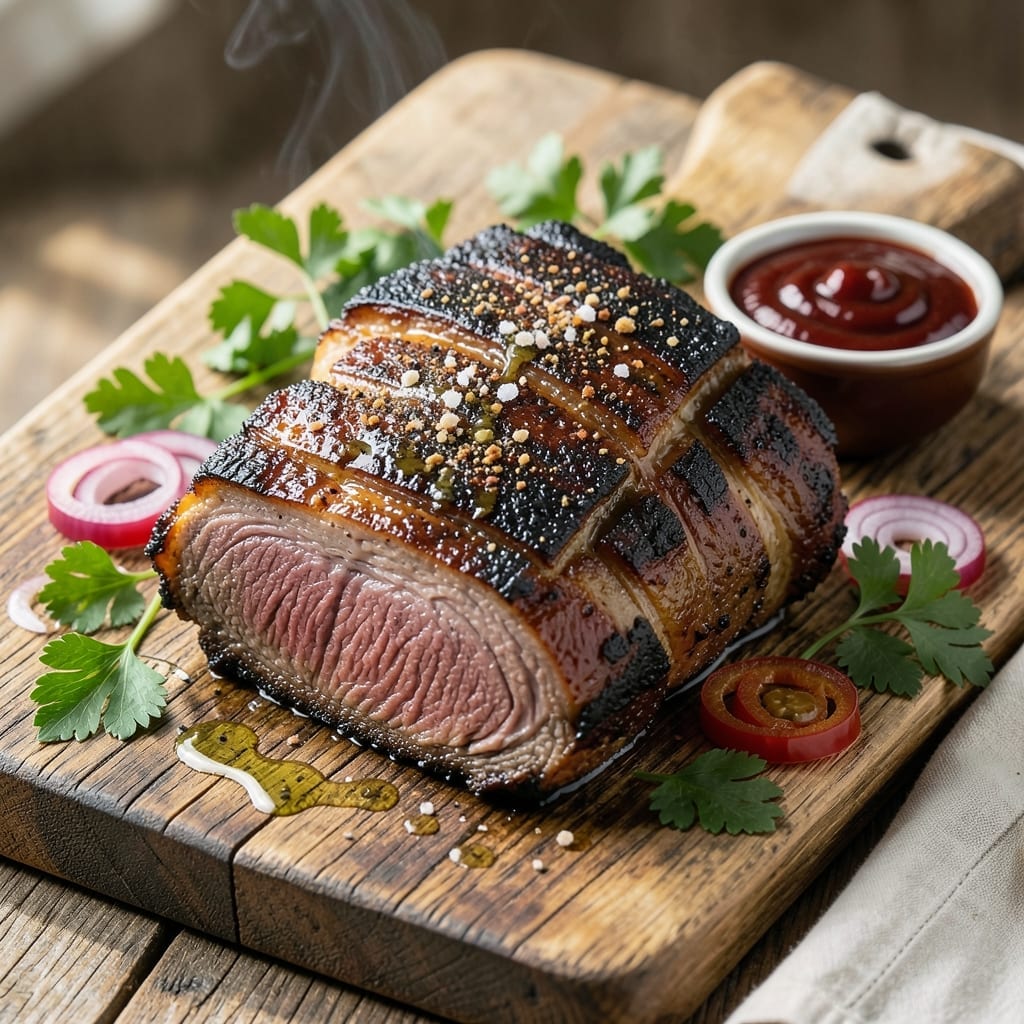
Mastering smoked beef brisket point requires patience and precision, but the reward is perfectly tender meat with a dark, flavorful bark. I’ve tested this method repeatedly to ensure consistent results in home kitchens everywhere.
The key lies in low-and-slow smoking, allowing the fat cap to render slowly while the seasoning forms a crust. This cut’s marbling ensures a juicy, melt-in-your-mouth texture that’s hard to beat.
With a well-maintained smoker and attention to temperature, you’ll achieve competition-level brisket right at home. The process is straightforward, but the details make all the difference.
This recipe transforms tough meat into a showstopping dish with rich, smoky depth. Let the smoke do the work, and the results will speak for themselves.
Ingredients for Bbq Beef Brisket Point Recipe Smoked
Quality beef and a bold dry rub create competition-level smoked brisket point at home.
| Ingredient | Amount | Notes |
|---|---|---|
| Beef Brisket Point 🥩 | 5 lb | Well-marbled, fat cap intact |
| Coarse Kosher Salt 🧂 | ¼ cup | Diamond Crystal preferred |
| Freshly Ground Black Pepper 🌶️ | ¼ cup | Coarse grind for bark |
| Garlic Powder 🧄 | 2 tbsp | Not garlic salt |
| Onion Powder 🧅 | 2 tbsp | Fine powder texture |
| Smoked Paprika 🌶️ | 2 tbsp | Deep color and flavor |
| Brown Sugar 🫙 | ¼ cup | Light or dark variety |
| Yellow Mustard 🟡 | ¼ cup | Binder for dry rub |
| Apple Cider Vinegar 🍏 | ¼ cup | For spritzing during smoke |
| Hickory Wood Chunks 🪵 | 4 pieces | Or oak/pecan for smoke |
| Beef Tallow 🧈 | ½ cup | Optional for wrapping |
| Butter 🧈 | ½ cup | Unsalted, for finishing |
The brisket point is non-negotiable here. Look for USDA Choice or higher with a thick, even fat cap—this is what renders down into that melty texture. Costco or a quality butcher are your best bets for consistent quality. The marbling should be visible throughout the meat, not just on the surface. If your butcher offers a full packer, ask them to separate the point for you. Avoid pre-trimmed cuts, as the fat cap is essential for moisture and bark formation.
No smoked paprika? Regular paprika plus a pinch of liquid smoke can substitute, though the flavor won’t be as deep. Brown sugar can be swapped for turbinado or coconut sugar in a pinch. Mustard haters can use olive oil or beef broth as a binder for the rub. The vinegar spritz is key for bark development—apple juice or water work too but lack the tang. For wood, cherry or mesquite add different but excellent profiles.
Store the raw brisket in the fridge for up to 3 days before smoking, or freeze for 6 months. Once smoked, rest at room temperature for 1 hour before slicing. Leftovers keep in the fridge for 5 days or freeze for 3 months. Always slice against the grain for optimal tenderness.
Why You’ll Love This Recipe
- Set and Forget: Honestly, I rub the brisket point with salt, pepper, garlic, and onion powder, then let the smoker do all the work for hours.
- Smoky Depth: That garlic and onion crust with the beef’s natural richness? Ridiculously good after a long smoke.
- Crowd Pleaser: I serve this at summer BBQs and it’s always the first thing to disappear—even my picky nephew asks for seconds.
- Leftovers Gold: Between us, the sandwiches I make with the leftovers might be better than the original meal.
Step-by-Step Instructions for BBQ Beef Brisket Point Smoked
Master the technique that delivers competition-level bark and a melty fat cap every time.
Step 1: Prepare and Season the Brisket Point
Begin by trimming the beef brisket point, leaving the fat cap intact at about ¼-inch thickness. I use a sharp knife to remove any hard fat or membrane while preserving the marbling that will render during the smoke.
Combine the coarse kosher salt, freshly ground black pepper, garlic powder, onion powder, smoked paprika, and brown sugar in a bowl. I apply the yellow mustard as a binder first, coating the entire surface of the brisket point, then press the dry rub mixture aggressively into the meat to create a thick, even layer. Let it rest at room temperature for 1 hour before smoking.
Step 2: Set Up the Smoker and Begin Cooking
Preheat your smoker to 225°F using the hickory wood chunks. I maintain this temperature precisely—fluctuations can affect the stall and overall cook time. Once the smoker is stable and producing thin blue smoke, place the brisket point fat-side up on the grill grates.
Smoke undisturbed for 4-5 hours until the bark begins to form and darken. I spritz with apple cider vinegar every 45-60 minutes after the first 2 hours to keep the surface moist and enhance the bark development. Watch for the color to deepen to a rich mahogany.
Step 3: Wrap and Power Through the Stall
When the internal temperature reaches 165-170°F, the brisket will stall as moisture evaporates. I wrap the brisket point tightly in pink butcher paper, adding the beef tallow if using, to push through this phase efficiently. This step preserves the bark while accelerating the cooking process.
Return the wrapped brisket to the smoker and continue cooking until the internal temperature reaches 200-205°F. Use a probe thermometer to check for tenderness—the probe should slide in like butter with minimal resistance. This typically takes another 4-6 hours, depending on the smoker’s consistency.
Step 4: Rest and Finish for Maximum Tenderness
Remove the brisket from the smoker and let it rest wrapped in a towel-lined cooler for at least 1 hour. This resting period allows the juices to redistribute and the collagen to fully break down, ensuring a tender, moist result.
For serving, I combine the butter with a bit of the rendered beef tallow and brush it over the sliced brisket. This final touch adds a glossy finish and an extra layer of richness. Slice against the grain and serve immediately for the best texture and flavor.
Pro Tips For Making Bbq Beef Brisket Point Recipe Smoked
- Low and Slow Wins: Smoke the brisket point at 225°F—no higher, no lower—and plan for 1.5 to 2 hours per pound. I learned this the hard way after rushing a batch at 250°F and ending up with dry, tough meat.
- Salt Overnight: Coat the brisket point with coarse kosher salt the night before smoking; it penetrates deep and seasons evenly. Sounds weird, but it works—your bark will thank you.
- Skip the Over-Trimming: Leave a thin layer of fat (about 1/4 inch) on the brisket point to keep it moist during the long smoke. After burning a few batches, I finally figured out that trimming too much ruins the texture.
- Rest Under Foil: Once it hits 203°F internally, pull it off, wrap it in foil, and let it rest for at least an hour. This isn’t the prettiest method, but it’s the tastiest—every slice stays juicy.
Health Benefits of This Dish
Rich Protein Source
This dish delivers a powerful protein punch with about 50 grams per 6-ounce serving. Protein is essential for muscle repair and growth, making this perfect for active lifestyles or anyone looking to maintain energy throughout the day. 💪
Iron and Zinc Boost
Beef brisket is packed with heme iron and zinc, nutrients that support immune function and metabolism. A single serving provides about 25% of your daily iron needs, helping combat fatigue and keep energy levels steady.
B Vitamins Abundance
You’ll get a full spectrum of B vitamins, including B12, B6, and niacin, which are crucial for brain function and energy production. These vitamins work together to convert food into fuel, keeping you sharp and focused.
Healthy Fats for Energy
The marbling in brisket point contains monounsaturated fats that provide sustained energy. While it’s higher in fat, these fats are heart-healthy when enjoyed in moderation, supporting cell growth and hormone production.
Collagen for Joints
Slow-cooked brisket breaks down collagen into gelatin, which supports joint health and skin elasticity. This natural process enhances the meat’s tenderness while providing a bonus nutritional benefit to your meal.
Minimal Additives
With just a simple dry rub of salt, pepper, and spices, this recipe avoids processed ingredients. It’s a cleaner way to enjoy rich, smoky flavors without hidden additives or preservatives. 🍽️
Nutrition Facts
Frequently Asked Questions
How long should I rest the brisket after smoking?
Rest it wrapped in a towel-lined cooler for at least 1 hour. This step is crucial for redistributing juices and ensuring maximum tenderness. Don’t skip it—you’ll lose moisture and flavor.
Can I use a different type of wood for smoking?
While hickory is classic, oak or pecan add excellent profiles. Cherry wood offers a sweeter, milder smoke, while mesquite brings bold intensity. Just avoid softwoods like pine.
Why did my bark turn out too dark or bitter?
This usually happens with too much direct heat or fluctuating temperatures. Maintain a steady 225°F and use thin blue smoke. Spritzing with apple cider vinegar helps balance the bark’s development.
Do I need to trim all the fat before smoking?
Leave about ¼-inch of the fat cap to render during cooking. Trim only hard fat or membrane—the marbling is key for flavor and moisture. Too much trimming can dry out the meat.

- BBQ Sausage Recipe Oven: Smoky Depth Without the Grill - September 28, 2026
- BBQ Chicken Bowl Recipe Rice: Smoky Sweetness Over Fluffy Grains - September 28, 2026
- Beef Cutlet Recipe Ideas: Crispy Breaded Patties With Bold Seasonings - September 28, 2026