
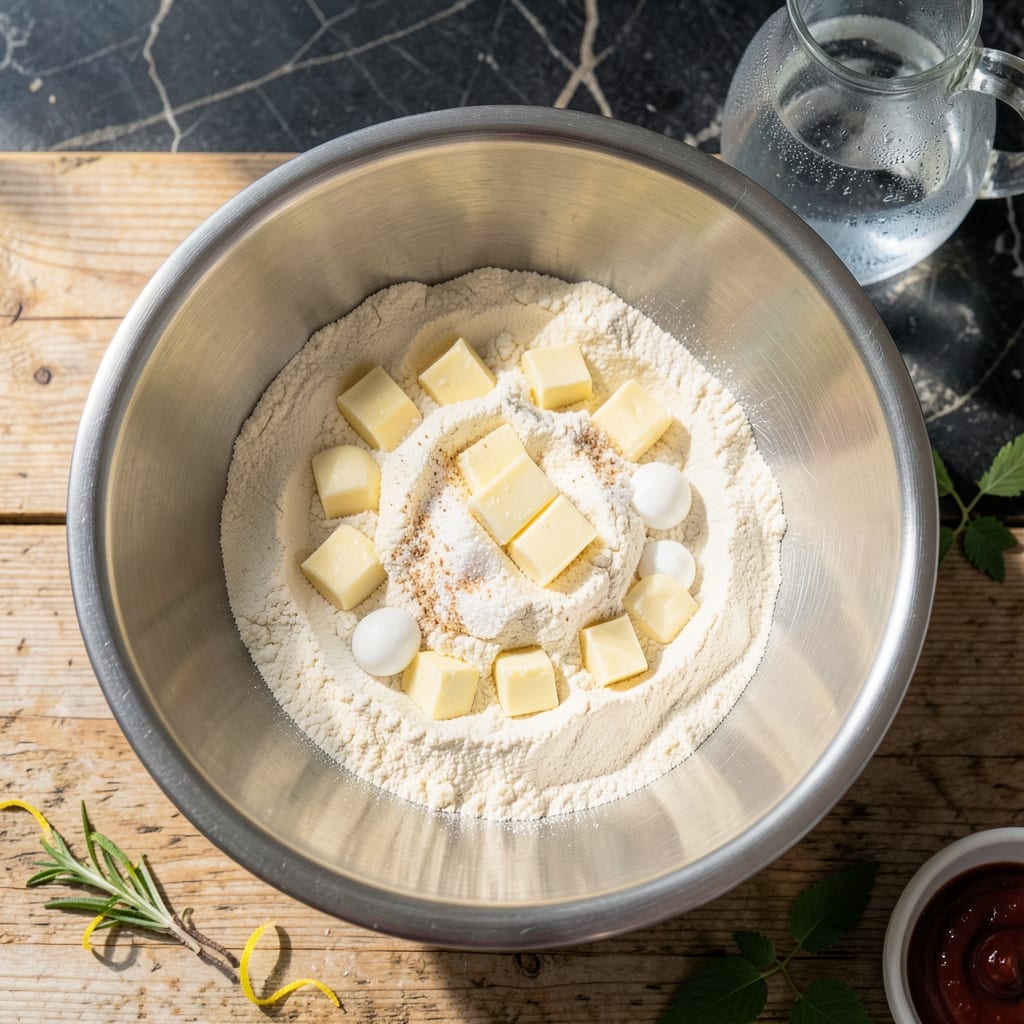
Achieving flaky pie crust at home is simpler than you think with this trusted approach. The secret lies in cold ingredients and minimal handling to prevent gluten development.
I’ve refined this method over years of testing, ensuring consistent results every time. The dough comes together quickly with basic pantry staples, and chilling it before rolling guarantees those coveted layers.
What you’ll get is a golden, tender crust that holds its shape and delivers that satisfying crunch with every bite. It’s the foundation for any great pie, whether sweet or savory.
No special equipment needed—just a bowl, a rolling pin, and a little patience. Here’s how to make it perfectly.
Ingredients for Pie Crust Recipe Betty Crocker
Basic pantry items plus cold butter and shortening. That’s all you need for perfect layers.
| Ingredient | Amount | Notes |
|---|---|---|
| All-Purpose Flour 🌾 | 2 ½ cups | Spoon and level, don't scoop |
| Salt 🧂 | 1 tsp | Fine table salt preferred |
| Granulated Sugar 🍚 | 1 tbsp | Optional for sweet pies |
| Unsalted Butter 🧈 | 1 cup | Ice cold, cubed into 1/2-inch pieces |
| Vegetable Shortening 🫒 | ¼ cup | Cold, for extra flakiness |
| Ice Water 💧 | ⅓ cup | Plus 1 tbsp as needed |
| White Vinegar 🍋 | 1 tbsp | Helps tenderize the dough |
The butter and shortening need to stay cold—keep them in the fridge until the very last minute. I always use Land O’Lakes for butter and Crisco for shortening (the all-vegetable kind). Flour matters too: King Arthur or Gold Medal give the most consistent results. Don’t use self-rising flour—it has leavening agents that’ll mess with the texture.
No vinegar? Lemon juice works just as well. Short on butter? Use all shortening, but the flavor won’t be as rich. If you’re making a sweet pie, the sugar is worth including—skip it for savory crusts. The water amount can vary depending on humidity, so add it slowly. And yes, ice cold water is non-negotiable (warm water = tough crust).
The dough can rest in the fridge for up to 2 days, or freeze it for 3 months. Wrap it tightly in plastic—double layer if freezing. Let it sit at room temp for 10 minutes before rolling (don’t skip this, or it’ll crack).
Why You’ll Love This Recipe
- No-Fuss Mixing: I just dump the flour, salt, sugar, butter, and shortening in a bowl—no fancy techniques, and it comes together in minutes.
- Buttery & Flaky: The combo of cold butter and shortening gives that perfect tender crunch in every bite.
- Freezer Friendly: I make a double batch and freeze half for spontaneous pie nights later.
- Pantry Staples: All-purpose flour, sugar, and butter are things I always have, so this is my last-minute dessert lifesaver.
Step-by-Step Instructions for Flaky Pie Crust
This method guarantees tender, layered results with minimal effort and maximum flake.
Step 1: Combine Dry Ingredients
In a large bowl, whisk together the 2.5 cups All-Purpose Flour, 1 tsp Salt, and 1 tbsp Granulated Sugar. I always spoon and level my flour to avoid compacting it, which would make the crust tough.
The sugar adds a subtle sweetness that works for both sweet and savory pies. Make sure the salt is fine table salt so it distributes evenly throughout the flour mixture. This dry blend creates the foundation for your flaky layers.
Step 2: Cut in Cold Fats
Add the 1 cup Unsalted Butter (cubed into ½-inch pieces) and 0.25 cup Vegetable Shortening to the flour mixture. The butter should be ice cold—this is non-negotiable for flaky results. I like to freeze my butter for 10 minutes before cubing if my kitchen is warm.
Using a pastry cutter or your fingers, work the fats into the flour until the mixture resembles coarse crumbs with some pea-sized pieces remaining. Don’t overwork it—the visible fat pieces create those beautiful flaky layers. The shortening adds extra flakiness while the butter provides flavor.
Step 3: Add Wet Ingredients Gradually
Create a well in the center of the mixture. In a small bowl, combine the 0.33 cup Ice Water and 1 tbsp White Vinegar. The vinegar tenderizes the dough by interfering with gluten development, while the ice water keeps everything cold.
Add the liquid mixture 1 tablespoon at a time, gently mixing with a fork until the dough just comes together. You might not need all the liquid—stop as soon as the dough holds when pressed. It should look shaggy, not smooth. Overmixing develops gluten, which makes crust tough instead of tender.
Step 4: Chill and Rest the Dough
Divide the dough into two equal portions and shape each into a disc about 1 inch thick. Wrap tightly in plastic wrap and refrigerate for at least 1 hour (or up to 2 days). This resting period allows the flour to fully hydrate and the fats to firm up.
I often make my dough the night before. The cold rest also relaxes the gluten, making the dough easier to roll out later. If you’re in a hurry, you can freeze the wrapped dough for 20 minutes, but don’t skip the chilling step entirely—it’s crucial for that flaky texture.
When ready to use, let the dough sit at room temperature for 10-15 minutes to soften slightly before rolling. This prevents cracking and makes it more pliable. Roll from the center outward, turning the dough occasionally to maintain an even thickness.
Pro Tips For Making Pie Crust Recipe Betty Crocker
- Chill the Dough: I learned this the hard way—let the dough rest in the fridge for at least 30 minutes before rolling. It keeps the butter and shortening firm so your crust stays flaky instead of tough.
- Use Ice Water: Sounds weird, but it works: swap regular water for ice-cold water when mixing. It prevents the fat from melting prematurely, which guarantees a crisp, layered crust.
- Skip the Overworking: Resist the urge to knead or handle the dough too much. Just mix until it barely comes together—overworking it makes the crust dense, not delicate.
- Freeze the Fat: Cut the butter and shortening into small cubes and freeze for 10 minutes before mixing. This keeps them solid longer, so your crust bakes up light and airy.
Flavor Customization for This Recipe
Sweet Enhancements
For fruit pies, add 1 tbsp vanilla extract to your ice water mixture for a subtle warmth that complements apples or berries. I also love brushing the rolled crust with 1 egg white beaten with 1 tsp water for extra shine and browning. 💛
Savory Twists
Omit the sugar and add 1 tsp dried herbs like thyme or rosemary directly to the flour. For cheese lovers, fold in ½ cup grated Parmesan after cutting in the fats. This creates a rich, flavorful base for quiches or pot pies.
Spiced Variations
Stir 1 tsp cinnamon or ½ tsp nutmeg into the dry ingredients for pumpkin or pecan pies. A pinch of cardamom adds warmth. These spices enhance the filling while adding depth to the crust itself.
Citrus Zest
Add 1 tsp lemon or orange zest to the flour for a bright, aromatic note. This pairs beautifully with cream pies or citrus-based fillings. The zest adds freshness without overpowering the buttery flavor.
I always use a microplane for fine zest that distributes evenly.
Nutty Crunch
Replace ¼ cup flour with finely ground almonds or hazelnuts for texture and nutty flavor. Toast the nuts first at 350°F for 8 minutes to enhance their aroma. This works especially well for nut-filled desserts.
Nutrition Facts
Frequently Asked Questions
Why use both butter and shortening?
Butter adds rich flavor while shortening creates extra flakiness. The combo gives you the best of both textures.
Can I make this ahead of time?
Yes! The dough keeps in the fridge for 2 days or freezer for 3 months. Always wrap tightly in plastic.
What if my dough cracks when rolling?
Let it warm at room temperature for 10-15 minutes first. If it still cracks, press edges together and re-roll.
How do I prevent a soggy bottom crust?
Blind bake at 375°F for 10 minutes before adding filling. This creates a moisture barrier.

- BBQ Chicken Bowl Recipe Rice: Smoky Sweetness Over Fluffy Grains - September 28, 2026
- Beef Cutlet Recipe Ideas: Crispy Breaded Patties With Bold Seasonings - September 28, 2026
- Bluefin Tuna Recipe Ideas: Sushi-Grade Seared and Sesame-Crusted - September 28, 2026