
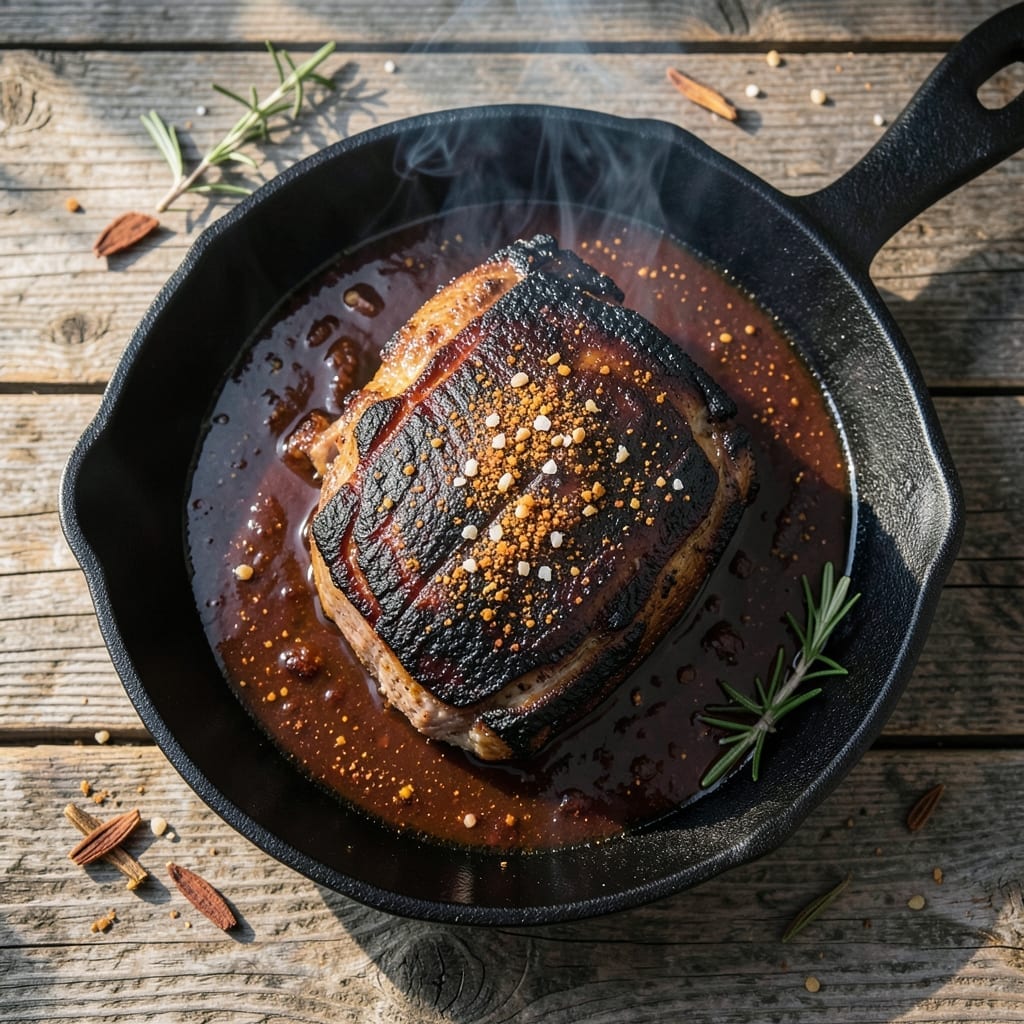
Smoker BBQ transforms tough chuck roast into fall-off-the-bone perfection with the right technique. I developed this method after years of testing to achieve consistent results at home.
The key lies in low and slow cooking, allowing the connective tissue to break down completely. A simple dry rub and proper smoke management create layers of deep, smoky flavor without overpowering the beef.
What emerges after hours in the smoker is meat so tender it pulls apart with fork pressure. The bark develops a rich mahogany color while the interior stays moist and juicy.
Serve with classic BBQ sides for a meal that rivals any pitmaster’s work. This recipe delivers restaurant-quality results in your own backyard.
Ingredients for Bbq Chuck Roast Recipe Smoker
Simple rub, quality beef, and patience create this smoky, fall-apart masterpiece in your own backyard.
| Ingredient | Amount | Notes |
|---|---|---|
| Chuck Roast 🥩 | 3 lb | Well-marbled, trimmed of excess fat |
| Coarse Kosher Salt 🧂 | 2 tbsp | Diamond Crystal preferred for consistency |
| Freshly Ground Black Pepper 🌶️ | 2 tbsp | Coarse grind for bark texture |
| Paprika 🌶️ | 1 tbsp | Sweet or smoked for depth |
| Garlic Powder 🧄 | 1 tbsp | Not garlic salt for pure flavor |
| Onion Powder 🧅 | 1 tbsp | Granulated for even distribution |
| Brown Sugar 💧 | ¼ cup | Light or dark for bark caramelization |
| Yellow Mustard 🟡 | ¼ cup | Binder for dry rub adhesion |
| Apple Cider Vinegar 🍏 | ¼ cup | For spritzing during smoke |
| Hickory Wood Chunks 🪵 | 4 pieces | Soaked 1 hour prior to use |
| Beef Broth 🥩 | 1 cup | Low-sodium for controlled seasoning |
| Unsalted Butter 🧈 | ½ cup | For finishing and moisture |
The chuck roast is non-negotiable for this method. Look for USDA Choice grade with abundant marbling—this fat renders down during the long cook, creating the moisture and flavor that defines great BBQ. Most butchers will cube it for you if requested, but a whole roast allows you to control the size and fat content. Costco often carries high-quality chuck at excellent prices for larger cuts.
No hickory? Pecan or oak wood chunks deliver excellent results with a slightly different flavor profile. Brown sugar can be substituted with turbinado for a coarser texture, and apple juice works as a spritz alternative in a pinch. The mustard binder is optional but highly recommended—it helps the rub form that coveted bark. Avoid pre-ground black pepper; fresh grinding is essential for optimal bark development.
The cooked roast can rest at room temperature for 1 hour before serving, allowing the juices to redistribute. Leftovers keep in the refrigerator for 4-5 days or can be frozen for 3 months. Reheat gently in the smoker or oven with a splash of broth to maintain moisture.
Why You’ll Love This Recipe
- Set and Forget: I toss the chuck roast in the smoker with just salt, pepper, paprika, and garlic powder—then walk away for hours.
- Smoky, Spiced Perfection: That paprika and garlic crust with the slow-smoked beef? Ridiculously good.
- Feeds a Hungry Crew: One roast makes enough for tacos, sandwiches, and leftovers for days.
- Budget-Friendly Luxury: A tough cut turns into melt-in-your-mouth BBQ for way less than brisket.
Step-by-Step Instructions for BBQ Chuck Roast Smoker
Master the technique for tender, smoky chuck roast with a flavorful bark every time.
Step 1: Prepare and Season the Chuck Roast
Begin by patting the 3 lb Chuck Roast completely dry with paper towels. This ensures the dry rub adheres properly and creates a perfect bark. In a small bowl, combine the 2 tbsp Coarse Kosher Salt, 2 tbsp Freshly Ground Black Pepper, 1 tbsp Paprika, 1 tbsp Garlic Powder, 1 tbsp Onion Powder, and 0.25 cup Brown Sugar.
Brush the roast with 0.25 cup Yellow Mustard to act as a binder for the rub. Evenly coat all sides of the meat with the spice mixture, pressing firmly to help it stick. Let the seasoned roast sit at room temperature for 30-45 minutes while you prepare the smoker.
Step 2: Set Up the Smoker with Hickory Wood
Soak the 4 pieces Hickory Wood Chunks in water for at least 1 hour prior to use. This prevents them from burning too quickly and ensures consistent smoke. Preheat your smoker to 225-250°F using indirect heat.
Once the smoker reaches the desired temperature and you see thin blue smoke (not thick white smoke), add the soaked hickory chunks directly to the coals or smoker box. Place a water pan in the smoker to maintain humidity during the long cook. The ideal environment is now ready for the chuck roast.
Step 3: Smoke the Chuck Roast to Perfection
Place the seasoned chuck roast directly on the smoker grates, fat-side up. Insert a meat thermometer into the thickest part of the roast, avoiding the fat cap. Smoke undisturbed for 4-5 hours, maintaining a steady temperature of 225-250°F.
Every 45-60 minutes, spritz the roast with 0.25 cup Apple Cider Vinegar to keep the surface moist and enhance bark formation. You’ll notice the bark darkening and the internal temperature rising steadily toward the target range.
Step 4: Wrap and Continue Cooking
When the internal temperature reaches 165-170°F, you’ll hit the stall as moisture evaporates from the surface. At this point, transfer the chuck roast to a large sheet of butcher paper or aluminum foil. Pour 1 cup Beef Broth over the roast and add 0.5 cup Unsalted Butter for extra richness.
Wrap the roast tightly and return it to the smoker. Continue cooking until the internal temperature reaches 200-205°F and a probe slides in like butter. This wrapping step helps power through the stall while maintaining moisture.
Step 5: Rest and Serve
Once the chuck roast reaches the desired tenderness, carefully remove it from the smoker and transfer to a cutting board or warm cooler. Tent loosely with a towel and let it rest for 1-2 hours—this allows the juices to redistribute throughout the meat.
Unwrap the roast and slice or pull the meat apart. The result should be incredibly tender with a rich, smoky flavor and a beautiful dark bark. Serve immediately with your favorite BBQ sides to enjoy the fruits of your low-and-slow smoking technique.
Pro Tips For Making Bbq Chuck Roast Recipe Smoker
- Dry the Roast First: Pat the chuck roast completely dry with paper towels before seasoning—this guarantees the rub sticks and forms a proper bark in the smoker.
- Low and Slow Wins: Keep your smoker between 225-250°F and plan for 1.5-2 hours per pound; I learned this the hard way after pulling tough meat at higher temps.
- Don’t Rush the Rest: Let the roast rest wrapped in foil for at least 30-45 minutes after smoking—skipping this step means all the juices will end up on the cutting board.
- Double the Rub: Use more seasoning than you think, especially with coarse salt and paprika; the bold crust is what makes this dish memorable.
Health Benefits of This Recipe
Rich in Protein
This dish delivers high-quality protein essential for muscle repair and growth. A 4-ounce serving provides about 28 grams of protein, supporting your body’s daily needs without excessive saturated fat. Perfect for active lifestyles and growing families. 💪
Iron and Zinc Boost
Beef is naturally rich in heme iron and zinc, nutrients crucial for energy production and immune function. The long cooking process doesn’t diminish these minerals, making this a reliable source of these vital micronutrients.
B Vitamins Abundance
You’ll find an impressive array of B vitamins in this meal, including B12, B6, and niacin. These support metabolism, brain function, and red blood cell production. One serving covers a significant portion of your daily B vitamin requirements.
Collagen Benefits
The slow cooking breaks down connective tissue into gelatin, which supports joint health and digestion. This natural process transforms tough cuts into tender, nutrient-rich meat that’s easier to digest and absorb. 🥩
Low-Carb Friendly
With no added starches, this creation fits perfectly into low-carb or keto lifestyles. The minimal sugar in the rub is mostly caramelized during cooking, leaving you with a flavorful dish that won’t spike blood sugar.
Healthy Fats
The marbling in chuck roast provides monounsaturated fats that support heart health. While moderation is key, these fats help your body absorb fat-soluble vitamins from other foods in your meal.
Nutrition Facts
Frequently Asked Questions
What’s the ideal smoking temperature?
Maintain a steady 225-250°F throughout the cook. Any higher risks drying out the meat before it becomes tender. Use a reliable thermometer to monitor both smoker and meat temperatures.
How do I know when it’s done?
It’s ready when the internal temperature hits 200-205°F and a probe slides in with no resistance. The bark should be dark mahogany, and the meat should pull apart easily with a fork.
Can I skip the wrapping step?
You can, but wrapping helps power through the stall and keeps the meat moist. Without it, the cook may take 1-2 hours longer, and the exterior can dry out.
What if my smoker runs hot?
If the temperature spikes above 275°F, open the vents slightly or add a water pan to stabilize. Fluctuations are normal, but consistent heat is key for even cooking.

- Bread Recipe For Bread Machine: Hands-Off Artisan Loaf With Perfect Rise - September 30, 2026
- BBQ Chicken Drumsticks Recipe Air Fryer: Smoky Char in Half the Time - September 30, 2026
- Korean BBQ Sauce Recipe Homemade: Sweet and Spicy Umami Glaze - September 30, 2026