
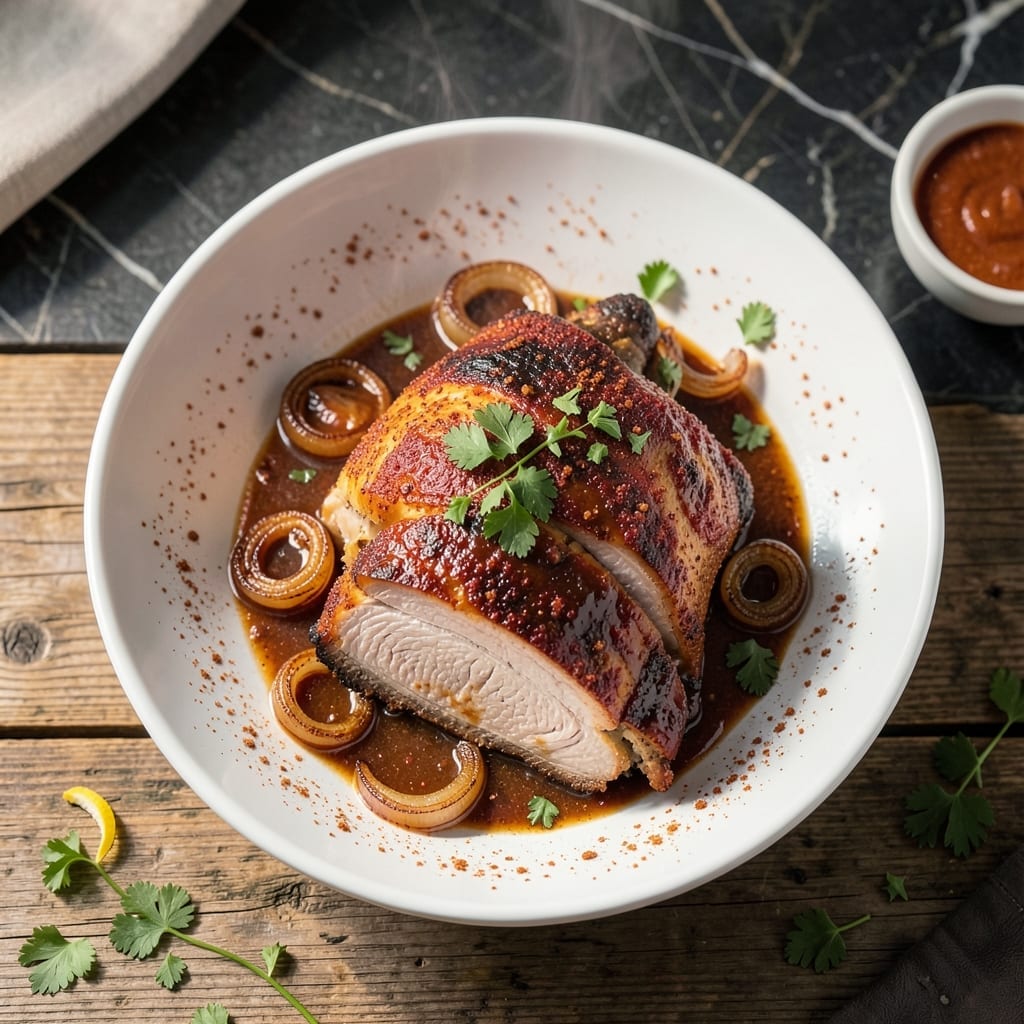
Slow-roasting transforms tough pork shoulder into tender, fall-apart meat with deep smoky flavor. I perfected this method after one too many dry results from rushed cooking.
The oven does most of the work here, breaking down connective tissue over 6-8 hours at a low temperature. A simple dry rub and occasional basting with tangy barbecue sauce build layers of taste.
What emerges is juicy, flavorful pork with a caramelized crust that pulls apart with minimal effort. The meat absorbs the smoky sauce while staying moist throughout the long cook.
This technique delivers consistent results every time, with minimal active effort required. The waiting is the hardest part, but the payoff is worth it.
Ingredients for Bbq Pork Shoulder Recipe Oven
Transform tough pork shoulder into fall-apart tender meat with these essential ingredients.
| Ingredient | Amount | Notes |
|---|---|---|
| Pork Shoulder 🥩 | 4 lb | Bone-in, skin-on preferred |
| Brown Sugar 🧂 | ½ cup | Light or dark variety |
| Paprika 🌶️ | 2 tbsp | Smoked paprika preferred |
| Garlic Powder 🧄 | 1 tbsp | Freshly ground if possible |
| Onion Powder 🧅 | 1 tbsp | Fine ground texture |
| Kosher Salt 🧂 | 2 tbsp | Diamond Crystal preferred |
| Black Pepper 🌶️ | 2 tsp | Freshly ground coarse |
| Cayenne Pepper 🔥 | ½ tsp | Adjust for heat preference |
| Barbecue Sauce 🍯 | 2 cups | Thick, tangy variety |
| Apple Cider Vinegar 🍏 | ¼ cup | For basting liquid |
| Olive Oil 🫒 | 2 tbsp | For rubbing dry mix |
| Yellow Mustard 🟡 | 2 tbsp | For binder in rub |
The pork shoulder is critical here. Bone-in, skin-on yields the juiciest results with that coveted caramelized crust. Costco and Sam’s Club offer excellent bulk options at reasonable prices. Look for good marbling throughout the cut—this fat renders down during the long cook, basting the meat from within. Avoid pre-cut pieces; a whole shoulder allows for more even cooking and better bark formation.
No smoked paprika? Regular paprika plus a pinch of liquid smoke approximates the flavor. Brown sugar can be swapped for coconut sugar or maple syrup in the rub, though the texture will differ slightly. Stubb’s or Sweet Baby Ray’s barbecue sauces work well for basting. If you’re out of apple cider vinegar, white vinegar in a pinch works, but the flavor profile will be sharper. The dry rub can be made ahead—store in an airtight container for up to 1 month.
The pork can be dry-rubbed and refrigerated overnight for deeper flavor penetration. Once cooked, shredded pork keeps in the fridge for 4-5 days or can be frozen for 3 months. Reheat gently with additional barbecue sauce to maintain moisture. Always bring refrigerated meat to room temperature before beginning the slow-roast process.
Why You’ll Love This Recipe
- Set and Forget: I rub the pork shoulder with brown sugar and spices, pop it in the oven, and let it do its thing for hours—no babysitting required.
- Smoky Sweet Crust: The mix of paprika and brown sugar creates this sticky, caramelized bark that’s honestly the best part.
- Feeds a Crowd: One shoulder gives me enough for tacos, sandwiches, and a freezer stash for later.
- Budget Hero: Pork shoulder is cheap, and this recipe turns it into something that tastes like a weekend splurge.
Step-by-Step Instructions for BBQ Pork Shoulder Oven
This method ensures fall-apart tenderness with a caramelized crust every time.
Step 1: Prepare the Dry Rub Mixture
In a medium bowl, combine the 0.5 cup Brown Sugar, 2 tbsp Paprika, 1 tbsp Garlic Powder, 1 tbsp Onion Powder, 2 tbsp Kosher Salt, 2 tsp Black Pepper, and 0.5 tsp Cayenne Pepper. Whisk until evenly distributed and the mixture appears uniform in color.
The sugar will help create a sticky surface for the barbecue sauce to cling to, while the spices build layers of smoky, savory depth. I always use smoked paprika here—it’s the closest you’ll get to authentic pit-smoked flavor in an oven.
This dry rub makes more than you’ll need, but the extra keeps well in an airtight container for up to 3 months. Don’t be tempted to reduce the quantities—the bold seasoning is what makes this dish sing.
Step 2: Season and Sear the Pork Shoulder
Pat the 4 lb Pork Shoulder dry with paper towels to ensure the rub adheres properly. Rub the meat all over with the 2 tbsp Yellow Mustard—this acts as a binder and adds a subtle tang that balances the sweetness of the rub.
Massage the dry rub mixture generously over every surface of the pork, pressing it into the meat so it forms a thick crust. The piece should be completely coated with no bare spots visible. Let it sit at room temperature for 30 minutes while you preheat the oven.
Heat the 2 tbsp Olive Oil in a large Dutch oven over medium-high heat. Sear the pork shoulder on all sides for 3-4 minutes per side until deeply browned. You’re not cooking it through here—just building a flavorful fond in the pot.
Step 3: Slow-Roast Until Fork-Tender
Preheat your oven to 300°F. After searing, add 0.25 cup Apple Cider Vinegar to the Dutch oven, scraping up any browned bits from the bottom. These bits contain concentrated flavor that will infuse into the meat as it cooks.
Cover the Dutch oven tightly with its lid and transfer it to the preheated oven. Roast for 4-5 hours until the pork is fork-tender and the internal temperature reaches 195-200°F. At this temperature, the collagen in the shoulder breaks down into gelatin, creating that signature pull-apart texture.
Resist the urge to check on it too often—every time you open the oven, you lose valuable heat and extend the cooking time. The pork is done when a fork inserted into the thickest part twists easily with no resistance.
Step 4: Shred and Sauce the Pork
Carefully transfer the pork to a large cutting board or serving dish. Using two forks, shred the meat into chunks, discarding any large pieces of fat or connective tissue. The meat should come apart with minimal effort.
Skimming excess fat from the cooking liquid in the Dutch oven, then pour about 1 cup of the liquid over the shredded pork to keep it moist. Add 2 cups Barbecue Sauce and toss everything together until evenly coated. The pork should glisten with sauce but not be swimming in it.
Let the pork rest for 10-15 minutes before serving to allow the flavors to meld together. This resting period also gives the sauce time to be absorbed slightly, ensuring every bite is packed with flavor.
Pro Tips For Making Bbq Pork Shoulder Recipe Oven
- Start Low, Finish Hot: I learned this the hard way—begin at 275°F for 4-5 hours to break down the connective tissue, then crank it to 325°F the last hour to get that sticky, caramelized crust on the brown sugar rub.
- Score the Fat Cap: Sounds weird, but it works: slice 1/4-inch deep crosshatches into the fat cap before seasoning so the paprika and spices penetrate deeper and the fat renders out evenly.
- Skip the Water Pan: After burning three batches with soggy bark, I finally figured out that pork shoulder in the oven doesn’t need a water pan—just a tight foil cover for the first half of cooking keeps it moist without steaming the crust.
- Rest Under Foil: Give it a solid 30 minutes under loose foil after pulling it from the oven—this lets the juices redistribute so they don’t all spill out when you shred it, and the meat stays juicy.
Flavor Customization for These Flavors
Spice Level Adjustments
For mild heat, reduce the cayenne pepper to ¼ tsp or omit it entirely. I often do this when serving to Emma and Jack. David, my official taste-tester, prefers the full ½ tsp for that extra kick. 🌶️
Sweet and Tangy
Swap brown sugar for maple syrup in the rub for a deeper sweetness. Add 1 tbsp molasses to your barbecue sauce for a richer, more complex flavor. This reminds me of Nana Mae’s secret touch back in Atlanta.
Smoky Depth
Use chipotle powder instead of regular paprika for a smokier profile. I also like adding 1 tsp liquid smoke to the basting liquid. This brings the dish closer to traditional pit-smoked flavor, even in the oven.
Herb-Infused Rub
Add 1 tbsp dried thyme or rosemary to the dry rub for an earthy note. Fresh herbs work too—just double the amount. This is a trick I picked up working in Asheville’s farm-to-table scene.
Extra Tang
Increase the apple cider vinegar to ½ cup for a sharper tang. Mix in 1 tbsp lemon juice to brighten the flavors. David swears this balances the richness perfectly. 💛
Crispy Bark
For a crunchier crust, broil the pork for 3-5 minutes after slow-roasting. Watch it closely to avoid burning. I learned this the hard way—once overcharred a batch trying to get it just right!
Nutrition Facts
Frequently Asked Questions
What temperature should the oven be set to?
Set your oven to 300°F for the slow-roast. This low heat breaks down the collagen over 4-5 hours without drying out the meat.
Can I use a bone-in or boneless cut?
Both work, but bone-in adds more flavor and helps keep the meat moist. Boneless cooks slightly faster but may dry out more easily.
How do I know when it’s done?
Check for fork-tenderness and an internal temp of 195-200°F. The meat should pull apart with minimal effort when fully cooked.
Should I cover it while cooking?
Yes, keep it tightly covered with a lid or foil during roasting. This traps steam, ensuring tender, juicy results.

- BBQ Sausage Recipe Oven: Smoky Depth Without the Grill - September 28, 2026
- BBQ Chicken Bowl Recipe Rice: Smoky Sweetness Over Fluffy Grains - September 28, 2026
- Beef Cutlet Recipe Ideas: Crispy Breaded Patties With Bold Seasonings - September 28, 2026