
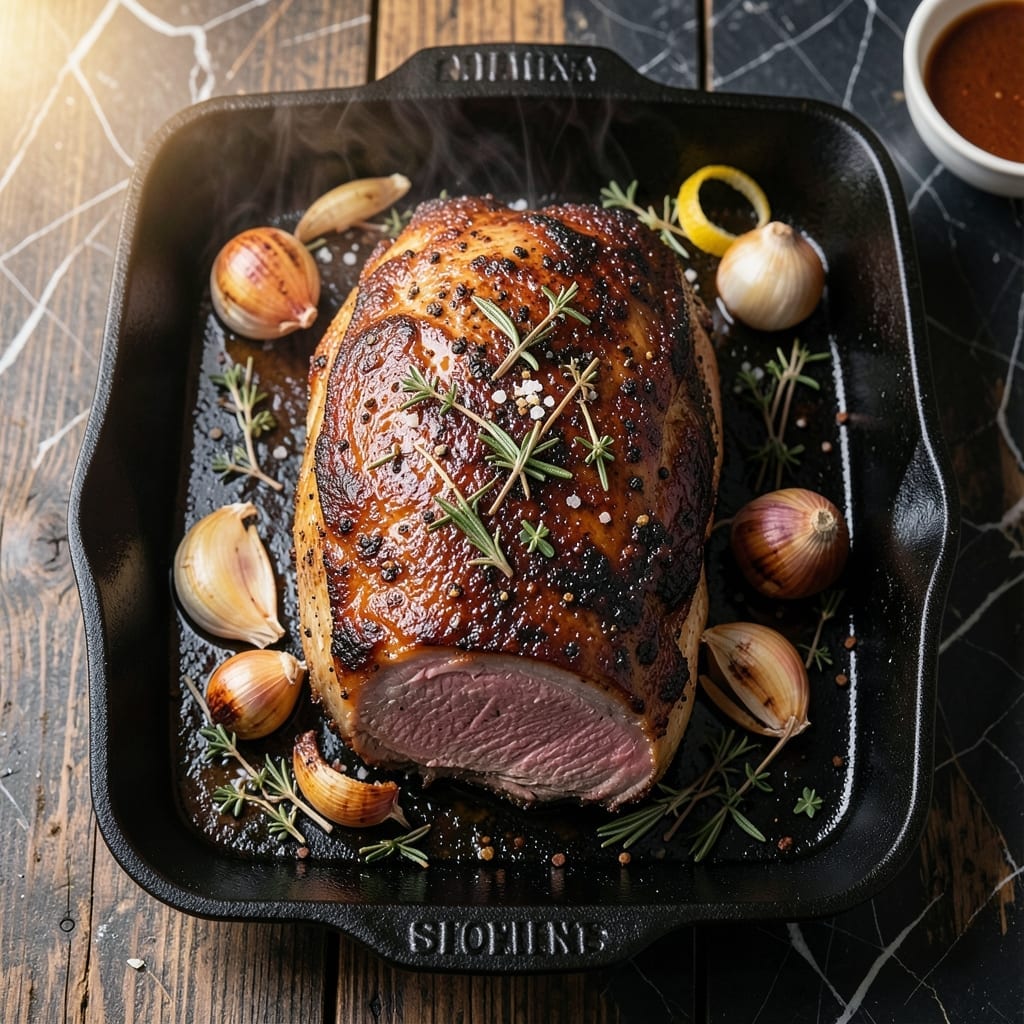
I remember the first time I attempted prime rib—it was a disaster. That experience taught me the value of precision, especially with a cut this special.
This method delivers a smoky crust and medium-rare precision without a grill. The oven does the heavy lifting while you focus on the details that matter.
With a few key techniques, you’ll achieve tender, juicy meat every time. The secret lies in low-and-slow cooking followed by a high-heat finish.
Perfect for Sunday dinners or holiday gatherings, this dish impresses without the stress. Here’s how to get it right.
Ingredients for Bbq Prime Rib Recipe Oven
Prime rib deserves premium ingredients. This list delivers the foundation for that perfect smoky crust.
| Ingredient | Amount | Notes |
|---|---|---|
| Prime Rib Roast 🥩 | 4 lb | Bone-in, well-marbled preferred |
| Kosher Salt 🧂 | 2 tbsp | Diamond Crystal or Morton |
| Coarse Black Pepper 🌶️ | 1 tbsp | Freshly cracked for best flavor |
| Garlic Cloves 🧄 | 6 cloves | Minced into paste consistency |
| Smoked Paprika 🌶️ | 1 tbsp | For authentic BBQ flavor |
| Dried Thyme 🍃 | 1 tsp | Rubbed between fingers to release oils |
| Dried Rosemary 🍃 | 1 tsp | Crushed before applying |
| Olive Oil 🫒 | 2 tbsp | For searing and moisture |
| Worcestershire Sauce 💧 | 2 tbsp | Adds depth to crust |
| Beef Broth 🍲 | 1 cup | Low-sodium preferred |
| Unsalted Butter 🧈 | 2 tbsp | For basting finish |
| Fresh Horseradish 🌿 | ¼ cup | Grated, for serving |
The prime rib itself is non-negotiable—look for USDA Prime or Choice grade with abundant marbling. Costco or a trusted butcher like Whole Foods are my go-tos. Bone-in roasts cook more evenly and add flavor, but boneless works in a pinch (just adjust cooking time). Ask for the ribeye cap to stay attached—it’s the most tender part. For the spices, Penzeys carries exceptional smoked paprika that makes a noticeable difference.
Swapping spices? Chipoltle powder adds heat if you want a spicier crust. No Worcestershire? Soy sauce plus a splash of vinegar mimics the umami. Fresh herbs can replace dried at triple the amount, but dried concentrates flavor better for crusts. For the butter baste, ghee works too and has a higher smoke point. If you can’t find horseradish fresh, prepared from a jar is acceptable (just drain well).
Prime rib needs to rest 30-45 minutes before carving—this redistributes juices. Leftovers? Wrap tightly, they’ll keep 4-5 days refrigerated. For longer storage, slice before freezing and vacuum seal for up to 3 months. The spice rub can be mixed a day ahead—just keep it airtight.
Why You’ll Love This Recipe
- Set It and Forget It: I just rub the prime rib with salt, pepper, garlic, and smoked paprika, pop it in the oven, and let the heat do the work.
- Smoky, Garlicky Bite: The smoked paprika and fresh garlic create this deep, savory crust that makes every slice ridiculously good.
- Holiday or Tuesday: Honestly, it’s impressive enough for Christmas dinner but simple enough for a weeknight when I’m craving something special.
- Leftovers for Days: One roast feeds my family for two meals—sandwiches the next day taste even better, if that’s possible.
Step-by-Step Instructions for BBQ Prime Rib Oven Roast
Here’s the method I use to achieve that perfect smoky crust with a tender, medium-rare center every time.
Step 1: Create the Flavorful Dry Rub and Prep the Roast
In a small bowl, combine the 2 tbsp Kosher Salt, 1 tbsp Coarse Black Pepper, 1 tbsp Smoked Paprika, 1 tsp Dried Thyme, and 1 tsp Dried Rosemary. I rub the herbs between my fingers as I add them to release their essential oils.
Pat the 4 lb Prime Rib Roast completely dry with paper towels—this ensures the rub adheres properly and promotes better browning. Coat the roast evenly with the 2 tbsp Olive Oil, then rub the spice mixture all over, pressing it into the meat. Let it sit at room temperature for 1 hour to allow the flavors to penetrate.
Step 2: Sear the Roast for a Deep, Smoky Crust
Preheat your oven to 450°F. Place the roast in a roasting pan with the bone side down. Pour the 2 tbsp Worcestershire Sauce over the top, letting it pool slightly around the edges. This adds depth to the crust and enhances the smoky profile.
Roast uncovered for 30 minutes at this high temperature to develop a rich, caramelized crust. You’ll start to see the exterior turn a deep dark brown, and the aroma will fill your kitchen with that unmistakable BBQ scent. This initial sear is crucial for locking in the juices and creating that signature bark.
Step 3: Slow Roast to Medium-Rare Perfection
Reduce the oven temperature to 325°F. Pour the 1 cup Beef Broth into the bottom of the pan to create a moist environment and prevent the drippings from burning. Cover the pan loosely with a tent of aluminum foil.
Continue roasting for approximately 1 to 1.5 hours, or until an instant-read thermometer inserted into the thickest part of the roast (avoiding the bone) reaches 130-135°F for medium-rare. Baste the roast with the pan juices every 30 minutes to keep it moist and enhance the flavor.
Step 4: Rest and Finish with a Buttery Glaze
Remove the roast from the oven and transfer it to a cutting board. Tent it loosely with foil and let it rest for 20-30 minutes. This resting period allows the juices to redistribute, ensuring every slice is juicy and flavorful.
While the roast rests, place the roasting pan on the stovetop over medium heat. Add the 2 tbsp Unsalted Butter and stir to melt, scraping up any browned bits from the bottom of the pan. Use this liquid to baste the roast one final time before slicing.
Serve the sliced prime rib with the pan juices and 0.25 cup Fresh Horseradish on the side for a bold, smoky finish that complements the richness of the meat.
Pro Tips For Making Bbq Prime Rib Recipe Oven
- Dry the Roast: Pat the prime rib completely dry with paper towels before seasoning—this guarantees a better crust and helps the salt and smoked paprika stick where they belong.
- Start High, Finish Low: Sear the roast at 450°F for 20 minutes, then drop to 250°F to finish. I learned this the hard way after my first few came out unevenly cooked.
- Skip the Cold Meat: Let the prime rib sit at room temperature for 1-2 hours before cooking—this prevents a shocking temperature drop when it hits the oven and cooks more evenly.
- Crush the Garlic: Smash the garlic cloves with the side of your knife before rubbing them on the meat. Sounds weird, but it works: the oils spread better and the flavor actually changes the outcome.
Make-Ahead Tips for This Dish
Prep the Rub Early
Mix your dry rub (salt, pepper, smoked paprika, thyme, rosemary) up to 24 hours ahead and store in an airtight container. This lets the spices meld and intensify. I always prep mine the night before for Sunday dinners.
Bring to Room Temp
Take the prime rib out of the fridge 2-3 hours before cooking. This ensures even cooking throughout. I set mine on the counter while I prep the rest of the meal.
Pre-Sear the Roast
If you’re short on oven time, sear the roast in a hot skillet with olive oil for 2-3 minutes per side before transferring to the oven. This jumpstarts the crust formation. 🔥
Partial Cook Ahead
Cook the roast up to the slow-roast phase (after the initial 450°F sear), then cool and refrigerate. The next day, finish at 325°F until it reaches 130-135°F.
Rest Before Slicing
Let the roast rest 30-45 minutes after cooking—this keeps it juicy. I use this time to set the table and warm side dishes. The juices redistribute beautifully.
Freeze for Later
Slice leftovers into individual portions and freeze in vacuum-sealed bags for up to 3 months. Reheat in a 350°F oven for 10-15 minutes. ✨
Nutrition Facts
Frequently Asked Questions
What’s the ideal internal temperature for medium-rare?
Aim for 130-135°F on an instant-read thermometer. This ensures a juicy, tender center with a perfect pink hue throughout.
How long should I let the roast rest before slicing?
Rest it for 20-30 minutes after cooking. This allows the juices to redistribute, guaranteeing moist, flavorful slices.
Can I use a boneless roast instead?
Yes, but reduce cooking time by about 20%. Bones act as insulators, so boneless cooks faster. Use a thermometer to check doneness.
Why do I need to sear at high heat first?
The initial 450°F sear creates a deep, smoky crust and locks in juices. This step is key for that authentic BBQ flavor.

- Beef Cutlet Recipe Ideas: Crispy Breaded Patties With Bold Seasonings - September 28, 2026
- Bluefin Tuna Recipe Ideas: Sushi-Grade Seared and Sesame-Crusted - September 28, 2026
- Blue Zone Recipe Ideas: Longevity-Boosting Meals for Vibrant Living - September 28, 2026