
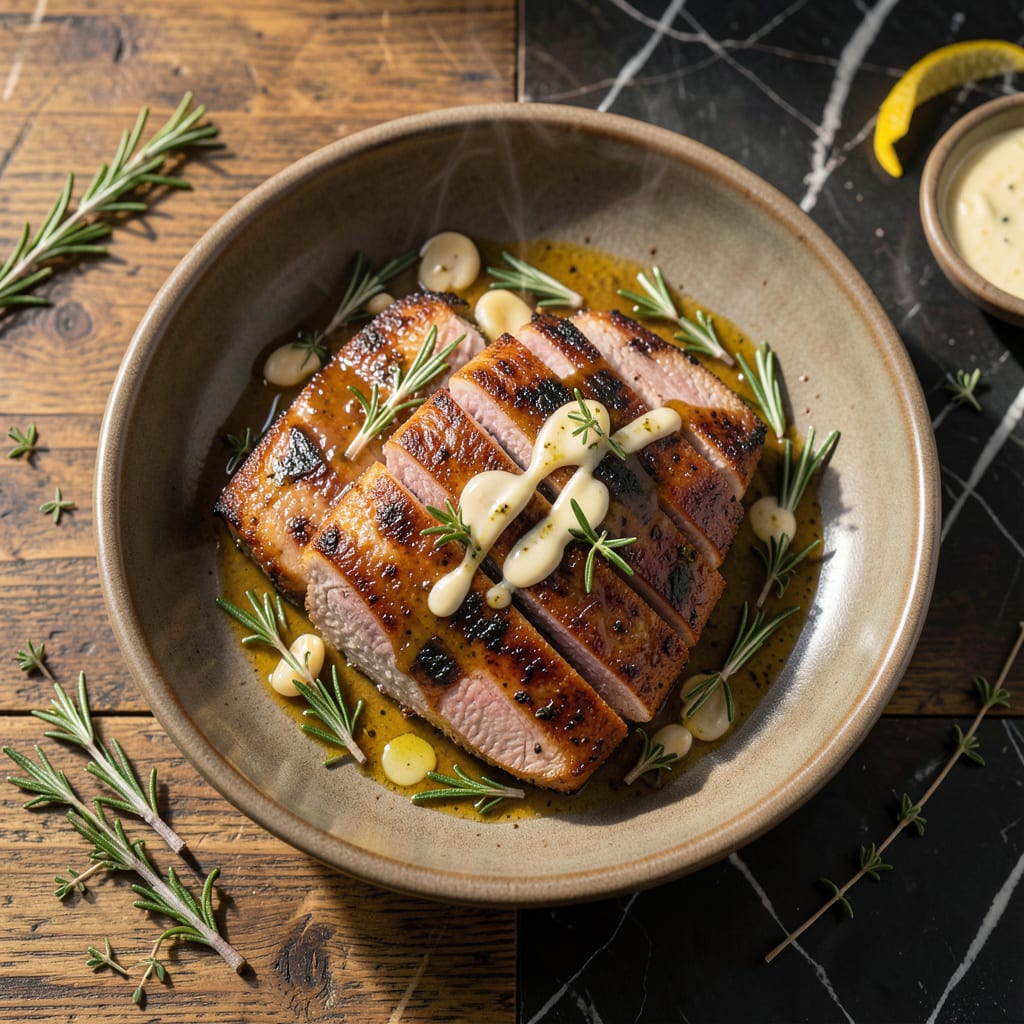
This oven-roasted pork tenderloin delivers tender, juicy meat with a fragrant herb crust that locks in flavor. The high-heat method ensures a perfect sear while keeping the inside succulent.
With a simple preparation and best-in-class results, this dish proves that impressive meals don’t need complicated techniques. The herb crust adds a crispy, aromatic finish that elevates every bite.
Ingredients for Best Damn Pork Tenderloin
Simple list, extraordinary results. Herbs meet pork for pure perfection.
| Ingredient | Amount | Notes |
|---|---|---|
| Pork Tenderloin 🥩 | 1 ½ lb | Trimmed of excess fat |
| Olive Oil 🫒 | 2 tbsp | Extra-virgin preferred |
| Dijon Mustard 🟡 | 2 tbsp | Smooth, not whole grain |
| Fresh Rosemary 🌿 | 2 tbsp | Finely chopped |
| Fresh Thyme 🍃 | 2 tbsp | Leaves stripped from stems |
| Garlic Cloves 🧄 | 4 cloves | Minced finely |
| Kosher Salt 🧂 | 1 ½ tsp | Diamond Crystal preferred |
| Black Pepper 🌶️ | 1 tsp | Freshly ground |
| Dried Oregano 🌿 | 1 tsp | Mediterranean variety |
| Smoked Paprika 🌶️ | 1 tsp | Adds depth to crust |
| Breadcrumbs 🍞 | ½ cup | Panko for extra crunch |
| Honey 🍯 | 1 tbsp | Helps caramelization |
| Lemon Zest 🍋 | 1 tsp | Brightens the crust |
The pork tenderloin is the star—look for 1.5 lb pieces at your butcher or Whole Foods. Trim any silver skin yourself (5-minute job, worth it). The herbs need to be fresh—bags from the grocery store work, but farmers market is better (way more aromatic). Garlic should be firm and heavy, not sprouting. I grab mine from Trader Joe’s when I’m in a rush.
No fresh herbs? Dried at one-third the amount still works, but fresh is game-changing here. Out of Dijon? Whole grain mustard (seed bits and all) adds texture. Smoked paprika missing? Regular paprika plus tiny pinch of cayenne mimics the smoke. Breadcrumbs can be swapped for crushed crackers (Ritz or saltines). Honey can be maple syrup—flavor shift, but still delicious.
Prep the herb crust up to 24 hours ahead—keeps flavors melding. Roast and serve immediately though; tenderloin overcooks fast. Leftovers? Slice thin, reheat gently in 30-second bursts in the microwave. Keeps 3-4 days in the fridge, but it’s so good you won’t have any.
Why You’ll Love This Recipe
- One Pan Wonder: Unfussy prep—just rub the tenderloin with olive oil, Dijon, and fresh herbs, then roast.
- Herb-Crusted Perfection: That crispy rosemary-thyme crust with the juicy pork inside? Ridiculously good.
- Dinner to Lunch: Roast extra on Sunday, and you’ve got sandwiches or salads sorted for days.
- Budget Hero: A whole tenderloin feeds four for less than a fancy steak night. I’ll be real: it’s my go-to when I need to impress without overspending.
Step-by-Step Instructions for Oven-Roasted Herb Crust Pork Tenderloin
This method guarantees the juiciest, most flavorful pork tenderloin with a crispy herb crust you won’t forget.
Step 1: Prepare the Herb and Breadcrumb Coating
In a medium bowl, combine the 2 tbsp Olive Oil, 2 tbsp Dijon Mustard, 2 tbsp Fresh Rosemary, 2 tbsp Fresh Thyme, 4 cloves Garlic Cloves, 1.5 tsp Kosher Salt, 1 tsp Black Pepper, 1 tsp Dried Oregano, and 1 tsp Smoked Paprika until fully blended. The mixture should be thick and fragrant, with the herbs evenly distributed.
Add the 0.5 cup Breadcrumbs, 1 tbsp Honey, and 1 tsp Lemon Zest, stirring until the breadcrumbs are evenly coated and the mixture clumps slightly when pressed between your fingers. This is your crust—it should smell incredible and hold together loosely.
Step 2: Coat the Pork Tenderloin Evenly
Pat the 1.5 lb Pork Tenderloin completely dry with paper towels. This is critical—moisture prevents the crust from adhering properly. Trim any remaining excess fat if needed, but leave the thin silver skin intact for texture.
Place the pork on a clean work surface and press the herb-breadcrumb mixture all over, using your hands to form an even layer. I like to work in sections, ensuring every part of the tenderloin is covered. The coating should look rustic and thick, with bits of herbs and breadcrumbs clinging to the surface. Press firmly so it sticks during cooking.
Step 3: Sear for Crispy, Golden Brown Crust
Preheat your oven to 425°F. While the oven heats, warm a large oven-safe skillet over medium-high heat. Add the coated pork tenderloin and sear for 2-3 minutes per side until the crust turns deep golden brown and crispy. You’ll hear a satisfying sizzle—this means the crust is forming properly.
Watch for the edges to darken and the coating to firm up. If the pan starts to smoke, reduce the heat slightly. The goal is a deep, even sear without burning the herbs. Don’t rush this step—it builds the foundation for that incredible flavor and texture.
Step 4: Roast to Juicy, Tender Perfection
Transfer the seared pork tenderloin to the preheated oven and roast for 15-20 minutes, or until an instant-read thermometer inserted into the thickest part reads 145°F. The crust should be deep brown and crispy, and the pork should feel slightly firm to the touch.
If the crust begins to darken too quickly, tent the pan loosely with foil. The internal temperature is the best indicator of doneness—pork tenderloin is safe to eat at 145°F and will be juicy and tender. Avoid overcooking, as it can dry out quickly.
Step 5: Rest and Slice for Maximum Flavor
Remove the pork from the oven and transfer it to a cutting board. Tent loosely with foil and let it rest for 10 minutes. This allows the juices to redistribute throughout the meat, ensuring every slice is moist and flavorful.
Slice the pork tenderloin into ½-inch thick medallions. The crust should stay intact, crackling slightly as you cut. Serve immediately while still warm, with the pan juices spooned over the top for extra richness. The contrast of the crispy exterior and tender interior is what makes this dish unforgettable.
Pro Tips For Making Best Damn Pork Tenderloin
- Pat It Dry: Use paper towels to thoroughly dry the tenderloin before seasoning—this guarantees a better sear with the olive oil and helps the herbs stick properly.
- Sear First, Then Roast: Start with a high-heat sear in olive oil to lock in juices, then finish in the oven at 375°F until it hits 145°F internal temp.
- Don’t Skip the Mustard: Coat the tenderloin with Dijon mustard before adding rosemary and thyme—it creates a flavorful crust and keeps the herbs from burning.
- Rest Before Slicing: Let the pork rest for 10 minutes after cooking—this keeps the juices inside the meat instead of all over your cutting board.
Pro Cooking Tips for Great best damn pork tenderloin
Perfect Searing Temp
Use an oven-safe skillet like Lodge cast iron for the sear—it retains heat beautifully. Get it screaming hot over medium-high heat for 3 minutes before adding the pork. The crust should sizzle aggressively on contact. 🔥
Thermometer Precision
I never cook pork without my ThermoWorks Instant Read. Pull it at exactly 145°F internal temp—the USDA safe minimum. The meat keeps cooking while resting, so resist the urge to leave it in longer.
Resting Importance
That 10-minute rest isn’t optional—it’s when the juices redistribute. Tent with foil to keep warm. If you cut too soon, you’ll lose all that beautiful moisture to the cutting board.
Crust Protection
If your crust browns too fast during roasting, tent loosely with foil. But leave the ends exposed so the coating stays crispy. I check mine at 12 minutes and adjust as needed.
Slicing Technique
Use a long, sharp knife (my Wüsthof 8-inch works perfectly). Slice against the grain into ½-inch medallions in one clean motion—no sawing. This keeps each piece intact with maximum crust.
Pan Juice Magic
Don’t discard those browned bits! Add ¼ cup chicken broth to the hot pan, scrape up the fond, and drizzle over the sliced pork. That’s liquid gold for flavor. 💫
Nutrition Facts
Frequently Asked Questions
Can I use a different type of mustard?
Yes! Whole grain mustard adds texture, while yellow mustard works in a pinch. The Dijon gives the best flavor balance, but any mustard will help the crust adhere.
How do I know when it’s done without a thermometer?
Press the thickest part with tongs—it should feel firm but still springy. At 145°F, juices will run clear. For safety, a meat thermometer is always recommended.
Can I make this ahead of time?
Prepare the crust mixture up to 24 hours ahead, but cook the pork fresh for best texture. Leftovers keep 3-4 days refrigerated.
Why does my crust fall off when slicing?
Press the coating on firmly before cooking, and let the pork rest 10 minutes after roasting. Use a sharp knife and slice in one clean motion.

- BBQ Sausage Recipe Oven: Smoky Depth Without the Grill - September 28, 2026
- BBQ Chicken Bowl Recipe Rice: Smoky Sweetness Over Fluffy Grains - September 28, 2026
- Beef Cutlet Recipe Ideas: Crispy Breaded Patties With Bold Seasonings - September 28, 2026