
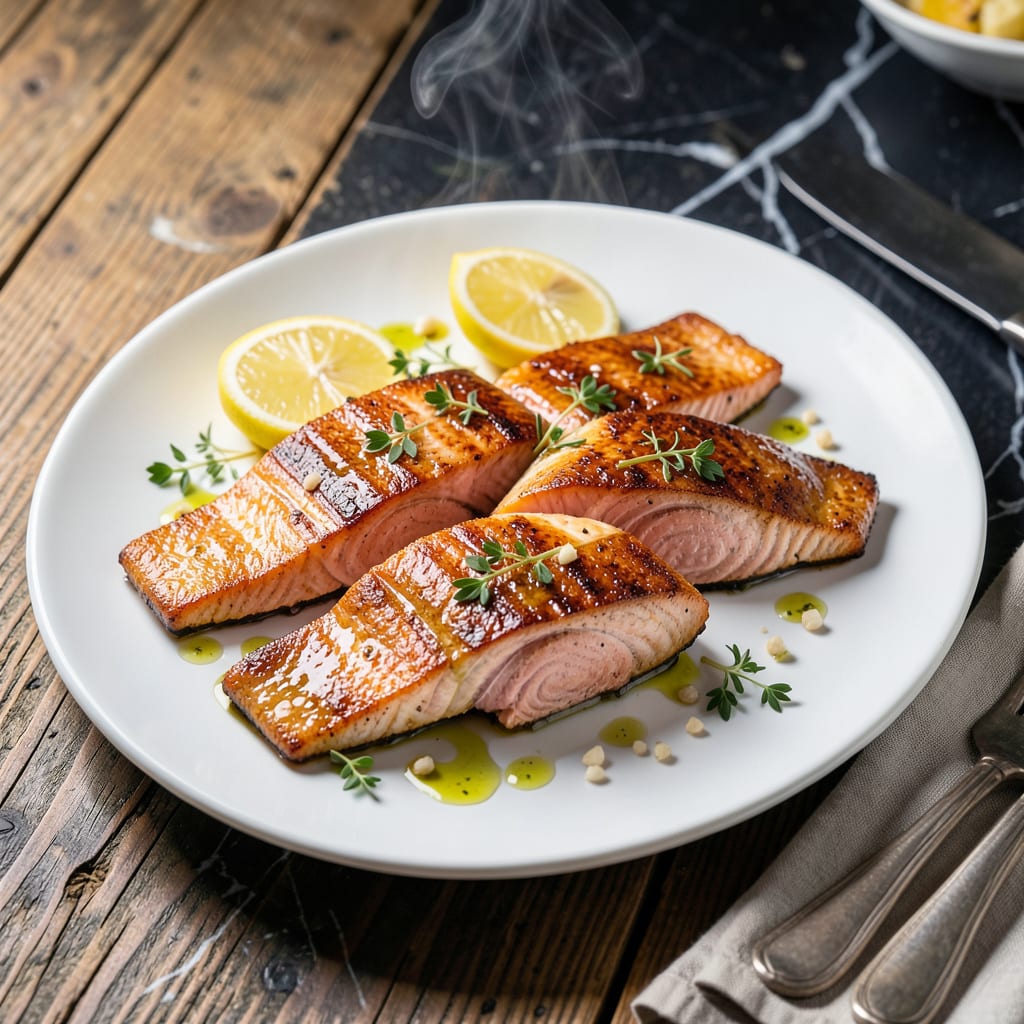
I’ve perfected this salmon recipe after years of testing, and the lemon-garlic butter glaze is what sets it apart. The technique ensures tender, flaky fish with a restaurant-quality finish every time.
This method delivers best results by searing the skin to crispy perfection while keeping the flesh moist. The butter glaze adds bright citrus and aromatic depth that elevates each bite.
Ingredients for Best Damn Salmon
Skin-on fillets, bright citrus, and aromatic butter create restaurant-quality results at home.
| Ingredient | Amount | Notes |
|---|---|---|
| Salmon Fillets 🐟 | 4 whole | Skin-on, wild-caught preferred |
| Unsalted Butter 🧈 | ½ cup | Room temperature, cubed |
| Fresh Lemon Juice 🍋 | ¼ cup | About 2-3 lemons |
| Garlic Cloves 🧄 | 4 cloves | Minced finely |
| Extra-Virgin Olive Oil 🫒 | 2 tbsp | For searing salmon |
| Kosher Salt 🧂 | 1 tsp | Diamond Crystal preferred |
| Freshly Ground Black Pepper 🌶️ | ½ tsp | Coarse grind preferred |
| Lemon Zest 🍋 | 1 tbsp | From 1-2 lemons |
| Fresh Dill 🌿 | 2 tbsp | Chopped, for garnish |
| Fresh Parsley 🍃 | 2 tbsp | Chopped, for garnish |
| Shallot 🧅 | 1 whole | Finely minced |
| Dry White Wine 🍷 | ¼ cup | Optional for deglazing |
The salmon quality is non-negotiable. Wild-caught sockeye or king provide the richest flavor and firmest texture. Source from Whole Foods or Costco for consistent freshness—look for vibrant color and no fishy odor. Skin should be intact and glistening. For the butter, Plugrá or Kerrygold deliver superior creaminess. Always bring butter to room temperature before incorporating into the glaze.
No white wine? Substitute chicken or vegetable broth with a splash of lemon juice. Fresh dill can be replaced with tarragon or chives at equal amounts. If lemons are scarce, lime juice and zest work in a pinch (though flavor profile shifts slightly). The olive oil can be any neutral oil, but extra-virgin adds depth. For a stronger garlic presence, increase to 6 cloves.
The glaze can be made 2 days ahead and refrigerated. Salmon is best cooked fresh but leftovers keep for 2-3 days refrigerated. Reheat gently in a 300°F oven to preserve moisture. Never microwave—it ruins the texture.
Why You’ll Love This Recipe
- One Pan Wonder: I toss the salmon, butter, and garlic on a sheet pan—no fancy tools, just 15 minutes in the oven.
- Buttery Garlic Bliss: The melted butter and fresh lemon juice soak into the salmon, making every bite rich and bright.
- Dinner or Lunch: I serve it hot for dinner or cold on salads the next day. Versatile like that.
- Budget-Friendly Luxury: A little salmon goes a long way, and the ingredients are pantry staples I always have.
Step-by-Step Instructions for Lemon-Garlic Butter Glazed Salmon
Master these techniques for restaurant-quality salmon with a glossy, flavorful finish every time.
Step 1: Prepare and Season the Salmon Fillets
Pat the 4 whole Salmon Fillets completely dry with paper towels—this is non-negotiable for achieving crispy skin. I use a firm press to remove all surface moisture, especially along the skin side where water tends to collect.
Season both sides evenly with 1 tsp Kosher Salt and 0.5 tsp Freshly Ground Black Pepper. The salt should form a visible crust on the surface. I always let the seasoned fillets sit at room temperature for 10 minutes before cooking—this ensures even cooking throughout.
Step 2: Sear the Salmon Skin-Side Down
Heat 2 tbsp Extra-Virgin Olive Oil in a large skillet over medium-high heat until it shimmers but doesn’t smoke. Add the fillets skin-side down, pressing gently with a fish spatula for 10 seconds to prevent curling and ensure full contact with the pan.
Cook undisturbed for 4-5 minutes until the skin becomes crisp and golden. The edges should appear slightly opaque when viewed from the side. Resist the urge to move them—this creates the perfect sear. Flip only when the fillets release easily from the pan.
Step 3: Create the Lemon-Garlic Butter Glaze
While the salmon cooks, melt 0.5 cup Unsalted Butter in a small saucepan over medium heat. Add 4 cloves Garlic Cloves (minced) and 1 whole Shallot (finely minced), sautéing for 1-2 minutes until fragrant but not browned.
Stir in 0.25 cup Fresh Lemon Juice and 1 tbsp Lemon Zest, then reduce heat to low. For depth, I add 0.25 cup Dry White Wine and let it simmer for 2 minutes until the mixture thickens slightly. The sauce should coat the back of a spoon with a glossy sheen.
Step 4: Finish Cooking and Glaze the Salmon
Flip the salmon and cook for an additional 2-3 minutes until the flesh flakes easily with a fork and reaches an internal temperature of 125-130°F. The center should still appear slightly translucent—it will continue cooking off heat.
Pour the lemon-garlic butter glaze over the fillets, tilting the pan to ensure even coverage. I spoon the glaze repeatedly over the top for 30 seconds to create a thick, glossy coating. The butter should sizzle and bubble as it melts into the fish.
Step 5: Garnish and Serve Immediately
Transfer the salmon to a serving platter, skin-side down. Sprinkle with 2 tbsp Fresh Dill and 2 tbsp Fresh Parsley, both chopped. The herbs should adhere to the glaze, creating a vibrant, aromatic finish.
Serve immediately while the glaze is still glossy and fluid. Each fillet should have crispy skin, tender flesh, and a bright, buttery sauce pooling beneath it. The ideal serving temperature is just above room temperature—never overcooked.
Pro Tips For Making Best Damn Salmon
- Dry the Fillets: Pat the salmon dry with paper towels before cooking—moisture is the enemy of that perfect golden crust.
- Use Room-Temp Butter: Let the unsalted butter sit out for 10 minutes so it melts evenly into the garlic and lemon without breaking.
- Skip Overcrowding: Give each fillet space in the pan, or they’ll steam instead of sear—I learned this the hard way.
- Rest Before Serving: Let the salmon rest 3-4 minutes after cooking to keep it juicy, even if you’re starving.
Storing and Reheating This best damn salmon
Refrigerator Storage
Let your salmon cool for no more than 30 minutes before storing. Transfer to an airtight container with a paper towel to absorb excess moisture. It keeps beautifully for 2-3 days at 40°F or below. The glaze actually enhances the flavor overnight. ❄️
Freezer Storage
For longer storage, wrap each fillet individually in plastic wrap, then place in a freezer-safe bag. Squeeze out all air to prevent freezer burn. It maintains quality for up to 1 month—though I recommend eating within 2 weeks for best texture.
Oven Reheating
Preheat oven to 300°F and place salmon on a baking sheet. Cover with foil and warm for 8-10 minutes. This gentle method preserves moisture and prevents the skin from getting soggy. Add a splash of water to the pan for extra insurance.
Skillet Reheating
For crispy skin revival, heat 1 tsp olive oil in a skillet over medium-low heat. Place salmon skin-side down and cover for 3-4 minutes. The steam will warm the fish while the skin re-crispes beautifully. 🔥
Serving Leftovers
Reheated salmon works great in salads or grain bowls. Flake it over mixed greens with lemon vinaigrette or serve with quinoa. The glaze pairs wonderfully with these lighter preparations, making leftovers feel like a new meal.
Nutrition Facts
Frequently Asked Questions
What temperature should salmon reach when cooked?
Salmon is perfectly done at an internal temperature of 125-130°F. Use a meat thermometer for accuracy. The flesh will continue cooking slightly after removal from heat, so take it off just before it reaches temperature.
Can I use frozen salmon for this recipe?
Yes, but thaw it overnight in the refrigerator first. Pat it completely dry before cooking to ensure crispy skin. Avoid microwaving to thaw, as this can start cooking the fish unevenly.
Why does the skin stick to the pan?
The pan isn’t hot enough or the fish wasn’t dry. Heat the oil until shimmering and press the fillet gently for 10 seconds to prevent curling. Don’t move it until it releases naturally.
How do I prevent the glaze from breaking?
Keep the heat at low when making the glaze. If it separates, remove from heat and whisk vigorously to re-emulsify. Adding the butter slowly while whisking helps maintain a smooth texture.

- BBQ Sausage Recipe Oven: Smoky Depth Without the Grill - September 28, 2026
- BBQ Chicken Bowl Recipe Rice: Smoky Sweetness Over Fluffy Grains - September 28, 2026
- Beef Cutlet Recipe Ideas: Crispy Breaded Patties With Bold Seasonings - September 28, 2026