
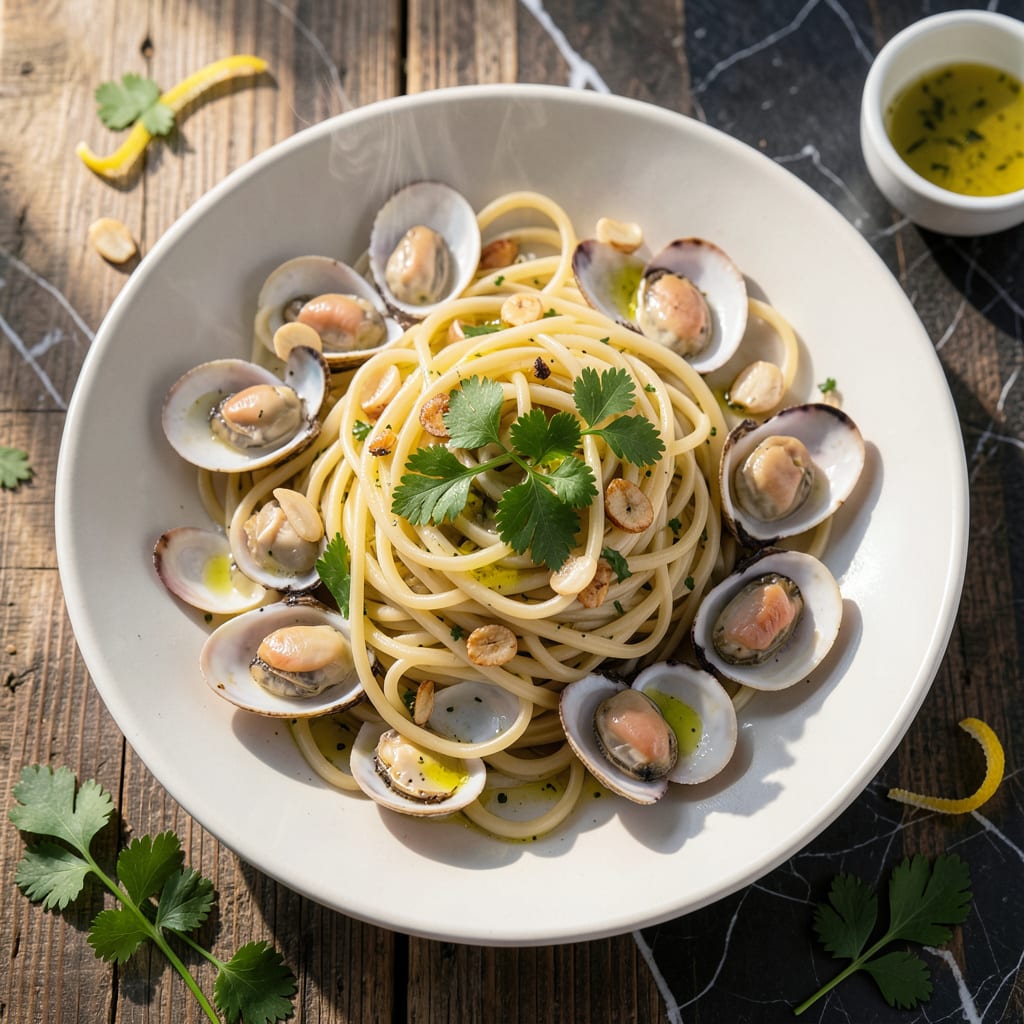
This recipe delivers the best balance of briny clam flavor and garlic-infused olive oil clinging to every strand of pasta. The secret lies in using fresh clams and timing the cooking just right.
You’ll achieve restaurant-quality results at home with simple ingredients and precise technique. The clams steam open in white wine, creating a light but flavorful sauce that coats the al dente linguine perfectly.
Ingredients for Best Linguine with Clams
Fresh clams, garlic, and white wine create this restaurant-quality pasta with minimal effort.
| Ingredient | Amount | Notes |
|---|---|---|
| Linguine Pasta 🍝 | 12 oz | Dried, for al dente texture |
| Fresh Littleneck Clams 🦪 | 2 lb | Scrubbed and debearded |
| Extra-Virgin Olive Oil 🫒 | ½ cup | High-quality, for sauce base |
| Garlic Cloves 🧄 | 6 cloves | Thinly sliced for infusion |
| Dry White Wine 🍷 | 1 cup | Sauvignon Blanc or Pinot Grigio |
| Unsalted Butter 🧈 | 4 tbsp | For finishing sauce |
| Fresh Parsley 🌿 | ½ cup | Chopped, for garnish |
| Red Pepper Flakes 🌶️ | ½ tsp | Adjust to heat preference |
| Kosher Salt 🧂 | 1 tsp | Diamond Crystal preferred |
| Freshly Ground Black Pepper 🌶️ | ½ tsp | For seasoning |
| Lemon 🍋 | 1 whole | Zested and juiced |
| Shallots 🧅 | 2 whole | Finely diced for depth |
[recipeingredientscaler]
The clams are non-negotiable—Littleneck or Manilas from a trusted fishmonger (I go to Whole Foods or a local seafood market) for peak brininess. Ensure they’re alive: shells should snap shut when tapped. The pasta needs to be high-quality bronze-die extruded (De Cecco or Barilla) to hold the sauce properly. Don’t skimp on the wine—dry white only, nothing sweet.
No white wine? Clam juice plus a splash of lemon works in a pinch. Swap parsley for fresh basil if that’s what’s growing in your garden. Shallots can be yellow onion at a 1:1 ratio. For extra richness, add 1 tbsp of heavy cream at the end (purists may scoff, but it’s delicious). The butter is essential—don’t substitute oil here.
Clams must be cooked the day you buy them—store in the fridge covered with a damp towel for no more than 24 hours. Leftovers keep for 2 days max (the clams get rubbery). Reheat gently, or the sauce will break. Always discard any clams that don’t open during cooking.
Why You’ll Love This Recipe
- One Pot Wonder: I love that this comes together in a single skillet—just toss in the linguine, clams, garlic, and wine, and let the flavors meld.
- Garlic-White Wine Magic: The combo of sizzling garlic and dry white wine with briny clams creates a sauce so good, I could drink it with a straw.
- Weeknight Hero: Between us, this is my secret for impressing guests without stressing—elegant enough for company but unfussy enough for a Tuesday.
- Stretches Further: Honestly, the leftovers reheat beautifully, and the clams stay tender, making it a reliable two-night meal.
Step-by-Step Instructions for Linguine With Clams
Master this technique to achieve perfectly balanced briny, garlicky pasta with tender clams every time.
Step 1: Prepare and Purge the Clams
Place the 2 lb Fresh Littleneck Clams in a large bowl and cover with cold water. Add 1 tsp Kosher Salt and let sit for 20 minutes to purge any sand. This step ensures your final dish won’t have that unpleasant gritty texture.
After purging, scrub each clam under cold water with a stiff brush to remove any debris, and debeard them by pulling off any visible strings. Discard any clams that remain open or have cracked shells. Pat them completely dry with a clean towel before cooking.
Step 2: Build the Aromatic Base
In a large, deep skillet or Dutch oven, heat 0.5 cup Extra-Virgin Olive Oil over medium heat. Add the 2 whole Shallots, finely diced, and cook for 2-3 minutes until translucent but not browned. This creates a sweet, fragrant foundation for your sauce.
Add the 6 cloves Garlic Cloves, thinly sliced, and 0.5 tsp Red Pepper Flakes. Sauté for 1 minute until the garlic is just beginning to turn golden at the edges. Be vigilant—garlic burns easily and will turn bitter if overcooked.
Step 3: Steam the Clams in White Wine
Pour in 1 cup Dry White Wine and bring to a simmer. Immediately add the purged clams, cover the pan with a tight-fitting lid, and cook for 5-7 minutes. The clams are done when their shells have opened wide—discard any that remain closed.
As the clams steam, they’ll release their briny liquid, creating a rich, flavorful broth. Transfer the clams to a bowl with a slotted spoon, leaving the cooking liquid in the pan. This liquid is liquid gold for your sauce.
Step 4: Finish the Sauce and Cook the Pasta
Bring a large pot of water to a boil and cook the 12 oz Linguine Pasta until 1 minute shy of al dente according to package instructions. Reserve 1 cup of pasta water before draining. The pasta will finish cooking in the sauce, absorbing all that delicious flavor.
While the pasta cooks, add 4 tbsp Unsalted Butter to the clam broth in the skillet. Simmer for 2 minutes to allow the flavors to meld. Stir in the zest and juice of the 1 whole Lemon for brightness.
Step 5: Combine and Serve
Add the drained pasta to the skillet and toss to coat in the sauce. Return the clams to the pan and add 0.5 cup Fresh Parsley, chopped. Toss everything together, adding reserved pasta water as needed to achieve a silky consistency that clings to the pasta.
Season with 0.5 tsp Freshly Ground Black Pepper and taste for additional salt if needed. Serve immediately in shallow bowls, ensuring each portion has plenty of clams and that glorious sauce. The pasta should glisten with the emulsified butter and wine mixture, and the clams should be tender with a slight resistance when bitten.
Pro Tips For Making Best Linguine With Clams
- Purge the Clams: Soak littleneck clams in salted water for 20-30 minutes before cooking—this rids them of sand and grit. I learned this the hard way after crunching on a mouthful of sand in my first batch.
- Save Pasta Water: Scoop out a cup of the starchy pasta water before draining—it helps bind the sauce to the linguine. Sounds weird, but it works: the clams and garlic stick better than with just oil or wine.
- Don’t Overcook Clams: Add clams to the sauce just until their shells open, about 3-4 minutes. After burning a few batches, I finally figured out they turn rubbery fast if left too long.
- Toast the Garlic: Cook the garlic in olive oil until just golden, not brown—about 1-2 minutes on medium heat. My grandmother swore by this, and she was right: burnt garlic makes the whole dish bitter.
Troubleshooting This Dish
Clams Won’t Open
If clams stay closed after 7 minutes of steaming, they were likely dead before cooking. Toss them immediately—consuming dead clams can make you sick. I always check each one as I transfer them to the bowl. 💡
Gritty Texture
That unpleasant grit means the clams weren’t purged properly. Next time, soak them in salted water for 30 minutes instead of 20. Also, scrub each shell thoroughly with a brush under running water.
Sauce Too Thin
Your pasta water is the secret weapon here. Add ¼ cup at a time while tossing until it clings perfectly. If it’s still thin, let it simmer uncovered for 2-3 minutes to reduce slightly.
Clams Are Tough
This usually means they overcooked. Pull them from the pan as soon as they open—usually 5-6 minutes. Return them only at the very end to warm through. Overcooked clams turn rubbery fast.
Sauce Breaks
If your sauce looks oily or separated, it needs emulsifying. Remove from heat and whisk vigorously for 30 seconds. Adding a splash of pasta water while whisking helps bring it back together.
Pasta Sticks
Toss the pasta immediately with the sauce off heat. Add 1-2 tbsp of reserved pasta water to create a slippery surface. Keep tossing until every strand is coated and glistening. ✨
Nutrition Facts
Frequently Asked Questions
What type of clams work best?
Fresh Littleneck or Manila clams are ideal for their sweet, briny flavor and tender texture. Avoid larger clams as they can be tougher. Always check they’re alive before cooking.
Can I use frozen clams?
Not recommended—fresh clams release natural juices that create the sauce’s signature flavor. Frozen clams often become rubbery and lack the same brininess. If you must, thaw them in the fridge overnight.
Why did my clams turn out tough?
Clams overcook quickly. Remove them from heat as soon as they open, usually in 5-6 minutes. Return them only at the end to warm through. Overcooking makes them rubbery.
How do I store leftovers?
Store in an airtight container in the fridge for up to 2 days. Reheat gently on low heat to avoid making the clams tough. The pasta may absorb more sauce over time.

- BBQ Sausage Recipe Oven: Smoky Depth Without the Grill - September 28, 2026
- BBQ Chicken Bowl Recipe Rice: Smoky Sweetness Over Fluffy Grains - September 28, 2026
- Beef Cutlet Recipe Ideas: Crispy Breaded Patties With Bold Seasonings - September 28, 2026