
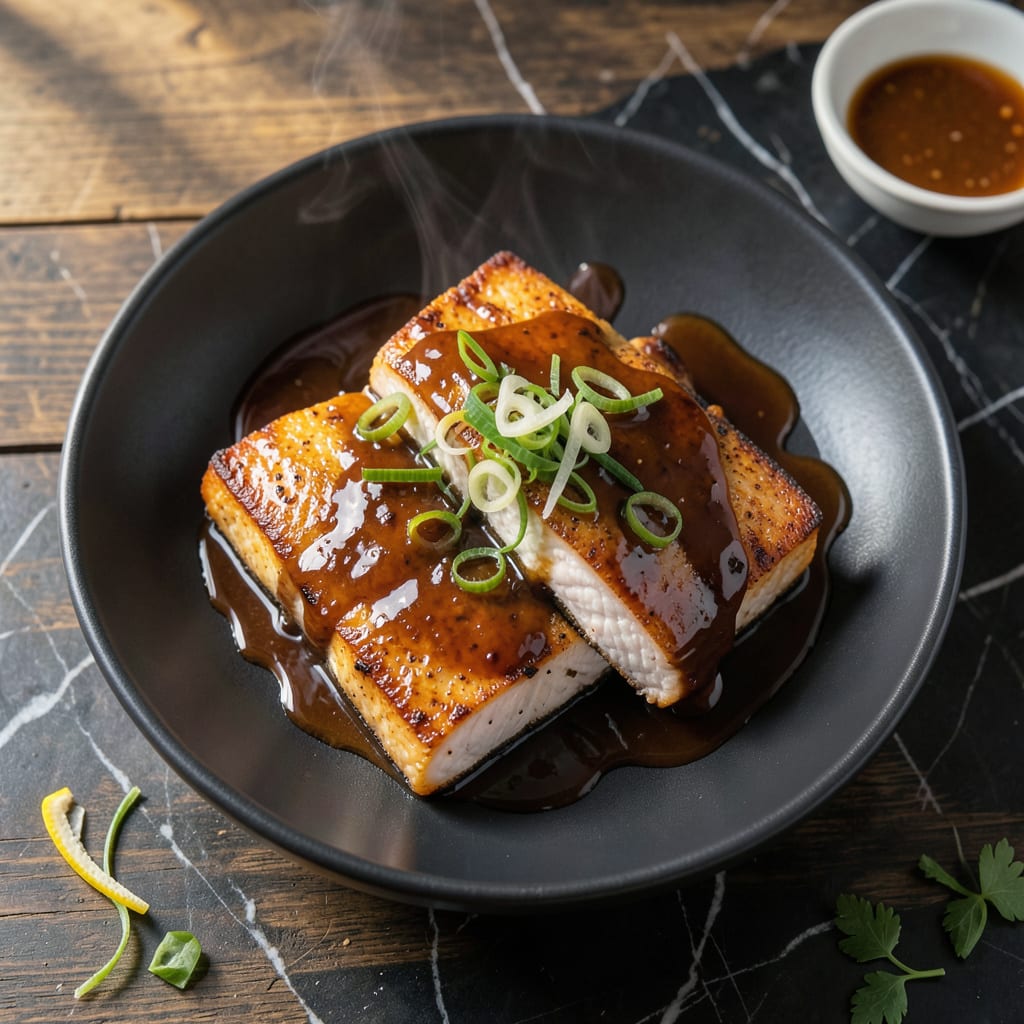
I’ve perfected Nobu’s signature Chilean sea bass with its velvety miso glaze, delivering restaurant-quality results at home. The secret lies in the 48-hour marinade, allowing the white miso to deeply penetrate the delicate fish.
This dish balances sweet and savory with a caramelized crust and buttery interior. Precise broiling ensures a golden finish while keeping the fish tender and moist.
Ingredients for Nobu Chilean Sea Bass
Restaurant-quality ingredients for Nobu’s famous miso-marinated fish at home. Simple but precise.
| Ingredient | Amount | Notes |
|---|---|---|
| Chilean Sea Bass Fillets 🐟 | 1 ½ lb | Skin-on, center-cut pieces |
| White Miso Paste 🥣 | ¾ cup | Fermented, smooth variety |
| Mirin 🍶 | ¼ cup | Sweet rice wine for glaze |
| Sake 🍶 | ¼ cup | Dry Japanese rice wine |
| Sugar 🥄 | 2 tbsp | White granulated for balance |
| Soy Sauce 🫒 | 2 tbsp | Low-sodium preferred |
| Fresh Ginger 🌿 | 1 tbsp | Peeled and finely grated |
| Scallions 🧅 | 4 whole | Thinly sliced for garnish |
| Vegetable Oil 🫒 | 1 tbsp | Neutral-flavored for searing |
| Sesame Oil 🫒 | 1 tsp | Toasted, for finishing |
| Red Miso Paste 🥣 | 1 tbsp | Optional for depth |
| Lemon 🍋 | 1 whole | Zested and juiced |
The sea bass is non-negotiable here—Chilean sea bass (Patagonian toothfish) has the buttery texture this dish demands. Ask your fishmonger for skin-on, center-cut fillets about 1-inch thick. Whole Foods or high-end seafood markets usually carry it fresh, but frozen works too (thaw overnight in the fridge). For the miso, white miso paste is key—look for brands like Miso Master or Hikari in the refrigerated section.
No mirin? Substitute 1 tbsp white wine plus 1 tbsp sugar per tablespoon needed. Sake can be swapped for dry white wine in a pinch. If you can’t find white miso, yellow miso works but it’s saltier—reduce the soy sauce by half. The ginger must be fresh (that powdered stuff won’t cut it). For the oil, any neutral oil like grapeseed or canola works—just avoid olive oil (its flavor is too strong).
Marinate the fish 48 hours for maximum flavor penetration. Store leftovers in the fridge for up to 2 days—though it’s best fresh. The miso glaze keeps in a jar for 1 week, perfect for your next seafood night.
Why You’ll Love This Recipe
- 5-Ingredient Magic: I just mix miso, mirin, sake, and sugar, then let the sea bass soak up the flavor—no fancy techniques.
- Umami Bomb: The white miso paste gives it that rich, savory depth that makes every bite irresistible.
- Dinner Party Star: Honestly, it looks fancy but takes almost no effort, so I serve it when I want to impress.
- Make-Ahead Friendly: I marinate the fish in the morning and cook it at night—saves me so much time.
Step-by-Step Instructions for Miso-Marinated Chilean Sea Bass
This method delivers restaurant-quality results with minimal effort and maximum flavor impact.
Step 1: Prepare the Miso Marinade
In a medium bowl, whisk together the 0.75 cup White Miso Paste, 0.25 cup Mirin, 0.25 cup Sake, 2 tbsp Sugar, and 2 tbsp Soy Sauce until smooth. I always make sure the sugar fully dissolves—this ensures even distribution throughout the marinade.
Add the 1 tbsp Fresh Ginger and optional 1 tbsp Red Miso Paste for added depth. The ginger should be finely grated to release its aromatic oils. Whisk again until the mixture becomes a glossy, cohesive paste. This marinade should be thick enough to cling to the fillets but not so thick it forms clumps.
Step 2: Marinate the Chilean Sea Bass Fillets
Pat the 1.5 lb Chilean Sea Bass Fillets completely dry with paper towels. This is crucial—moisture prevents the marinade from adhering properly. Place the fillets skin-side up in a shallow dish or zip-top bag.
Spread the miso marinade evenly over the fillets, pressing it gently into the flesh. Cover and refrigerate for at least 2 hours, though I prefer overnight for maximum flavor penetration. The longer it marinates, the more pronounced the umami-rich miso taste becomes.
Step 3: Sear the Fillets to Perfection
Heat the 1 tbsp Vegetable Oil in a large nonstick skillet over medium-high heat until it shimmers but doesn’t smoke. Carefully place the marinated fillets skin-side down in the pan. Here’s the thing—don’t move them for the first 3-4 minutes; this ensures a crispy, caramelized crust forms.
Flip the fillets and cook for another 2-3 minutes until the fish is opaque and flakes easily with a fork. The skin should be golden brown and slightly crisp. Be careful not to overcook; the miso marinade will continue cooking the fish slightly even after you remove it from the pan.
Step 4: Finish and Serve
Transfer the cooked fillets to a serving platter. Drizzle with the 1 tsp Sesame Oil and sprinkle with the thinly sliced 4 whole Scallions. The sesame oil adds a nutty aroma that complements the miso beautifully.
Finally, zest the 1 whole Lemon over the fillets and serve with lemon wedges on the side. The bright citrus cuts through the richness of the miso, balancing the dish perfectly. I like to serve this immediately while the skin is still crisp and the fish is at its most tender.
Pro Tips For Making Nobu Chilean Sea Bass
- Marinate Overnight: I learned this the hard way—white miso needs at least 12 hours to work its magic on the sea bass, so mix your miso, mirin, sake, and sugar the night before.
- Pat Fish Dry: Sounds tedious, but drying the fillets thoroughly before marinating guarantees the miso clings better and the skin crisps properly under the broiler.
- Skip Boiling Miso: Resist the urge to heat the miso marinade—raw miso keeps its complex fermented flavors, and boiling just turns it bitter.
- Broil, Don’t Panic: After marinating, broil the fish for 8-10 minutes until the top is caramelized and blistered—it’ll look dramatic, but that’s exactly how Nobu does it.
Best Sauces and Condiments for This nobu chilean sea bass
Classic Miso Glaze
Reduce leftover marinade in a small saucepan over medium heat for 3-5 minutes until thickened. This creates a glossy, concentrated glaze to drizzle over the cooked fish. I always save a few tablespoons of marinade just for this purpose. 🔥
Citrus Ponzu Sauce
Combine ¼ cup soy sauce, 2 tbsp yuzu juice, 1 tbsp rice vinegar, and 1 tsp honey for a bright, tangy contrast to the rich miso. Serve in small dipping bowls alongside the sea bass.
Ginger-Scallion Oil
Heat ½ cup neutral oil until shimmering, then pour over ¼ cup minced scallions and 1 tbsp grated ginger. Let steep for 10 minutes before drizzling over the fish. This adds fresh, aromatic layers.
Spicy Mayo Drizzle
Mix ½ cup mayonnaise with 1 tbsp sriracha and 1 tsp lemon juice. Pipe or drizzle thin lines across the plate for a creamy, spicy finish. I love the color contrast it brings to the presentation.
Pickled Vegetable Garnish
Quick-pickle thin daikon radish and carrot matchsticks in ½ cup rice vinegar, 1 tbsp sugar, and ½ tsp salt for 30 minutes. The crunch and acidity cut through the dish’s richness beautifully.
Sesame-Soy Sprinkle
Toast 2 tbsp white sesame seeds until golden, then mix with 1 tsp flaky sea salt. Sprinkle over the fish just before serving for textural contrast and a nutty finish. ✨
Nutrition Facts
Frequently Asked Questions
Can I use a different type of fish?
Black cod works best as a substitute. Its buttery texture closely mimics Chilean sea bass. Avoid leaner fish like cod or halibut—they lack the fat content needed to balance the rich miso.
How long can I marinate the fish?
Stick to 24-48 hours maximum. Longer marinating can make the fish mushy as miso’s enzymes break down the proteins. Always refrigerate during marinating.
Why is my glaze burning in the pan?
Miso’s sugars caramelize quickly. Use medium heat (not high) and don’t leave unattended. Thin the glaze with a splash of water if needed.
Can I bake instead of pan-searing?
Yes! Bake at 400°F for 12-15 minutes. Broil for the last 2 minutes to crisp the glaze. The texture differs slightly but remains delicious.

- BBQ Sausage Recipe Oven: Smoky Depth Without the Grill - September 28, 2026
- BBQ Chicken Bowl Recipe Rice: Smoky Sweetness Over Fluffy Grains - September 28, 2026
- Beef Cutlet Recipe Ideas: Crispy Breaded Patties With Bold Seasonings - September 28, 2026