
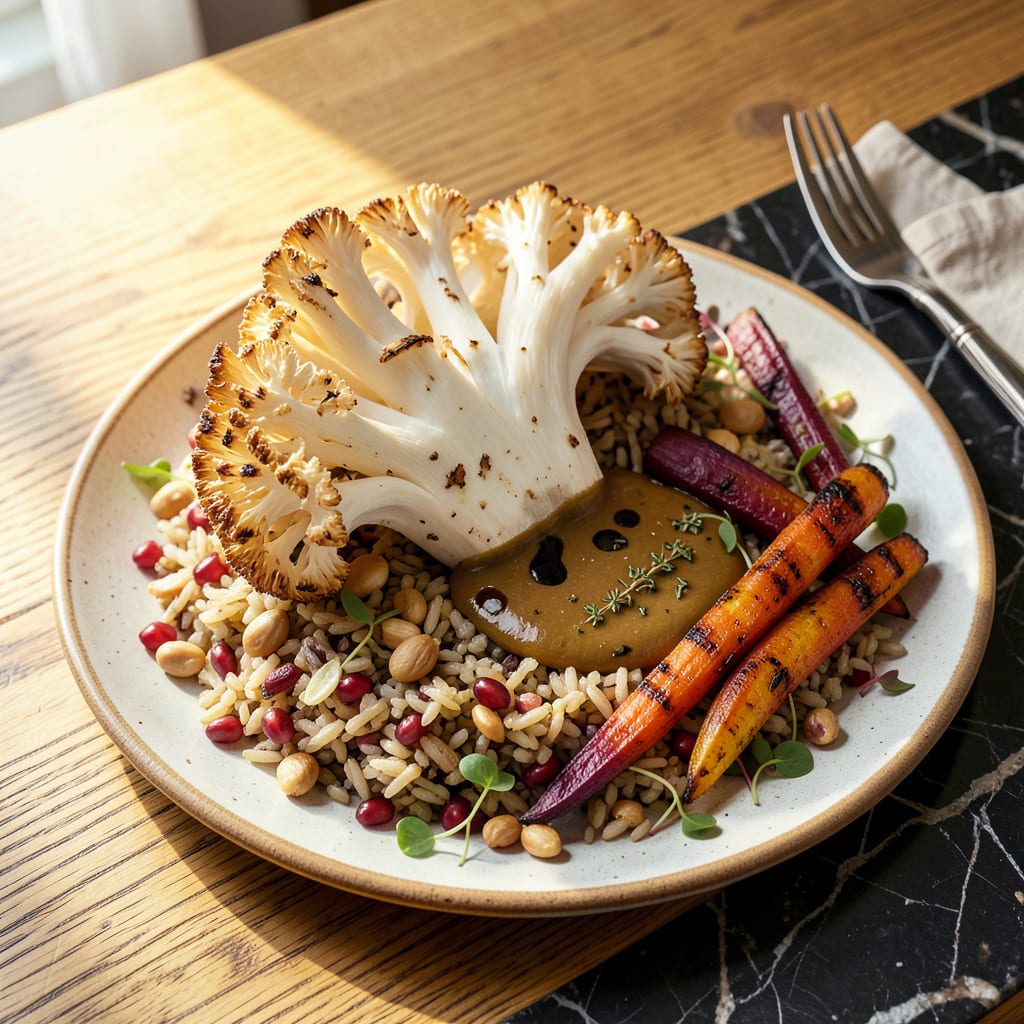
The best Lion’s Mane recipe highlights its delicate seafood-like texture by searing until golden, then finishing with butter, garlic, and herbs. Try it pan-fried, roasted, or in creamy sauces for maximum flavor.
This mushroom’s magic lies in its ability to transform into a gourmet experience with minimal effort. 🔥 The key is treating it like scallops or crab—high heat creates that coveted crispy exterior while keeping the inside tender. I’ve found that a simple butter basting technique with fresh thyme elevates its natural umami, making it taste like a restaurant-quality dish. The versatility is what impresses me most: toss it in creamy pasta, serve it as a steak alternative, or even use it in tacos for a surprising twist.
💡 In This Article
- Why Lion’s Mane Absorbs Flavors Like Seafood
- Top 3 Lion’s Mane Cooking Methods for Beginners
Why Lion’s Mane Absorbs Flavors Like Seafood
The secret lies in its unique cellular structure. Lion’s Mane mushrooms have elongated, fibrous hyphae that mimic the muscle fibers in seafood like crab or lobster. When cooked, these fibers contract and create tiny pockets that trap liquids—whether it’s melted butter, garlic-infused oil, or a creamy sauce.
This gives it that signature “meaty” texture while acting like a flavor sponge. 🔥
What’s fascinating is how heat transforms its composition. At temperatures above 350°F, the natural sugars in Lion’s Mane caramelize, developing a golden crust while the interior stays tender. Unlike denser mushrooms, its low moisture content (85-90% water vs. 92% in button mushrooms) means it sears rather than steams, locking in umami richness. The result?
A texture that’s crispy outside, silky inside—just like perfectly cooked scallops.
The umami factor comes from its high glutamate content, the same compound that makes Parmesan cheese and soy sauce so savory. When you pair it with fatty ingredients like butter or olive oil, the glutamates bind to fat molecules, creating a flavor explosion.
That’s why a simple butter-garlic-thyme finish makes it taste decadent without heavy seasoning. ✨
Here’s what most home cooks miss: Lion’s Mane’s flavor absorption peaks when sliced into 1-inch steaks. Thinner slices lose moisture too fast, while thicker cuts don’t develop enough surface area for caramelization.
The ideal cook time is 3-4 minutes per side in a screaming-hot pan—just long enough to create that coveted crust without drying it out.
For comparison, think of it like tofu’s more elegant cousin. While tofu relies on pressing to absorb flavors, Lion’s Mane does it naturally through its fibrous network. That’s why it works so well in dishes where you’d normally use seafood—like garlic butter “scallops” or creamy mushroom risotto—without needing marinades or brines.
Pro tip: Let it rest 2-3 minutes after cooking. This allows the fibers to reabsorb any released juices, keeping every bite succulent. The difference is noticeable—rested Lion’s Mane stays moist for up to 10 minutes after plating, while cutting too soon can make it seem dry. 💫

- BBQ Sausage Recipe Oven: Smoky Depth Without the Grill - September 28, 2026
- BBQ Chicken Bowl Recipe Rice: Smoky Sweetness Over Fluffy Grains - September 28, 2026
- Beef Cutlet Recipe Ideas: Crispy Breaded Patties With Bold Seasonings - September 28, 2026