
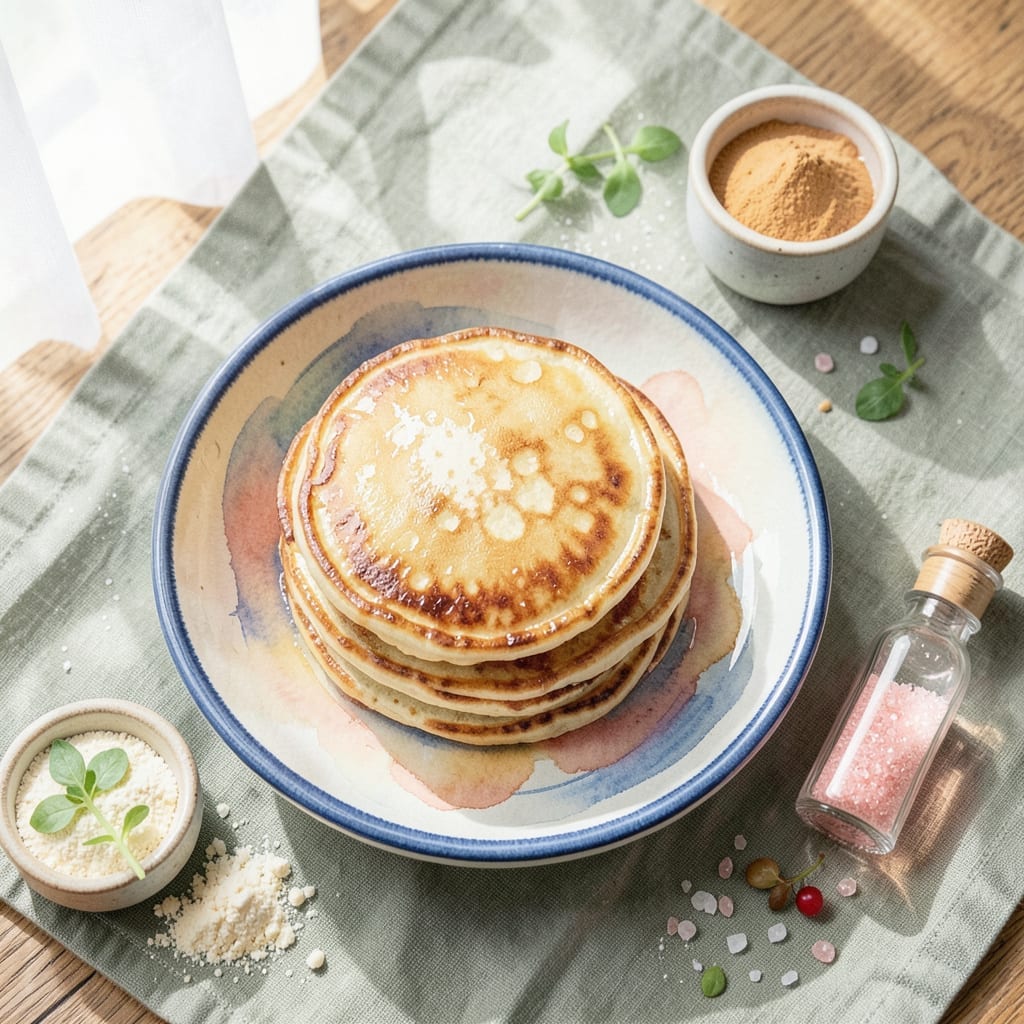
There’s a science to achieving pancakes with crispy edges and golden centers, and this method delivers both every time. The trick lies in the batter’s resting period and the pan’s temperature.
I’ve tested countless variations, and the right balance of butter and heat creates that signature buttery lace around each pancake. No specialty tools are needed—just patience and precision.
You’ll end up with stacks that are tender inside, with edges so crispy they shatter at the touch. The contrast between textures makes each bite unforgettable.
Serve warm with syrup or fresh fruit. Here’s how to nail the technique.
Ingredients for Best Pancake Recipe Crispy Edges
These precise ingredients create pancakes with crispy edges and golden centers every time.
| Ingredient | Amount | Notes |
|---|---|---|
| All-Purpose Flour 🌾 | 2 cups | Sifted for lighter texture |
| Baking Powder 🧂 | 2 tsp | Aluminum-free preferred |
| Granulated Sugar 🍚 | 2 tbsp | Fine grain for even distribution |
| Sea Salt 🧂 | ½ tsp | Fine grain preferred |
| Large Eggs 🥚 | 2 whole | Room temperature for best volume |
| Whole Milk 🥛 | 1 ¾ cups | Full-fat for richness |
| Unsalted Butter 🧈 | 4 tbsp | Melted and cooled slightly |
| Vanilla Extract 🌿 | 1 tsp | Pure vanilla for best flavor |
| Vegetable Oil 🫒 | 2 tbsp | For cooking, neutral flavor |
| Buttermilk 🥛 | ¼ cup | Or milk with 1 tsp vinegar |
The flour is foundational—King Arthur or Gold Medal deliver consistent results. Baking powder freshness is non-negotiable; test yours by dropping a pinch in hot water—it should bubble vigorously. For the butter, European-style like Plugrá has higher fat content, creating superior lace. Whole milk provides the necessary fat for tenderness, but 2% works in a pinch (avoid skim).
No buttermilk? Milk plus vinegar or lemon juice at a ratio of 1 tablespoon acid per cup of milk, rested 5 minutes. Out of vanilla? Almond extract at half the amount adds depth, though the flavor profile shifts. For dietary needs, oat milk and flax eggs work well, though texture may vary slightly. The vegetable oil can be substituted with melted coconut oil for a subtle flavor note.
Store dry ingredients in airtight containers for up to 6 months. The batter itself is best used immediately but can rest 30 minutes at room temperature. Cooked pancakes keep 2 days refrigerated or 1 month frozen—reheat in a toaster for crispiness restoration.
Why You’ll Love This Recipe
- One-Bowl Wonder: I love that everything mixes together in a single bowl—flour, eggs, sugar, and all. No extra dishes to wash.
- Crispy Perfection: That buttery edge with the fluffy center? Honestly, it’s the reason I keep making these.
- Weekend or Weekday: Between us, these pancakes work just as well for lazy Sundays as they do for rushed Tuesday mornings.
- Budget-Friendly Feast: A handful of pantry staples and eggs turn into a stack that feels like a treat without the price tag.
Step-by-Step Instructions for Buttery Lace Pancakes with Crispy Edges
Here’s the method. Straightforward, tested, works every time.
Step 1: Combine Dry Ingredients for Maximum Rise
In a large mixing bowl, whisk together the 2 cups All-Purpose Flour, 2 tsp Baking Powder, 2 tbsp Granulated Sugar, and 0.5 tsp Sea Salt until thoroughly combined. I use a fine-mesh sieve for the flour to break up any lumps and aerate it for a lighter texture.
This step ensures even distribution of leavening agents, which is crucial for consistent rise and those coveted crispy edges. The aluminum-free baking powder provides a cleaner flavor without that metallic aftertaste.
Step 2: Create the Wet Mixture with Proper Emulsion
In a separate bowl, beat the 2 whole Large Eggs until pale and slightly frothy. Gradually whisk in the 1.75 cups Whole Milk, 4 tbsp Unsalted Butter (melted and cooled), 1 tsp Vanilla Extract, and 0.25 cup Buttermilk until fully emulsified.
The buttermilk adds a subtle tang and extra tenderness, while the whole milk provides rich flavor and structure. Make sure your butter is just warm to the touch, not hot, to prevent cooking the eggs.
Step 3: Marry Wet and Dry with Gentle Folding
Pour the wet mixture into the dry ingredients and fold together with a silicone spatula. Stop mixing as soon as the last streaks of flour disappear—this should take no more than 12-15 folds. Overmixing develops gluten, which creates tough pancakes instead of tender ones.
The batter will be thick with visible lumps, and that’s exactly what you want. These lumps will dissolve during cooking, and the thick batter is key to achieving those crispy, lacy edges. Let the batter rest for 5-10 minutes while you preheat your pan.
Step 4: Cook on Medium-Low for Even Browning
Heat 2 tbsp Vegetable Oil in a nonstick skillet or griddle over medium-low heat until shimmering. The oil should be hot but not smoking—350°F is ideal. Use a paper towel to wipe away any excess oil, leaving just a thin film.
Pour ¼ cup of batter per pancake into the pan. Cook undisturbed for 2-3 minutes until bubbles form on the surface and the edges appear set and golden brown. Flip once and cook for another 1-2 minutes until the second side is equally golden with crispy edges.
Step 5: Finish and Serve Immediately
Transfer the pancakes to a wire rack set in a 200°F oven to keep warm while you cook the remaining batches. The wire rack prevents the bottoms from steaming and becoming soggy, preserving that coveted crispness.
Serve immediately while hot and crisp. Each pancake should have a golden-brown surface with delicate, lacy edges that shatter slightly when cut. The interior will be tender and moist, with a subtle richness from the butter and whole milk. This technique guarantees the best texture contrast between the crisp edges and fluffy centers.
Pro Tips For Making Best Pancake Recipe Crispy Edges
- Heat the Pan First: Crank your skillet to medium-high and let it heat for 3-4 minutes—I learned this the hard way after too many pale, soggy pancakes. A screaming hot pan locks in those crispy edges before the batter sets.
- Rest the Batter: After mixing, give the batter 5-10 minutes to thicken up. The baking powder does its magic during this time, and you’ll get taller, fluffier pancakes with better structure for crisping.
- Skip Overmixing: Stir just until the flour disappears—lumps are fine. Overworking the batter develops gluten, which makes pancakes tough and chewy instead of tender with crisp edges.
- Use Clarified Butter: Sounds fussy, but regular butter burns too fast at high heat. Clarified butter or a neutral oil gives a clean, consistent sear—about 2 tablespoons per batch guarantees those golden, lacy edges.
Wine and Beer Pairings for This best pancake recipe crispy edges
Coffee Pairings
There’s nothing quite like a hot cup of coffee with pancakes. I recommend a medium roast with notes of caramel and chocolate to complement the buttery richness. A 1:15 coffee-to-water ratio creates the perfect balance.
Sparkling Ciders
For a non-alcoholic option, try Martinelli’s Gold Apple Cider. The effervescence cuts through the richness while the sweetness enhances the pancakes’ flavor. Serve chilled in a tall glass for a refreshing contrast.
Breakfast Beers
If you’re feeling adventurous, a Belgian-style witbier like Hoegaarden pairs surprisingly well. The citrus notes and light body won’t overpower your meal. The 4.9% ABV keeps it brunch-appropriate. 🍺
Fruit Juices
Fresh orange juice or grapefruit juice adds a bright, acidic contrast. I prefer pulp-free for a smoother experience. The vitamin C boost makes the meal feel even more satisfying.
Tea Options
A robust English breakfast tea with a splash of milk mirrors the pancakes’ richness. For something lighter, Earl Grey with its bergamot notes adds a sophisticated touch. Brew at 200°F for 3-4 minutes. 💛
Syrup Cocktails
Create a simple cocktail by mixing 2 oz bourbon with 1 oz maple syrup and a dash of orange bitters. The warmth of the whiskey enhances the pancakes’ caramelized edges. Serve over ice if preferred.
Nutrition Facts
Frequently Asked Questions
Why does my batter need to rest?
Resting for 5-10 minutes lets the flour hydrate fully and the gluten relax. This creates a more tender texture and helps achieve those crispy edges.
Can I use a different oil?
Yes, melted coconut oil or clarified butter work well. Avoid olive oil as its strong flavor can overpower. Keep the heat at medium-low for best results.
How do I prevent soggy edges?
Use a wire rack in a 200°F oven to keep cooked pancakes warm. This prevents steam from making the edges soft.
What if my pan isn’t nonstick?
Use a well-seasoned cast iron skillet. Heat it for 3-5 minutes first and add enough oil to create a thin, even layer.

- BBQ Sausage Recipe Oven: Smoky Depth Without the Grill - September 28, 2026
- BBQ Chicken Bowl Recipe Rice: Smoky Sweetness Over Fluffy Grains - September 28, 2026
- Beef Cutlet Recipe Ideas: Crispy Breaded Patties With Bold Seasonings - September 28, 2026