
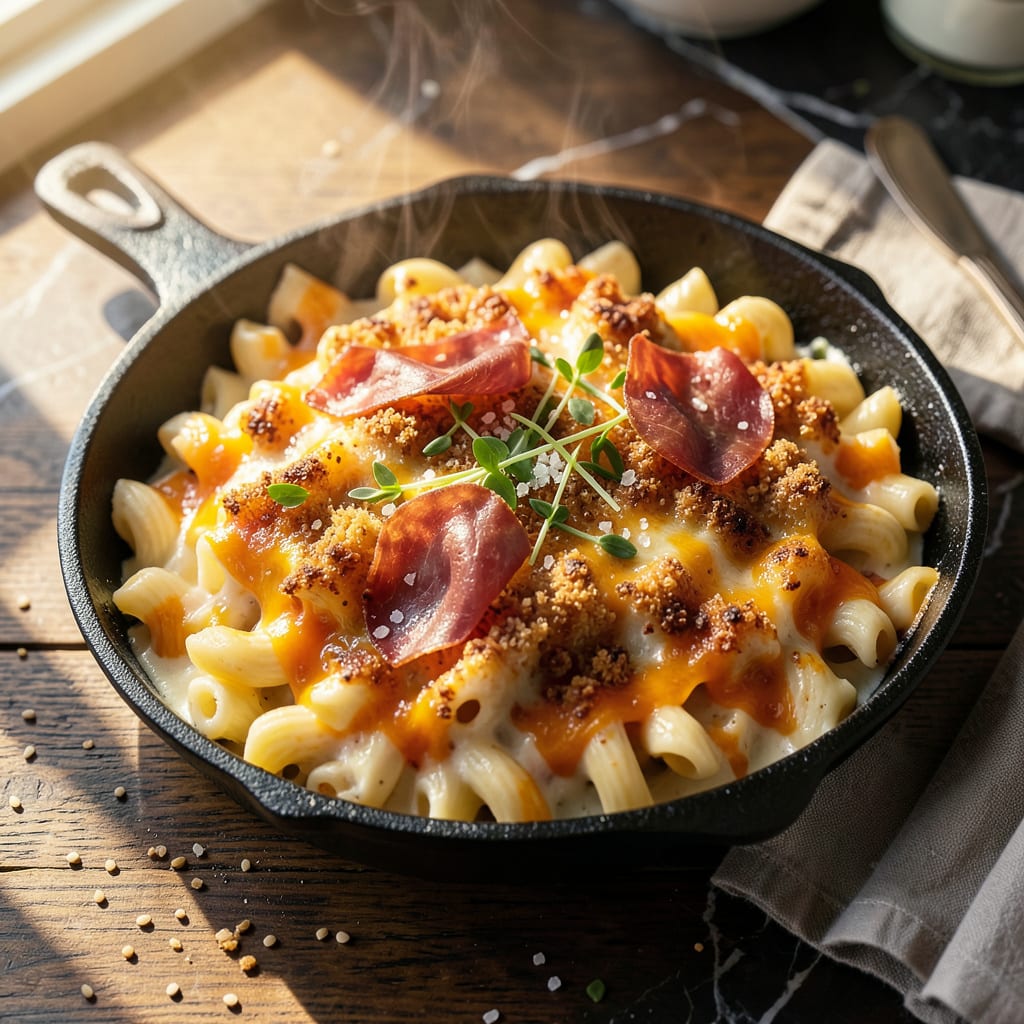
The best mac and cheese combines sharp cheddar and Gruyère for depth, a velvety béchamel sauce for creaminess, and a buttery panko-Parmesan topping for crunch. Bake at 375°F until golden and bubbly for perfect texture every time.
This isn’t just about throwing cheese at pasta—it’s about balancing flavors and textures. The sharpness of aged cheddar cuts through richness, while Gruyère’s nutty notes add complexity. I’ve found that the béchamel technique (butter, flour, milk) creates a smoother sauce than simply melting cheese with milk. 🔥
That crispy topping isn’t just for show—it provides essential contrast to the creamy base. The panko-Parmesan mix browns beautifully at 375°F, creating a satisfying crunch without burning. What most recipes miss is the importance of undercooking the pasta slightly before baking, so it absorbs sauce without turning mushy. ✨
💡 In This Article
- Why Cheese Selection Makes or Breaks Mac and Cheese
- Pro Techniques for Next-Level Homemade Mac and Cheese
Why Cheese Selection Makes or Breaks Mac and Cheese
The magic happens at the molecular level when cheese melts. Natural cheeses like cheddar and Gruyère contain casein proteins that unwind and form a smooth matrix when heated. Sharp cheddar (aged 12-18 months) contributes tangy depth, while Gruyère’s 32% fat content creates silkiness.
The melting point matters too—cheddar melts at 150°F, while Gruyère liquefies at 130°F, creating a staggered melt that prevents clumping. 🔥
Processed cheeses behave differently because they’re emulsified with sodium citrate or phosphates, which prevent fat separation. That’s why Velveeta stays creamy when natural cheeses might turn grainy. For best results, I use a 2:1 ratio of natural to processed cheese—the natural provides flavor complexity while the processed ensures smooth texture.
The lactose content also plays a role: younger cheeses (like mild cheddar) have more lactose, which caramelizes during baking for subtle sweetness. ✨
Aging transforms cheese chemistry dramatically. A 24-month aged cheddar has 30% less moisture than mild cheddar, concentrating flavors but reducing meltability. That’s why I blend it with medium cheddar for balance. Gruyère’s tyrosine crystals (those crunchy bits) develop after 5+ months of aging, adding textural contrast.
The fat content is crucial too—cheeses below 25% fat (like Parmesan) work better as toppings than in the sauce itself. 🌟
Here’s what most recipes get wrong: using pre-shredded cheese. The anti-caking agents (usually cellulose) interfere with melting, creating a gritty texture. Always grate fresh from the block. For extra creaminess, I add 1/4 cup cream cheese—its stabilizers prevent sauce separation. The cheese-to-sauce ratio should be 1:1.5 by weight for optimal coating without greasiness.
Temperature control is key: never boil the sauce after adding cheese, or the proteins will tighten and squeeze out fat. ⚡
Consider these cheese combinations for different effects:
- Classic Depth: 2 cups sharp cheddar + 1 cup Gruyère + 1/2 cup Parmesan (nutty, tangy, umami)
- Extra Creamy: 1.5 cups medium cheddar + 1 cup fontina + 1/4 cup cream cheese (velvety, mild)
- Bold Flavor: 1.5 cups aged Gouda + 1 cup smoked cheddar + 1/2 cup pecorino (caramelized, smoky, sharp)
The final texture depends on how you combine these elements. For stovetop mac, higher-moisture cheeses work best. For baked versions, include at least one low-moisture cheese (like Parmesan) to prevent a watery sauce. The baking process at 375°F causes the Maillard reaction between cheese proteins and sugars, creating those coveted browned, flavorful crust bits. 💫

- BBQ Sausage Recipe Oven: Smoky Depth Without the Grill - September 28, 2026
- BBQ Chicken Bowl Recipe Rice: Smoky Sweetness Over Fluffy Grains - September 28, 2026
- Beef Cutlet Recipe Ideas: Crispy Breaded Patties With Bold Seasonings - September 28, 2026