
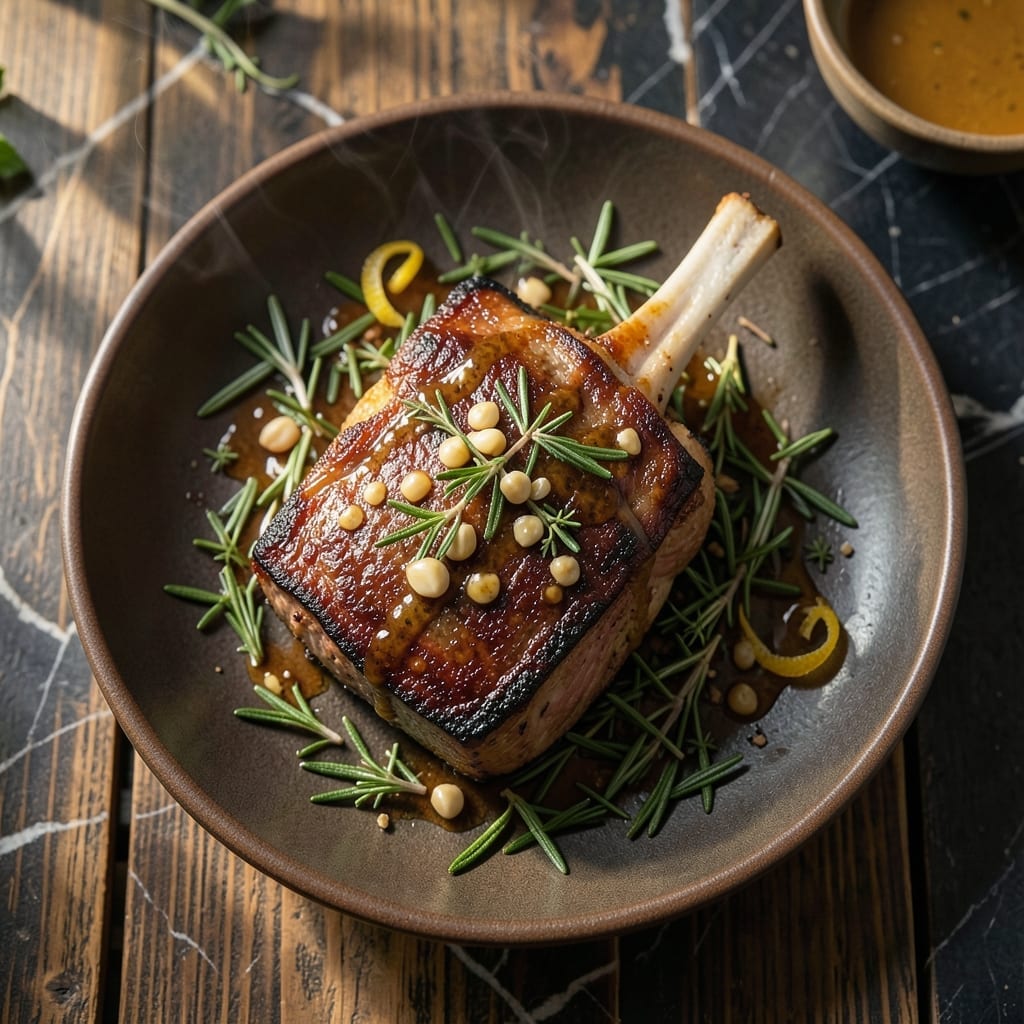
This bone-in pork shoulder blade steak delivers exceptional flavor and tenderness with a simple herb crust.
The marbling ensures juicy, rich meat while the bone adds depth to every bite. A hot sear locks in natural juices before finishing in the oven for perfect doneness.
I developed this method to highlight the cut’s natural qualities without overpowering seasoning. The herb crust complements rather than masks the pork’s robust character.
Serve with roasted potatoes and seasonal vegetables for a complete meal that impresses without fuss.
Ingredients for Bone in Pork Shoulder Blade Steak
Quality ingredients elevate this rich, marbled cut with aromatic herbs and bold flavors.
| Ingredient | Amount | Notes |
|---|---|---|
| Bone-In Pork Shoulder Blade Steak 🥩 | 2 lb | About 1 inch thick, well-marbled |
| Kosher Salt 🧂 | 1 ½ tsp | Diamond Crystal preferred for texture |
| Freshly Ground Black Pepper 🌶️ | 1 tsp | Coarse grind for crust |
| Fresh Rosemary 🌿 | 2 tbsp | Finely chopped, stems removed |
| Fresh Thyme 🍃 | 2 tbsp | Leaves stripped from stems |
| Garlic Cloves 🧄 | 4 cloves | Minced to fine paste |
| Extra-Virgin Olive Oil 🫒 | 3 tbsp | Divided for searing and crust |
| Unsalted Butter 🧈 | 2 tbsp | For basting while searing |
| Dijon Mustard 🟡 | 1 tbsp | For herb crust adhesion |
| Red Wine 🍷 | ¼ cup | Dry variety for deglazing |
| Beef Stock 🥣 | ½ cup | Low-sodium preferred |
| Shallot 🧅 | 1 whole | Finely minced for pan sauce |
The pork shoulder blade steak is non-negotiable here. Look for bone-in cuts with visible marbling at Whole Foods or a trusted butcher—this fat distribution ensures juiciness. Avoid pre-cut steaks labeled as ‘shoulder steak’ without the blade bone; the bone itself contributes significantly to flavor. For the herbs, fresh rosemary and thyme from the produce section outperform dried every time (the oils are more vibrant).
No fresh herbs? Dried at one-third the amount, but toast them in a dry pan first to wake up the flavors. Swap Dijon for whole-grain mustard if that’s what you have—texture will differ slightly but the taste works. The red wine can be substituted with additional beef stock plus a splash of balsamic vinegar. For a non-alcoholic version, use apple cider vinegar with a pinch of sugar.
The steaks can rest in the herb mixture for up to 24 hours before cooking. Store fresh herbs wrapped in damp paper towels for 5-7 days. Leftover cooked steak keeps well in the fridge for 3-4 days—reheat gently in a pan with a splash of stock to prevent drying.
Why You’ll Love This Recipe
- Set It and Forget: Honestly, it’s just salt, pepper, and fresh herbs—then the oven does all the work.
- Herb Crust Perfection: That rosemary and thyme rub forms the most insane crispy crust on the bone-in cut.
- Feeds the Whole Crew: One steak serves six, and it’s just as good sliced for sandwiches the next day.
- Budget Hero: Pork shoulder blade steak gives you restaurant-quality flavor for a fraction of the price.
Step-by-Step Instructions for Bone In Pork Shoulder Blade Steak
Master this technique for perfectly seared pork with a fragrant herb crust and rich pan sauce.
Step 1: Prepare the Herb Crust
Finely chop the 2 tbsp fresh rosemary and strip the leaves from 2 tbsp fresh thyme. In a small bowl, combine these with the minced 4 cloves garlic cloves, 1 tbsp Dijon mustard, 1.5 tsp kosher salt, and 1 tsp freshly ground black pepper.
Add 1 tbsp extra-virgin olive oil to the herb mixture and stir to form a thick paste. This paste will adhere to the pork, creating a flavorful crust during cooking. The mustard acts as a binder while adding a subtle tang that complements the richness of the meat.
Step 2: Sear the Pork Steak
Pat the 2 lb bone-in pork shoulder blade steak dry with paper towels. This ensures a proper sear. Rub the herb paste evenly over all surfaces of the steak, pressing it into the meat so it adheres well.
Heat 2 tbsp extra-virgin olive oil in a heavy skillet over medium-high heat until it shimmers. Add the steak and sear for 4-5 minutes per side until a deep golden crust forms. Add the 2 tbsp unsalted butter during the last 2 minutes of searing, basting the steak continuously with the foaming butter.
Step 3: Rest and Build the Pan Sauce
Transfer the seared steak to a cutting board and tent loosely with foil. Let it rest for 10 minutes—this allows the juices to redistribute, ensuring moist, tender meat when sliced.
While the pork rests, reduce the heat to medium and add the finely minced 1 whole shallot to the skillet. Cook for 1-2 minutes until softened. Deglaze the pan with the 0.25 cup red wine, scraping up all the browned bits from the bottom with a wooden spoon.
Step 4: Finish the Sauce and Serve
Pour in the 0.5 cup beef stock and simmer for 3-4 minutes until the liquid reduces by half and thickens slightly into a rich, glossy sauce. Taste and adjust seasoning if needed—though the herb crust should have provided ample flavor.
Slice the pork against the grain into ½-inch thick pieces. Arrange on a platter and spoon the pan sauce over the top. The sauce should coat the meat lightly without overwhelming its natural juiciness. Serve immediately while the pork is still warm and the crust remains crisp.
Pro Tips For Making Bone In Pork Shoulder Blade Steak
- Dry the Steak: Pat the pork shoulder blade steak thoroughly dry with paper towels before seasoning—this guarantees a better sear and prevents the herbs from steaming instead of crisping.
- Season Boldly: Use more kosher salt than you think, especially with fresh rosemary and thyme, as the bone can dilute the seasoning. I learned this the hard way after my first few steaks tasted bland.
- Rest Before Cutting: Give the steak a solid 10 minutes to rest under foil after cooking, or the juices will run all over your cutting board instead of staying in the meat.
- Use a Meat Thermometer: Pull the steak at 140°F for medium-rare—pork shoulder blade steak can go from perfect to dry in minutes if you guess. Sounds obvious, but I burned a few before I started checking.
Flavor Customization for This bone in pork shoulder blade steak
Spicy Kick
Add ½ tsp cayenne pepper to your herb crust mixture for subtle heat that builds with each bite. I also like stirring in 1 tsp smoked paprika for warmth and depth. The spice enhances the pork’s natural richness without overpowering it.
Citrus Brightness
Zest 1 lemon directly into the herb paste for a fresh, aromatic note. The acidity cuts through the fat beautifully. Alternatively, finish the dish with a squeeze of fresh lemon juice just before serving to brighten all the flavors.
Sweet Contrast
Balance the savory herbs with 1 tbsp honey or maple syrup mixed into the crust. This creates a caramelized glaze during searing. I’ve found it pairs especially well with the shallot pan sauce. 💫
Umami Boost
Stir 1 tsp Worcestershire sauce into the pan sauce while it reduces. The fermented depth amplifies the meat’s natural umami. For extra richness, add 1 tbsp balsamic vinegar at the end for a tangy complexity.
Herb Variations
Swap rosemary for fresh sage—its earthy pine notes work beautifully here. Or try adding 1 tbsp chopped fresh oregano to the crust. Both herbs stand up to pork’s robust flavor while offering different aromatic profiles.
Garlic Intensity
Double the garlic to 8 cloves for serious allium lovers. Roast the extra cloves first until golden and soft, then mash into a paste. This creates a sweeter, more mellow garlic presence in the final dish.
Nutrition Facts
Frequently Asked Questions
What internal temperature should I aim for?
Cook until the thickest part reaches 145°F on a meat thermometer. This ensures tender, juicy meat while meeting safety standards. Let it rest for 10 minutes before slicing.
Can I use a different cooking method?
Try grilling over direct medium-high heat for 6-8 minutes per side. For slower cooking, use a smoker at 225°F until it hits 195°F for pull-apart tenderness.
How do I prevent the herb crust from burning?
Sear over medium-high heat just until the crust forms, then reduce to medium. Watch closely—the sugar in mustard can scorch. Baste with butter to keep it moist.
What if my steak is thicker than 1 inch?
Adjust cooking time by adding 2-3 minutes per side for each extra ½ inch. Use a thermometer to check doneness rather than timing alone.

- BBQ Sausage Recipe Oven: Smoky Depth Without the Grill - September 28, 2026
- BBQ Chicken Bowl Recipe Rice: Smoky Sweetness Over Fluffy Grains - September 28, 2026
- Beef Cutlet Recipe Ideas: Crispy Breaded Patties With Bold Seasonings - September 28, 2026