
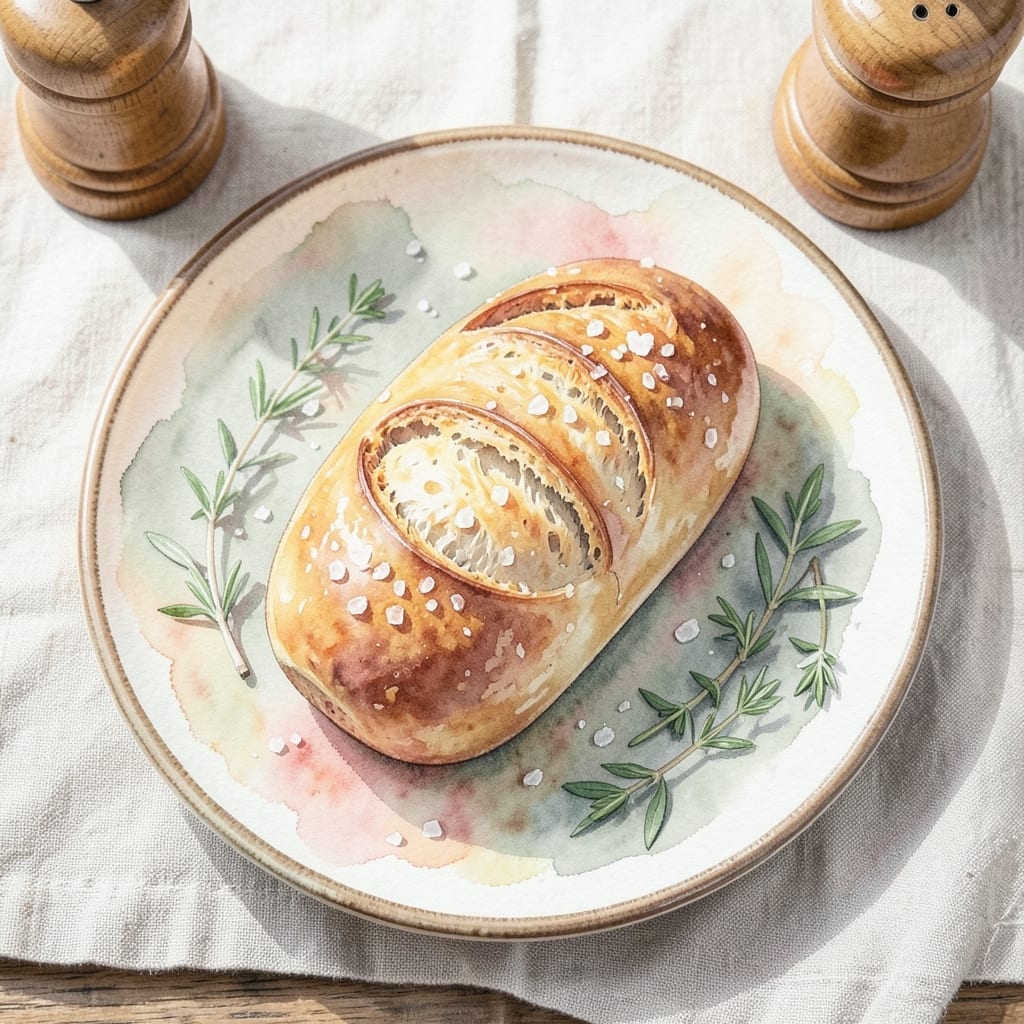
This no-sugar bread delivers the same soft texture and golden crust you expect from classic recipes, without any added sweetness. I developed this version to prove that bread can be both light and flavorful without relying on sugar for color or taste.
The secret lies in using a small amount of honey or maple syrup in the dough—just enough to feed the yeast without making the bread sweet. This creates a perfect rise and that signature bread aroma, while keeping the flavor neutral.
What you get is a loaf with a tender crumb, golden crust, and pure bread flavor that pairs beautifully with both sweet and savory toppings. The technique is simple, requiring only basic ingredients and standard mixing methods.
Perfect for sandwiches, toast, or serving alongside meals when you want bread without the sugar. Here’s how to make it.
Ingredients for Bread Recipe with No Sugar
Basic pantry staples come together for a loaf with golden crust and soft texture.
| Ingredient | Amount | Notes |
|---|---|---|
| Bread Flour 🌾 | 4 cups | All-purpose works in a pinch |
| Active Dry Yeast 🍞 | 2 ¼ tsp | One packet, proofed in warm water |
| Honey 🍯 | 1 tbsp | Feeds yeast, not for sweetness |
| Warm Water 💧 | 1 ¼ cups | 110°F, not hotter |
| Olive Oil 🫒 | 2 tbsp | Extra-virgin for richness |
| Salt 🧂 | 1 ½ tsp | Kosher or sea salt |
| Unsalted Butter 🧈 | 2 tbsp | Melted, for softness |
| Whole Milk 🥛 | ½ cup | Warmed slightly |
| Large Egg 🥚 | 1 whole | Room temperature |
| Maple Syrup 🍁 | 1 tsp | Optional, replaces honey |
The flour is the foundation here. King Arthur bread flour gives you that perfect chew, but all-purpose from any grocery store works fine. I grab mine from Whole Foods when I’m restocking (the bulk bins are great). Yeast is yeast—just check the expiration date. Honey or maple syrup is just for the yeast, not sweetness, so don’t skip it. Look for local honey at farmers markets for best quality.
No honey? Maple syrup works at a 1:1 ratio. Out of bread flour? All-purpose is fine, but the texture will be slightly less chewy. For the milk, 2% or whole milk gives the best crumb, but I’ve used oat milk in a pinch (adds a slight nuttiness). If you don’t have butter, coconut oil works but might alter the flavor slightly. Egg can be skipped, but the crust won’t brown as deeply.
Store flour in an airtight container for up to 6 months. Yeast keeps in the fridge for 1 year unopened. The baked loaf stays fresh wrapped on the counter for 2 days, or freeze slices for up to 3 months.
Why You’ll Love This Recipe
- No Fuss Mixing: Honestly, just stir the yeast into warm water and honey, then fold in flour and olive oil—no stand mixer required.
- Subtle Sweetness: The honey adds just enough natural sweetness without overpowering, so it’s still a classic bread flavor.
- Meal Prep Hero: I bake two loaves on Sunday and we’re set for sandwiches and toast all week.
- Budget Stretch: A pound of bread flour makes two loaves for pennies—way cheaper than store-bought.
Step-by-Step Instructions for Bread With No Sugar
Here’s how I make perfectly soft, fluffy bread without any added sweetness.
Step 1: Activate the Yeast and Prepare Wet Ingredients
In a small bowl, combine the 2.25 tsp Active Dry Yeast with the 1.25 cups Warm Water and the 1 tbsp Honey. The water should feel just warm to the touch—110°F is ideal. Stir gently and let it sit for 5-10 minutes until it becomes foamy on top.
While the yeast activates, warm the 0.5 cup Whole Milk slightly and melt the 2 tbsp Unsalted Butter. In a separate bowl, whisk the 1 whole Large Egg until smooth. The honey here is just to feed the yeast, not to sweeten the bread.
Step 2: Mix Wet and Dry Ingredients
In a large mixing bowl, combine the 4 cups Bread Flour and 1.5 tsp Salt. Make a well in the center and pour in the activated yeast mixture, melted butter, warmed milk, 2 tbsp Olive Oil, and the whisked egg. If you prefer, you can use 1 tsp Maple Syrup instead of honey.
Using a wooden spoon or dough whisk, mix everything together until a shaggy dough forms. You’ll notice the dough starts to pull away from the sides of the bowl. This is when you know it’s ready for kneading. Don’t worry if it looks a bit sticky—that’s normal at this stage.
Step 3: Knead the Dough Until Smooth
Turn the dough out onto a lightly floured surface and knead for 8-10 minutes by hand. I like to push the dough away with the heel of my hand, then fold it back over itself. The dough will be slightly tacky but shouldn’t stick excessively to your hands or the surface.
After a few minutes of kneading, the dough should become smooth and elastic. If it’s too sticky, add a little more bread flour, 1 tablespoon at a time. If it’s too dry, add a splash of warm water. The key is to keep kneading until the dough passes the windowpane test—stretch a small piece thinly, and it should let light through without tearing.
Step 4: Let the Dough Rise Until Doubled
Place the kneaded dough in a lightly oiled bowl, turning it once to coat all sides. Cover the bowl with a clean kitchen towel or plastic wrap and let it rise in a warm, draft-free place for 1 to 1.5 hours, or until it has doubled in size.
I like to preheat my oven to its lowest setting (170°F), then turn it off and place the dough inside to rise. This creates the perfect environment. You’ll know it’s ready when the dough springs back slowly when you press it gently with your finger.
Step 5: Shape, Rise Again, and Bake to Golden Perfection
Punch down the risen dough to release the air, then shape it into a loaf and place it in a greased 9×5-inch loaf pan. Cover it again and let it rise for another 30-45 minutes, or until it domes about 1 inch above the rim of the pan.
Preheat your oven to 375°F. Bake the bread for 25-30 minutes, or until the top is golden brown and the loaf sounds hollow when tapped. If it browns too quickly, tent the pan with foil. Let it cool in the pan for 5 minutes, then transfer to a wire rack to cool completely before slicing.
Pro Tips For Making Bread Recipe With No Sugar
- Check Water Temp: Use a thermometer to hit 105-110°F for the warm water—any hotter and you’ll kill the yeast, any cooler and it won’t activate. I learned this the hard way after a few loaves that refused to rise.
- Swap Honey Wisely: Since there’s no sugar, the honey feeds the yeast—use raw, unprocessed honey for better fermentation. Skip the cheap stuff; it’s thinner and can throw off your liquid ratios.
- Don’t Rush Proofing: Give the dough a full 1-2 hours for the first rise, even if it looks ready sooner. After burning three batches by cutting it short, I finally figured out patience is the thing that matters most here.
- Oil the Bowl: Coat your rising bowl with about 1 teaspoon of olive oil before adding the dough—it prevents sticking and makes cleanup a breeze. Sounds simple, but it actually changes the outcome of your loaf’s texture.
Wine and Beer Pairings for This bread recipe with no sugar
Light White Wines
An unoaked Chardonnay from California pairs beautifully, with its crisp apple notes complementing the bread’s neutral flavor. I love Kendall-Jackson Avant for its balance. A Sauvignon Blanc from New Zealand offers citrusy brightness that cleanses your palate between bites. 🍷
Sparkling Options
Dry Prosecco or Cava works wonderfully—the effervescence cuts through the bread’s richness. For a budget pick, La Marca Prosecco is my go-to. Serve chilled at 45-50°F for best results.
Light Beers
A crisp Pilsner like Stella Artois enhances the bread’s toasty notes without overpowering. For craft lovers, a Kolsch from Reissdorf offers subtle fruitiness. Both styles have the carbonation to refresh your palate. 🍺
Darker Beverages
A dry Amber Ale such as Fat Tire adds caramel notes that pair well with warm slices. Avoid heavy stouts—they’ll overwhelm the bread’s delicate flavor. Serve at 45-50°F for optimal taste.
Non-Alcoholic Pairs
Sparkling water with a squeeze of lemon highlights the bread’s clean taste. For tea drinkers, a chilled green tea like Ito En offers a light, refreshing contrast. Both options work for any meal.
Nutrition Facts
Frequently Asked Questions
Why include honey if it’s sugar-free?
The 1 tbsp Honey is only to feed the yeast, not sweeten the bread. Yeast needs sugar to activate and create gas for rising. The tiny amount used gets consumed entirely during proofing.
Can I skip the honey entirely?
Yes, but replace it with 1 tsp Maple Syrup or 1 tsp Sugar to ensure proper rise. Without any sweetener, the yeast may not activate fully, resulting in dense bread.
How do I know when it’s fully baked?
Check for a golden brown crust and a hollow sound when tapped. The internal temperature should reach 190-200°F on a thermometer. Let it cool 5 minutes before slicing.

- BBQ Sausage Recipe Oven: Smoky Depth Without the Grill - September 28, 2026
- BBQ Chicken Bowl Recipe Rice: Smoky Sweetness Over Fluffy Grains - September 28, 2026
- Beef Cutlet Recipe Ideas: Crispy Breaded Patties With Bold Seasonings - September 28, 2026