
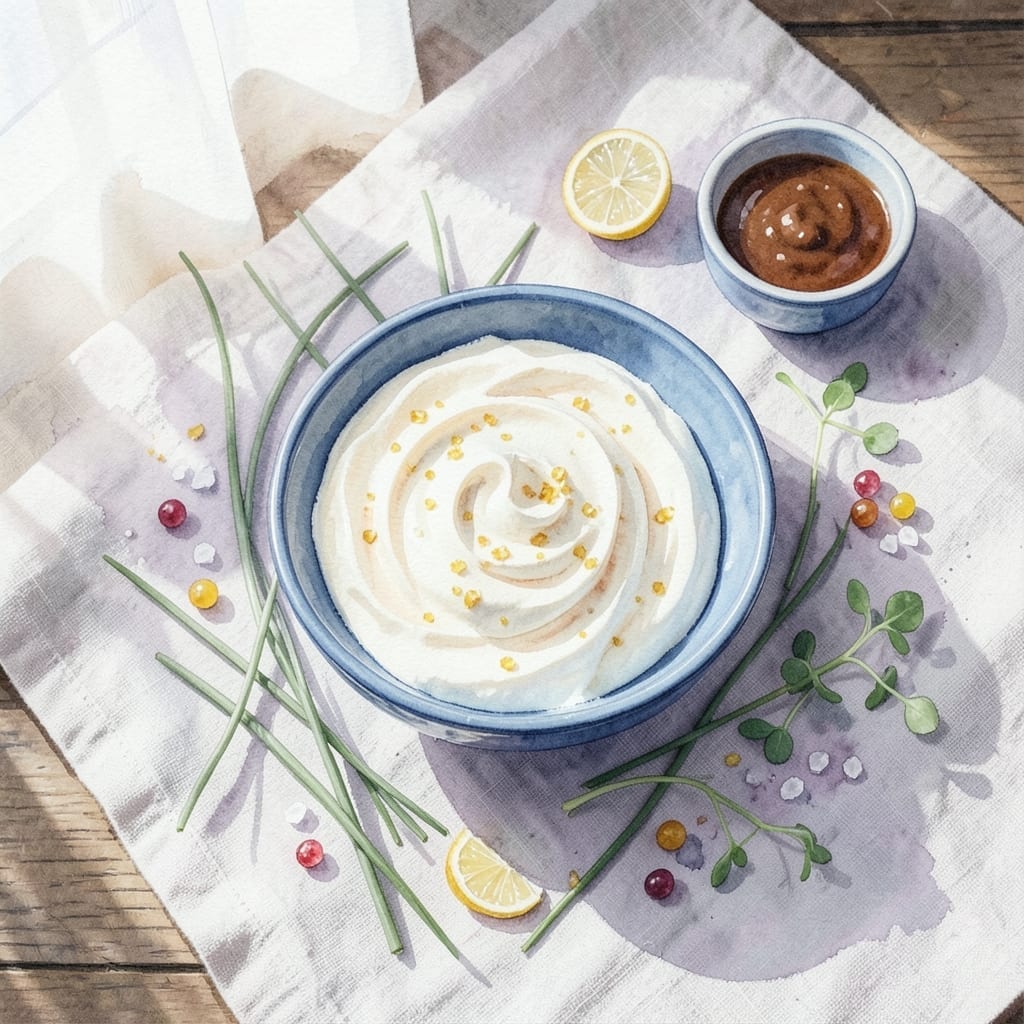
I discovered crème fraîche by accident while trying to salvage sour cream that had sat too long.
This tangy, rich cultured cream is the secret weapon in my kitchen—thicker than sour cream, less likely to curdle, and packed with complex flavor. It takes 24 hours and just two ingredients to make at home.
Use it to elevate everything from baked potatoes to fruit desserts. It adds creamy depth to sauces, makes perfect dips, and even replaces heavy cream in soups without breaking.
The best part? It keeps for weeks in the fridge, so you always have this versatile staple ready.
Ingredients for Creme Fraiche Recipe Ideas
Six simple ingredients create this rich, tangy cultured cream at home.
| Ingredient | Amount | Notes |
|---|---|---|
| Heavy Cream 🥛 | 2 cups | Full-fat, not ultra-pasteurized |
| Buttermilk 🥛 | 2 tbsp | Cultured, for tangy kick |
| Salt 🧂 | ¼ tsp | Fine sea salt preferred |
| Lemon Zest 🍋 | 1 tsp | Optional, for brightness |
| White Pepper 🌶️ | 0.125 tsp | Freshly ground for subtle heat |
| Chives 🌿 | 1 tbsp | Finely chopped, for garnish |
The cream is everything here. Look for heavy cream that’s NOT ultra-pasteurized—it won’t culture properly. Whole Foods and Trader Joe’s usually carry the right kind. Buttermilk adds the tang, but in a pinch, plain yogurt thinned with a little milk works too (the good stuff, not the flavored kind). I always grab organic when I can afford it, but conventional is fine.
No buttermilk? Plain yogurt with a splash of milk gets you close. Want more tang? Add an extra tablespoon of lemon juice. The salt can be eyeballed, but don’t skip it—it balances the richness. If you’re using this in dips, garlic powder or dried dill are great additions (just fold them in after it’s done).
Stores in the fridge for 2-3 weeks—honestly gets better with age. The texture thickens as it sits. Freezing isn’t ideal (it separates), but 3 months is doable if you really need to. Just give it a good stir after thawing.
Why You’ll Love This Recipe
- Two Ingredients: I just mix heavy cream and buttermilk, then let it sit—no cooking, no fuss.
- Bright & Tangy: That hint of lemon zest and white pepper gives it a subtle zing that’s way better than store-bought.
- Endless Uses: I dollop it on soups, fold it into mashed potatoes, or spread it on toast with smoked salmon.
- Stays Fresh: Honestly, it keeps for weeks in the fridge, so I always have some ready for last-minute meals.
Step-by-Step Instructions for Homemade Crème Fraîche
This simple process takes just minutes to start and yields rich, tangy results.
Step 1: Combine Cream and Cultured Buttermilk
Pour the 2 cups Heavy Cream into a clean glass jar or bowl with a lid. I prefer a wide-mouth mason jar for easy mixing and storage. The cream needs to be full-fat and not ultra-pasteurized, as this affects the culture’s ability to develop properly.
Add the 2 tbsp Buttermilk to the cream. The buttermilk provides the live cultures that will thicken and ferment the cream. Stir gently with a wooden spoon or silicone spatula until just combined—you don’t want to whip air into the mixture. The cream should look smooth with no visible streaks of buttermilk.
Step 2: Season and Flavor the Base
Sprinkle in the 0.25 tsp Salt, 0.125 tsp White Pepper, and 1 tsp Lemon Zest. I use fine sea salt for even distribution, and freshly ground white pepper for a subtle, earthy heat without black specks. The lemon zest adds a bright, citrusy note that balances the richness.
Stir these seasonings into the cream mixture thoroughly. Make sure the salt and pepper are fully dissolved and the lemon zest is evenly dispersed. You should see tiny flecks of zest throughout the cream, and the mixture should smell slightly tangy with a hint of citrus.
Step 3: Cover and Ferment at Room Temperature
Cover the jar or bowl with a clean kitchen towel or loose-fitting lid. The covering should allow airflow while protecting the mixture from dust or debris. Place it in a warm spot in your kitchen, ideally where the temperature stays around 70-75°F.
Let the mixture sit undisturbed for 12-24 hours. You’ll notice it beginning to thicken after about 8 hours, but the full fermentation time develops the characteristic tang. The cream is ready when it has the consistency of thick sour cream and a pleasantly sharp, yogurt-like flavor.
Step 4: Chill and Finish with Fresh Chives
Once thickened, stir the crème fraîche gently to incorporate any liquid that may have separated. Transfer it to the refrigerator and chill for at least 4 hours to halt the fermentation process and allow the flavors to meld.
Just before serving, stir in the 1 tbsp Chives. The fresh, mild onion flavor of the chives complements the tangy cream beautifully. The crème fraîche should now be thick, creamy, and full of complex, tangy flavor with a hint of brightness from the lemon and fresh herbs.
Pro Tips For Making Creme Fraiche Recipe Ideas
- Warm the Cream: Take the heavy cream out of the fridge 30 minutes before mixing—I learned this the hard way after my first batch curdled because it was too cold.
- Use Full-Fat Buttermilk: Skip the low-fat versions; full-fat buttermilk gives crème fraîche that rich, velvety texture it’s known for.
- Skip the Overmixing: Stir just until combined, then let it sit—overworking the cream can break the emulsion and ruin the consistency.
- Add Zest Last: Fold in the lemon zest and white pepper after the crème fraîche has thickened, so the flavors stay bright and don’t get lost in the fermentation.
Common Mistakes When Making creme fraiche recipe ideas
Wrong Cream Choice
Using ultra-pasteurized heavy cream is the most common mistake—it won’t culture properly because the pasteurization process kills the good bacteria. I learned this the hard way with my first failed batch. Always check the label for non-ultra-pasteurized cream. 💡
Skipping the Warm Spot
If your kitchen is too cold (below 70°F), fermentation will take much longer or fail entirely. I place my jar near the oven (turned off) or on top of the fridge where it stays warm. A consistent temperature is key for that perfect tangy flavor.
Overmixing the Cream
Vigorously stirring the cream and buttermilk can introduce too much air, leading to a thin, foamy texture instead of thick crème fraîche. Just mix gently until combined—think 3-4 slow stirs with a wooden spoon. Less is more here.
Rushing the Fermentation
Checking the mixture every hour or moving it around can disrupt the culturing process. I set a timer for 12 hours and leave it undisturbed. The longer it sits (up to 24 hours), the tangier and thicker it becomes.
Adding Fresh Herbs Too Soon
Folding in fresh herbs like chives before fermentation can introduce moisture and bacteria, risking spoilage. Wait until after chilling to add 1 tbsp chives or other fresh herbs. This keeps the flavor clean and the texture perfect.
Ignoring Separation
A little liquid separation is normal—don’t pour it out! Just stir it back in before chilling. If you see excessive separation or an off smell, the batch may have gone bad. Properly cultured crème fraîche should smell fresh and tangy, not sour or funky.
Nutrition Facts
Frequently Asked Questions
Can I use this in place of sour cream?
Yes! It works perfectly as a 1:1 substitute in dips, baked potatoes, or garnishes. The texture is similar, but the flavor is richer and less likely to curdle when heated.
How long does homemade crème fraîche last?
It stays fresh in the fridge for 2-3 weeks in an airtight container. The flavor actually deepens over time, making it even more delicious for later use.
What if my mixture doesn’t thicken?
Check your cream wasn’t ultra-pasteurized and that it stayed at 70-75°F for 24 hours. If still thin, try adding a bit more buttermilk and waiting another 12 hours.

- BBQ Sausage Recipe Oven: Smoky Depth Without the Grill - September 28, 2026
- BBQ Chicken Bowl Recipe Rice: Smoky Sweetness Over Fluffy Grains - September 28, 2026
- Beef Cutlet Recipe Ideas: Crispy Breaded Patties With Bold Seasonings - September 28, 2026