
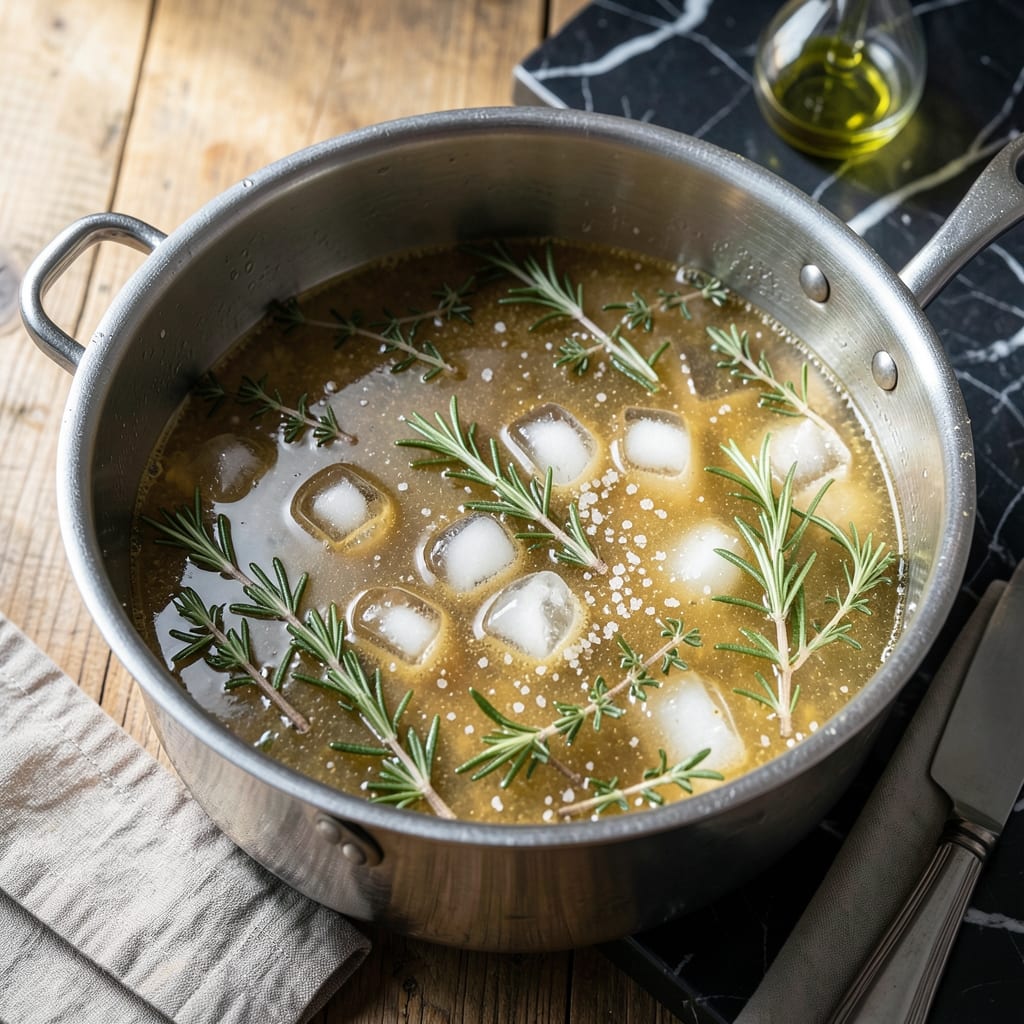
This brining method guarantees juicy, tender Cornish hens every time by locking in moisture before cooking. The simple salt-sugar solution works its magic in just a few hours, transforming lean poultry into succulent, flavorful birds.
I’ve tested countless ratios and soaking times, and this approach consistently delivers moist results without overpowering the natural taste of the meat. The brine penetrates deep, ensuring each bite stays rich and satisfying.
After brining, the hens roast to golden perfection, with skin that crisps beautifully while the meat inside remains perfectly tender. It’s a foolproof way to elevate your poultry game.
Serve these hens as the centerpiece of a special meal. The difference in texture and flavor will speak for itself.
Ingredients for Brine Recipe for Cornish Hens
Simple brine ingredients transform lean hens into juicy, tender centerpieces with minimal effort.
| Ingredient | Amount | Notes |
|---|---|---|
| Cornish Hens 🍗 | 4 whole | Thawed if frozen, giblets removed |
| Water 💧 | 8 cups | Cold, for brine base |
| Kosher Salt 🧂 | ¾ cup | Diamond Crystal preferred for consistency |
| Granulated Sugar 🍚 | ½ cup | Balances salt, aids browning |
| Fresh Rosemary Sprigs 🌿 | 4 whole | Bruised to release oils |
| Fresh Thyme Sprigs 🍃 | 4 whole | Optional but recommended |
| Garlic Cloves 🧄 | 6 cloves | Smashed, peeled |
| Black Peppercorns 🌶️ | 1 tbsp | Lightly crushed |
| Bay Leaves 🍂 | 2 whole | Dried, for depth |
| Lemon Slices 🍋 | 2 whole | Thinly sliced, seeds removed |
| Ice ❄️ | 2 cups | To chill brine quickly |
| Olive Oil 🫒 | 2 tbsp | For post-brine patting |
The salt is non-negotiable—Diamond Crystal kosher salt is the gold standard here (its coarse texture dissolves perfectly in cold water). Most grocery stores carry it, but if yours doesn’t, Morton’s kosher works too—just cut the amount by 25% since it’s finer. Fresh herbs make a difference, but dried in a pinch (use half the quantity of fresh). I grab my herbs from Whole Foods—they’ve got the best selection.
No kosher salt? Table salt at half the volume (it’s denser). Swap sugar for brown sugar or maple syrup—same effect. Fresh out of herbs? Dried Italian seasoning works fine. The garlic can be skipped, but why would you? Trader Joe’s pre-peeled cloves save time. Bay leaves are optional but add that subtle depth—don’t skip the lemon though.
Brine keeps in the fridge for 24 hours max (after that, it’s just salty water). Hens can stay in the brine 4-12 hours—overnight works great. Discard the brine after use. Leftovers? The cooked hens keep 3-4 days in the fridge.
Why You’ll Love This Recipe
- 5-Minute Prep: I just mix water, salt, sugar, and rosemary in a pot—no chopping, no fuss.
- Juicy Every Time: The brine keeps the hens so tender, with rosemary adding that earthy depth I crave.
- Holiday or Tuesday: Honestly, it’s my go-to for fancy dinners or a cozy weeknight in.
- Leftovers? Yes Please: The brined hens reheat beautifully, so I always make extra for sandwiches the next day.
Step-by-Step Instructions for Brine for Cornish Hens
Here’s how to brine cornish hens for maximum tenderness and juiciness every time.
Step 1: Prepare the Aromatic Brine Base
In a large stockpot, combine the 8 cups Water with the 0.75 cup Kosher Salt and 0.5 cup Granulated Sugar. Stir over medium heat until both the salt and sugar dissolve completely—the liquid should be clear, not cloudy.
Add the 4 whole Fresh Rosemary Sprigs, 4 whole Fresh Thyme Sprigs, 6 cloves Garlic Cloves, 1 tbsp Black Peppercorns, 2 whole Bay Leaves, and 2 whole Lemon Slices. These aromatics infuse the brine with layers of flavor that penetrate deep into the meat.
Step 2: Chill the Brine to Safe Temperature
Remove the pot from heat and add the 2 cups Ice. Stir until the ice melts and the brine cools to room temperature—this should take about 10-15 minutes. You’ll know it’s ready when the pot feels cool to the touch.
This step is critical: submerging the cornish hens in hot brine would start cooking the meat and could lead to dryness. The brine must be completely cool before you add the birds to ensure even absorption without partial cooking.
Step 3: Submerge the Cornish Hens in Brine
Place the 4 whole Cornish Hens in a large container or brining bag. Pour the cooled brine over them, making sure they’re fully submerged. If needed, weigh them down with a plate to keep them under the liquid.
Refrigerate for 4-6 hours. This is the sweet spot for cornish hens—long enough to ensure deep flavor penetration and moisture retention, but not so long that the meat becomes overly salty. You’ll notice the hens plump up as they absorb the brine.
Step 4: Remove and Pat Dry for Optimal Browning
After brining, remove the hens from the liquid and discard the brine. Pat them completely dry with paper towels—this step is non-negotiable for achieving crispy skin later.
Drizzle the 2 tbsp Olive Oil over the hens and rub it evenly across the skin. This creates a barrier that helps lock in moisture during cooking while promoting even browning. The skin should feel slightly tacky but not wet.
Let them air-dry in the refrigerator uncovered for 1 hour before cooking. This final step ensures the skin crisps beautifully, delivering that perfect contrast to the moist, tender meat inside.
Pro Tips For Making Brine Recipe For Cornish Hens
- Brine Overnight: I learned this the hard way—give the hens at least 12 hours in the brine for the salt and rosemary to fully penetrate. Anything less and the flavor stays on the surface.
- Use Warm Water: Start with warm water to dissolve the kosher salt and sugar completely before adding cold water and ice. This prevents grainy undissolved bits clinging to the hens.
- Skip the Overcrowding: Resist the urge to cram all the hens into one small container. Use a large pot or divide them so the brine fully covers each bird.
- Rinse Before Cooking: After brining, give the hens a quick cold water rinse and pat them dry. This removes excess salt on the surface and helps the skin crisp up properly.
Wine and Beer Pairings for This Dish
White Wine Pairings
A crisp Sauvignon Blanc from New Zealand cuts through the richness of brined hens beautifully. The bright acidity and citrus notes complement the herbaceous brine flavors. I recommend Kim Crawford for a reliable, food-friendly option. 🍷
Red Wine Options
For red lovers, a light-bodied Pinot Noir from Oregon works wonderfully. The earthy notes and subtle fruit harmonize with the rosemary and thyme in the brine. Try Domaine Drouhin for a classic choice.
Sparkling Choices
A dry Prosecco or Cava offers refreshing contrast to the savory hens. The bubbles cleanse your palate between bites. I always keep a bottle of La Marca Prosecco on hand for special meals.
Craft Beer Pairings
A Belgian-style witbier like Blue Moon enhances the citrus and herb notes from the brine. The slight spice and orange peel flavors create a perfect match. Serve chilled in a wheat beer glass. 🍺
Malty Beer Alternatives
An amber ale with caramel notes, such as Fat Tire, complements the savory depth of the hens. The malt sweetness balances the saltiness from the brine without overpowering.
Non-Alcoholic Options
For alcohol-free pairings, try sparkling apple cider or a rosemary-infused lemonade. Both echo the brine’s aromatic profile while refreshing your palate between bites.
Nutrition Facts
Frequently Asked Questions
How long should I brine Cornish hens?
Brine them for 4-6 hours in the refrigerator. This is the ideal window to ensure moisture retention and flavor penetration without making the meat too salty.
Can I reuse the brine?
No, always discard the brine after use. Reusing it risks bacterial contamination and won’t be as effective for flavor or texture. Safety first!
Do I need to rinse the hens after brining?
No rinsing needed—just pat them completely dry with paper towels. This helps achieve crispy skin when cooked and prevents diluting the flavors.
What if I don’t have kosher salt?
Use table salt but reduce the amount by 25% since it’s denser. The brine must stay balanced to avoid over-salting the meat.

- BBQ Sausage Recipe Oven: Smoky Depth Without the Grill - September 28, 2026
- BBQ Chicken Bowl Recipe Rice: Smoky Sweetness Over Fluffy Grains - September 28, 2026
- Beef Cutlet Recipe Ideas: Crispy Breaded Patties With Bold Seasonings - September 28, 2026