
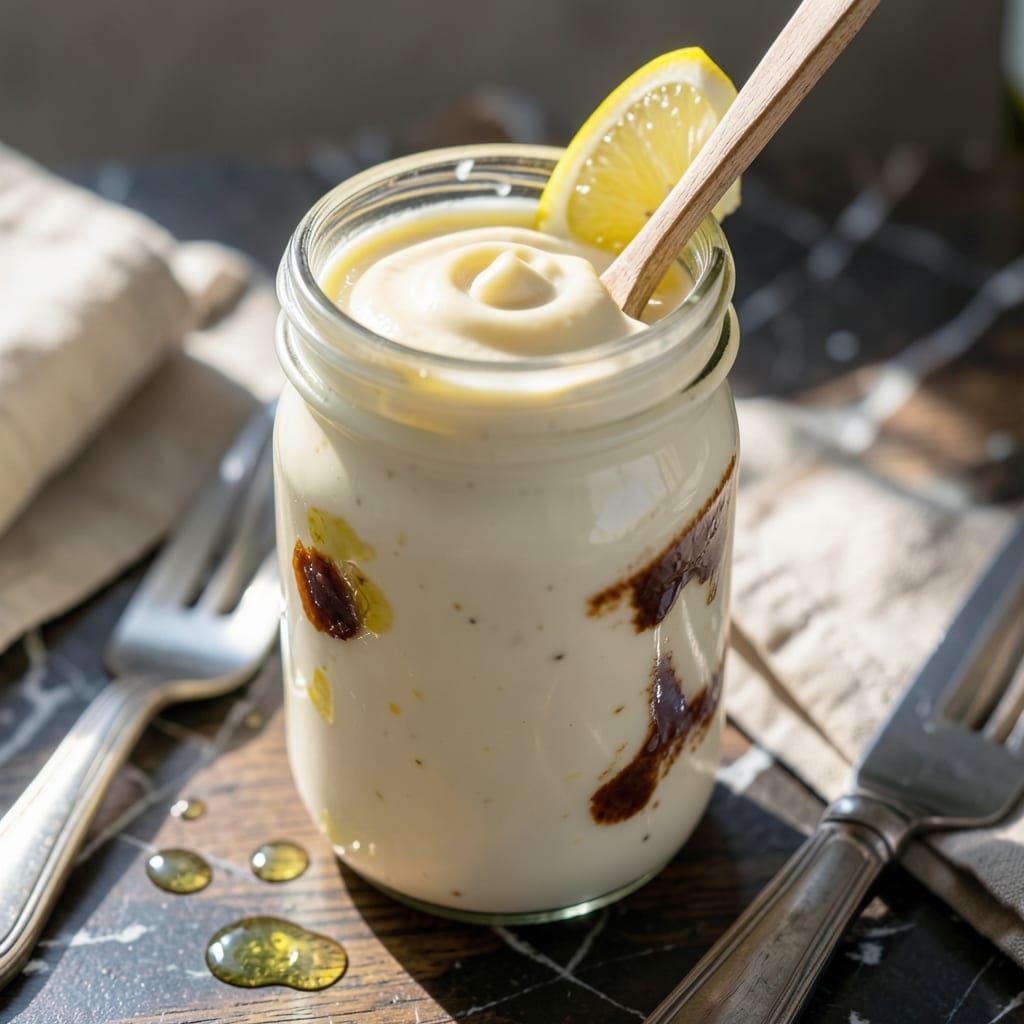
I’ve tested countless methods for making mayonnaise, and the immersion blender technique consistently delivers the silkiest results with minimal effort. This approach transforms simple ingredients into a creamy, stable emulsion in under a minute.
The secret lies in the gradual incorporation of oil while the blender runs, creating tiny droplets that suspend perfectly in the egg yolk. No whisking fatigue, no separation—just foolproof mayonnaise every time.
What you’ll get is a rich, velvety condiment that outperforms any store-bought version. The texture is luxurious, the flavor is fresh, and the process is so simple you’ll never go back to the jarred stuff.
Use it immediately or store it in the fridge for up to a week. This method redefines homemade mayonnaise.
Ingredients for Homemade Mayonnaise Recipe Immersion Blender
Seven simple components create that luxurious, velvety texture you expect from professional kitchens.
| Ingredient | Amount | Notes |
|---|---|---|
| Large Egg Yolk 🥚 | 1 whole | Room temperature for best emulsion |
| White Wine Vinegar 🍷 | 1 tbsp | Or apple cider vinegar |
| Dijon Mustard 🟡 | 1 tsp | Smooth, not whole grain |
| Neutral-Flavored Oil 🫒 | 1 cup | Avocado, light olive, or grapeseed |
| Salt 🧂 | ¼ tsp | Fine sea salt preferred |
| White Pepper ⚪ | 0.125 tsp | Optional, for clean appearance |
| Lemon Juice 🍋 | ½ tsp | Freshly squeezed for brightness |
The oil is critical here. Avocado oil has the highest smoke point and neutral flavor, but light olive oil (not extra-virgin) works well too. Grapeseed oil is another excellent choice. Avoid strongly flavored oils—they’ll overpower the emulsion. Egg temperature matters: room temperature yolks emulsify more readily than cold ones. Most grocery stores carry all these, but Whole Foods has a great selection of neutral oils in bulk.
No white wine vinegar? Apple cider vinegar or lemon juice at equal amounts works perfectly. The mustard acts as an emulsifier—Dijon is ideal, but yellow mustard in a pinch. For a tangier mayo, increase the vinegar to 1.5 tbsp. If you’re worried about raw eggs, pasteurized eggs are available at most supermarkets. The salt should be fine-grained so it dissolves completely.
This keeps beautifully in the fridge for 1 week—the flavors actually improve after a day. Store in a glass jar with a tight lid. If separation occurs (unlikely with this method), just give it a quick whisk. Freezing isn’t recommended as it breaks the emulsion. Perfect for sandwiches, dips, or salad dressings.
Why You’ll Love This Recipe
- Blender Magic: I just dump everything in a tall jar, blitz with the immersion blender, and watch it transform into creamy mayo in seconds.
- Tangy Perfection: The white wine vinegar and Dijon mustard give it that bright, bold kick that store-bought can’t touch.
- Endless Uses: I spread it on sandwiches, mix it into dressings, or dollop it on fries—it’s my kitchen multitasker.
- Pantry Staple: Honestly, I save money making my own and it keeps for a week in the fridge, so I always have some on hand.
Step-by-Step Instructions for Homemade Mayonnaise with an Immersion Blender
Master the emulsion technique and you’ll achieve restaurant-quality mayonnaise with minimal effort.
Step 1: Combine the Base Ingredients
Place the 1 whole Large Egg Yolk, 1 tbsp White Wine Vinegar, and 1 tsp Dijon Mustard into a container just wide enough to fit your immersion blender. I use a tall, narrow mason jar for this—it creates the perfect vortex for emulsification.
The egg yolk acts as your emulsifier, while the vinegar and mustard add acidity and depth of flavor. Make sure your egg yolk is at room temperature; cold ingredients can prevent proper emulsification. The mustard also helps stabilize the emulsion, so don’t skip it.
Step 2: Begin the Emulsion Process
Insert the immersion blender all the way to the bottom of the container. Pulse it a few times to combine the base ingredients, then leave it running continuously. With the blender still running, begin adding the 1 cup Neutral-Flavored Oil in a very thin, steady stream.
This is the critical moment. The oil must incorporate slowly to create a stable emulsion. If you add it too quickly, the mayonnaise will break. I pour the oil in a slow trickle, letting each addition fully incorporate before adding more. You’ll see the mixture begin to thicken and turn pale yellow as the emulsion forms.
Step 3: Finish with Seasonings and Lemon Juice
Once all the Neutral-Flavored Oil has been incorporated and the mayonnaise has thickened significantly, add the 0.25 tsp Salt, 0.125 tsp White Pepper, and 0.5 tsp Lemon Juice. Pulse the immersion blender a few more times to distribute the seasonings evenly.
The salt enhances all the flavors, while the white pepper adds a subtle heat without the visual specks of black pepper. The lemon juice brightens the flavor and balances the richness of the oil. Taste and adjust seasoning if needed, but remember that flavors will develop slightly as the mayonnaise rests.
Step 4: Check Consistency and Adjust
Turn off the blender and examine your mayonnaise. It should be thick, creamy, and pale with a glossy sheen. If it’s too thick, you can thin it with a teaspoon of water or additional vinegar. If it’s too thin, blend in a bit more oil, a teaspoon at a time.
If the mayonnaise breaks (separates into oil and liquid), don’t panic. Simply start over with a fresh egg yolk in a clean container, then slowly drizzle in the broken mayonnaise while blending. It will come back together. This technique works because the fresh yolk acts as a new emulsifier for the separated mixture.
Transfer the finished mayonnaise to a clean jar and store it in the refrigerator for up to 1 week. The flavors will meld and improve over the first 24 hours.
Pro Tips For Making Homemade Mayonnaise Recipe Immersion Blender
- Use Room-Temp Eggs: Cold eggs resist emulsifying—I learned this the hard way after three broken batches. Pull your egg out 30 minutes before blending.
- Drip the Oil Slowly: Start with a thin, steady stream of oil, especially in the first 30 seconds. After burning two attempts rushing it, I now count to 10 before speeding up.
- Acid First, Then Oil: Blend the yolk, vinegar, and mustard for 5 seconds before adding oil. Sounds weird, but it works: the acid jumpstarts the emulsion.
- Skip Cheap Oil: That bargain vegetable oil smells fine in the bottle but tastes harsh in mayo. A mid-range neutral oil like avocado or light olive oil actually changes the outcome.
Troubleshooting This Recipe
Too Thin or Runny
If your mayo looks thin, continue blending while drizzling in 1-2 tsp more oil. The emulsion needs more fat to stabilize. I’ve found that avocado oil works best for thickening because of its high viscosity. 💡
Mayo Breaks or Separates
This happens when oil is added too quickly. To fix, place a fresh egg yolk in a clean container, then slowly drizzle in the broken mixture while blending. The new yolk will re-emulsify everything beautifully.
Overly Thick Texture
If it’s too stiff, thin it with 1 tsp water, vinegar, or lemon juice at a time. Pulse the blender between additions. The acidity will loosen it without breaking the emulsion.
Weak or Bland Flavor
Taste and adjust seasoning with more salt or a splash of lemon juice. Remember, flavors develop over 24 hours in the fridge, so give it time before adding too much.
Lumpy or Uneven
If you see streaks or lumps, keep blending for 10-15 seconds longer. The immersion blender should smooth everything out. Ensure your container is narrow enough for proper vortex formation.
Oil Pooling on Top
This means the oil didn’t incorporate fully. Use a spoon to gently mix the pooled oil back in, then blend for 5-10 seconds more. If it persists, you may need to restart with a fresh yolk.
Nutrition Facts
Frequently Asked Questions
Can I use a whole egg instead of just the yolk?
Yes, but it will create a lighter, less rich result. A whole egg makes slightly more mayonnaise with a paler color. For best texture, stick to the 1 egg yolk as specified.
What if I don’t have Dijon mustard?
Substitute with 1 tsp yellow mustard or ½ tsp dry mustard powder. The acidity and emulsifying properties are similar, though the flavor will be slightly different.
How do I fix mayonnaise that’s too tangy?
Balance the acidity by blending in ½ tsp sugar or an extra 1-2 tbsp oil. Taste as you go to avoid overcorrecting.
Can I use extra-virgin olive oil?
It’s not recommended—the strong flavor can overpower the mayonnaise. If you must, use a mild extra-virgin and mix it with a neutral oil.

- BBQ Sausage Recipe Oven: Smoky Depth Without the Grill - September 28, 2026
- BBQ Chicken Bowl Recipe Rice: Smoky Sweetness Over Fluffy Grains - September 28, 2026
- Beef Cutlet Recipe Ideas: Crispy Breaded Patties With Bold Seasonings - September 28, 2026