
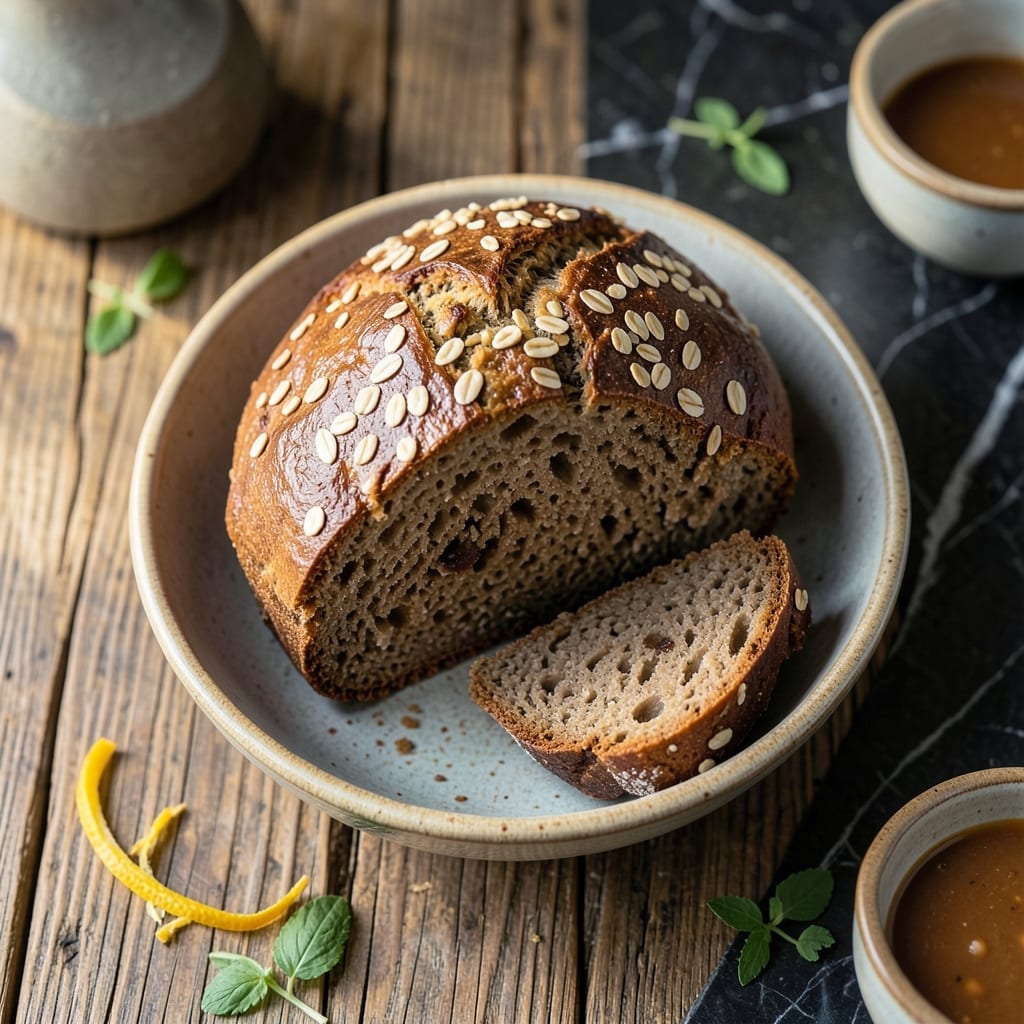
This traditional Irish brown bread captures the rustic charm of whole wheat with a touch of molasses depth. A staple in Irish kitchens, it delivers hearty texture and rich flavor.
The recipe honors authentic techniques, using simple ingredients to create a loaf that’s both nourishing and deeply satisfying. Baked to a deep golden crust, it’s perfect with butter or alongside stews.
Ingredients for Brown Bread Recipe Ireland
Whole wheat flour and molasses create this traditional loaf with rustic character and depth.
| Ingredient | Amount | Notes |
|---|---|---|
| Whole Wheat Flour 🌾 | 3 cups | Stone-ground preferred for texture |
| All-Purpose Flour 🌾 | 1 cup | For lighter crumb structure |
| Old-Fashioned Oats 🥣 | ½ cup | Rolled, not instant variety |
| Molasses 🍯 | ¼ cup | Unsulphured for cleaner flavor |
| Buttermilk 🥛 | 1 ½ cups | Full-fat for authentic richness |
| Baking Soda 🧂 | 1 tsp | Fresh for optimal rise |
| Salt 🧂 | 1 tsp | Fine sea salt preferred |
| Unsalted Butter 🧈 | 2 tbsp | Melted for dough enrichment |
| Large Egg 🥚 | 1 whole | Room temperature for binding |
| Wheat Bran 🌾 | ¼ cup | Optional for extra fiber |
The flours are critical here. Stone-ground whole wheat gives authentic texture—look for it at Whole Foods or natural food stores. Old-fashioned oats (the thick, flat kind) add chew, while all-purpose lightens the crumb. Buttermilk must be full-fat; reduced-fat versions lack the tang and richness this bread demands. For molasses, unsulphured is essential—sulphured has a bitter edge that overpowers.
No buttermilk? Whole milk plus 1 tbsp lemon juice works in a pinch. Swap molasses for dark corn syrup if needed, though the flavor shifts slightly. Adding 1 tbsp honey balances the molasses depth. The egg can be omitted, but the loaf will be denser. For a lighter texture, replace 1/4 cup flour with bread flour—this mimics Irish bread flour’s higher protein.
This bread stays fresh 3-4 days wrapped in beeswax cloth at room temperature. For longer storage, slice and freeze for up to 3 months. Toast slices to revive. Best served warm with butter, or alongside hearty stews as the Irish do.
Why You’ll Love This Recipe
- I’ll be real: I bake it Sunday and we’re still enjoying it Thursday, no stale crumbs in sight.
- One Bowl Wonder: I mix everything right in the bowl—no fancy steps, just whole wheat flour, oats, and buttermilk coming together in minutes.
- Rich & Malty: The molasses gives it a deep, almost caramel-like sweetness that balances the nuttiness of the whole wheat perfectly.
- Breakfast or Tea: Honestly, it’s just as good toasted with butter for breakfast as it is served with soup for dinner.
Step-by-Step Instructions for Traditional Irish Brown Bread
This method honors the classic technique while ensuring consistent, perfect results every time.
Step 1: Combine Dry Ingredients for Structure
In a large mixing bowl, whisk together the 3 cups Whole Wheat Flour, 1 cup All-Purpose Flour, 0.5 cup Old-Fashioned Oats, 1 tsp Baking Soda, and 1 tsp Salt. I use stone-ground whole wheat flour for its coarse texture, which gives the bread its characteristic hearty bite.
The all-purpose flour lightens the crumb, while the oats add a subtle nutty flavor and chewy texture. Ensure the baking soda is fresh—its leavening power is crucial for proper rise. Make a well in the center of the dry ingredients to receive the wet mixture.
Step 2: Prepare and Incorporate Wet Ingredients
In a separate bowl, beat the 1 whole Large Egg lightly, then whisk in the 0.25 cup Molasses, 1.5 cups Buttermilk, and 2 tbsp Unsalted Butter (melted and cooled slightly). The unsulphured molasses provides a deep, mellow sweetness without bitterness, while full-fat buttermilk ensures richness and tenderness.
Pour the wet ingredients into the well of the dry mixture. Using a wooden spoon, stir gently until just combined—overmixing will develop gluten, resulting in a dense loaf. The batter should be thick but pourable, with a slightly lumpy texture. If using, fold in the 0.25 cup Wheat Bran at this stage for added fiber.
Step 3: Bake Until Golden and Hollow-Sounding
Preheat your oven to 375°F and grease a 9×5-inch loaf pan. Pour the batter into the pan, smoothing the top with a spatula. The loaf should fill the pan about two-thirds full to allow for rising.
Bake for 50-60 minutes until the bread is deep golden brown and a skewer inserted into the center comes out clean. For an additional test, tap the top of the loaf—it should sound hollow. This auditory cue confirms the bread is fully baked through.
Step 4: Cool Completely Before Slicing
Remove the bread from the oven and let it cool in the pan for 10 minutes. Then, transfer it to a wire rack to cool completely, which takes about 1 hour. Slicing too soon will result in a gummy texture, as the internal structure needs time to set.
The finished loaf should have a sturdy, slightly domed top with a crack running lengthwise—a hallmark of traditional Irish brown bread. The crust will be firm, while the interior remains moist and dense, perfect for slathering with butter or pairing with hearty stews.
Pro Tips For Making Brown Bread Recipe Ireland
- Warm the Molasses: I learned this the hard way—cold molasses sticks to the measuring cup and leaves half the flavor behind. Warm it slightly in the microwave for 10-15 seconds, then it pours clean and mixes evenly into the buttermilk. —
- Don’t Overmix: After burning three loaves, I finally figured out that this dough only needs a gentle hand. Stir just until the flours are moistened—overworking it makes the bread dense, not tender. —
- Use Fresh Buttermilk: Sounds weird, but it works: stale buttermilk won’t react properly with the baking soda, and your bread won’t rise. If yours is past its prime, add a teaspoon of lemon juice to fresh milk instead. —
- Bake Hot, Then Cool: Start the oven at 400°F for the first 15 minutes to get a good crust, then drop to 350°F to finish. I used to rush this part and wondered why my loaf never had that classic Irish brown bread texture.
Dietary Considerations for This Recipe
Gluten-Free Adaptation
For a gluten-free version, swap the whole wheat flour for a blend of 1.5 cups gluten-free oat flour and 1.5 cups almond flour. Replace the all-purpose flour with 1 cup tapioca starch for structure. The texture will be denser but still delicious. I’ve tested this with Bob’s Red Mill flours with good results. 💪
Dairy-Free Option
To make this dairy-free, use unsweetened almond milk mixed with 1 tbsp lemon juice instead of buttermilk. Replace the butter with 2 tbsp coconut oil (melted). The flavor remains rich, though slightly coconut-forward, which complements the molasses well.
Vegan Modifications
For a fully vegan loaf, omit the egg and add 1 tbsp ground flaxseed mixed with 3 tbsp water as a binder. Use the dairy-free swaps above. The bread will be slightly denser but still hearty and flavorful. I often add 1 extra tbsp molasses to enhance moisture.
Nut Allergy Note
If nut allergies are a concern, avoid almond flour and use 1.5 cups gluten-free all-purpose flour (like King Arthur’s) plus 0.5 cup coconut flour. Adjust the buttermilk quantity to 1.75 cups for proper hydration, as coconut flour absorbs more liquid.
Lower Sugar Alternative
To reduce sugar, cut the molasses to 2 tbsp and add 1 tbsp blackstrap molasses for depth. Replace the rest with unsweetened applesauce to maintain moisture. The bread will be less sweet but still rich in flavor. This works well for those watching their sugar intake. ✨
Fiber Boost
For extra fiber, increase the wheat bran to ½ cup or add ¼ cup ground flaxseed. Both blend seamlessly into the batter and enhance the bread’s nutritive profile without altering the texture significantly. This is my go-to for a morning toast that keeps me full for hours.
Frequently Asked Questions
Why use both whole wheat and all-purpose flour?
Whole wheat provides hearty texture and nutty flavor, while all-purpose lightens the crumb. This blend creates the perfect balance for authentic Irish brown bread.
Can I substitute honey for molasses?
Yes, but the flavor will be milder and less complex. Use 1/3 cup honey and add 1 tsp blackstrap molasses for depth. The bread may be slightly sweeter.
How do I know when it’s fully baked?
The top should be deep golden brown and sound hollow when tapped. A skewer inserted in the center should come out clean after 50-60 minutes at 375°F.
Why is my bread dense?
Overmixing develops gluten, creating a heavy loaf. Stir just until combined. Also, ensure your baking soda is fresh for proper rise.
Nutrition Facts

- BBQ Sausage Recipe Oven: Smoky Depth Without the Grill - September 28, 2026
- BBQ Chicken Bowl Recipe Rice: Smoky Sweetness Over Fluffy Grains - September 28, 2026
- Beef Cutlet Recipe Ideas: Crispy Breaded Patties With Bold Seasonings - September 28, 2026