
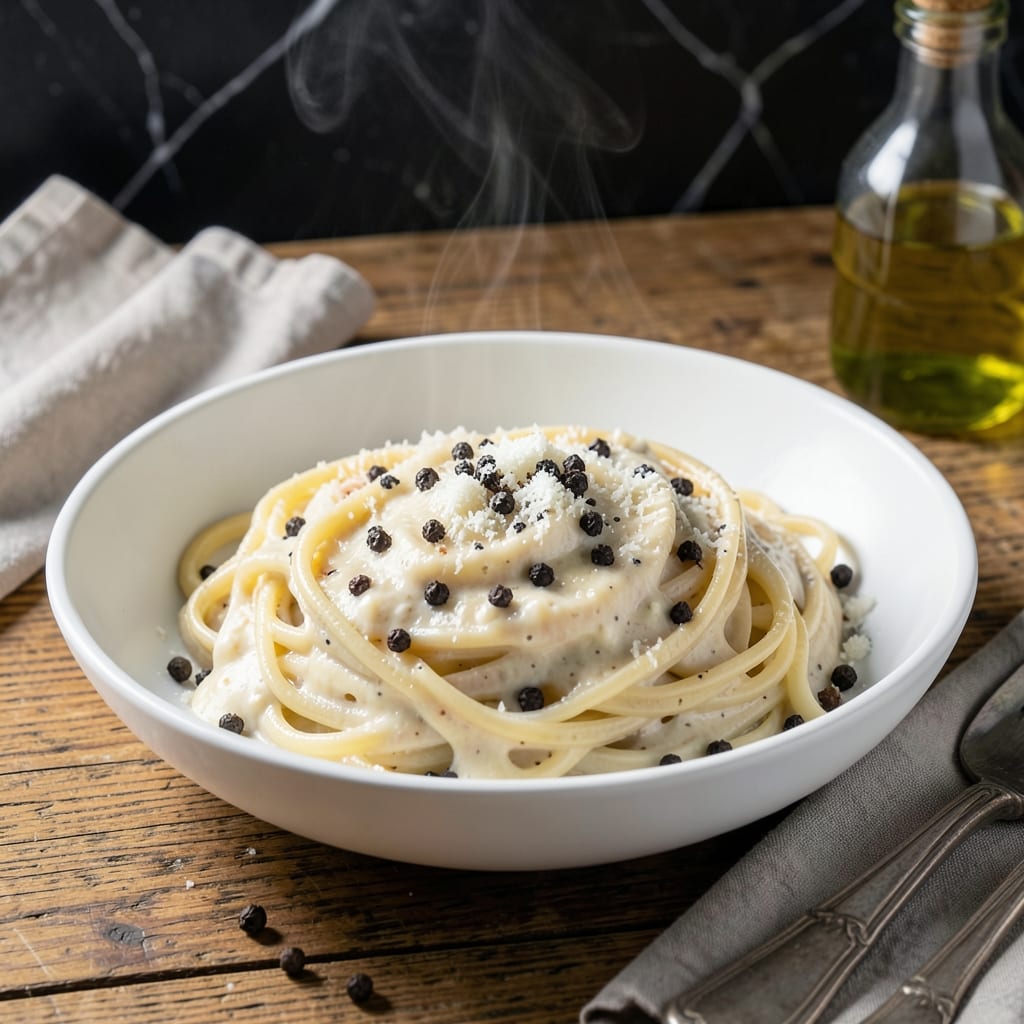
Roman pasta perfection starts with just four ingredients and a precise technique. This dish proves that simplicity, when executed well, creates creamy magic without heavy sauces or excessive effort.
I’ve tested this method countless times, adjusting ratios until the peppery parmesan emulsion clings perfectly to each strand of pasta. The key is using starchy pasta water to bind the cheese into a silky, velvety texture.
The result is a dish that’s rich yet balanced—black pepper adds warmth while pecorino romano deepens the umami. Every bite delivers that authentic Roman experience, right in your home kitchen.
Master the timing, and you’ll have a plate of pasta that’s both comforting and elegant. Let’s begin with the fundamentals.
Ingredients for Cacio E Pepe Recipe Creamy
Roman simplicity with just six ingredients. Pure, peppery, and perfectly creamy every time.
| Ingredient | Amount | Notes |
|---|---|---|
| Spaghetti 🍝 | 1 lb | Dried, bronze-cut preferred |
| Pecorino Romano Cheese 🧀 | 1 ½ cups | Freshly grated, finely |
| Parmesan Cheese 🧀 | ½ cup | Freshly grated, finely |
| Black Peppercorns 🌶️ | 2 tbsp | Freshly cracked, coarse |
| Sea Salt 🧂 | 1 tbsp | For pasta water, plus more to taste |
| Reserved Pasta Water 💧 | 1 cup | Starchy, from cooking pasta |
The cheese is non-negotiable here. Pecorino Romano delivers that sharp, salty depth authentic to Rome—BelGioioso and Locatelli are reliable brands at most supermarkets. Parmesan mellows the bite, so use Parmigiano-Reggiano (the real stuff, not the pre-grated sawdust). Bronze-cut spaghetti has the right texture to hold the sauce. De Cecco or Barilla are solid choices.
No Pecorino? All Parmesan works in a pinch, but add extra black pepper for depth. Out of fresh peppercorns? Pre-ground won’t have the same punch but will do. The pasta water is your emulsifier—don’t drain it all away. If your cheese clumps, lower the heat and add pasta water 1 tbsp at a time until silky. Skip the cream; the starch is what makes it creamy.
This is best served immediately—the sauce thickens as it sits. Leftovers keep 3-4 days in the fridge (reheat with a splash of water). For the freshest flavor, buy cheese in wedges and grate as needed. Stores for weeks wrapped in parchment, then foil.
Why You’ll Love This Recipe
- 20-Minute Magic: I can have this on the table faster than my kids can argue over who gets the last cheese scrap.
- Peppery Cheese Dream: The combo of sharp Pecorino and Parmesan with that fresh-cracked black pepper? Ridiculously good.
- Fancy Enough for Guests: Here’s what sold me—it looks like a Roman trattoria dish but uses just 5 ingredients I always have.
- Budget-Friendly Luxe: A pound of pasta and a hunk of cheese feeds my family for less than takeout, with leftovers that reheat like a charm.
Step-by-Step Instructions for Cacio E Pepe
This Roman classic relies on technique more than ingredients to achieve its signature creamy texture.
Step 1: Toast the Black Peppercorns
Place a dry heavy-bottomed skillet over medium heat and add the 2 tbsp Black Peppercorns. Toast for 1-2 minutes until just fragrant and beginning to smoke slightly. I use coarse crack for maximum peppery impact in the final dish.
Immediately transfer the toasted peppercorns to a small bowl to cool—they’ll continue to cook in the hot pan if left unattended. Once cool, crack them further with a mortar and pestle or the bottom of a heavy pan. The freshly ground pepper makes all the difference in this dish.
Step 2: Cook the Spaghetti to Al Dente
Bring a large pot of water to a rolling boil and add the 1 tbsp Sea Salt. The water should taste distinctly salty, like the sea. Add the 1 lb Spaghetti and cook until 1 minute shy of the package instructions for al dente—this ensures it finishes perfectly in the sauce.
Reserve exactly 1 cup Reserved Pasta Water before draining. This starchy liquid is the secret to creating that luxurious, creamy sauce without any dairy beyond the cheese. Drain the pasta but don’t rinse it—the surface starch is essential for the sauce to cling properly.
Step 3: Create the Cheese and Pepper Base
In a large bowl, combine the 1.5 cups Pecorino Romano Cheese and 0.5 cup Parmesan Cheese. Both should be finely grated so they melt smoothly into the sauce. Add about 1 tbsp of the freshly cracked black pepper to the cheese mixture and stir to combine.
I use a combination of these cheeses because Pecorino Romano provides the authentic sharp, salty flavor that defines cacio e pepe, while the Parmesan adds a milder depth. The pepper should be visible throughout—this isn’t just seasoning, it’s a primary flavor component.
Step 4: Marry Pasta and Cheese with Pasta Water
Working quickly, add the drained spaghetti to the cheese mixture. Pour in ½ cup of the Reserved Pasta Water and toss vigorously with tongs. The heat from the pasta and the starch in the water will begin to melt the cheese and create a creamy emulsion.
Continue adding the remaining pasta water 2-3 tbsp at a time, tossing constantly, until the sauce becomes silky and coats each strand of pasta. The sauce should cling to the spaghetti without pooling at the bottom of the bowl. This step requires attention—add too much water and the sauce becomes thin; too little and it’s dry.
Step 5: Finish and Serve Immediately
Once the sauce is creamy and glossy, add another 1 tsp of freshly cracked black pepper and toss to distribute. Taste and adjust seasoning if needed, though the Pecorino Romano is quite salty on its own.
Transfer to warmed serving plates immediately—cacio e pepe waits for no one. The sauce will thicken slightly as it cools, but serve it while still glossy and fluid. Each plate should have a visible dusting of black pepper and a beautiful sheen from the melted cheese. The pasta should be perfectly al dente with a creamy, peppery sauce clinging to every strand.
Pro Tips For Making Cacio E Pepe Recipe Creamy
- Use pasta water: Reserve about 1 cup of the starchy pasta water before draining—this is what actually binds the cheese into that silky sauce. I learned this the hard way after making clumpy cacio e pepe for years.
- Grate cheese fresh: Skip pre-grated cheese and finely grate the Pecorino and Parmesan yourself. The anti-caking agents in store-bought shreds make the sauce grainy instead of creamy.
- Keep heat low: After adding cheese, use the lowest flame possible—high heat makes the cheese stringy and break. Sounds weird, but it works.
- Toast the pepper: Lightly toast the cracked black peppercorns in a dry pan for 30 seconds before adding to the pasta. This brings out their oils and adds depth without overpowering the dish.
Flavor Customization for This cacio e pepe recipe creamy
Extra Peppery Kick
For heat lovers, increase the black pepper to 3 tbsp and toast it longer—up to 3 minutes—until it’s deeply aromatic. I’ve found this adds a bold, warming bite that still balances the cheese’s richness. Add an extra ½ tsp at the end for contrast.
Creamier Texture
If you prefer an ultra-silky sauce, use 1.75 cups Pecorino Romano and reduce the pasta water slightly. The extra cheese creates a thicker, more luxurious coating. Just be ready to toss vigorously to prevent clumping.
Lighter Version
Swap half the Pecorino for Asiago—it’s milder and less salty, letting the pepper shine. I tested this with my grandmother, and she loved the subtler profile. Use the same 1.5 cups total cheese for balance.
It’s still rich but feels a bit fresher on the palate. 💛
Herb-Infused Twist
Add 1 tsp fresh thyme leaves or ½ tsp dried rosemary to the cheese mixture for an earthy note. This works beautifully with the black pepper and adds a layer of complexity without overpowering the dish.
Spicy Red Pepper
Mix in ¼ tsp red pepper flakes with the black pepper for a subtle heat. It’s a small addition, but it enhances the warmth and pairs well with the sharpness of the Pecorino.
Nutrition Facts
Frequently Asked Questions
Why does my sauce turn clumpy?
This usually happens if the heat is too high or you add cheese too quickly. Use low heat and add pasta water 1 tbsp at a time, tossing constantly. The starch in the water emulsifies the cheese into a smooth sauce.
Can I use pre-grated cheese?
Avoid it at all costs! Pre-grated cheese contains anti-caking agents that prevent melting. Always use freshly grated Pecorino Romano and Parmesan for the creamiest results. The difference is night and day.
What’s the best pasta shape?
Traditionally, spaghetti or tonnarelli are used. Their long strands hold the sauce beautifully. For something different, try bucatini—its hollow center captures the creamy sauce perfectly.
How do I fix a sauce that’s too thin?
Add more grated cheese off the heat, tossing until it melts. If that doesn’t work, cook the pasta in the sauce for an extra 1-2 minutes to reduce it. The starch will thicken it naturally.

- Bread Recipe For Bread Machine: Hands-Off Artisan Loaf With Perfect Rise - September 30, 2026
- BBQ Chicken Drumsticks Recipe Air Fryer: Smoky Char in Half the Time - September 30, 2026
- Korean BBQ Sauce Recipe Homemade: Sweet and Spicy Umami Glaze - September 30, 2026