
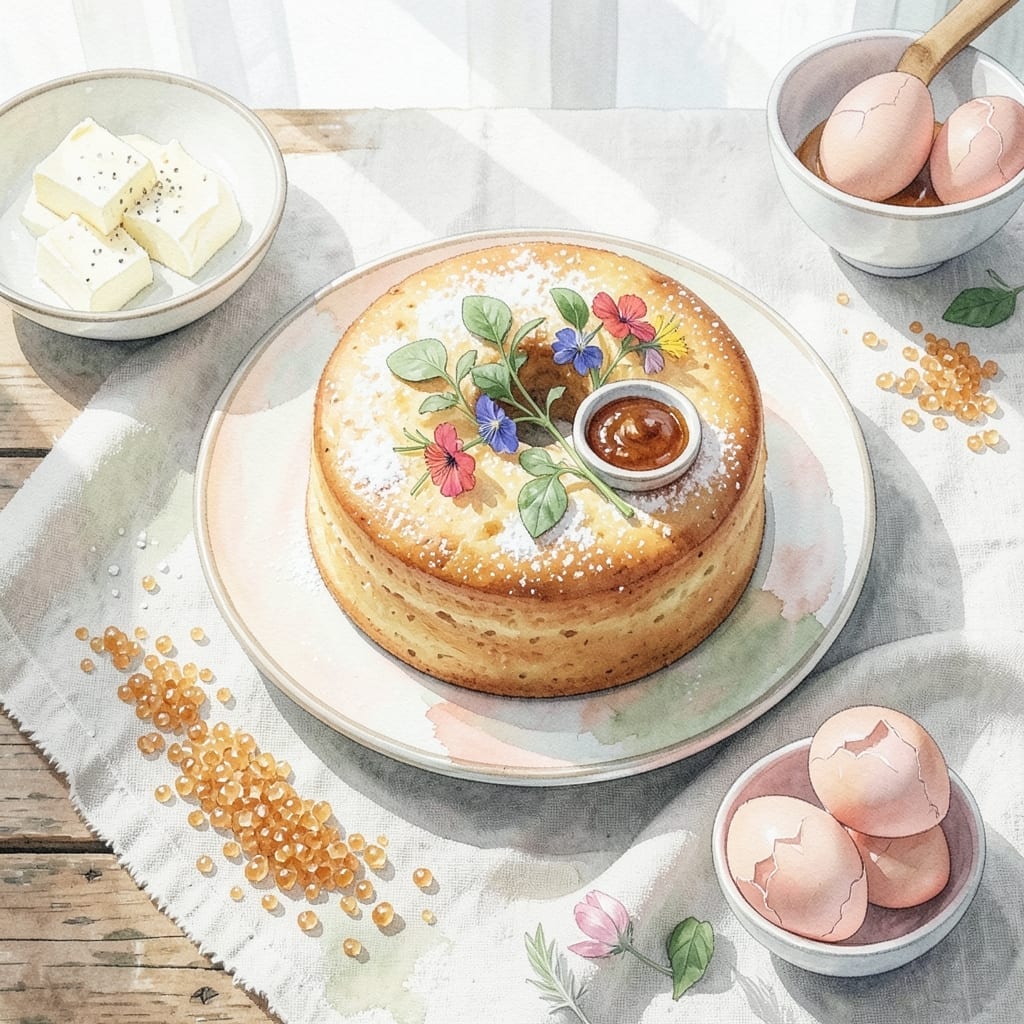
There’s a reason bakers swear by salted butter for cake—it enhances flavor in ways unsalted simply can’t. This recipe proves that balance is everything, with rich, layered taste in every bite.
The salt in the butter doesn’t just season; it amplifies the sweetness and depth of the cake. A simple mixing method ensures a tender crumb, while the butter’s natural richness creates a moist texture that lasts for days.
Baking at the right temperature is key to achieving a golden crust and even rise. The result is a cake that’s as satisfying to make as it is to eat, with no shortcuts to the process.
Perfect for celebrations or an everyday treat, this is a dessert that delivers on both taste and technique. Let’s begin with the details.
Ingredients for Cake Recipe with Salted Butter
Rich, balanced flavors start with quality ingredients like salted butter and vanilla. Nothing complicated here.
| Ingredient | Amount | Notes |
|---|---|---|
| Salted Butter 🧈 | 1 cup | Room temperature, unsalted not suitable |
| Granulated Sugar 🍚 | 2 cups | Fine white sugar preferred |
| Large Eggs 🥚 | 4 whole | Room temperature for even mixing |
| All-Purpose Flour 🌾 | 2 ½ cups | Sifted for lighter texture |
| Baking Powder 🧂 | 2 tsp | Fresh for optimal rise |
| Baking Soda 🧂 | ½ tsp | Balances acidity in batter |
| Vanilla Extract 🌿 | 2 tsp | Pure extract for best flavor |
| Whole Milk 🥛 | 1 cup | Full-fat for richness |
| Sour Cream 🥛 | ½ cup | Adds moisture and tang |
| Fine Sea Salt 🧂 | ½ tsp | Enhances all flavors |
Salted butter is non-negotiable here—it’s doing double duty. Plugrá or Kerrygold are my go-tos for consistent quality and flavor. The milk and sour cream should be full-fat; reduced-fat versions throw off the moisture balance. Look for pure vanilla extract (not imitation) for that deep, aromatic note. Most supermarkets carry reliable brands like McCormick or Nielsen-Massey.
No salted butter? Add 1/4 tsp fine sea salt to unsalted butter instead. Sour cream can be swapped for plain Greek yogurt at the same quantity. For a lighter texture, cake flour works in place of all-purpose—use 2 3/4 cups sifted. The eggs must be room temperature; cold eggs can cause the batter to curdle.
Batter keeps in the fridge for 1 day if covered tightly. Baked cake stays fresh at room temperature for 3-4 days under a cake dome. For longer storage, wrap slices in plastic and freeze for up to 3 months.
Why You’ll Love This Recipe
- One Bowl Wonder: I just dump everything in a single bowl—no mixer, no fuss. Honestly, cleanup takes 2 minutes.
- Buttery Magic: The salted butter gives this cake a rich, caramel-like depth that plain butter can’t touch.
- Weekend or Wednesday: It’s my go-to for birthdays, but I’ll bake it on a random Tuesday just because.
- Stays Moist: Leftovers? Still soft and tender two days later. Between us, that’s rare for homemade cake.
Step-by-Step Instructions for Cake With Salted Butter
Master this technique and you’ll produce a moist, tender cake with rich buttery flavor in every bite.
Step 1: Cream the Salted Butter and Granulated Sugar
In a stand mixer fitted with the paddle attachment, beat the 1 cup Salted Butter and 2 cups Granulated Sugar on medium-high speed for 4-5 minutes. The mixture should become pale and noticeably increased in volume.
This creaming process incorporates air, creating the fine crumb structure characteristic of professional cakes. Stop the mixer periodically to scrape down the sides and bottom of the bowl with a silicone spatula to ensure even mixing. The butter should be at room temperature—65-68°F—to cream properly.
Step 2: Incorporate the Large Eggs and Vanilla Extract
Add the 4 whole Large Eggs, one at a time, beating on medium speed for 30 seconds after each addition. This gradual addition prevents the batter from curdling and ensures proper emulsification.
Once all eggs are incorporated, add the 2 tsp Vanilla Extract and beat for an additional 20 seconds. The mixture should appear smooth and slightly glossy. The eggs should also be at room temperature to maintain the emulsion and prevent the butter from seizing.
Step 3: Combine the Dry Ingredients and Alternate with Wet
In a separate bowl, whisk together the 2.5 cups All-Purpose Flour, 2 tsp Baking Powder, 0.5 tsp Baking Soda, and 0.5 tsp Fine Sea Salt. This ensures even distribution of leavening agents, which is critical for consistent rise.
With the mixer on low speed, add one-third of the dry ingredients to the butter mixture, followed by half of the 1 cup Whole Milk. Repeat, ending with the final third of dry ingredients. Mix just until the flour disappears—overmixing develops gluten, resulting in a dense cake.
Step 4: Fold in Sour Cream and Prepare for Baking
Remove the bowl from the mixer and fold in the 0.5 cup Sour Cream by hand with a silicone spatula. The sour cream adds moisture and a subtle tang that balances the sweetness of the cake. Make 10-12 folds to combine evenly.
Pour the batter into prepared cake pans, filling each no more than two-thirds full to allow for proper rise. Smooth the tops with the spatula and tap the pans firmly on the counter 2-3 times to release any large air bubbles, which can create tunnels in the baked cake.
Step 5: Bake to Golden Perfection
Preheat your oven to 350°F and bake for 25-30 minutes, or until a toothpick inserted into the center comes out clean or with a few moist crumbs. Rotate the pans halfway through baking for even browning, especially if your oven has hot spots.
Allow the cakes to cool in the pans on a wire rack for 10 minutes, then invert onto the rack to cool completely. The cakes are ready for frosting or serving once they reach room temperature, which prevents melting or sliding of any added decorations.
Pro Tips For Making Cake Recipe With Salted Butter
- Room Temp Butter: Pull your salted butter out 1-2 hours before baking—creaming it properly with sugar traps air for a lighter crumb. I learned this the hard way after my first few dense, flat cakes.
- Measure Flour Right: Spoon flour into your measuring cup and level it off—don’t scoop directly from the bag. Packed flour adds too much, and your cake will turn out dry.
- Skip Overmixing: Once you add flour, mix just until the streaks disappear. Overworking the batter develops gluten, and your cake will be tough instead of tender.
- Test with a Toothpick: Start checking for doneness 5 minutes before the recipe says—salted butter can brown faster. A clean toothpick means it’s done, even if the top looks pale.
Troubleshooting cake recipe with salted butter
Dense Cake Texture
If your cake turns out dense, you likely overmixed the batter. Once you add the flour, mix just until it disappears—about 15-20 seconds on low speed. Overworking develops gluten, which toughens the crumb. 💡
Flat or Sunken Cake
This usually means your leavening agents are expired. Check that your baking powder and baking soda are fresh—they lose potency after 6-12 months. Also, ensure your oven is fully preheated to 350°F before baking.
Butter Separating
If the butter separates from the sugar during creaming, your butter was likely too warm. It should be 65-68°F—soft but still cool to the touch. Chill the bowl for 10 minutes and restart creaming if separation occurs.
Uneven Baking
Rotate your pans halfway through the 25-30 minute baking time. If one side browns faster, your oven may have hot spots. For even results, avoid placing pans directly next to each other or against the oven walls.
Dry Cake
Overbaking is the most common culprit. Start checking for doneness at 25 minutes—the toothpick should have a few moist crumbs, not be completely clean. The cake continues cooking slightly as it cools on the rack.
Curdled Batter
Cold eggs can cause this. Ensure all 4 large eggs are at room temperature before adding them one at a time. If curdling happens, don’t panic—just add 1 tbsp of flour from your measured amount to help stabilize the emulsion.
Nutrition Facts
Frequently Asked Questions
Can I use unsalted butter instead?
Yes, but add 1/4 tsp fine sea salt to compensate. The salted butter in this recipe enhances flavor and balances sweetness naturally.
Why does the butter need to be room temperature?
Butter at 65-68°F creams properly, trapping air for a light texture. Cold butter won’t incorporate evenly, and melted butter loses structure.
How do I prevent a dense cake?
Mix the batter just until flour disappears—about 15-20 seconds on low. Overmixing develops gluten, which makes the crumb tough.
Can I substitute the sour cream?
Yes, use plain Greek yogurt at the same quantity. It provides similar moisture and tang, keeping the cake rich and tender.

- Recipe for Mixed Vegetables: Colorful Medley With Bright Flavors - September 28, 2026
- Smothered Cabbage Recipe Louisiana: Cajun-Spiced Slow-Cooked Comfort - September 28, 2026
- American Cheese Recipe Sodium Citrate: Smooth Melting Magic for Dips - September 28, 2026