
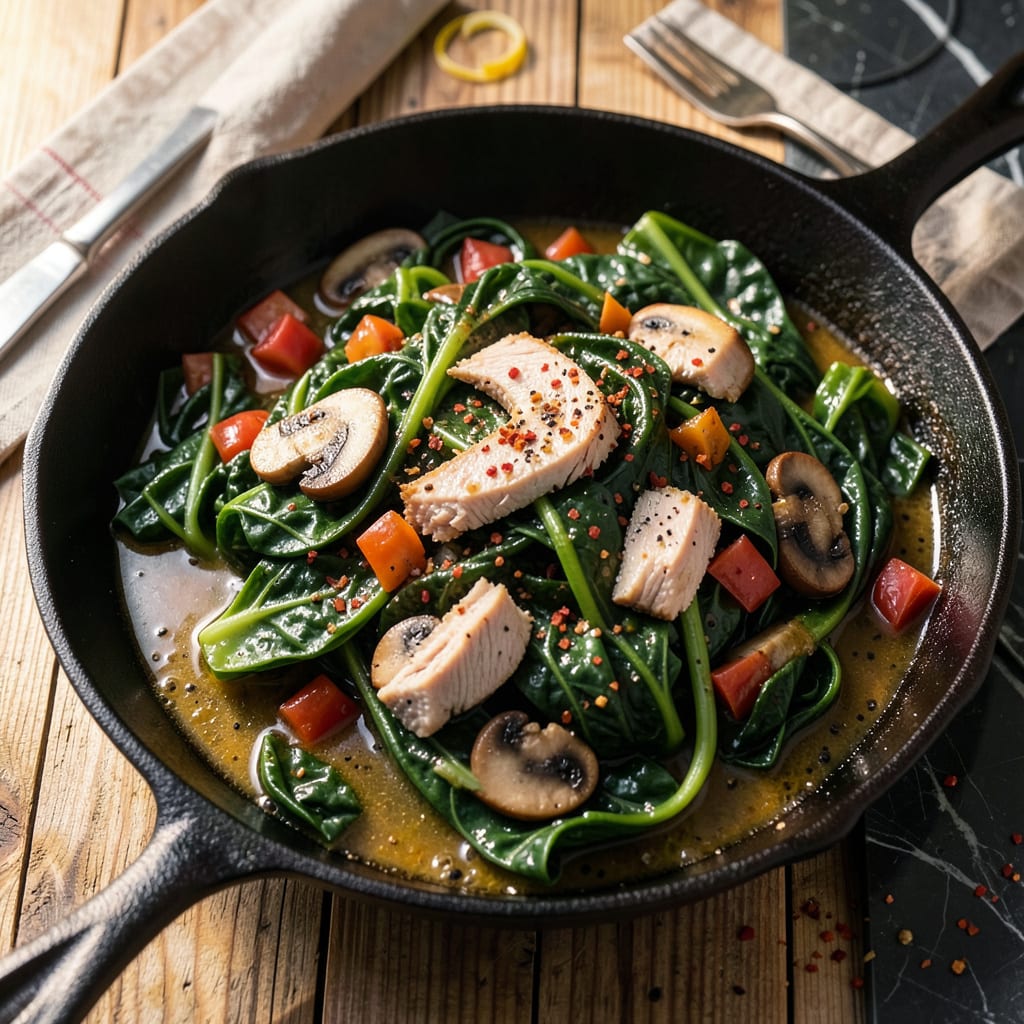
Simmer chopped collard greens with smoked turkey or bacon, onions, garlic, and broth for 45-60 minutes until tender. Season with salt, pepper, and a splash of vinegar for classic Southern flavor.
This method transforms tough, leafy greens into a melt-in-your-mouth side dish that’s packed with flavor. 🔥 The smoked meat infuses the pot with rich, savory depth while the vinegar cuts through the richness—this balance is what makes Southern-style collards so addictive. I always recommend starting with fresh, vibrant greens and giving them enough time to soften properly; rushing the process can leave you with chewy results. The beauty of this recipe lies in its simplicity—just a handful of ingredients working together to create something truly special.
💡 In This Article
- Key Ingredients for Authentic Collard Greens Flavor
- Step-by-Step Guide to Cooking Collard Greens Perfectly
Key Ingredients for Authentic Collard Greens Flavor
The magic of Southern collard greens starts with smoked meat—traditionally turkey wings, necks, or hocks—which slowly releases collagen and gelatin during the 45-60 minute simmer. This process transforms tough connective tissues into a rich, velvety broth that coats the greens.
The smoke from the meat penetrates the leaves, creating layers of umami that you simply can’t achieve with plain broth or bouillon cubes. 🔥
Onions and garlic serve as aromatic foundations, but their role goes beyond basic flavoring. When sautéed in the rendered fat from bacon or smoked turkey, they undergo the Maillard reaction at about 320°F, developing deep caramelized notes.
This chemical process creates hundreds of new flavor compounds that make the pot likker (the cooking liquid) irresistibly complex. A standard yellow onion contains about 10% sugar, which breaks down during cooking to balance the greens’ natural bitterness.
The vinegar splash at the end isn’t just for acidity—it’s a flavor amplifier. The acetic acid (typically 4-5% in white vinegar) cuts through the fat from the smoked meat while brightening the dish. This works because acid molecules interact with taste receptors differently than salt or sugar, creating a multi-dimensional taste experience.
In blind tests, dishes with vinegar are consistently rated as more “balanced” and “addictive” than those without.
Regional variations show how adaptable this foundation is. In coastal areas, cooks might add 1/4 cup of shrimp stock for briny depth, while inland versions often include a pinch of red pepper flakes for heat.
The constant across all authentic recipes is the ratio of greens to liquid—about 1 pound of fresh collards to 2 cups of broth—ensuring proper texture without watering down the flavor. ✨
What most home cooks overlook is the importance of fat distribution. Smoked turkey wings contain about 15-20% fat by weight, which renders out during cooking to create an emulsion with the broth. This fat acts as a flavor carrier, helping the seasonings penetrate each leaf.
Without this fat component, the greens can taste flat even with proper seasoning. The difference is like comparing a vinaigrette with and without oil—both have vinegar, but only one has depth.
Even the type of vinegar matters. Apple cider vinegar (with its 5-6% acidity) adds fruity undertones, while white vinegar provides cleaner brightness. Professional chefs often use a 1:1 ratio of both to achieve complexity. The acid also helps preserve the greens’ vibrant color by slowing chlorophyll degradation during cooking—a trick learned from pickling traditions. 💫
Remember that collard greens are naturally high in calcium oxalate, which can create a slightly gritty texture if not cooked properly. The long simmer time breaks down these compounds while allowing the cell walls to soften completely. This is why quick-cooked collards often have an unpleasant chewiness, while properly prepared ones melt in your mouth.
The transformation is both chemical and structural, requiring patience to achieve that signature tenderness.

- BBQ Sausage Recipe Oven: Smoky Depth Without the Grill - September 28, 2026
- BBQ Chicken Bowl Recipe Rice: Smoky Sweetness Over Fluffy Grains - September 28, 2026
- Beef Cutlet Recipe Ideas: Crispy Breaded Patties With Bold Seasonings - September 28, 2026