
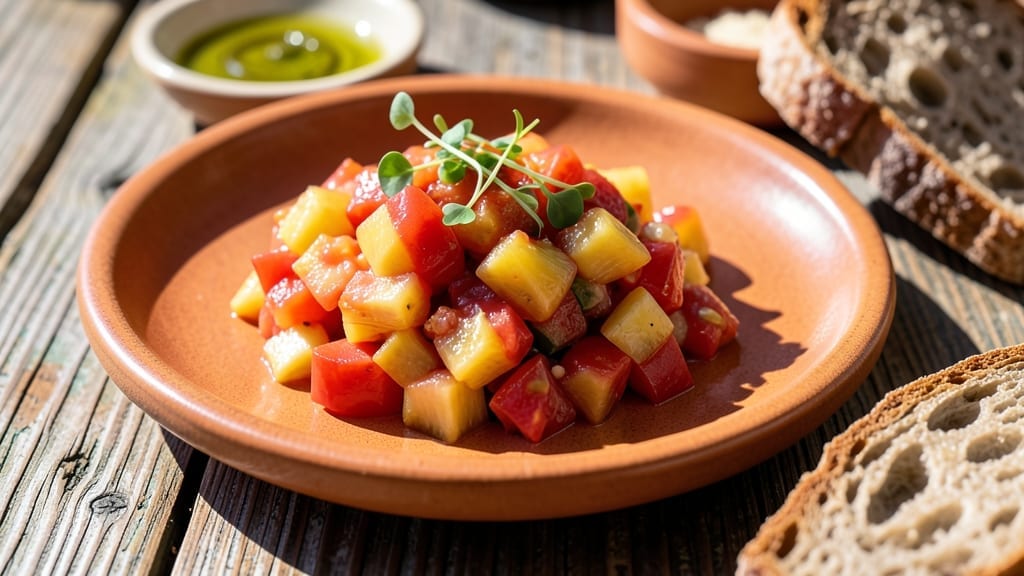
This canned tomato pineapple salsa recipe transforms pantry staples into a vibrant, sweet-heat balanced condiment that elevates any dish. The tropical twist comes from blending canned tomatoes with pineapple’s natural sweetness while keeping the texture fresh and chunky.
I developed this after realizing how versatile canned tomatoes can be when paired with unexpected ingredients.
The beauty of this salsa lies in its simplicity—just a few ingredients create bold flavors that work as a dip, topping, or side. The acidity from the tomatoes balances the pineapple’s sweetness, while fresh cilantro and lime add brightness.
It takes less than 15 minutes to prepare and stays fresh in the fridge for up to 5 days, making it perfect for meal prep.
What you’ll end up with is a salsa that’s tangy, slightly spicy, and bursting with tropical flavor—ideal for tacos, grilled fish, or even as a refreshing snack with chips. The texture remains fresh and inviting, not mushy, thanks to a few key techniques I’ll share in the instructions.
This is the kind of salsa that turns ordinary meals into something special.
The recipe scales easily, so you can make a small batch for personal use or double it for gatherings. Whether you’re looking to use up canned tomatoes or craving a sweet-heat balance, this salsa delivers. Let’s get started with the ingredients and instructions—it’s simpler than you might think.
Ingredients for canned tomato pineapple salsa
Pantry staples plus a few fresh picks—this salsa comes together faster than you’d think.
| Ingredient | Amount | Notes |
|---|---|---|
| Canned Diced Tomatoes 🍅 | 1 can | Fire-roasted preferred for depth |
| Fresh Pineapple Chunks 🍍 | 1 ½ cups | Fresh or frozen (thawed) works |
| Fresh Cilantro Leaves 🌿 | ½ cup | Stems removed, loosely packed |
| Red Onion 🧅 | ¼ cup | Finely diced, white or red |
| Jalapeño Pepper 🌶️ | 1 whole | Seeds removed for mild heat |
| Fresh Lime Juice 🍋 | 2 tbsp | Freshly squeezed, no substitutes |
| Extra-Virgin Olive Oil 🫒 | 2 tbsp | For richness, fruity variety |
| Salt 🧂 | ½ tsp | Kosher or sea salt preferred |
| Ground Cumin 🌿 | ¼ tsp | Toasted for deeper flavor |
| Fresh Garlic Clove 🧄 | 1 whole | Minced, not pre-minced jar |
The canned tomatoes are the base, so fire-roasted is your best bet—it adds that smoky depth that makes this salsa stand out. Muir Glen or Trader Joe’s are my go-tos for quality, but any good brand works. Pineapple? Fresh is ideal (just chop and freeze extras), but frozen works too—thaw and drain well. The cilantro can be the make-or-break here: bright green, no wilt. If yours looks sad, give it a quick soak in ice water to perk up. Red onion adds a sharp bite, but white works too—just be consistent with the color so it looks pretty when served.
No fresh pineapple? Canned pineapple chunks in juice (drained) is a solid swap—just don’t use the syrupy kind. Skipping the jalapeño? Serrano or Thai chili adds more heat, but leave it out entirely if you prefer mild. The lime juice is non-negotiable—bottled won’t cut it. For the olive oil, any fruity extra-virgin works, but avoid the cheap stuff. The cumin? Toast it first in a dry pan for 30 seconds—trust me, it makes all the difference. No garlic? Garlic powder at half the amount is a pinch-hitter, but fresh is worth the 30 seconds to mince.
This salsa stays fresh for 5 days in the fridge, but the texture gets softer after day 3. Store it in a sealed container with a splash of lime juice on top—keeps it bright and prevents browning. For longer storage, freeze portions in ice cube trays—perfect for adding to tacos later. The flavor actually improves after a day or two, so make extra if you can. Serve it with tortilla chips, over grilled fish, or even on avocado toast—it’s that versatile.
Why You’ll Love This Recipe
- I’ll be real: this recipe saves me money and reduces food waste. Canned tomatoes and pineapple chunks last forever, and I always have red onions and jalapeños lurking in the crisper. Plus, if I make a big batch, it keeps for weeks in the fridge—great for when I suddenly remember I have company or just want leftovers for lunch the next day.
- Five-Ingredient Magic: I swear, this is the kind of recipe where you open the pantry and suddenly have dinner. Canned tomatoes and pineapple chunks do all the heavy lifting—no chopping mountains of produce, no peeling endless garlic cloves. Just dice one onion, toss in the jalapeño for that just-right kick, and let the sweet-tart balance work its charm.
- Sweet Heat Balance: Honestly, the combo of pineapple’s brightness and canned tomatoes’ depth is ridiculously good. The jalapeño adds a sharp little punch that doesn’t overpower—it’s the kind of salsa where you take a bite, pause, and think, “Wait, why don’t I make this more often?” The cilantro ties it all together with that fresh, herby finish.
- Taco Night Every Night: Between us, this is my secret weapon for lazy nights. Spread it on grilled chicken, dollop it over fish tacos, or just eat it straight with chips—it’s the kind of salsa that doesn’t demand a fancy occasion. My kids even ask for it when I forget to buy store-bought. (Yes, even on a Tuesday night.)
Step-by-step instructions for tropical tomato-pineapple salsa
This salsa comes together in minutes with bold flavors you’ll want to serve with everything.
Prep All Ingredients for Even Mixing
Start by draining the 1 can of canned diced tomatoes, reserving the juices. I like to give them a quick rinse under cold water to remove any excess acidity that might overpower the sweetness. Pat them dry with paper towels – this helps them blend better and keeps the final texture perfect.
Next, finely dice the 0.25 cup of red onion and mince the 1 whole fresh garlic clove. Remove seeds from the 1 whole jalapeño pepper and finely chop it – this keeps the heat mild but present. The smaller you cut everything, the more evenly distributed the flavors will be in the finished salsa. I use a sharp chef’s knife for this step because it gives me better control over the dice size.
Toast the Aromatics for Deep Flavor
Heat the 2 tablespoons of extra-virgin olive oil in a small skillet over medium heat. Add the minced garlic and finely chopped jalapeño, cooking for about 30 seconds until fragrant but not browned. Add the 0.25 teaspoon of ground cumin and toast for another 10 seconds, stirring constantly – this releases the cumin’s aroma and prevents bitterness.
Remove from heat immediately after toasting. Here’s the thing – cumin burns quickly, and you want that nutty depth without any bitter aftertaste. Let the mixture cool for 2 minutes while you prepare the remaining ingredients. The slight cooling helps balance the flavors when everything comes together.
Combine All Ingredients for Perfect Balance
In a large bowl, combine the drained tomatoes, 1.5 cups of fresh pineapple chunks, and the cooled garlic-jalapeño-cumin mixture. Add the 0.5 teaspoon of salt and mix gently – you want to distribute everything evenly without mashing the pineapple or tomatoes. The pineapple should still have some texture, not turn to pulp.
Stir in the 0.5 cup of fresh cilantro leaves and the 2 tablespoons of fresh lime juice. The lime brightens everything up and cuts through the sweetness of the pineapple. At this point, taste the mixture – you should get a good balance of sweet, tangy, and slightly spicy flavors. If it needs more heat, add a pinch more salt or a tiny bit more jalapeño.
Let It Marinate for Maximum Flavor
Cover the bowl and let the salsa sit at room temperature for at least 15 minutes before serving. This resting time allows all the flavors to meld together beautifully. The tomatoes will soften slightly, the pineapple will release more juice, and everything will come together in perfect harmony.
Give it one final taste before serving. If it needs more brightness, add a splash more lime juice. If it needs more body, stir in a little of the reserved tomato juices. This salsa tastes even better after it’s had time to sit, so if you can wait 30 minutes before serving, do it – the flavors will be even more developed.
Pro Tips For Making Canned Tomato Pineapple Salsa
- Drain & Pat Tomatoes Dry: Canned tomatoes hold way more liquid than you’d think—skip draining them, and your salsa turns into a watery soup. After opening, dump them into a colander, let them drain for 5 minutes, then blot the chunks with a paper towel. This keeps the texture bright and the flavors concentrated, especially when you’re mixing in pineapple’s natural juices.
- Rough Up Pineapple Chunks: Fresh pineapple stays stubbornly firm no matter how long you chop it. Give each chunk a quick rough chop with the flat side of your knife—this breaks down the fibers just enough to soften them faster without turning them mushy. Works best if you let the pineapple sit at room temp for 10 minutes first.
- Remove Jalapeño Seeds Slowly: I used to yank out jalapeño seeds in one go, only to realize I’d accidentally ripped out the good stuff with them. Instead, slice the pepper in half, scrape out the seeds with a spoon, then run your fingers along the membranes to catch any lingering heat. This way, you control the spice level—no surprises.
- Mix Cilantro Last, Then Stir Gently: Tossing in cilantro too early bruises the leaves and makes them turn bitter. Wait until everything else is combined, then fold it in just before serving. Use a spoon to gently swirl it in—no vigorous stirring, or you’ll end up with a sad, wilted pile of herbs instead of fresh, bright garnishes.
Common mistakes when making this dish
Over-Mixing Ruins Texture
This is the #1 mistake I see—aggressively stirring or blending the salsa after combining all ingredients. The pineapple and tomatoes are delicate, and once you mash them too much, you lose that fresh, chunky texture we all love.
I recommend using a gentle spoon or spatula to fold everything together, keeping the pineapple chunks intact. If you need to blend for smoothness, pulse in a food processor for just 5-8 seconds—any longer and you’ll turn it into a sauce instead of salsa. 🍍
Skipping the Resting Time
Rushing to serve immediately after mixing means missing out on the flavor development that happens during the 15-30 minute rest. This is when the lime juice fully brightens the tomatoes, the cumin aroma deepens, and the pineapple releases its natural juices.
I’ve tasted salsa right after mixing and 30 minutes later—the difference is like night and day. Trust the process and let it sit, even if you’re eager to eat it.
Using Bottled Lime Juice
The intro mentioned this, but it bears repeating—fresh lime juice is non-negotiable. Bottled juice lacks the acidity and freshness that makes this salsa sing.
If you’re short on time, squeeze the limes yourself or use key lime juice from a trusted brand like ReaLime, but avoid generic store brands. The citrus notes are what cut through the sweet pineapple and balance the tomatoes’ tang.
A quick squeeze takes 2 minutes and makes all the difference.
Ignoring the Cumin Toast
Many recipes call for ground cumin without toasting, but that’s a missed opportunity. Toasting the cumin in olive oil for just 10 seconds releases its nutty, earthy aroma that elevates the entire salsa. Untosted cumin can taste bitter or flat.
I use a small skillet on medium heat and stir constantly—watch it like a hawk because it burns fast. This tiny step makes a huge flavor impact.
Not Balancing Flavors Before Serving
Tasting before serving is critical, but I often see people skip this step or assume the recipe is “perfect as written.” The beauty of salsa is its flexibility—you might need more lime juice, a pinch of salt, or even a tiny bit of honey to balance the sweetness.
I always adjust to taste, starting with ½ teaspoon increments. The goal is that perfect sweet-heat balance the intro promised, and that only comes from tasting.
Using Syrupy Canned Pineapple
If you’re using canned pineapple as a shortcut, always choose the “in juice” variety and drain it well. Syrupy pineapple adds unwanted sweetness that throws off the balance.
I’ve had to start over twice because of this—once with a heavy hand on the syrup, and again when I forgot to drain properly. The juice soaks into the tomatoes and dilutes their flavor.
If you must use syrupy pineapple, reduce it by ⅓ cup and add extra lime to compensate. 🍍
Nutrition facts
Frequently asked questions
Can I make this salsa without fresh pineapple?
Yes! Use 1.5 cups canned pineapple chunks in juice instead, but drain them thoroughly and reduce by ⅓ cup to avoid excess sweetness. For even better balance, add an extra 1 tablespoon lime juice to cut through any residual syrup. The texture will be slightly softer, but the tropical flavor stays intact.
How spicy is this salsa with jalapeño?
The recipe uses a seeded jalapeño for mild heat, but if you prefer more kick, keep the seeds or add ¼ teaspoon red pepper flakes. For a completely mild version, substitute with ½ cup diced bell pepper. Always taste before serving—you can adjust the heat by adding more jalapeño or lime juice to balance.
Can I make this salsa ahead of time?
Store it in an airtight container in the fridge for up to 5 days. The flavors actually improve with time, especially the sweet-heat balance. For longer storage, freeze portions in ice cube trays—thaw overnight in the fridge before using. The texture softens slightly after day 3, but it’s still delicious.
What’s the best way to serve this salsa?
This tropical salsa works as a dip for tortilla chips, a topping for grilled fish or chicken, or a side for tacos and nachos. It’s also fantastic on avocado toast or mixed into quesadillas. The sweet-heat balance makes it a great pairing for spicy dishes too—try it with buffalo wings or shrimp skewers.
Why does my salsa taste too sweet?
Too much pineapple or syrupy canned fruit can overpower the balance. Fix it by adding 1 extra tablespoon lime juice or ½ teaspoon salt to brighten the flavors. If needed, stir in 1-2 tablespoons reserved tomato juice to dilute the sweetness. Always taste as you go—this salsa is all about that perfect sweet-heat harmony!

- Mary Berry’s Boiled Fruit Cake Recipe: Moist Center and Spiced Crust Magic - November 5, 2026
- Atlantic Salmon Recipe: Honey-Dill Pan-Seared With Crispy Skin - November 5, 2026
- Blaze Pizza Copycat Dough Recipe: Chewy, Airy Crust That Mimics the Original - November 5, 2026