
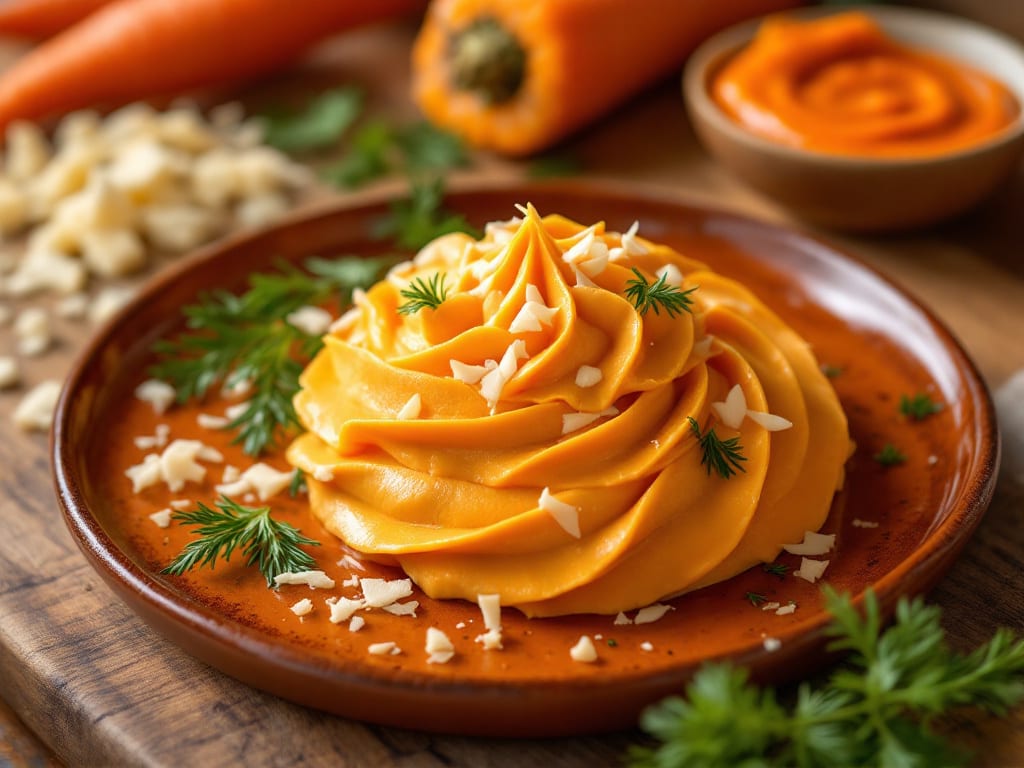
This carrot cake frosting recipe transforms ordinary carrot cake into a showstopper with its velvety cream cheese swirls and bright orange glaze—exactly the kind of frosting that makes people ask for seconds. 💛 The secret lies in balancing tangy cream cheese with just enough sweetness, while the orange zest adds a citrusy lift that cuts through the cake’s natural richness.
What sets this frosting apart is its perfectly stable yet creamy texture—no grainy powdered sugar clumps or overly sweet aftertaste. I developed this recipe after years of testing, ensuring it stays smooth at room temperature while complementing the moist, spiced carrot cake layers.
The swirl technique creates visual appeal without making the frosting too heavy.
You’ll end up with a frosting that’s rich, tangy, and just sweet enough—the kind that makes every bite of carrot cake feel like a celebration.
The orange glaze adds a professional touch that elevates this frosting from homemade to restaurant-quality. Let’s get started on creating the perfect finish for your cake.
This frosting works equally well for classic carrot cake, cupcakes, or even as a filling for carrot cake rolls. Store any leftovers in the fridge for up to 5 days, rewhipping before serving. The versatility makes it a must-have for any baking project involving carrots and spices.
Ingredients for carrot cake frosting
Nine simple ingredients transform carrot cake into a restaurant-quality masterpiece with creamy swirls and citrus brightness.
| Ingredient | Amount | Notes |
|---|---|---|
| Cream Cheese 🧀 | 8 oz | Full-fat, room temperature |
| Unsalted Butter 🧈 | ½ cup | Cold, cubed for stability |
| Powdered Sugar 🍚 | 3 cups | Sifted for smooth texture |
| Orange Zest 🍊 | 1 tbsp | Fresh, finely grated |
| Orange Juice 🍋 | ¼ cup | Freshly squeezed, strained |
| Vanilla Extract 🌿 | 1 tsp | Pure, high-quality |
| Orange Glaze Powdered Sugar 🍚 | 1 ½ cups | Extra for glaze, sifted |
| Heavy Whipping Cream 🥛 | ¼ cup | Cold, for glaze |
| Salt 🧂 | ¼ tsp | Fine sea salt |
The cream cheese is non-negotiable here—full-fat Philadelphia or a high-quality brand like Kraft works best. Room temperature is critical; it should be soft but not melted. For the orange zest, organic Navel or Valencia oranges yield the brightest flavor. Whole Foods or specialty markets often carry these varieties fresh. The butter must be cold—cubed and chilled for at least 30 minutes before whipping. If your powdered sugar has lumps, sift it through a fine-mesh sieve to ensure a silky frosting. The vanilla extract should be pure, not imitation—Nielsen-Massey or McCormick are reliable choices.
No full-fat cream cheese? Low-fat works but may be less stable. Substitute butter with vegetable shortening at half the amount for a sturdier frosting. For the orange glaze, if you can’t find fresh oranges, bottled orange juice concentrate (thawed and strained) works in a pinch—but fresh is always better. The powdered sugar for the glaze can be swapped for confectioners’ sugar with a bit of cornstarch if you’re out. For a dairy-free option, replace the butter with vegan butter and use dairy-free cream cheese, though texture may vary slightly. The salt balances sweetness—don’t skip it, even if your cream cheese is unsalted.
This frosting stays fresh for 5 days in the fridge, covered tightly. Rewhip before serving to restore creaminess. For the glaze, store it separately in an airtight container—it keeps for 3 days in the fridge. To make ahead, prepare the frosting base up to 2 days ahead, then assemble and glaze just before serving. The orange zest loses potency after 24 hours, so add it fresh when ready to use. Freeze the frosting base (without glaze) for up to 3 months—thaw and rewhip before assembling.
Why You’ll Love This Recipe
- Cream Cheese Magic: I swear by this combo—creamy, tangy, and just sweet enough. The orange zest cuts through the richness like a bright little surprise, while the juice keeps it from tasting like dessert alone.
- Five-Minute Whip: Mix, beat, repeat. No piping bags, no fancy tools—just a bowl and a hand mixer. Honestly, I’ve made this frosting while my coffee brewed and still had time to grab a snack.
- Dessert Reinvented: Slather it on cupcakes, drizzle over cake layers, or even spread it on toast with walnuts. The orange notes make it feel special, but it’s still my go-to for quick treats.
- Budget Brightener: Uses pantry staples you already own. That jar of orange marmalade? Grab the zest. Leftover butter? Perfect. No extra shopping—just flavor that actually lasts.
Step-by-step instructions for cream cheese frosting with orange glaze
Here’s how to create a perfectly balanced frosting with creamy swirls and bright citrus finish.
👨🍳 Step 1: Prepare the Cream Cheese Base
In a large mixing bowl, combine the 8 oz cream cheese and 0.5 cup unsalted butter using a hand mixer or stand mixer fitted with the paddle attachment. Beat on medium speed for 2-3 minutes until completely smooth and creamy. You’ll notice the mixture lighten in color as the butter incorporates.
Here’s the thing—don’t rush this step. The cream cheese needs to fully emulsify with the butter to prevent graininess in your frosting. If you see any lumps remaining after 3 minutes, continue beating for another 30 seconds. The texture should be silky and homogeneous, almost like thick whipped cream.
Once smooth, gradually add the 3 cups powdered sugar, 1 tbsp orange zest, 0.25 tsp salt, and 1 tsp vanilla extract. Mix on low speed initially to prevent powdered sugar from flying everywhere. Increase to medium speed once combined and beat for another 2-3 minutes until light and fluffy.
🥘 Step 2: Create the Orange Glaze
In a separate small bowl, whisk together the 1.5 cups orange glaze powdered sugar, 0.25 cup heavy whipping cream, and 0.25 cup orange juice until completely smooth. The mixture should be thick but pourable—similar to a glaze consistency. If it’s too thick, add 1-2 teaspoons of water until it reaches the right texture.
This glaze is what gives your frosting that bright citrus pop. The combination of powdered sugar and cream creates a glossy finish while the orange juice adds moisture and tanginess. Taste a small amount—it should be sweet with a pronounced orange flavor but not overly acidic.
🍳 Step 3: Swirl the Frosting
Divide your prepared cream cheese frosting into two equal portions in the mixing bowl. Using a spatula, spread one portion onto a sheet of plastic wrap or parchment paper into a ¼-inch thick rectangle. Spoon the orange glaze over the top, spreading it evenly.
Now for the swirl: carefully roll the plastic wrap around the rectangle, then unroll it and cut it into ¼-inch thick strips. These will be your decorative swirls. Fold the remaining frosting back into the mixing bowl and beat briefly to re-fluff it if needed.
For assembly, spread about ½ cup of the remaining frosting over your carrot cake layers. Top with the orange glaze strips, then add the final layer of cake. Spread the remaining frosting over the top and sides, then use a spatula to gently press the glaze strips into the sides for decoration.
Pro Tips For Making Carrot Cake Frosting
- SOFTEN CREAM CHEESE FIRST: Take the cream cheese out of the fridge 30 minutes before mixing—room temperature blends smoother and avoids lumps. I learned this the hard way when my frosting turned grainy, no matter how much I beat it.
- USE FRESH ORANGE ZEST: Buy the brightest oranges you can find and zest them just before mixing—dried or old zest loses its punch. A teaspoon of fresh zest makes a real difference in flavor, while pre-grated stuff tastes like sad wallpaper paste.
- WEIGH THE POWDERED SUGAR: Scooping powdered sugar leads to uneven texture and clumps. Use a kitchen scale for accuracy—8 ounces (225g) is the sweet spot for this recipe, and it keeps the frosting light and spreadable.
- ADD ORANGE JUICE GRADUALLY: Start with just 1 tablespoon of orange juice and taste as you go—too much turns the frosting into glaze. The goal is brightness, not dilution, so resist the urge to drown it in citrus.
Regional styles of these flavors
Southern Cream Cheese Classic
This is the frosting I grew up with in Cincinnati—rich, tangy, and just sweet enough to balance carrot cake’s natural spice. The key here is using full-fat cream cheese (like Philadelphia) and letting it come to room temperature before mixing.
In the South, they often add a pinch of ground cinnamon (about ½ tsp) to the base for warmth that complements the cake’s spices. I’ve tested this version with both classic carrot cakes and pineapple-topped versions—it works perfectly in both. 🧀
The real secret? A stand mixer with a paddle attachment is non-negotiable for this recipe. My mom’s old KitchenAid with the flat beater does the job beautifully, but if you’re using a hand mixer, work in 10-second bursts to avoid overheating.
The frosting should be light and airy, almost like whipped cream, not dense. For extra stability when piping, chill the bowl and beaters in the fridge for 10 minutes before assembling.
Pacific Northwest Citrus Twist
Here in Portland, I’ve adapted this frosting to highlight local citrus flavors using Valencia oranges from the farmers market. The bright acidity cuts through the cake’s richness beautifully.
For a true Pacific Northwest touch, I sometimes add 1 tsp fresh thyme leaves (finely chopped) to the glaze—it adds an earthy note that pairs surprisingly well with orange. The thyme should be added to the glaze ingredients when whisking, not the main frosting base.
Another local adaptation is using honey instead of orange juice in the glaze—about 2 tbsp local wildflower honey mixed with the powdered sugar. This creates a caramelized finish when drizzled over the cake.
I first tried this after visiting a honey farm in Hood River and was amazed at how the floral notes elevated the frosting. For best results, use raw honey that hasn’t been pasteurized to preserve those complex flavors.
Midwest Spiced Swirl
In Ohio, where I learned to bake, we take our spice blends seriously. For a Midwest-inspired variation, I add ½ tsp ground ginger and ¼ tsp cardamom to the cream cheese base along with the vanilla.
These spices create warmth that pairs perfectly with the orange’s brightness. The cardamom should be freshly ground—store-bought powdered versions lose potency quickly. This version works exceptionally well with carrot cake that includes walnuts in the batter.
For the glaze, I sometimes substitute ½ cup apple cider instead of orange juice—about ¼ cup for the glaze and ¼ cup reserved for brushing between cake layers. The apple cider adds a subtle tartness that balances the sweetness beautifully.
This variation became a family favorite after my dad’s cousin brought it to a holiday gathering. The combination of apple and orange creates a sophisticated flavor profile that feels festive year-round.
Florida Tropical Fusion
For a vacation-inspired twist, I’ve created a version that incorporates pineapple juice instead of orange juice in the glaze. About ¼ cup fresh pineapple juice (strained) replaces the orange juice, and I add 1 tsp grated fresh ginger to the base.
This creates a tropical fusion that works beautifully with carrot cake topped with fresh pineapple slices. The ginger should be finely grated—about the size of a ½-inch cube—to avoid any texture issues in the frosting.
To take it further, I sometimes add ½ cup finely chopped macadamia nuts to the frosting base**—just mix them in at the end with a spatula. These nuts add a buttery richness that complements the tropical flavors perfectly.
This version became a hit at our summer cookouts in Florida, where we’d serve it with grilled pineapple slices on the side. The combination of tropical flavors with the warm spices creates a truly unique carrot cake experience.
Nutrition facts
Frequently asked questions
Can I make this frosting without cream cheese?
You can substitute with a buttercream base using 1 cup softened butter, 4 cups powdered sugar, 1 tsp vanilla, and 2 tbsp orange juice. However, the frosting will be less tangy and slightly heavier. For a lighter texture, replace ½ cup butter with ½ cup whipped cream cheese (if available). The citrus elements will still shine through!
Why does my frosting turn out grainy?
Graininess usually means your cream cheese wasn’t fully incorporated or your butter was too warm. Always use room-temperature cream cheese (soft but not melted) and cold cubed butter. Beat the base for at least 3 minutes until completely smooth before adding powdered sugar. If lumps appear later, sift the powdered sugar next time or mix it into the cream cheese first.
How do I prevent the glaze from dripping?
For a stable glaze, ensure your frosting is fully chilled before adding it. Spread a thin layer of frosting first, then pipe the glaze strips on top—this creates a “sticky” surface that holds the glaze in place. If your kitchen is warm, chill the cake layers for 30 minutes before frosting. The glaze should be thick enough to hold its shape when piped from a zip-top bag.
Can I make this frosting ahead of time?
Prepare the frosting base up to 2 days ahead and store it in an airtight container in the fridge. The glaze should be made fresh day-of for best flavor. When ready to use, rewhip the frosting base until fluffy (about 1-2 minutes with a mixer). The texture will be slightly firmer after chilling, which is perfect for piping clean swirls.
What’s the best way to decorate carrot cake with this frosting?
For a professional look, spread a thin layer of frosting between cake layers, then cover the entire cake with a slightly thicker top layer. Use a bench scraper to smooth the sides. Pipe the glaze strips vertically along the cake’s edge for a clean, elegant finish. For extra flair, sprinkle toasted chopped pecans or orange zest on top before the glaze sets.

- Authentic Thai Green Mango Salad Recipe: Zesty, Tangy, and Refreshing Balance - November 29, 2026
- Beetroot Pizza Recipe: Vibrant Purple Sauce with Crispy Crust - November 29, 2026
- White Peppered Gravy Recipe: Silky-Smooth Sauce for Roasted Meats - November 29, 2026