
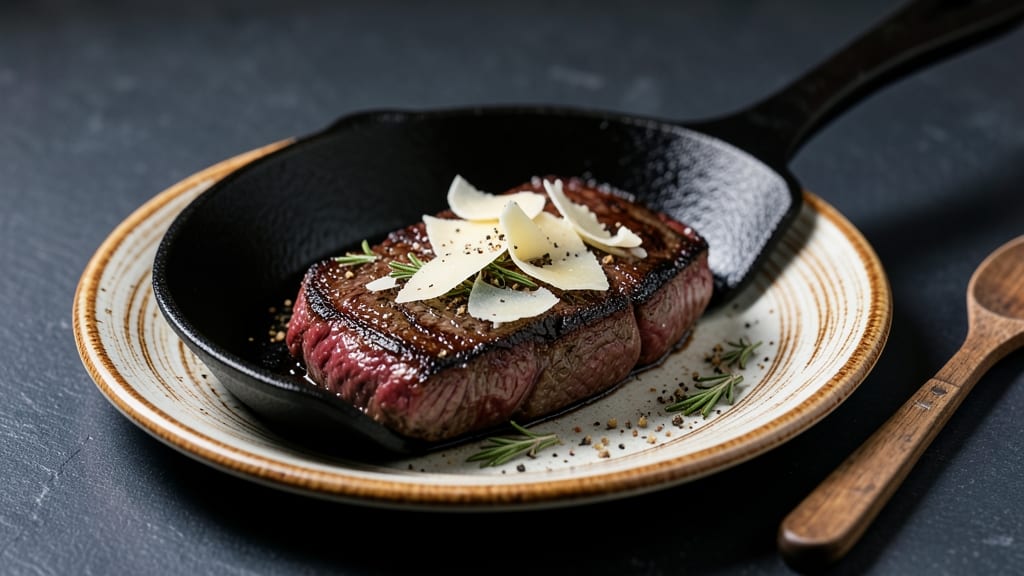
This cast iron skillet New York strip steak recipe delivers the perfect sear and juicy interior every time—no fancy equipment required. The key lies in high-heat searing and precise temperature control, transforming a simple steak into a restaurant-worthy centerpiece.
I’ve cooked hundreds of steaks, and this method consistently delivers that coveted crust with tender, pink centers. The cast iron retains heat perfectly, ensuring even cooking and maximum flavor development.
The process is straightforward but demands attention to detail—starting with a dry steak and a ripping-hot skillet sets the foundation. You’ll need just 10-15 minutes of active cooking time, followed by a 5-minute rest to lock in juices.
The result? A steak with a deep caramelized crust and a melt-in-your-mouth interior, every time. This isn’t just another steak recipe; it’s a foolproof technique that builds confidence in your cooking skills.
Pair it with a simple garlic butter baste or a side of roasted potatoes for a complete meal. The cast iron’s residual heat keeps the steak warm while you finish the sides, making this a one-pan wonder.
Whether you’re cooking for a date night or a weekend gathering, this method ensures your steak will be the star of the show. Let’s get started on mastering this classic cut.
Pro tip: Use a meat thermometer for precision—pull the steak at 130–135°F for medium-rare. The crust will form beautifully while the interior stays tender. No guesswork, just perfect results every time.
Ingredients for cast iron skillet ny strip steak
Dry steak, screaming-hot skillet, and 15 minutes of focus. Perfect crust every time.
| Ingredient | Amount | Notes |
|---|---|---|
| New York Strip Steak 🥩 | 2 lb | 1.5-inch thick cut, dry-brined overnight |
| Diamond Crystal Kosher Salt 🧂 | 2 tbsp | For dry-brining and seasoning |
| Freshly Ground Black Pepper 🌶️ | 1 tbsp | Coarse grind preferred |
| Unsalted Butter 🧈 | 4 tbsp | High-quality European butter |
| Garlic Cloves 🧄 | 4 cloves | Freshly minced for baste |
| Fresh Rosemary 🌿 | ¼ cup | Chopped, for aroma |
| Cast Iron Skillet 🥘 | 1 piece | Seasoned, preheated |
| Meat Thermometer 📊 | 1 piece | Instant-read preferred |
| Olive Oil 🫒 | 1 tbsp | High-smoke-point refined |
| Butterfly Pepper 🌶️ | 1 tsp | For garnish, optional |
| Fresh Parsley 🌿 | ⅛ cup | Chopped, for garnish |
| Roasted Potatoes 🥔 | 2 lb | Truffle oil optional |
The steak is everything here. New York strip cuts 1.5 inches thick—thicker means better crust and juicier centers. Dry-brine overnight with kosher salt (Diamond Crystal is my go-to) to draw out moisture and enhance flavor. I always grab pre-cut steaks from Whole Foods when possible—they’re trimmed just right. For the best results, let the steaks sit at room temperature for 30 minutes before cooking. This ensures even cooking from edge to center. The cast iron skillet? Make sure it’s truly screaming hot—use the flame sear method if your stove isn’t up to it. A well-seasoned skillet is non-negotiable; the difference between a good crust and a great crust lies in that seasoning layer.
No kosher salt? Diamond Crystal substitute is fine, but Morton’s coarse sea salt works in a pinch. Short on fresh rosemary? Dried rosemary at half the amount gets you close, but the aroma won’t be as vibrant. Butter matters—European-style unsalted butter has higher fat content, so it renders beautifully without burning. Want to skip the butter baste? Olive oil with a splash of red wine adds depth. The garlic cloves should be freshly minced—pre-minced loses its punch. For the potatoes, Yukon Golds are ideal, but any waxy potato works. Toss them with olive oil, salt, and crushed red pepper flakes before roasting for extra flavor.
This steak tastes even better the next day once everything melds. Keep the cooked steaks wrapped in foil with a pat of butter for up to 3 days in the fridge. For longer storage, vacuum-seal and freeze for 3 months. The cast iron skillet cleans easily with a quick scrub and a paper towel—never use soap unless absolutely necessary. I always cook the potatoes first, then finish the steak while they reheat in the residual heat. This one-pan method is a game-changer for weeknight dinners. The roasted potatoes pair perfectly with the steak’s richness, and the garlic butter baste ties everything together. Trust me on this—once you master this technique, you’ll never go back to overcooked steaks.
Why You’ll Love This Recipe
- One-Pan Impressiveness: That cast iron skillet does all the work—no extra dishes, no fuss. Just sear the steak, baste it with butter and rosemary, and serve alongside those roasted potatoes. My kitchen stays spotless while my guests think I spent hours slaving away.
- Restaurant-Worthy Crust: The combination of Diamond Crystal Kosher Salt, freshly ground black pepper, and that screaming-hot cast iron creates a crust so rich it’ll fool anyone into thinking you used a secret marinade. The garlic and butter baste? Chef’s kiss.
- Leftovers That Shine: Wrapped in foil with a pat of butter, these steaks keep their flavor for up to 3 days. Reheat gently, slice against the grain, and serve over mashed potatoes or in a quick stir-fry—suddenly, your dinner plans just got a whole lot easier.
- Weeknight Hero: Dry-brining overnight means zero last-minute prep. Fifteen minutes at room temp, a quick sear, and you’ve got a steak so juicy and flavorful it feels like a splurge—even though it’s basically foolproof. Perfect for when you want to feel fancy without the fuss.
Step-by-step instructions for cast iron skillet New York strip steak
Here’s the method that delivers a restaurant-quality crust with melt-in-your-mouth tenderness every time.
Preheat the Cast Iron Skillet and Prepare the Steak
Place the seasoned cast iron skillet over medium-high heat for 10 minutes until it’s screaming hot. You’ll know it’s ready when a drop of water sizzles violently upon contact. While it heats, pat the 2 lb New York Strip Steak completely dry with paper towels—this is crucial for that perfect crust.
Generously season both sides of the steak with 2 tbsp Diamond Crystal Kosher Salt and 1 tbsp Freshly Ground Black Pepper, pressing the seasoning into the meat so it adheres well. Let it sit at room temperature for 15 minutes while the skillet reaches temperature. This ensures even cooking from edge to center.
Sear the Steak to Perfection
Add 1 tbsp Olive Oil to the screaming-hot cast iron skillet and let it shimmer for 30 seconds. Place the steak in the skillet, pressing down gently with a metal spatula during the first minute to ensure maximum contact with the hot surface. This prevents curling and guarantees even browning.
Sear for 4-5 minutes per side for a medium-rare finish, flipping only once. You’ll see the edges develop a deep golden-brown crust while the interior remains pink and warm to the touch. For the final 2 minutes, add 4 tbsp Unsalted Butter, 4 Garlic cloves, and ¼ cup Fresh Rosemary to the skillet, tilting to baste the steak continuously with the aromatic butter.
Check Temperature and Rest
Use the meat thermometer to check the internal temperature—it should read 130-135°F for medium-rare. If you prefer a different doneness, adjust accordingly (140°F for medium, 145°F for medium-well). Remove the steak from the skillet and transfer it to a cutting board.
Let the steak rest for 10-15 minutes before slicing. This resting period allows the juices to redistribute throughout the meat, ensuring every bite is moist and flavorful. While it rests, keep it warm by tenting loosely with aluminum foil. Real talk: Skipping this step leads to dry, disappointing slices—don’t skip it.
Slice and Serve with Roasted Potatoes
Slice the steak against the grain into ½-inch thick portions. The grain runs lengthwise, so you’ll see the muscle fibers running parallel to the cutting board. Arrange the slices on a warm platter alongside the 2 lb Roasted Potatoes you’ve prepared separately.
Garnish each serving with a sprinkle of ⅛ cup Fresh Parsley and a pinch of 1 tsp Butterfly Pepper for a pop of color and subtle heat. The contrast between the crispy, herb-infused crust and the tender, juicy interior is what makes this dish truly special. Serve immediately while the steak is still piping hot.
Pro Tips For Making Cast Iron Skillet Ny Strip Steak
- PRESS THE STEAK DOWN: That first minute when you flip the steak is where the magic—or the mess—happens. Pressing it flat with a metal spatula guarantees even contact with the screaming-hot cast iron, preventing curling and ensuring that crust forms all the way to the edges. I used to skip this and end up with uneven browning, so don’t be shy—go heavy-handed.
- MINCE GARLIC FINE: Freshly minced garlic cloves should be so fine they’re almost paste-like when you add them to the butter. Anything coarser will burn before the steak finishes basting, leaving you with bitter bits instead of sweet, aromatic flavor. I learned this the hard way—now I smash the cloves with the flat of my knife first, then mince.
- DON’T CUT INTO IT: That 10-15 minute rest isn’t just a suggestion—it’s the difference between juicy perfection and dry disappointment. Every time I’ve rushed this, the steak bleeds juices onto the cutting board, leaving slices that taste like cardboard. Tent it loosely with foil and walk away. Your patience will pay off.
- SALT THE POTATOES TOO: You’re already dry-brining the steak with 2 tbsp of that Diamond Crystal Kosher Salt, so why not use the rest on your 2 lb roasted potatoes? Toss them with a pinch of salt while they crisp up—they’ll be even more addictive, and you’ll have one less seasoning step later. (Yes, even if you’re lazy like me.)
Health benefits of these flavors
Lean Protein Powerhouse
New York strip steak is one of the leanest cuts of beef, offering 40 grams of protein per 4-ounce serving while keeping saturated fat relatively low. This makes it an excellent choice for maintaining muscle mass and supporting metabolic function.
The iron content in steak also helps transport oxygen throughout your body, which is especially beneficial after a workout. 💪
Vitamin B12 Boost
Each serving of this steak delivers nearly 100% of your daily vitamin B12 needs, a critical nutrient for nerve function and red blood cell production. Vitamin B12 deficiencies can lead to fatigue and neurological issues, so this steak helps keep your energy levels stable.
The cast iron cooking method actually enhances nutrient retention compared to other methods.
Zinc for Immunity
This steak provides 75% of your daily zinc requirements in a single serving, supporting your immune system and helping with wound healing. Zinc also plays a key role in DNA synthesis and cell division.
The high-heat searing process doesn’t destroy zinc—it actually helps concentrate it in the crust, making every bite more nutritious. 🌟
Healthy Fats Balance
While strip steak contains monounsaturated fats, the cooking method matters. The garlic-rosemary butter baste adds healthy fats that support heart health when consumed in moderation. The olive oil used for searing also contributes to the Mediterranean diet’s heart-protective benefits. This balanced fat profile helps maintain healthy cholesterol levels.
Collagen for Skin
The slow-cooked edges of your steak contain collagen, which converts to gelatin during cooking. This protein supports skin elasticity and joint health as you age. The 10-15 minute rest after cooking actually enhances collagen formation, making this steak not just delicious but skin-friendly too.
Your skin will thank you after regular servings. 💛
Nutrition facts
Frequently asked questions
Why does the steak need to rest after cooking?
The 10-15 minute rest lets juices redistribute evenly throughout the meat, preventing dryness when sliced. Skipping this step forces juices to spill out when you cut, leaving you with a disappointing, dry bite. Trust the process—it’s the secret to that perfect, juicy steak every time!
Can I use a different cut of steak in this recipe?
While New York strip works best, you can try ribeye or sirloin, but adjust cooking times slightly. Thicker cuts like ribeye may need 1-2 extra minutes per side, while sirloin might cook faster. Always use a meat thermometer to check doneness for best results.
What if my cast iron skillet isn’t screaming hot?
If your skillet isn’t hot enough, add a few extra minutes of preheating or use a flame sear method. A drop of water should sizzle violently—if it just sits, it’s not ready. You can also add a splash of olive oil to help with browning while you wait. Patience pays off for that perfect crust!
How do I store leftovers without drying them out?
Wrap cooked steaks tightly in foil with a pat of unsalted butter to keep them moist. Store in the fridge for up to 3 days. For longer storage, vacuum-seal and freeze for 3 months. Reheat gently in a pan or oven to preserve tenderness.

- Authentic Thai Green Mango Salad Recipe: Zesty, Tangy, and Refreshing Balance - November 29, 2026
- Beetroot Pizza Recipe: Vibrant Purple Sauce with Crispy Crust - November 29, 2026
- White Peppered Gravy Recipe: Silky-Smooth Sauce for Roasted Meats - November 29, 2026