
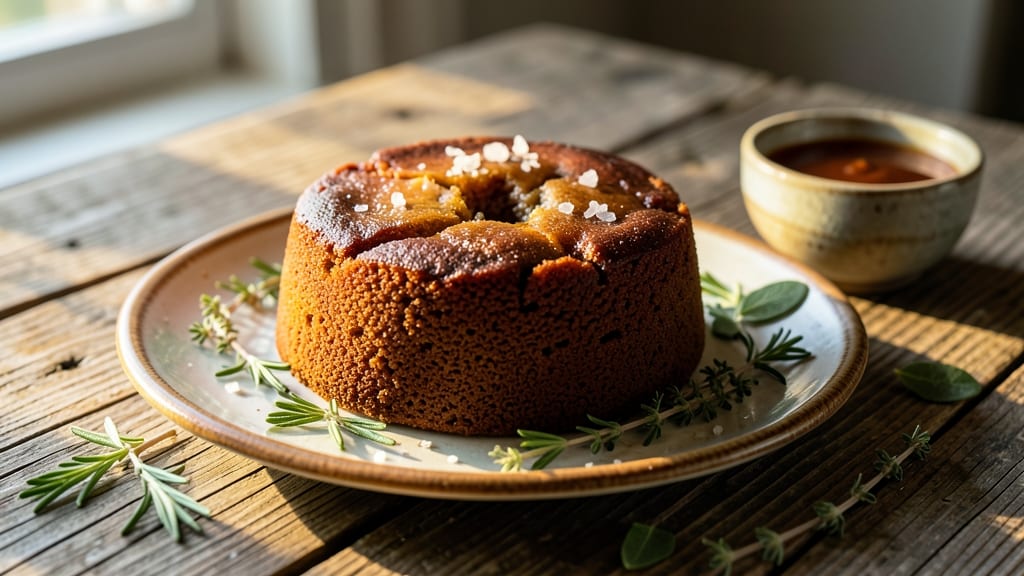
This brown sugar cake recipe delivers the perfect balance of moist crumb and caramelized top that keeps everyone asking for seconds. The rich, buttery flavor of brown sugar creates a tender crumb and a sticky, golden crust that’s impossible to resist.
I’ve baked this cake countless times for holidays and celebrations, and it never fails to impress.
The secret to achieving that moist texture lies in the right mix of ingredients and precise baking technique. Using a combination of all-purpose flour, butter, and brown sugar ensures a tender crumb, while the addition of buttermilk adds extra moisture.
Baking at 350°F for 30–35 minutes guarantees a perfectly set cake with a caramelized top that’s just sweet enough.
Once out of the oven, the cake’s aroma alone will have your guests lining up for slices. The caramelized top gives it a beautiful sheen, while the moist interior makes every bite irresistible.
Serve it warm with a dusting of powdered sugar or a drizzle of vanilla glaze for an extra touch of elegance.
This versatile cake works for birthdays, holiday desserts, or even a cozy weekend treat. The recipe scales easily, so you can adjust the size of the pan to fit your needs. Whether you’re a seasoned baker or just starting out, this foolproof method ensures a showstopping dessert every time.
Ingredients for brown sugar cake
Rich brown sugar, tender crumb, and caramelized perfection—this cake delivers every time.
| Ingredient | Amount | Notes |
|---|---|---|
| All-Purpose Flour 🌾 | 3 cups | Sifted for even texture |
| Light Brown Sugar 🍚 | 2 ½ cups | Packed for maximum density |
| Unsalted Butter 🧈 | 1 ½ cups | Creamed with sugar |
| Large Eggs 🥚 | 4 whole | Room temperature preferred |
| Buttermilk 🥛 | 1 ½ cups | Full-fat for richness |
| Baking Soda 🧂 | 2 tsp | Freshly measured |
| Vanilla Extract 🌿 | 2 tbsp | Pure vanilla preferred |
| Salt 🧂 | 1 tsp | Fine grain preferred |
| Granulated Sugar 🍬 | ½ cup | For caramelized top |
| Vanilla Glaze 🍰 | ½ cup | Optional finishing touch |
The brown sugar is the star here, so opt for light, packed variety—it balances sweetness with moisture better than dark. Costco and Whole Foods carry excellent bulk options, but any quality brand works if it’s freshly packaged. For the butter, unsalted is non-negotiable—salted can disrupt the delicate balance of flavors. I always measure it in cups after creaming with sugar to ensure consistency. The buttermilk should be full-fat; substituting regular milk with vinegar works in a pinch, but the texture won’t be as velvety.
No buttermilk? Plain yogurt mixed with milk (1:1 ratio) mimics the acidity and moisture, though the cake may be slightly denser. For the vanilla extract, pure vanilla bean paste elevates the flavor, but high-quality imitation works fine. The granulated sugar for the caramelized top should be superfine or finely ground—it spreads more evenly. If you’re scaling this up, double-check your baking pans—this recipe fits two 9×13-inch pans perfectly, but a 9-inch round will need adjustment. The baking soda must be fresh; test it with vinegar to ensure it still fizzes—old baking soda won’t lift the cake.
Store the cake in an airtight container at room temperature for up to 3 days, or refrigerate for 5 days if you prefer it chilled. For longer storage, freeze slices individually wrapped for up to 3 months. The vanilla glaze keeps separately in the fridge for 2 weeks—just stir before using. Reheating? A quick 10-minute warm in the oven at 300°F brings back that fresh-baked aroma. The caramelized top is best enjoyed immediately, but the moist crumb improves with age, so let it sit for at least 1 hour before slicing for optimal texture.
Why You’ll Love This Recipe
- No-Fuss Moisture Magic: That creamed butter and brown sugar combo? It’s the secret to a cake that stays moist for days—no dry crumbs here. The buttermilk keeps it tender, and that granulated sugar topping? It caramelizes into a crispy shell that’s chef’s kiss perfection.
- Crowd-Pleaser Always: This cake doesn’t care if it’s Sunday brunch or a last-minute dessert. My kids devour it straight from the pan, and my in-laws always ask for seconds—no fuss, just pure satisfaction. Plus, it’s the kind of thing that disappears fast, so you’ll never have leftovers to stress over.
- Budget’s Best Kept Secret: Brown sugar and butter aren’t expensive, but they make this cake feel like a splurge. You’re using pantry staples, and the results? Rich, caramelized, and worth every penny. Honestly, I’ve spent way more on cakes that taste like cardboard.
- Glaze It Right: The vanilla glaze isn’t just pretty—it locks in moisture so your cake stays fresh for days. I freeze slices wrapped tightly, and they thaw like they’re fresh out of the oven. No sad, dry cake here, just reliable, delicious leftovers.
Step-by-step instructions for brown sugar cake
This method delivers a tender crumb and signature caramelized top without fail.
Cream Butter and Sugars Together
In a stand mixer fitted with the paddle attachment, combine the 1½ cups unsalted butter and 2½ cups light brown sugar. Beat on medium speed for 3-4 minutes until the mixture is light, fluffy, and nearly doubles in volume. The texture should be pale and ribbon-like when you lift the paddle.
This creaming process incorporates air into the batter, which creates the cake’s signature moist crumb. I press down on the paddle occasionally to ensure even mixing—uneven creaming leads to dense pockets. The butter should be softened but not melted, and the sugar should be fully dissolved with no visible grains remaining.
Add Eggs and Buttermilk Alternately
Add the 4 large eggs, one at a time, mixing just until each is fully incorporated after about 30 seconds per addition. Scrape down the sides of the bowl to ensure even distribution. Then, add the 1½ cups buttermilk in two equal pours, mixing on low speed after each addition until smooth.
Alternating wet ingredients prevents gluten development while maintaining moisture. The batter should be thick but pourable—if it looks too stiff, add 1 tablespoon of buttermilk to adjust. Here’s the thing—overmixing after adding the buttermilk can introduce air bubbles that create tunnels in the cake, so mix just until combined.
Combine Dry Ingredients and Fold Gently
In a separate bowl, whisk together the 3 cups all-purpose flour, 2 tsp baking soda, 1 tsp salt, and 2 tbsp vanilla extract. Sift the flour mixture directly into the wet ingredients and use a silicone spatula to gently fold until just combined. Avoid overmixing—you should still see small streaks of flour in the batter.
The baking soda reacts with the buttermilk’s acidity to create lift, while the flour provides structure. Folding preserves the air incorporated during creaming. I use a gentle “J” motion with the spatula to maintain that delicate texture. If the batter looks too dry, add 1 tablespoon of buttermilk to restore moisture.
Bake with Granulated Sugar Topping
Preheat the oven to 350°F. Grease two 9-inch round cake pans and line the bottoms with parchment paper. Divide the batter evenly between the pans and smooth the tops. Sprinkle the ½ cup granulated sugar evenly over each cake.
Bake for 30-35 minutes until a toothpick inserted in the center comes out clean and the edges are golden. The granulated sugar creates a caramelized crust that’s both decorative and flavorful. I like to place the pans on the middle rack—hotter oven temperatures at the top would burn the sugar before the cake is fully baked.
Cool and Glaze for Moisture Lock
Remove the cakes from the oven and let them cool in the pans for 10 minutes. Then transfer to a wire rack to cool completely. Once fully cooled, combine the ½ cup vanilla glaze with 1 tablespoon of milk (if needed) to achieve a smooth drizzling consistency. Pour evenly over the cooled cake layers.
The glaze seals in moisture while adding a sweet finish. I brush it gently over the top and sides, letting any excess drip off the edges. This step isn’t just for decoration—it helps maintain that moist crumb even after several days. For best results, assemble the cake immediately after glazing to prevent the layers from drying out.
Pro Tips For Making Brown Sugar Cake
- Cream Butter Properly: Dump that cold butter straight from the fridge into the brown sugar and beat it with a mixer for at least 3 minutes—until the mixture looks like wet sand and turns a pale golden color. I used to rush this, and the cake always ended up dense. Trust me, the extra time pays off.
- Use Room-Temp Eggs: Pull those eggs out of the fridge 30 minutes before mixing—cold eggs can make your batter curdle, especially when combined with buttermilk. I learned this the hard way when my first batch looked like lumpy pancake batter instead of smooth cake batter.
- Don’t Overmix the Batter: Once you add the flour, mix just until combined—about 10-12 strokes with a spatula. Overmixing develops gluten, and your cake will turn out tough instead of tender. I know it’s tempting to get it “perfect,” but stop when the flour disappears.
- Test for Doneness Early: Start checking for doneness 5 minutes before the recipe’s suggested time—insert a toothpick into the center. If it comes out with moist crumbs but no wet batter, it’s done. I’ve walked away too many times and ended up with a dry, overbaked cake. Timing is everything.
Creative variations of these flavors
Spiced Pumpkin Twist
Add 1 cup pumpkin puree and 1½ tsp pumpkin pie spice (like Penzeys brand) to the dry ingredients before folding them into the wet batter. This fall-inspired variation keeps the classic moist texture while adding warm notes of cinnamon, nutmeg, and ginger.
I reduce the light brown sugar to 2 cups to balance the pumpkin’s natural sweetness. 🍂
Lemon Poppy Seed Layer Cake
Divide the batter between two pans, then add a thin layer of lemon poppy seed filling (mix ½ cup poppy seeds, ¼ cup sugar, 2 tbsp lemon juice, and 1 tbsp melted butter) between the layers.
This brightens the cake with citrusy zing while keeping the buttery richness intact. I top it with a lemon glaze made from ¼ cup powdered sugar and 1 tbsp lemon juice.
Chocolate Chip Brown Butter
Brown the 1½ cups unsalted butter before creaming it with sugar—this deepens the flavor and adds a nutty richness. Swirl in 1 cup chocolate chips (like Ghirardelli) along with the dry ingredients.
The brown butter gives the cake a toasty depth that pairs perfectly with the chocolate. I let the batter cool for 10 minutes before baking to prevent spreading. 🍫
Coffee-Infused Moisture Boost
Replace ½ cup of the buttermilk with ½ cup strong brewed coffee (cooled) to enhance the cake’s depth. This works especially well if you’re serving it with coffee or espresso-based desserts.
The coffee also pairs beautifully with ½ cup chopped walnuts folded into the batter for added crunch. I use a French press for the strongest flavor extraction.
Carrot Cake Fusion
Add 2 cups grated carrots (finely shredded) and ½ cup raisins soaked in 1 tbsp orange juice to the dry ingredients. Replace ½ cup of the buttermilk with ½ cup orange juice for a citrusy twist.
This version keeps the cake’s signature moistness while adding the familiar carrot cake flavors. Top with a cream cheese glaze for extra richness. 🥕
Nutrition facts
Frequently asked questions
Why does my brown sugar cake sometimes turn out dry?
Dryness often happens when you overmix the batter or skip the buttermilk step. The buttermilk adds moisture and reacts with baking soda for lift. Always mix just until combined after folding in dry ingredients—overmixing develops gluten and steals moisture. Also, ensure your 1½ cups unsalted butter is softened but not melted before creaming.
Can I substitute regular milk for buttermilk in this recipe?
Yes, but it won’t taste or texture the same! Mix 1 cup regular milk with 1 tablespoon white vinegar or lemon juice to mimic buttermilk’s acidity. The cake will be slightly denser, but the moisture balance will still work. For best results, use full-fat buttermilk if available.
What’s the best way to prevent the cake from sticking to the pan?
Grease your 9-inch round cake pans thoroughly with butter or baking spray, then line the bottoms with parchment paper. This creates a non-stick barrier while ensuring even heat distribution. Avoid overfilling the pans—leave ½ inch of space at the top to prevent overflowing during baking.
How do I know when the cake is fully baked?
Insert a toothpick or cake tester into the center—it should come out clean with just a few moist crumbs. The edges should also be golden brown. If your oven runs hot, check at 30 minutes and watch for the sugar topping to caramelize. Overbaking dries out the cake, so trust the toothpick test!
Can I make this cake ahead of time and freeze it?
Slice the cooled cake and wrap each piece tightly in plastic wrap or aluminum foil. Freeze for up to 3 months. Thaw at room temperature overnight before serving. The moist crumb improves after thawing—just add a light vanilla glaze to restore freshness.

- Chicken Pelau Recipe: Caribbean-Style Rice with Tender Chicken and Pigeon Peas - November 29, 2026
- Best Cream of Broccoli Soup Recipe with Heavy Cream: Velvety Richness in One Pot - November 29, 2026
- Authentic Thai Green Mango Salad Recipe: Zesty, Tangy, and Refreshing Balance - November 29, 2026