
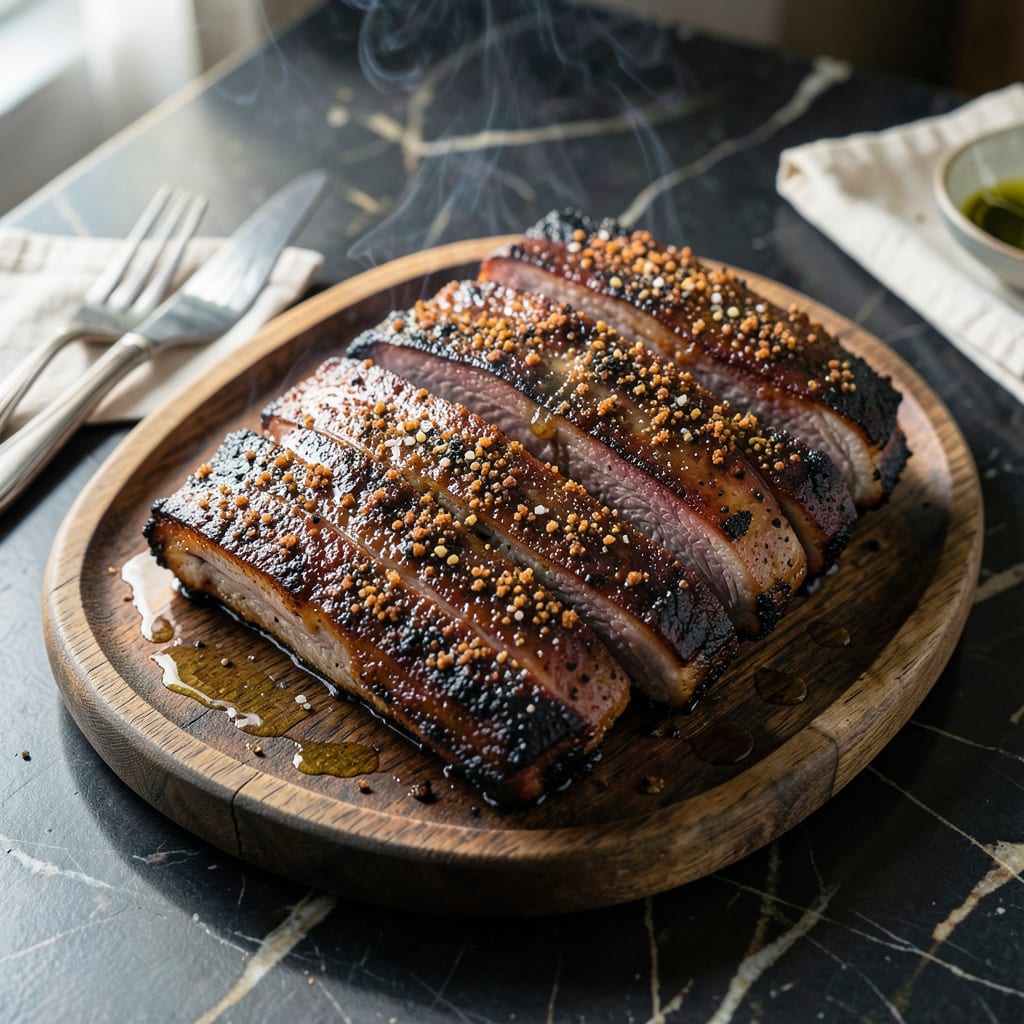
Achieving fall-off-the-bone ribs on a charcoal grill requires patience and precise technique. This method delivers deeply smoky, tender meat with a perfect caramelized bark every time.
Low and slow is the key—maintain consistent heat, use quality wood chips, and let the ribs cook undisturbed. The result is meat so tender it nearly melts with each bite.
Ingredients for Charcoal Grill Ribs
Quality ribs and a well-built rub set the foundation for perfect charcoal-grilled tenderness.
| Ingredient | Amount | Notes |
|---|---|---|
| Pork Baby Back Ribs 🥩 | 2 lb | Rack, membrane removed |
| Kosher Salt 🧂 | 2 tbsp | Diamond Crystal preferred |
| Coarse Black Pepper 🌶️ | 2 tbsp | Freshly ground for best results |
| Brown Sugar 🍚 | ½ cup | Light or dark variety |
| Smoked Paprika 🌶️ | 1 tbsp | For deep smoky flavor |
| Garlic Powder 🧄 | 1 tbsp | Not garlic salt |
| Onion Powder 🧅 | 1 tbsp | Fresh ground preferred |
| Cayenne Pepper 🔥 | ½ tsp | Adjust for heat preference |
| Yellow Mustard 🟡 | ¼ cup | For binder in rub |
| Apple Cider Vinegar 🍏 | ¼ cup | For spritzing ribs |
| Charcoal Briquettes ⚫ | 5 lb | Lump charcoal preferred |
| Hickory Wood Chips 🌳 | 2 cups | Soaked in water 30 minutes |
| Barbecue Sauce 🍯 | 1 cup | For glaze, optional |
[recipeingredientscaler]
The ribs are the star—baby back ribs offer the best meat-to-bone ratio for grilling. Source from a reputable butcher or high-turnover supermarket to ensure freshness. Look for racks with good marbling and avoid any with a grayish tint. Lump charcoal burns hotter and cleaner than briquettes, and Jealous Devil or Kamado Joe brands are professional favorites for consistent heat.
No hickory chips? Cherry or apple wood provide excellent alternatives with milder smoke. Brown sugar can be swapped for raw turbinado for a deeper molasses note. For a spicier profile, increase the cayenne to 1 full teaspoon. The yellow mustard in the rub is purely for adhesion—Dijon works equally well if that’s what you have on hand.
Store uncooked ribs in the fridge for up to 3 days or freeze for 6 months. Keep wood chips in a sealed container to maintain moisture. Leftover ribs reheat beautifully wrapped in foil at 300°F for 20 minutes—they’ll be just as tender.
Why You’ll Love This Recipe
- Low-Effort Grilling: I just rub the ribs with salt, pepper, brown sugar, and smoked paprika—no marinade, no fuss. The charcoal does the rest.
- Smoky Sweet Balance: That brown sugar caramelizes while the paprika adds a deep, smoky kick. Honestly, it’s the perfect bite every time.
- Crowd-Pleasing Dish: I serve these at summer BBQs, and they vanish faster than I can grill them. Between us, even the picky eaters come back for seconds.
- Budget-Friendly Feast: Pork baby back ribs are affordable, and one rack feeds my whole family. Plus, leftovers taste just as good the next day.
Step-by-Step Instructions for Charcoal Grill Ribs
Master the low-and-slow technique to achieve perfectly tender ribs on your charcoal grill.
Step 1: Prepare and Season the Ribs
Begin by removing the thin membrane from the bone side of the pork baby back ribs. This ensures the rub penetrates the meat and doesn’t create a barrier. Pat the ribs dry with paper towels to help the seasoning adhere properly.
In a bowl, combine the kosher salt, coarse black pepper, brown sugar, smoked paprika, garlic powder, onion powder, and cayenne pepper. Mix thoroughly. Coat the ribs generously with the yellow mustard as a binder, then apply the rub evenly to all surfaces. Let them sit at room temperature for 30 minutes while you prepare the grill.
Step 2: Set Up the Charcoal Grill for Indirect Heat
Arrange the charcoal briquettes on one side of the grill, leaving the other side empty. This creates a two-zone fire for indirect cooking. Light the charcoal and let it burn until covered with white ash, then add the soaked hickory wood chips directly onto the hot coals for smoke.
Place a drip pan filled with water on the empty side of the grill. This stabilizes the temperature and adds moisture to prevent the ribs from drying out. Close the lid and adjust the vents to maintain a temperature of 250-275°F—this low heat is crucial for breaking down the collagen in the ribs without drying them out.
Step 3: Smoke the Ribs Low and Slow
Place the seasoned ribs bone-side down on the grill grate over the drip pan, away from direct heat. Cover the grill and let them smoke undisturbed for 2 hours. Spritz the ribs with apple cider vinegar every 45-60 minutes to keep them moist and add a subtle tang.
After the initial 2 hours, flip the ribs and continue cooking for another 1.5-2 hours. The ribs are ready for the next step when they reach an internal temperature of 160-170°F and the meat starts to pull back from the bones.
Step 4: Wrap and Finish the Ribs
Lay out a large sheet of heavy-duty foil and place the ribs meat-side down in the center. Drizzle with a little more apple cider vinegar and wrap tightly, creating a sealed packet. Return the wrapped ribs to the grill and cook for another 1-1.5 hours.
This step, known as the “Texas crutch,” steams the ribs in their own juices, speeding up the cooking process while keeping them incredibly tender. You’ll know they’re done when the internal temperature reaches 195-203°F and the meat is probe-tender.
Step 5: Glaze and Rest Before Serving
Carefully unwrap the ribs and place them back on the grill over direct heat. Brush generously with barbecue sauce and cook for 2-3 minutes per side to caramelize the sauce. Watch closely to prevent burning.
Transfer the ribs to a cutting board and let them rest for 10-15 minutes before slicing. This allows the juices to redistribute throughout the meat. Slice between the bones and serve immediately with any remaining sauce on the side.
Pro Tips For Making Charcoal Grill Ribs
- Preheat the Coals: Get your charcoal fully ashed over before adding the ribs—this prevents temperature spikes that can burn the sugar in your dry rub.
- Trim the Membrane: I learned this the hard way—peel off that tough silver skin on the bone side of the ribs or it’ll block the seasoning and make them chewy.
- Low and Slow: Keep the heat around 225°F and cook the ribs for 3-4 hours; rushing with high heat dries them out and turns the brown sugar bitter.
- Spritz for Bark: After burning three batches, I finally figured out that spritzing with apple juice every hour keeps the ribs moist and builds that sticky, caramelized crust.
Storing and Reheating Leftovers
Refrigerator Storage
Let cooked ribs cool to room temperature within 2 hours, then wrap tightly in heavy-duty foil or place in airtight containers. They’ll keep in the fridge at 40°F or below for up to 4 days. I find the flavors deepen overnight. ❄️
Freezer Storage
For longer storage, freeze ribs in gallon freezer bags with parchment paper between layers to prevent sticking. Squeeze out excess air to avoid freezer burn. They’ll maintain quality for 3 months. Label with the date—I always forget otherwise.
Oven Reheating
Preheat oven to 300°F. Wrap ribs in foil with 2 tbsp apple cider vinegar and heat for 20-25 minutes. This method preserves moisture better than any other. The vinegar steams them back to tenderness.
Grill Reheating
For that fresh-off-the-grill taste, reheat wrapped ribs over indirect heat at 275°F for 15-20 minutes. Unwrap and sear over direct heat for 2 minutes per side to crisp the bark. 🔥
Sauce Refresh
If using barbecue sauce, add a fresh coat during the final 2 minutes of reheating. I keep Sweet Baby Ray’s on hand for this. The sauce caramelizes beautifully over heat.
Serving Tip
Always rest reheated ribs for 5 minutes before serving. This lets the juices redistribute. Slice between bones just before serving for the best presentation.
Nutrition Facts
Frequently Asked Questions
What’s the ideal temperature for grilling?
Maintain 250-275°F for low and slow cooking. This range breaks down collagen without drying out the meat.
How do I prevent my ribs from drying out?
Use a drip pan with water and spritz ribs with apple cider vinegar every 45-60 minutes. Wrapping in foil during the final stage also locks in moisture.
Can I use a different wood for smoking?
Cherry or apple wood offer milder, sweeter smoke. Hickory provides the strongest flavor, while pecan is a great middle-ground option.
How long should I let the ribs rest before slicing?
Rest for 10-15 minutes after cooking. This allows juices to redistribute throughout the meat for maximum tenderness.

- BBQ Sausage Recipe Oven: Smoky Depth Without the Grill - September 28, 2026
- BBQ Chicken Bowl Recipe Rice: Smoky Sweetness Over Fluffy Grains - September 28, 2026
- Beef Cutlet Recipe Ideas: Crispy Breaded Patties With Bold Seasonings - September 28, 2026