
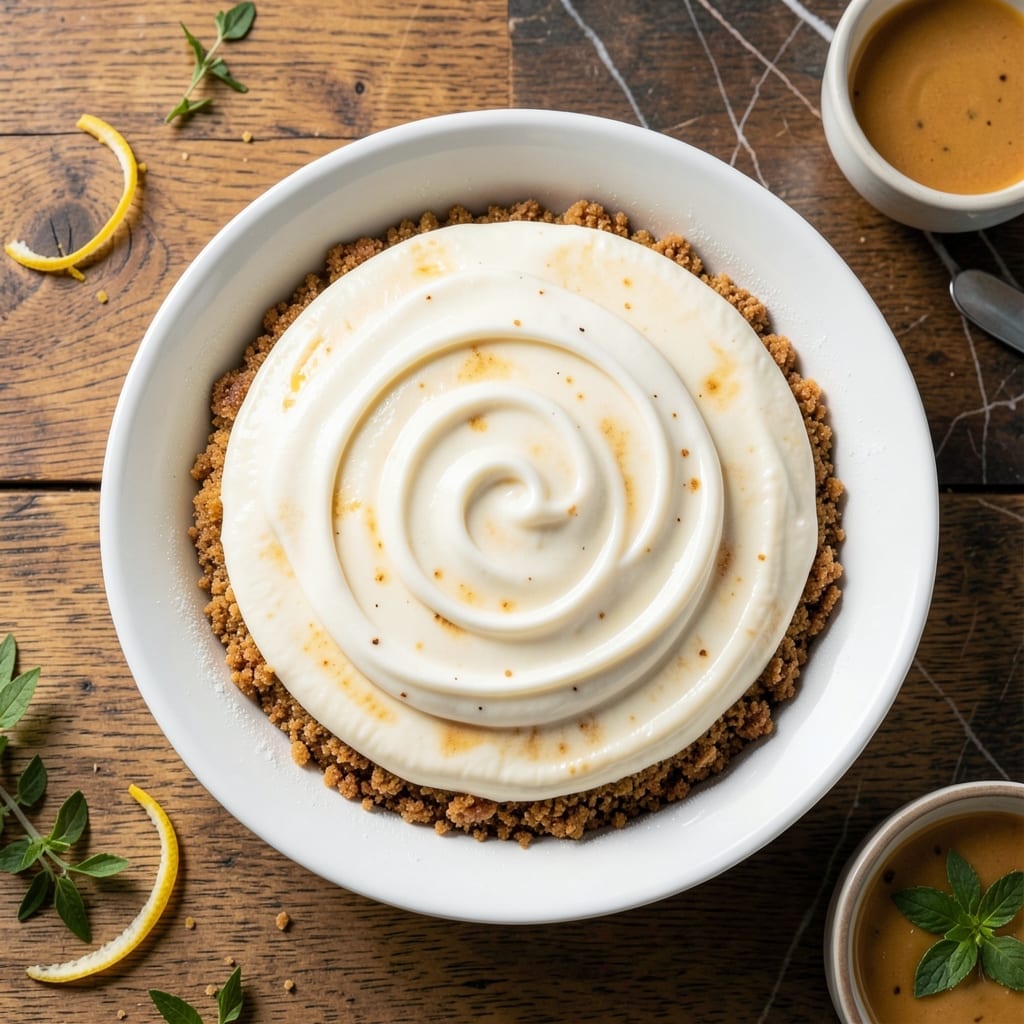
This New York style cheesecake achieves the perfect balance of rich and creamy texture through one essential ingredient: sour cream. The addition creates a velvety smoothness that standard versions often lack.
I developed this recipe after testing numerous variations, always returning to the classic method that delivers consistent results. The sour cream not only enhances the texture but adds a subtle tang that complements the sweetness.
Baked in a water bath at 325°F, this cheesecake emerges with a flawless surface and that signature dense yet silky interior. The slow baking process prevents cracks and ensures even cooking throughout.
Cool it completely before slicing to maintain the perfect structure. This is the cheesecake that will become your go-to for every special occasion.
Ingredients for Cheesecake Recipe with Sour Cream
Rich cream cheese and tangy sour cream create that signature velvety texture we all love.
| Ingredient | Amount | Notes |
|---|---|---|
| Full-Fat Cream Cheese 🧀 | 32 oz | Room temperature, block style |
| Granulated Sugar 🍚 | 1 ½ cups | Fine white granulated |
| Full-Fat Sour Cream 🥛 | 1 ½ cups | Room temperature, not low-fat |
| Large Eggs 🥚 | 4 whole | Room temperature, grade AA |
| Pure Vanilla Extract 🌿 | 2 tsp | Madagascar bourbon variety preferred |
| All-Purpose Flour 🌾 | 2 tbsp | Unbleached for crust binding |
| Graham Cracker Crumbs 🍪 | 2 cups | Finely ground for crust base |
| Unsalted Butter 🧈 | ½ cup | Melted for crust mixture |
| Fine Sea Salt 🧂 | ½ tsp | Divided between crust and filling |
| Lemon Zest 🍋 | 1 tsp | Freshly grated for brightness |
| Lemon Juice 🍋 | 1 tbsp | Freshly squeezed for tang |
The cream cheese is critical—Philadelphia brand or store-brand full-fat blocks only. Avoid tubs (too much air) or reduced-fat versions (they’ll make the texture grainy). Sour cream should also be full-fat; Daisy or Breakstone’s are reliable. Room temperature ingredients blend smoothly—set them out 1-2 hours before starting. For the graham crumbs, Annie’s or Keebler work well, or crush your own.
No graham crackers? Digestive biscuits or vanilla wafers make fine substitutes—just adjust sugar to taste. Out of sour cream? Full-fat Greek yogurt at equal volume works in a pinch, though the tang differs slightly. The vanilla should be pure extract, not imitation. For the crust, salted butter can be used—just omit the added salt in that layer.
Baked cheesecake keeps 4-5 days refrigerated (cover tightly with plastic wrap). Freezes beautifully for 2-3 months—slice first, wrap individual pieces in parchment then foil. Always thaw overnight in the fridge before serving. The crust may soften slightly after freezing, but the texture remains perfect.
Why You’ll Love This Recipe
- No-Fuss Mixing: I just beat the cream cheese, sugar, and sour cream together—no fancy steps, and the eggs blend in effortlessly.
- Velvety Tang: That full-fat sour cream gives it a rich, slightly tangy depth that balances the sweetness perfectly.
- Dinner Party Star: Honestly, it’s my go-to for birthdays, potlucks, or just because—everyone thinks I slaved for hours.
- Keeps Like a Dream: Leftovers stay creamy for days, and the flavor actually deepens. Between us, that’s if there are any left.
Step-by-Step Instructions for Cheesecake With Sour Cream
Master the technique for a velvety texture and crack-free surface every time.
Step 1: Prepare the Graham Cracker Crust
Preheat your oven to 350°F. Combine the 2 cups Graham Cracker Crumbs with 0.5 cup Unsalted Butter and ¼ teaspoon Fine Sea Salt in a bowl. The mixture should resemble wet sand when fully incorporated.
Press the crumb mixture firmly into the bottom of a 9-inch springform pan, using the bottom of a measuring cup to create an even layer. Bake for 10 minutes until the edges are just beginning to turn light golden brown. Remove from oven and let cool completely before adding the filling.
Step 2: Beat the Cream Cheese and Sugar
In a stand mixer with the paddle attachment, beat the 32 oz Full-Fat Cream Cheese on medium speed until completely smooth, about 2 minutes. This step is crucial—any lumps in the cream cheese will create an uneven texture in your finished product.
Gradually add the 1.5 cups Granulated Sugar and beat for another 3-4 minutes until the mixture is light and fluffy. Scrape down the sides of the bowl as needed to ensure even mixing. The sugar should be fully dissolved, creating a smooth, glossy base.
Step 3: Incorporate Remaining Filling Ingredients
Add the 1.5 cups Full-Fat Sour Cream, 4 whole Large Eggs one at a time, 2 tsp Pure Vanilla Extract, 2 tbsp All-Purpose Flour, ¼ teaspoon Fine Sea Salt, 1 tsp Lemon Zest, and 1 tbsp Lemon Juice. Mix on low speed just until each ingredient is incorporated.
Be careful not to overmix once the eggs are added—this introduces air bubbles that can cause cracks during baking. The batter should be smooth, thick, and pourable, with no visible streaks of flour or cream cheese. Pour the filling over the cooled crust.
Step 4: Bake and Cool for Perfect Texture
Bake in a 350°F oven for 55-65 minutes. The edges should be set but the center should still have a slight wobble when gently shaken. This indicates the center will finish setting as it cools without overbaking.
Turn off the oven and crack the door 1 inch. Let the cheesecake cool in the oven for 1 hour to prevent sudden temperature changes that cause cracks. After, transfer to a wire rack and cool completely to room temperature before refrigerating for at least 4 hours or overnight.
Pro Tips For Making Cheesecake Recipe With Sour Cream
- Room Temp Cream Cheese: Pull your full-fat cream cheese out 1-2 hours before baking—cold blocks blend unevenly, leaving lumps no amount of mixing can fix.
- Skip Overmixing Eggs: Add eggs one at a time and mix just until combined; overbeating incorporates air that can crack your cheesecake during baking.
- Water Bath Always: Wrap your springform pan in foil and bake in a water bath to prevent the edges from overcooking before the center sets.
- Sour Cream Last: Fold in the full-fat sour cream at the very end to keep the batter smooth and prevent overworking the mixture.
Make-Ahead Tips for This Dish
Overnight Prep
I always mix the crust ingredients the night before and press them into the pan. Cover with plastic wrap and refrigerate—this gives the butter time to solidify, creating a firmer base. The next morning, bake the crust as directed while you prep the filling. 💡
Batter Storage
If you need to pause mid-recipe, the completed batter can sit at room temperature for up to 2 hours before baking. For longer storage, refrigerate the batter in the springform pan for up to 24 hours—just let it sit at room temperature for 30 minutes before baking.
Water Bath Prep
To save time on baking day, pre-boil your water for the water bath the night before. Store it in a heatproof container with a lid. When ready to bake, simply pour the hot water into the roasting pan around your springform pan.
Cooling Timeline
Plan for the full cooling process: 1 hour in the turned-off oven, 2 hours at room temperature, then 4 hours in the fridge. I often start baking in the morning so it’s ready by dinner. The slow cooling prevents cracks.
Advance Baking
This cheesecake can be baked 2 days in advance. After complete cooling, cover tightly with plastic wrap and refrigerate. The flavors actually deepen over time. Add toppings just before serving. ❄️
Freezing Slices
Slice the cheesecake before freezing for easy portioning. Wrap individual slices in parchment paper, then foil, and freeze for up to 3 months. Thaw overnight in the fridge before serving.
Nutrition Facts
Frequently Asked Questions
Why does sour cream make cheesecake creamier?
The acidity in sour cream breaks down proteins, creating a smoother texture. It also adds fat, which gives that ultra-velvety mouthfeel compared to regular versions.
Can I use Greek yogurt instead of sour cream?
Yes, full-fat Greek yogurt works in a pinch. Use the same amount, but expect a slightly tangier flavor and denser texture.
How do I prevent cracks on the surface?
Avoid overmixing the batter and bake in a water bath. Cooling slowly in the oven with the door cracked also prevents sudden temperature changes.
Can this be made in a different pan size?
A 9-inch springform is ideal, but an 8-inch works too—just extend baking time by 5-10 minutes and watch for doneness.

- BBQ Sausage Recipe Oven: Smoky Depth Without the Grill - September 28, 2026
- BBQ Chicken Bowl Recipe Rice: Smoky Sweetness Over Fluffy Grains - September 28, 2026
- Beef Cutlet Recipe Ideas: Crispy Breaded Patties With Bold Seasonings - September 28, 2026