
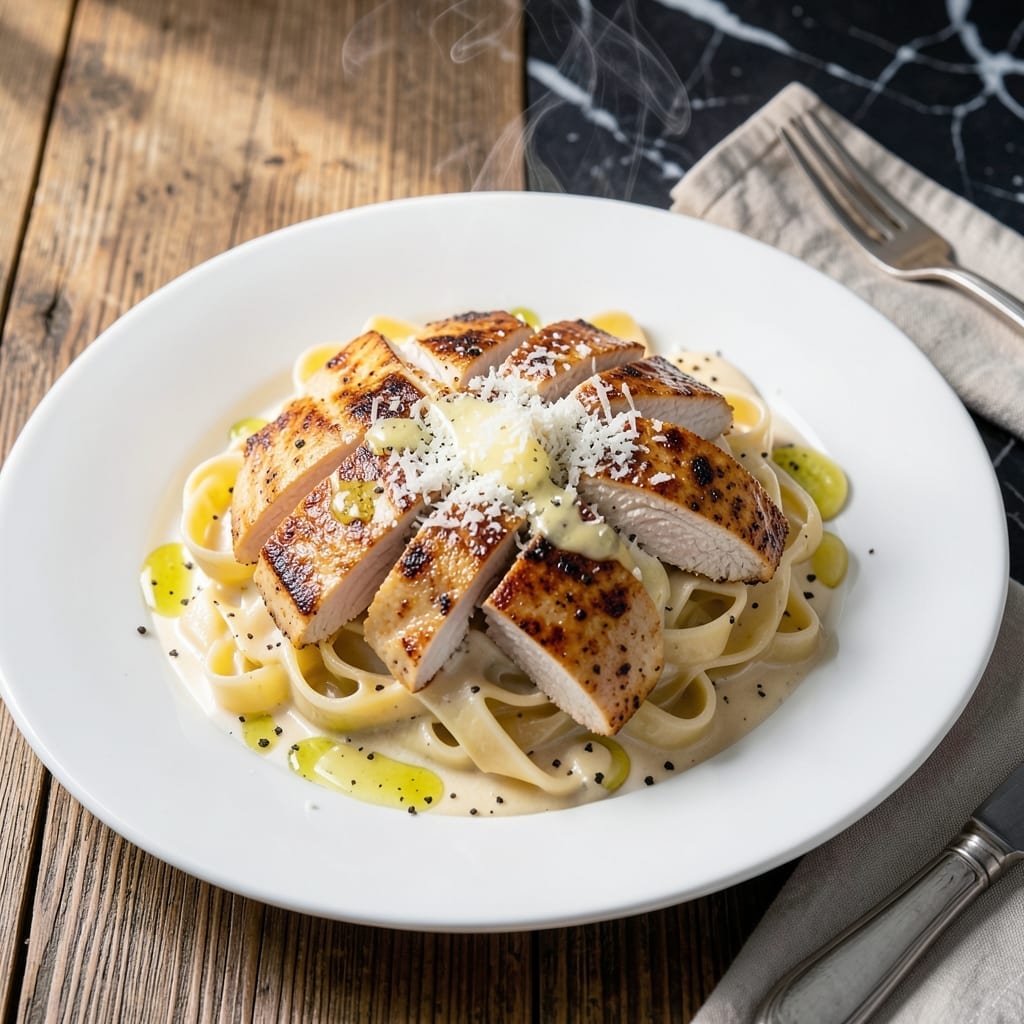
This chicken alfredo delivers tender results every time using professional techniques adapted for home cooks. The secret lies in properly cooking the chicken to maintain moisture and building a silky parmesan sauce from scratch.
What sets this version apart is the careful balance of cream, parmesan, and pasta water to create a sauce that clings perfectly to each noodle. The chicken stays juicy through precise timing and temperature control, never drying out.
You’ll achieve restaurant-quality texture with a velvety sauce and perfectly cooked chicken. The dish comes together with simple ingredients but delivers sophisticated flavor that impresses every time.
Serve immediately while the sauce is at its creamiest. Here’s how to make it properly at home.
Ingredients for Chicken Alfredo Recipe Gordon Ramsay
Professional ingredients create restaurant-quality alfredo with tender chicken and silky sauce at home.
| Ingredient | Amount | Notes |
|---|---|---|
| Fettuccine Pasta 🍝 | 12 oz | Fresh or dried, al dente |
| Boneless Skinless Chicken Breast 🍗 | 1 ½ lb | Pounded to even thickness |
| Heavy Cream 🥛 | 2 cups | Full-fat for richness |
| Parmesan Cheese 🧀 | 1 ½ cups | Freshly grated from block |
| Unsalted Butter 🧈 | ½ cup | European-style preferred |
| Garlic Cloves 🧄 | 4 cloves | Minced finely |
| Olive Oil 🫒 | 2 tbsp | Extra-virgin for cooking |
| All-Purpose Flour 🌾 | ¼ cup | For thickening sauce |
| Salt 🧂 | 1 ½ tsp | Kosher or sea salt |
| Black Pepper 🌶️ | 1 tsp | Freshly ground |
| Fresh Parsley 🌿 | ¼ cup | Chopped, for garnish |
| Whole Milk 🥛 | ¼ cup | To adjust sauce consistency |
| Nutmeg 🌰 | 0.125 tsp | Freshly grated preferred |
The Parmesan is non-negotiable—Parmigiano-Reggiano from Whole Foods or a specialty cheese shop. Pre-grated won’t melt properly and adds anti-caking agents that thicken the sauce unevenly. For the chicken, air-chilled breasts from Trader Joe’s or Costco have better texture. Look for even thickness or pound them yourself to ensure consistent cooking. The pasta water is your secret weapon for sauce consistency, so don’t drain it all.
No heavy cream? Half-and-half with a splash of cream works, but the sauce won’t be as rich. Fresh garlic is essential—jarred minced garlic at half the amount in a pinch. If you can’t find fresh parsley, dried parsley flakes at one-third the quantity can substitute. The nutmeg might seem optional, but freshly grated makes a noticeable difference in the sauce’s depth.
Cook the chicken immediately after pounding to maintain moisture. The sauce is best served fresh but keeps for 2-3 days in the fridge—reheat gently with extra milk. Freezing isn’t recommended as the cream separates. Store Parmesan wedge wrapped in parchment, not plastic.
Why You’ll Love This Recipe
- One Pan Wonder: I love that everything cooks in a single skillet—chicken, sauce, even the pasta if I time it right.
- Velvety Dream: The heavy cream and parmesan melt into this ridiculous sauce that clings to every strand of fettuccine.
- Weeknight Hero: Honestly, it’s fancy enough for guests but simple enough for a Tuesday when I’m starving at 6 PM.
- Leftovers Gold: The flavors deepen overnight, so yesterday’s dinner becomes today’s even better lunch.
Step-by-Step Instructions for Chicken Alfredo
Master this technique for a restaurant-quality dish with velvety sauce and perfectly cooked chicken.
Step 1: Prepare and Cook the Chicken
Pound the 1.5 lb boneless skinless chicken breast to an even ½-inch thickness between plastic wrap. This ensures even cooking and prevents dry spots. Season both sides generously with 1 tsp black pepper and 1 tsp salt.
Heat 2 tbsp olive oil in a large skillet over medium-high heat until shimmering. Add the chicken and cook for 5-6 minutes per side until golden brown and the internal temperature reaches 165°F. Transfer to a plate and tent with foil to keep warm.
The fond left in the pan will deepen the sauce’s flavor. Don’t wipe the skillet clean—those browned bits are essential.
Step 2: Create the Roux and Aromatic Base
In the same skillet, melt 0.5 cup unsalted butter over medium heat. Add the 4 cloves garlic cloves and sauté for 30 seconds until fragrant but not browned. Stir in 0.25 cup all-purpose flour and cook for 1-2 minutes to form a light golden roux.
This step thickens the sauce and removes the raw flour taste. Keep the heat moderate to avoid burning the garlic, which would add bitterness.
Gradually whisk in 2 cups heavy cream until smooth. Simmer for 2-3 minutes until the mixture thickens slightly and coats the back of a spoon.
Step 3: Build the Alfredo Sauce
Reduce heat to low and stir in 1.5 cups parmesan cheese until fully melted and smooth. Add 0.125 tsp nutmeg and the remaining 0.5 tsp salt, stirring to combine. If the sauce is too thick, thin it with 0.25 cup whole milk, 1 tablespoon at a time.
The sauce should be rich but pourable. Freshly grated parmesan melts more smoothly than pre-shredded, so it’s worth the extra effort. Taste and adjust seasoning as needed.
Return the chicken to the skillet and spoon the sauce over it. Let it warm through for 1-2 minutes off the heat.
Step 4: Cook the Pasta and Finish the Dish
Boil 12 oz fettuccine pasta in salted water until al dente, about 1 minute less than the package instructions. Reserve ½ cup pasta water, then drain the pasta.
Add the pasta to the skillet with the chicken and sauce. Toss everything together, adding reserved pasta water as needed to loosen the sauce and help it cling to the pasta. The starch in the water helps emulsify the sauce for a silkier texture.
Garnish with 0.25 cup fresh parsley and serve immediately. The pasta should glisten with sauce, and the chicken should slice easily with a tender, juicy interior.
Pro Tips For Making Chicken Alfredo Recipe Gordon Ramsay
- Pound the Chicken: Use a meat mallet to flatten the chicken breasts to an even ½-inch thickness—I learned this the hard way after ending up with dry, overcooked edges and underdone centers.
- Reserve Pasta Water: Before draining the fettuccine, scoop out ½ cup of the starchy cooking water; it’s the thing that matters most for loosening the alfredo sauce to the perfect consistency.
- Low and Slow for Sauce: Keep the heat at medium-low when adding the cream and butter to the pan, or you’ll risk breaking the sauce and turning it into a greasy, curdled mess.
- Grate Your Own Parmesan: Skip the pre-shredded stuff and grate a block of Parmesan yourself—after burning three batches of sauce with clumpy, anti-caking agent-filled cheese, I finally figured out why.
Essential Equipment for This Dish
Premium Cookware
Invest in a heavy-bottomed stainless steel skillet like All-Clad D3 for even heat distribution. A 12-inch pan gives you enough room to cook chicken without crowding. I’ve found this prevents hot spots that can burn your sauce. 🔥
Precision Tools
Use an instant-read thermometer—I trust ThermoWorks ThermoPop—to ensure chicken reaches 165°F without overcooking. A microplane is perfect for grating fresh nutmeg and parmesan with minimal effort.
Pasta Perfection
A large pot (at least 6 quarts) gives pasta room to move freely. I prefer Cuisinart Multi-Clad Pro for its durability. Don’t forget a pasta fork or tongs for easy tossing with the sauce.
Sauce Success
A whisk is essential for smooth sauce—look for one with a long handle to keep your hands away from the heat. I keep a fat separator handy to skim any excess grease from the chicken.
Finishing Touches
A fine-mesh strainer helps reserve pasta water while draining. For serving, warm plates keep your alfredo hot longer. I place mine in a 200°F oven while finishing the dish.
Optional Upgrades
For serious cooks, a chinois (fine conical strainer) ensures ultra-smooth sauce. A kitchen scale provides precise measurements for consistent results every time. 💡
Nutrition Facts
Frequently Asked Questions
What’s the best way to prevent the sauce from clumping?
Use freshly grated parmesan and add it slowly while stirring constantly. Keep heat on low to prevent separation.
Can I use chicken thighs instead of breasts?
Yes! Boneless thighs stay juicier and are more forgiving. Cook to 175°F for optimal tenderness.
How do I fix sauce that’s too thick?
Thin with reserved pasta water or warm milk, 1 tablespoon at a time, until silky.
Why does my sauce taste grainy?
Pre-shredded cheese often contains anti-caking agents. Always grate fresh parmesan from a block.

- BBQ Sausage Recipe Oven: Smoky Depth Without the Grill - September 28, 2026
- BBQ Chicken Bowl Recipe Rice: Smoky Sweetness Over Fluffy Grains - September 28, 2026
- Beef Cutlet Recipe Ideas: Crispy Breaded Patties With Bold Seasonings - September 28, 2026