
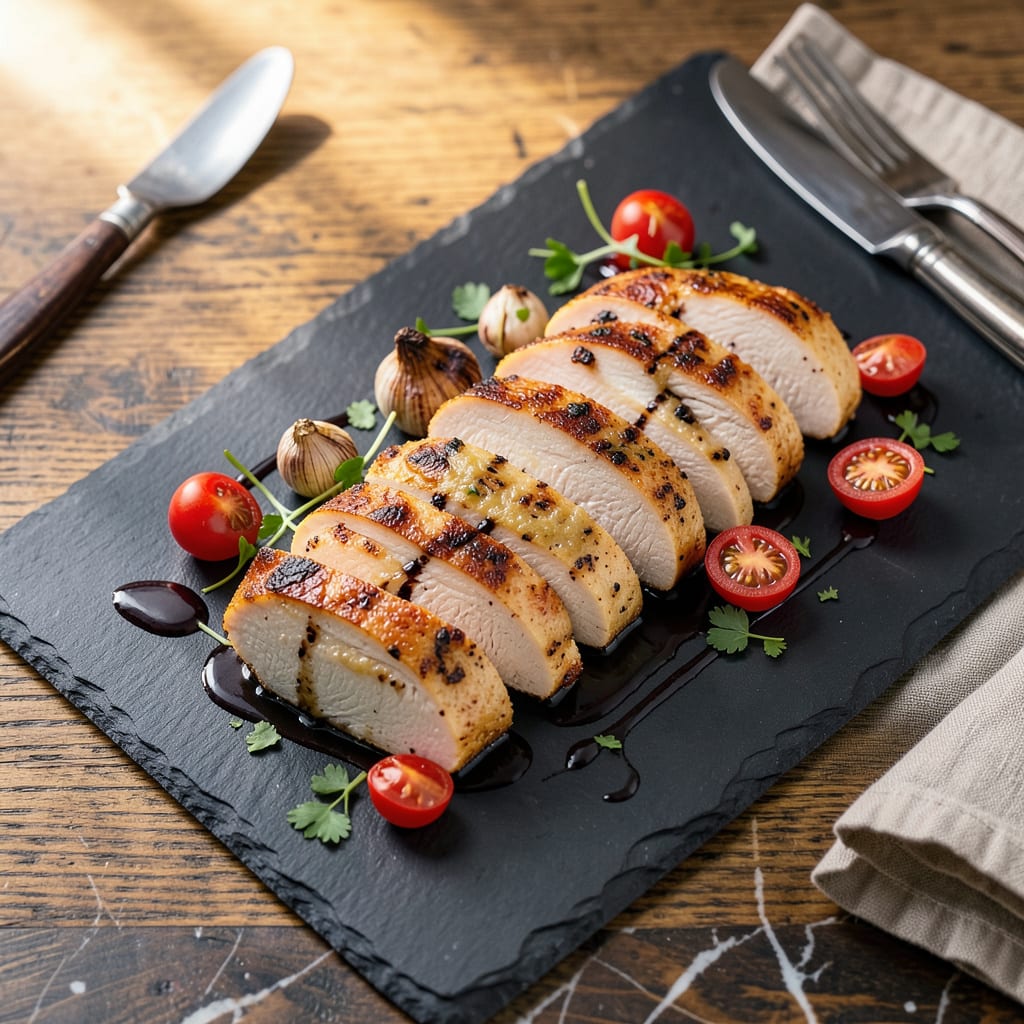
The classic Army chicken breast recipe features simple, hearty seasoning with salt, pepper, and garlic powder, then baked or grilled to juicy perfection. Designed to feed large groups efficiently while maintaining consistent flavor and texture.
This no-frills approach reflects the military’s need for reliability and scalability in feeding troops. 🔥 The simplicity isn’t just about convenience—it’s a calculated method to ensure every serving meets strict standards for taste and safety, regardless of who’s cooking or where it’s prepared. I’ve found that the minimalist seasoning actually enhances the chicken’s natural flavor, while the cooking techniques (like precise temperature control) prevent dryness even when preparing hundreds of portions. The recipe’s genius lies in its adaptability: whether you’re cooking for a platoon or a family dinner, the core principles deliver consistently satisfying results.
💡 In This Article
- How Military Kitchens Perfect Chicken Breast for Mass Feeding
- Adapting the Army Chicken Breast Recipe for Home Cooks
How Military Kitchens Perfect Chicken Breast for Mass Feeding
The secret to Army mess halls serving consistently juicy chicken lies in their rigorous temperature protocols. Every batch is cooked to a precise internal temperature of 165°F, verified with calibrated thermometers at multiple points. This isn’t just about safety—it’s about hitting the sweet spot where proteins denature just enough to retain moisture while eliminating pathogens.
Military cooks use industrial convection ovens that circulate heat at 350°F for exactly 25-30 minutes, creating an environment where 100+ breasts cook uniformly without drying out. 🔥
Portion control becomes an engineering challenge at this scale. Each chicken breast is trimmed to 6-8 ounces and pounded to an even ¾-inch thickness before cooking. This standardization ensures every piece hits the target temperature simultaneously, preventing undercooked centers or overdone edges.
The seasoning blend—1 tablespoon kosher salt, 1 teaspoon black pepper, and 2 teaspoons garlic powder per 10 pounds of chicken—is measured with military precision. The garlic powder’s fine grind disperses evenly, while the salt penetrates the meat during a mandatory 30-minute rest period before cooking. ✨
Time management in mess halls follows a strict “cook-hold-serve” protocol. After reaching temperature, chicken rests in heated cambros (insulated food pans) at 140°F for up to 2 hours before serving. This holding period allows juices to redistribute while keeping the meat safe from bacterial growth.
The system accounts for unpredictable meal times in military operations—whether it’s a scheduled chow call or an impromptu feeding after training. I’ve seen this same technique prevent dryness in home cooking when you need to keep chicken warm for family members with different schedules. 💫
What makes this system brilliant is its foolproof nature. The recipe accounts for variable factors like different chicken breast sizes or oven hot spots by relying on temperature rather than time as the primary doneness indicator.
Military cooks train to check three zones in each breast with their thermometers—thickest part, center, and thinnest edge—ensuring no cold spots. The garlic powder’s maillard reaction at 300°F+ creates a subtle crust that locks in moisture, while the salt enhances natural chicken flavors without overpowering them.
This is why the same recipe works whether you’re feeding a platoon or just your family. ⚡
The equipment makes a difference too. Military kitchens use high-capacity ovens with 50% humidity injection to prevent drying, mimicking the effects of brining. The steam created during cooking raises the moisture content of the chicken by about 8-10% compared to home ovens.
For home cooks without this equipment, the Army’s solution is simple: place a pan of water on the lower oven rack during baking. This low-tech hack replicates the mess hall’s humid environment, keeping your chicken breasts nearly as juicy as the military version. 🌟
Even the serving process follows a calculated approach. Chicken is never sliced until service to minimize moisture loss. When plated, it’s arranged with the grain running horizontally to make cutting easier for diners—a small but important consideration when feeding large groups quickly.
The entire system, from prep to service, demonstrates how standardized procedures can elevate even the simplest ingredients. It’s this attention to operational details that makes Army chicken breast surprisingly delicious despite its basic ingredients. 💛

- BBQ Sausage Recipe Oven: Smoky Depth Without the Grill - September 28, 2026
- BBQ Chicken Bowl Recipe Rice: Smoky Sweetness Over Fluffy Grains - September 28, 2026
- Beef Cutlet Recipe Ideas: Crispy Breaded Patties With Bold Seasonings - September 28, 2026