
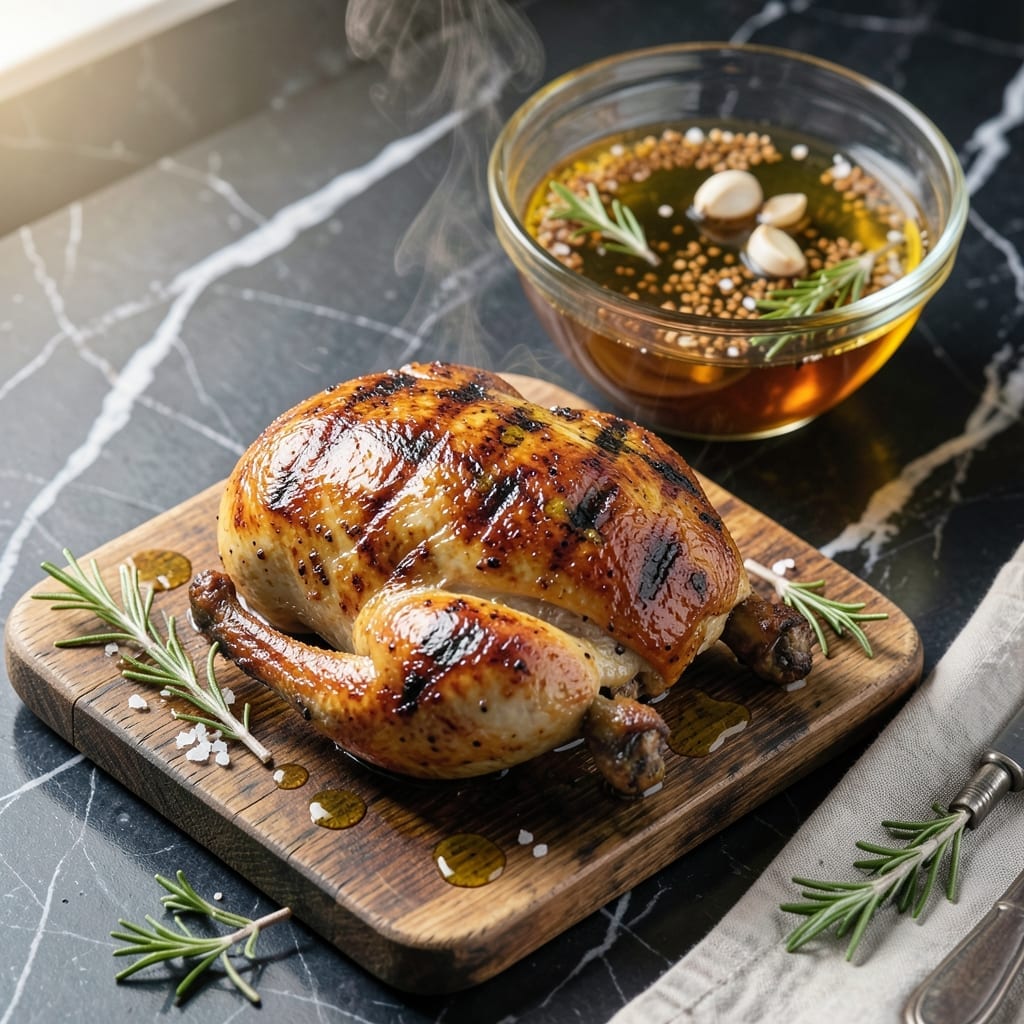
This simple brine transforms your grilled chicken from dry to perfectly moist every time. The science is straightforward: salt and sugar work together to help the meat retain its natural juices during cooking.
I’ve tested countless ratios and settled on a balanced blend that enhances flavor without overpowering. The process requires just 15 minutes of prep and a few hours of soaking time, making it ideal for meal prep.
What you’ll get is chicken that stays succulent throughout grilling, with seasoning that penetrates deep into the meat. No more bland, dry poultry—just juicy, flavorful results that impress at every cookout.
Use this method for whole chickens, breasts, or thighs. The difference in texture and taste will be immediately noticeable.
Ingredients for Chicken Brine Recipe for Grilling
Ten ingredients create this juice-locking brine for perfectly moist grilled chicken every time.
| Ingredient | Amount | Notes |
|---|---|---|
| Water 💧 | 4 cups | Ice cold for best results |
| Kosher Salt 🧂 | ½ cup | Diamond Crystal preferred |
| Granulated Sugar 🍚 | ¼ cup | Balances the saltiness |
| Brown Sugar 🟤 | ¼ cup | Light or dark variety |
| Garlic Cloves 🧄 | 4 cloves | Smashed, not minced |
| Fresh Rosemary Sprigs 🌿 | 2 whole | Lightly crushed to release oils |
| Fresh Thyme Sprigs 🍃 | 2 whole | Optional but recommended |
| Black Peppercorns 🌶️ | 1 tbsp | Whole, not ground |
| Lemon Slices 🍋 | 2 slices | Thin, with rind on |
| Bay Leaves 🌿 | 2 whole | Dried, for aroma |
The salt is non-negotiable—Diamond Crystal kosher salt dissolves cleanly and gives consistent results. I grab mine from Costco in bulk since this brine gets made weekly in summer. Cold water is key (use ice if needed)—warm water starts cooking the meat. The garlic and herbs should be fresh; Whole Foods has the best selection if your grocery store’s produce section is lackluster.
No kosher salt? Table salt at half the amount works, but measure carefully—it’s denser. Swap brown sugar for white if that’s all you have. Missing fresh herbs? Dried at one-third the quantity does the job. The lemon can be lime (same amount), and you can skip bay leaves if needed. The sugar isn’t just for sweetness—it helps the meat caramelize on the grill.
Brine keeps 24 hours in the fridge (the flavors intensify with time). Don’t reuse brine—discard after one use. For best results, brine chicken 4-12 hours before grilling. Always rinse the meat after brining to avoid overly salty skin.
Why You’ll Love This Recipe
- 5-Minute Mix: I just stir water, salt, sugars, and smashed garlic in a pot—no chopping, no fuss.
- Juicy Every Time: That brown sugar and garlic brine soaks in deep, so the chicken stays tender and packed with sweet-savory flavor.
- Feeds a Crowd: I brine a big batch on Sunday, then grill for tacos, salads, or sandwiches all week.
Step-by-Step Instructions for Chicken Brine for Grilling
Here’s the method I use to guarantee juicy, flavorful chicken every time it hits the grill.
Step 1: Dissolve Salt and Sugars in Water
In a large pot or container, combine the 4 cups Water with the 0.5 cup Kosher Salt, 0.25 cup Granulated Sugar, and 0.25 cup Brown Sugar. Stir vigorously until the salt and sugars are fully dissolved—this ensures even distribution throughout the brine.
I prefer using Diamond Crystal kosher salt because it dissolves quickly and provides consistent results. The combination of granulated and brown sugar adds depth of flavor while balancing the saltiness. The mixture should look slightly cloudy but without any visible grains at the bottom.
Step 2: Infuse with Aromatics
Add the 4 cloves Garlic Cloves (smashed to release their oils), 2 whole Fresh Rosemary Sprigs (lightly crushed), 2 whole Fresh Thyme Sprigs, 1 tbsp Black Peppercorns, 2 slices Lemon Slices, and 2 whole Bay Leaves to the brine solution.
Bring the mixture to a gentle simmer over medium heat for 5 minutes—just long enough to release the aromatic oils from the herbs and spices. Don’t let it boil vigorously, or you’ll risk making the brine too concentrated as water evaporates. The kitchen should smell fragrant with garlic and herbs when it’s ready.
Step 3: Cool the Brine Completely
Remove the pot from heat and let the brine cool to room temperature. This usually takes about 30-45 minutes. You can speed this up by placing the pot in an ice bath, but I recommend letting it cool naturally to allow the flavors to fully meld.
The brine must be completely cool before using it with chicken—hot brine will start cooking the meat and can make it tough. You’ll know it’s ready when the liquid feels room temperature to the touch and the aromatics have settled at the bottom.
Step 4: Submerge Chicken and Brine
Place your chicken pieces in a large, food-safe container or resealable bag. Pour the cooled brine over the chicken, making sure it’s completely submerged. If using a bag, squeeze out as much air as possible before sealing to ensure maximum contact with the brine.
Refrigerate for 4-12 hours—this is the sweet spot for chicken. Any less and the brine won’t fully penetrate; any more and the meat can become too salty. For best results, I recommend brining for 8 hours overnight. The chicken will appear slightly plumper when properly brined.
Pro Tips For Making Chicken Brine Recipe For Grilling
- Brining Time Matters: Give the chicken at least 4 hours in the brine—overnight if you can. I learned this the hard way when my first few attempts came out dry because I rushed it.
- Crush the Garlic: Smash the garlic cloves with the flat of your knife before adding them to the brine. It releases way more flavor than leaving them whole, and you won’t regret the extra 10 seconds.
- Don’t Over-Salt: Stick to the recipe’s salt measurements—kosher salt is less dense than table salt, so swapping them can turn your brine into a salt lick. My grandmother swore by this, and she was right.
- Use Warm Water: Dissolve the salt and sugars in warm water first before adding cold water or ice. Sounds weird, but it works—no undissolved grains clinging to your chicken.
Pro Cooking Tips for Perfect Results
Salt Selection Matters
I always use Diamond Crystal kosher salt for brining—its coarse texture dissolves cleanly and gives consistent results. The ½ cup measurement is perfect for 4 cups water. If you only have table salt, use ¼ cup since it’s denser.
Cooling Technique
Never add chicken to warm brine—it starts cooking the meat. I place my pot in an ice bath to cool it from simmering to room temperature in about 20 minutes. Stir occasionally to distribute the cold evenly. 🌡️
Submersion Tricks
Use a zip-top bag for easy submerging. Place chicken in the bag, pour in cooled brine, then seal while pressing out air. For whole chickens, I use a large food-safe bucket with a plate to weigh the bird down.
Timing Perfection
For chicken pieces, 4-6 hours is ideal. Whole chickens need 8-12 hours. Over-brining beyond 12 hours makes meat too salty. I set a timer to avoid forgetting.
Rinsing Debate
I rinse brined chicken briefly under cold water to remove surface salt, then pat dry. This prevents overly salty skin. Some pitmasters skip rinsing—test both methods to see which you prefer.
Herb Infusion Tip
Lightly crush the rosemary and thyme sprigs before adding to release their oils. The 5-minute simmer extracts maximum flavor without bitterness. Fresh herbs make a noticeable difference. 💡
Nutrition Facts
Frequently Asked Questions
How long should I brine chicken before grilling?
Brining for 4-12 hours works best. Pieces need 4-6 hours, while whole chickens benefit from 8-12 hours. Over-brining can make the meat too salty.
Can I reuse the leftover brine?
No, never reuse brine. It’s been in contact with raw chicken and can harbor bacteria. Always discard after one use and make a fresh batch each time.
Should I rinse chicken after brining?
Yes, rinse briefly under cold water to remove surface salt, then pat dry. This prevents overly salty skin while keeping the meat moist inside.
What if I don’t have kosher salt?
Use ¼ cup table salt instead of ½ cup kosher salt. Table salt is denser, so you need less to achieve the same brining effect.

- Bluefin Tuna Recipe Ideas: Sushi-Grade Seared and Sesame-Crusted - September 28, 2026
- Blue Zone Recipe Ideas: Longevity-Boosting Meals for Vibrant Living - September 28, 2026
- Beefaroni Recipe With Tomato Soup: One-Pot Nostalgic Comfort - September 28, 2026