
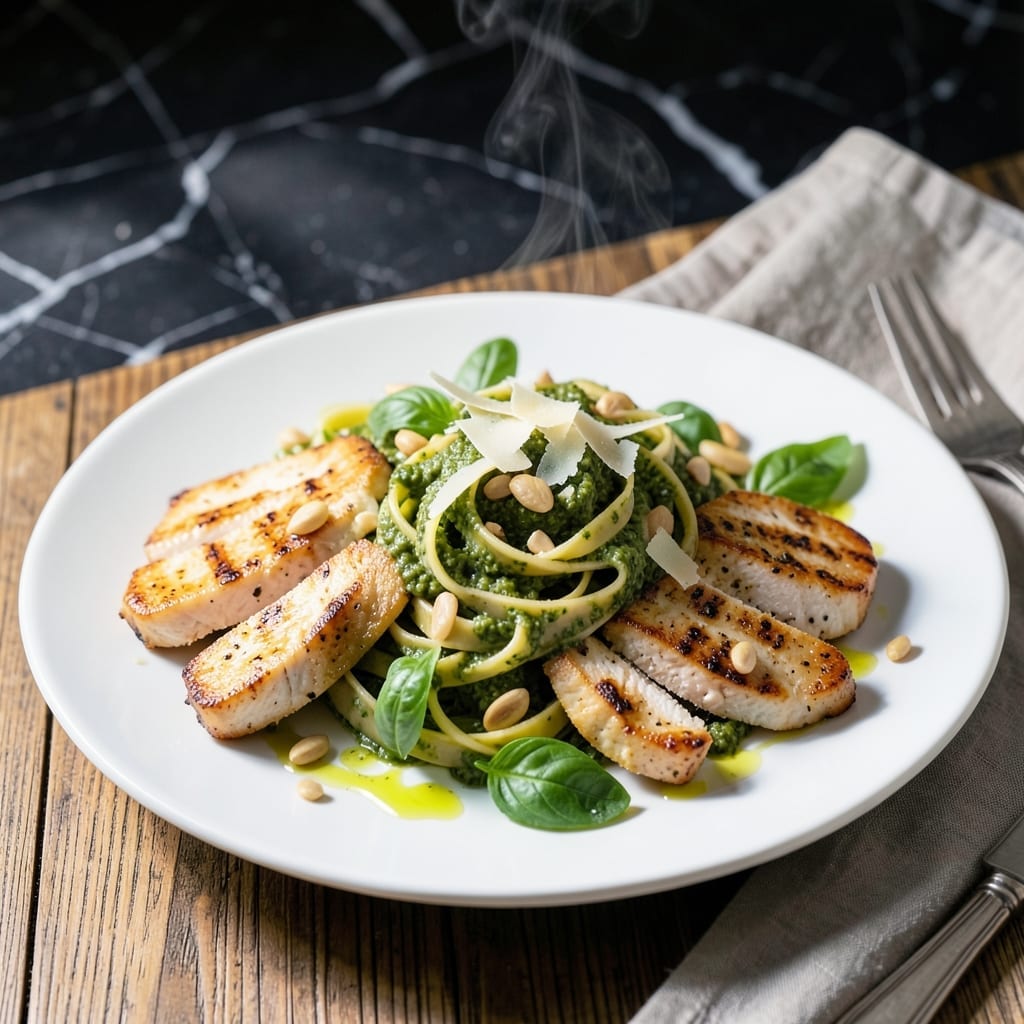
This dish proves that simple ingredients can create extraordinary results. I developed this method after years of testing, focusing on achieving tender chicken that pairs perfectly with al dente pasta and vibrant pesto.
The key is cooking the chicken separately before combining it with the pasta and sauce. This ensures each component maintains its ideal texture and flavor. The pesto coats every noodle while the chicken stays juicy and flavorful.
What you get is a plate of pasta with perfectly cooked chicken, bright green pesto clinging to each strand, and a balance of flavors that feels restaurant-quality. The dish comes together quickly but tastes like you spent hours.
Serve immediately while the pasta is hot and the pesto is fragrant. This is comfort food with a fresh, herbaceous twist.
Ingredients for Chicken Pasta Recipe Pesto
Every ingredient here builds that perfect bite of pasta, chicken, and fresh basil pesto.
| Ingredient | Amount | Notes |
|---|---|---|
| Chicken Breast 🍗 | 1 ½ lb | Boneless, skinless, pounded thin |
| Fettuccine Pasta 🍝 | 12 oz | Dried, for al dente texture |
| Fresh Basil Leaves 🌿 | 2 cups | Packed, stems removed |
| Pine Nuts 🥜 | ½ cup | Toasted for richness |
| Garlic Cloves 🧄 | 3 cloves | Peeled, minced |
| Parmesan Cheese 🧀 | ¾ cup | Freshly grated from block |
| Extra-Virgin Olive Oil 🫒 | ¾ cup | High quality, fruity |
| Lemon Juice 🍋 | 1 tbsp | Freshly squeezed |
| Salt 🧂 | 1 tsp | Kosher or sea salt |
| Black Pepper 🌶️ | ½ tsp | Freshly ground preferred |
| Heavy Cream 🥛 | ¼ cup | For creamy pesto variation |
| Reserved Pasta Water 💧 | ½ cup | Starchy, for sauce consistency |
The chicken needs to stay juicy—buy boneless, skinless breasts and pound them to even thickness (a rolling pin works). Most supermarkets carry these pre-packaged. For the basil, farmers market bunches have the best fragrance, but grocery store works too (just smell the leaves—if they’re wilted or brown, skip them). Pine nuts are pricey, so Costco or Trader Joe’s offer the best bulk deals.
No pine nuts? Walnuts or raw cashews give a similar texture at half the cost. Out of fresh basil? Spinach plus extra garlic and Parm makes a decent stand-in (though the flavor won’t be as bright). For a lighter version, swap heavy cream for Greek yogurt. The pasta water trick is non-negotiable though—don’t drain it all, or your sauce won’t cling right.
The pesto keeps 3-4 days in the fridge with a thin olive oil layer on top. Cooked chicken stays good for 4 days—store it separate from the pasta to keep textures perfect. Freeze pesto portions in ice cube trays for up to 3 months (worth the effort).
Why You’ll Love This Recipe
- One Pot Meal: I love that I can cook the chicken, pasta, and pesto all in the same pot—minimal cleanup, maximum flavor.
- Fresh Herb Boost: The basil and garlic in the pesto make every bite taste like a summer garden on a plate.
- Crowd Pleaser: Honestly, this is my go-to for family dinners, potlucks, or even a fancy date night in.
- Budget Stretcher: Between us, chicken breast and pasta are affordable, and the pine nuts add just enough luxury without breaking the bank.
Step-by-Step Instructions for Chicken Pasta Pesto
Here’s how I make this dish with perfect texture and flavor every time.
Step 1: Cook and Slice the Chicken Breast
Season the 1.5 lb Chicken Breast with 1 tsp Salt and 0.5 tsp Black Pepper on both sides. Heat a large skillet over medium-high heat with 1 tablespoon of the 0.75 cup Extra-Virgin Olive Oil.
Cook the chicken for 5-6 minutes per side until golden brown and the internal temperature reaches 165°F. Let it rest for 5 minutes before slicing thinly against the grain. This keeps the chicken tender and juicy.
Step 2: Prepare the Fettuccine Pasta
Bring a large pot of salted water to a rolling boil. Add the 12 oz Fettuccine Pasta and cook according to package instructions until al dente. Reserve 0.5 cup Reserved Pasta Water before draining—this starchy water will help bind the sauce later.
Drain the pasta but don’t rinse it. The starch on the surface helps the pesto cling to every strand. Set aside while you prepare the pesto sauce.
Step 3: Make the Fresh Basil Pesto
In a food processor, combine the 2 cups Fresh Basil Leaves, 0.5 cup Pine Nuts, 3 cloves Garlic Cloves, and 0.75 cup Parmesan Cheese. Pulse until finely chopped.
With the processor running, slowly drizzle in the remaining 0.75 cup Extra-Virgin Olive Oil (minus the 1 tablespoon used earlier). Add 1 tbsp Lemon Juice, 1 tsp Salt, and 0.5 tsp Black Pepper. Pulse until smooth, scraping down the sides as needed.
Step 4: Combine Everything and Finish
In a large bowl, toss the cooked fettuccine with the pesto. Add the sliced chicken and 0.25 cup Heavy Cream. Toss gently to coat everything in the sauce.
If the sauce seems thick, add the 0.5 cup Reserved Pasta Water 1 tablespoon at a time until it reaches your desired consistency. The pasta should be glossy and well-coated.
Serve immediately while warm. The pesto should cling to the pasta with a vibrant green color, and the chicken should be tender with every bite. Garnish with extra Parmesan if desired.
Pro Tips For Making Chicken Pasta Recipe Pesto
- Salt the Chicken First: Brine the chicken breast in salted water for 15 minutes before cooking—it keeps the meat juicy even if you slightly overcook it. I learned this the hard way after serving dry chicken too many times.
- Toast the Pine Nuts: Skip raw pine nuts; toast them in a dry pan for 2-3 minutes until golden. Sounds weird, but it works—they add a deep, nutty flavor to the pesto that raw ones just can’t match.
- Save Pasta Water: Before draining the fettuccine, scoop out ½ cup of the starchy cooking water. It’s the thing that matters most for loosening the pesto and helping it cling to the pasta.
- Pulse, Don’t Blend: When making the pesto, pulse the basil, garlic, and pine nuts in short bursts—over-blending turns it bitter. My grandmother swore by this, and she was right.
Regional Styles of This chicken pasta recipe pesto
Liguria Tradition
In Liguria, Italy, they’ve been making pesto for centuries using mortar and pestle. The classic version uses only basil, Parmigiano-Reggiano, pine nuts, garlic, and olive oil. I love how the simplicity lets each ingredient shine. The pasta here is often trofie or linguine rather than fettuccine.
Sicilian Twist
Sicily adds a bold touch with sun-dried tomatoes and sometimes ricotta salata. The tomatoes add sweetness that balances the pesto’s garlic. I’ve tested this version with 1/4 cup chopped sun-dried tomatoes and it’s incredible. The chicken stays the star while the sauce gets a Mediterranean upgrade.
French Influence
In Provence, they might use herbes de Provence alongside basil. I’ve tried adding 1 tsp of this blend to the pesto for a floral note. The French often use crème fraîche instead of heavy cream, which gives a tangier finish. The chicken is sometimes marinated in white wine first. 🌿
American Adaptation
Here in the US, we often see pesto with spinach or arugula to stretch the basil. I’ve made versions with 1 cup spinach added to the 2 cups basil when basil is expensive. The cream addition is very American – it makes the sauce richer and more kid-friendly.
Greek Variation
Greek cooks might add feta cheese to their pesto and use walnuts instead of pine nuts. I’ve tried 1/2 cup crumbled feta and it adds a wonderful salty tang. The chicken is often marinated in lemon and oregano before cooking. 💫
Nutrition Facts
Frequently Asked Questions
Can I use store-bought pesto instead of making it fresh?
Yes, but fresh pesto makes a big difference in flavor. If using store-bought, add 1-2 tablespoons of lemon juice to brighten it up and thin with reserved pasta water as needed.
How do I keep the chicken from drying out?
Pound the breasts to even thickness and cook over medium-high heat for 5-6 minutes per side. Let it rest for 5 minutes before slicing to retain juices.
Can I make this dish ahead of time?
Cook the pasta and chicken separately, store in airtight containers, and combine just before serving. The pesto can be made 1-2 days ahead and stored in the fridge.
What pasta shapes work best besides fettuccine?
Penne, linguine, or farfalle all work well. Longer shapes like spaghetti also hold the sauce nicely. Avoid very thick or ridged pasta that might overpower the delicate pesto.

- BBQ Sausage Recipe Oven: Smoky Depth Without the Grill - September 28, 2026
- BBQ Chicken Bowl Recipe Rice: Smoky Sweetness Over Fluffy Grains - September 28, 2026
- Beef Cutlet Recipe Ideas: Crispy Breaded Patties With Bold Seasonings - September 28, 2026