
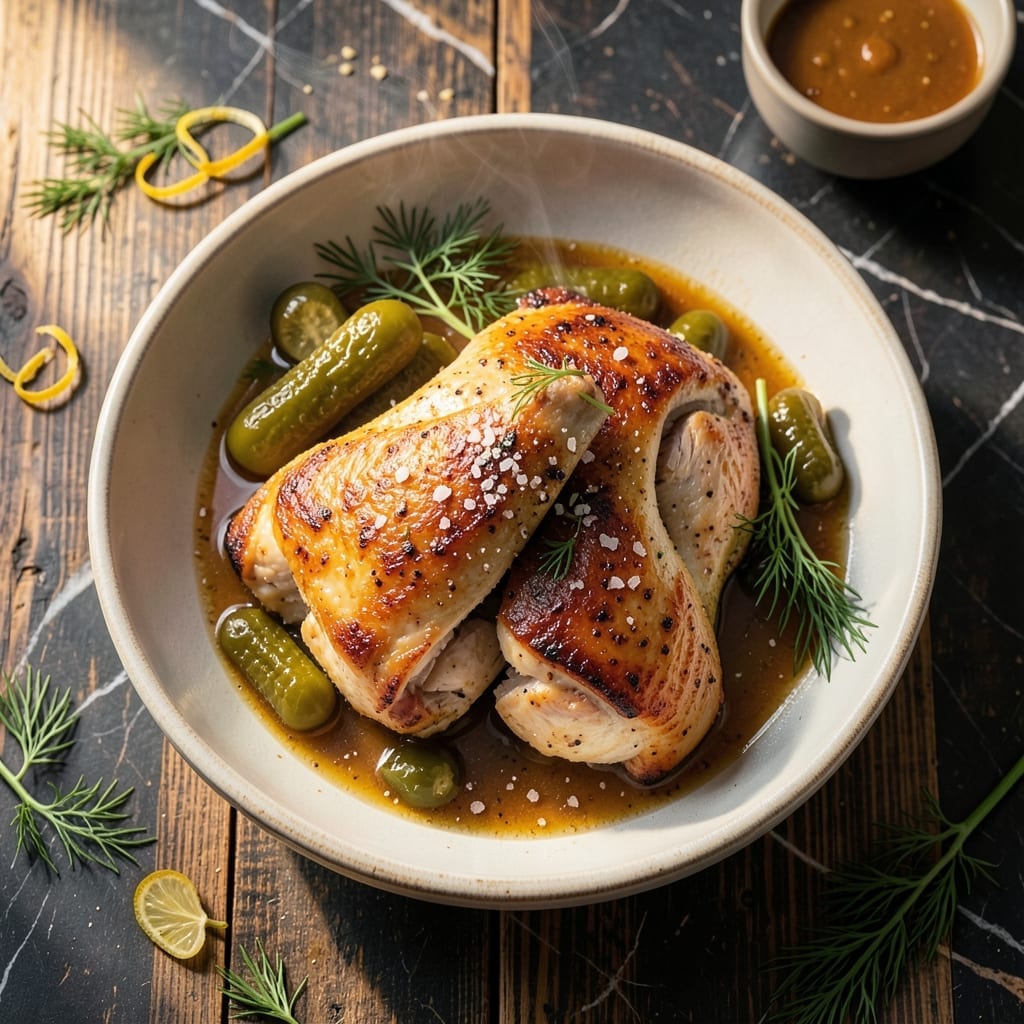
This recipe transforms ordinary chicken into something extraordinary through one simple ingredient. I discovered this method after years of testing, and it consistently delivers the juiciest results you’ll find.
Pickle juice works as a natural brine, tenderizing the meat while infusing subtle tangy flavor. The acidity breaks down proteins, ensuring every bite stays moist and perfectly seasoned without any dryness.
What emerges from the oven is chicken with golden skin and flesh so tender it nearly falls off the bone. The pickle juice doesn’t make it taste like pickles—it simply enhances the natural chicken flavor.
This technique works for any cut, from thighs to breasts. The results speak for themselves.
Ingredients for Chicken Recipe with Pickle Juice
A handful of pantry staples and one secret ingredient elevate this chicken to perfection.
| Ingredient | Amount | Notes |
|---|---|---|
| Chicken Thighs 🍗 | 2 lb | Bone-in, skin-on preferred |
| Pickle Juice 🥒 | 1 ½ cups | From dill or bread and butter pickles |
| Kosher Salt 🧂 | 1 tbsp | Diamond Crystal preferred |
| Black Pepper 🌶️ | 1 tsp | Freshly cracked for best flavor |
| Garlic Powder 🧄 | 1 tsp | For even seasoning distribution |
| Onion Powder 🧅 | 1 tsp | Complements the brining process |
| Smoked Paprika 🌶️ | 1 tsp | Adds depth to the flavor profile |
| Dried Thyme 🍃 | ½ tsp | For earthy undertones |
| Olive Oil 🫒 | 2 tbsp | For high-heat searing |
| Unsalted Butter 🧈 | 2 tbsp | For basting the skin |
| Fresh Rosemary 🌿 | 2 slices | Optional for garnish and aroma |
The pickle juice is non-negotiable here. Use dill or bread and butter juice—sweet pickle juice can make the chicken cloying. Most grocery stores carry Claussen or Vlasic in the refrigerated section. For the chicken, bone-in, skin-on thighs yield the juiciest results, but breasts work if that’s your preference. Look for even sizing to ensure consistent cooking.
No pickle juice on hand? Brining with saltwater and a splash of vinegar mimics the acidity. Swap smoked paprika for regular if you prefer a milder flavor. Fresh rosemary can replace dried thyme at double the amount (1 tsp fresh = 0.5 tsp dried). The olive oil can be any neutral oil with a high smoke point, like avocado or grapeseed.
The brined chicken keeps in the fridge for 2-3 days before cooking. Once cooked, it stays fresh for 4 days refrigerated or freezes for 3 months. Always let it rest 10 minutes post-cooking for optimal juiciness.
Why You’ll Love This Recipe
- Minimal Effort: I just dump everything in one pan and let the oven do the work.
- Tangy Crunch: The pickle juice gives the chicken thighs this bright, zesty kick that’s downright addictive.
- Weeknight Hero: Honestly, it’s my go-to when I need dinner on the table fast, and the leftovers reheat like a dream.
- Budget Friendly: Five ingredients, most of which I already have, and it feeds my whole family without breaking the bank.
Step-by-Step Instructions for Chicken Brined in Pickle Juice
This method guarantees tender, flavorful meat with a perfect sear every time.
Step 1: Create the Pickle Juice Brine
In a large bowl, whisk together the 1.5 cups Pickle Juice, 1 tbsp Kosher Salt, 1 tsp Black Pepper, 1 tsp Garlic Powder, 1 tsp Onion Powder, 1 tsp Smoked Paprika, and 0.5 tsp Dried Thyme until the salt is fully dissolved. The brine should have a uniform, slightly cloudy appearance.
This acidulated brine not only seasons the chicken but begins the tenderizing process. The vinegar in the pickle juice breaks down surface proteins, allowing the meat to retain more moisture during cooking. Submerge all 2 lb Chicken Thighs in the brine, ensuring they are completely covered.
Step 2: Brine and Dry the Chicken
Let the chicken brine in the refrigerator for 4-6 hours, or ideally overnight for maximum flavor penetration. You’ll notice the meat becomes slightly plump as it absorbs the liquid.
After brining, remove the chicken from the liquid and pat it completely dry with paper towels. This step is crucial—any residual moisture will prevent proper browning. The surface should appear matte, not glossy, when properly dried.
Step 3: Sear the Chicken to Golden Perfection
Heat the 2 tbsp Olive Oil in a large skillet over medium-high heat until it shimmers. Add the chicken thighs skin-side down and cook undisturbed for 6-8 minutes until the skin turns deep golden brown and releases easily from the pan.
Flip the chicken and add the 2 tbsp Unsalted Butter and 2 slices Fresh Rosemary to the pan. Baste the chicken with the foaming butter continuously for 4-5 minutes until the internal temperature reaches 165°F and the juices run clear.
Step 4: Rest and Serve
Transfer the chicken to a wire rack set over a plate and let it rest for 5-10 minutes. This allows the juices to redistribute throughout the meat, ensuring each bite is uniformly moist.
The skin should remain crispy while the interior stays succulent. Serve immediately while hot, garnished with the pan-seared rosemary if desired. The result will be chicken with a perfect balance of crispy exterior and juicy interior, infused with the tangy complexity from the brine.
Pro Tips For Making Chicken Recipe With Pickle Juice
- Pat the Thighs Dry: I learned this the hard way—wet chicken steams instead of searing. Blot the thighs with paper towels before seasoning to guarantee that crispy skin everyone wants.
- Reduce the Pickle Juice: After burning three batches, I finally figured out that simmering the pickle juice for 5 minutes first concentrates the tang and prevents a watery braise.
- Don’t Skip the Rest: Give the cooked chicken a solid 10 minutes under foil before serving—it keeps the juices inside where they belong, not on the cutting board.
- Double the Garlic Powder: Sounds weird, but it works: the brine in pickle juice mutes spices, so go heavy on the garlic powder or the flavor gets lost.
Make-Ahead Tips for This Dish
Overnight Brining
For the most flavorful results, I always brine my chicken in the pickle juice mixture overnight. Simply submerge the 2 lb Chicken Thighs in the brine and refrigerate for 8-12 hours. This extended time lets the flavors penetrate deeply.
Same-Day Prep
If you’re short on time, a 4-6 hour brine still works wonders. I’ve tested this with busy weeknights in mind—just prep the brine in the morning before work, and your chicken will be ready to cook when you get home. 💡
Refrigerator Storage
After brining but before cooking, the chicken can stay in the fridge for up to 24 hours. I often prep this the night before a big family dinner to save time the next day. Just keep it in a sealed container.
Freezing Brined Chicken
You can freeze the brined chicken for up to 1 month before cooking. I recommend vacuum-sealing to prevent freezer burn. Thaw it overnight in the fridge before cooking for the best texture.
Post-Cooking Storage
Once cooked, this dish keeps beautifully in the fridge for 4 days. I store it in airtight containers and reheat gently to maintain the juiciness. The flavors often taste even better the next day. ❄️
Reheating Tips
For the best results, reheat in a skillet over medium-low heat with a splash of water or chicken broth. Cover the pan and warm for 5-7 minutes, turning occasionally to keep it moist.
Nutrition Facts
Frequently Asked Questions
Can I use any type of pickle juice?
Dill or bread and butter work best. Sweet pickle juice can make the chicken too sweet. Always choose unsweetened for balanced flavor.
How long should I brine the chicken?
For best results, brine for 4-6 hours or overnight. Shorter times work but won’t penetrate as deeply. Never exceed 24 hours or the texture may suffer.
Does the chicken taste like pickles?
Not at all! The brine enhances natural flavors without overpowering. The result is juicy, tender meat with just a hint of tang.
Can I use boneless chicken breasts?
Yes, but reduce brining to 2-3 hours to avoid over-softening. Bone-in thighs stay juicier, but breasts work in a pinch.

- BBQ Sausage Recipe Oven: Smoky Depth Without the Grill - September 28, 2026
- BBQ Chicken Bowl Recipe Rice: Smoky Sweetness Over Fluffy Grains - September 28, 2026
- Beef Cutlet Recipe Ideas: Crispy Breaded Patties With Bold Seasonings - September 28, 2026