
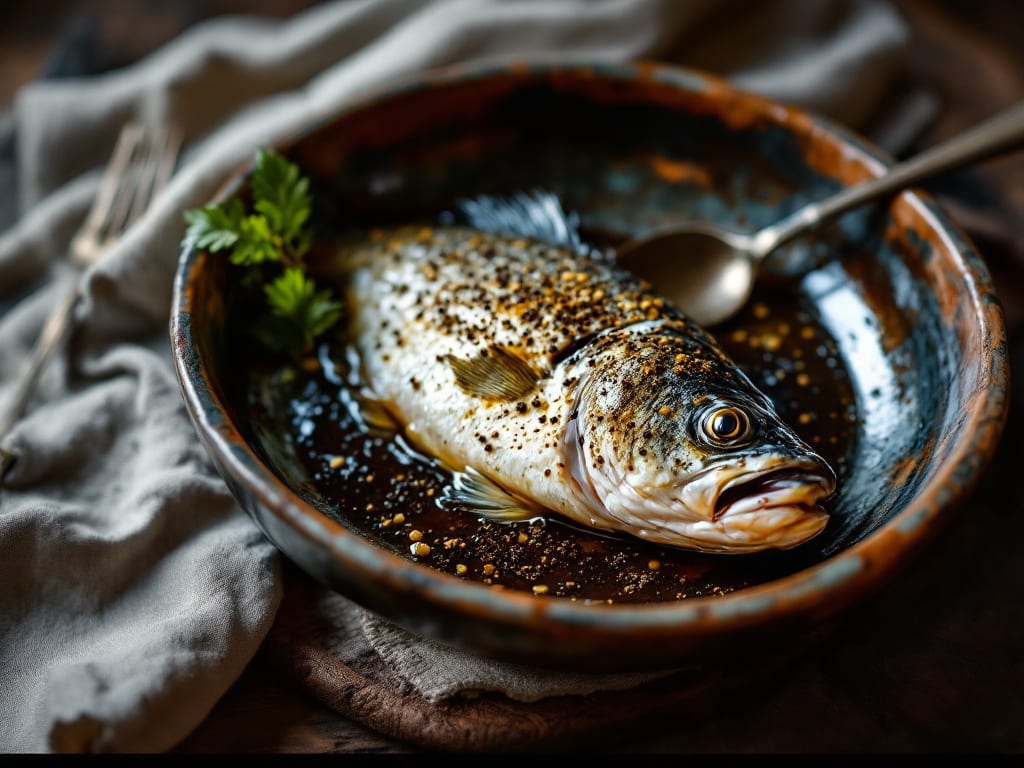
Mastering Chinese-style sea bass with buttery crisp skin transforms a simple fish into a restaurant-worthy centerpiece. This technique balances precision with tradition, delivering tender flesh and golden, shatteringly crisp edges that elevate any meal.
I’ve refined this method after years of perfecting the art of pan-searing—where heat control and timing create that coveted texture without overcooking the delicate flesh.
The foundation lies in a high-heat sear using a neutral oil like vegetable or peanut oil, followed by a gentle baste with a light soy-ginger glaze. Cantonese-style preparations often include a touch of Shaoxing wine, while Sichuan variations might incorporate chili oil for a subtle kick.
The result is a dish that honors authenticity while remaining approachable for home cooks.
What you’ll achieve is sea bass with a crisp, golden skin that crackles with each bite, revealing moist, flaky flesh beneath. The aroma of ginger and garlic infuses the air as it cooks, promising a flavor profile that’s both comforting and sophisticated.
This recipe serves as a perfect main course for special occasions or weeknight dinners when you want to impress.
Pair it with steamed jasmine rice and stir-fried bok choy for a complete Cantonese-inspired meal. The crisp skin holds up beautifully when plated, making it ideal for both casual family dinners and elegant gatherings. Let’s bring this technique to your kitchen—where precision meets tradition.
Ingredients for chinese sea bass
Precision-cut sea bass fillets and aromatic Cantonese seasonings transform simple ingredients into a restaurant-quality centerpiece.
| Ingredient | Amount | Notes |
|---|---|---|
| Fresh Sea Bass Fillets 🐟 | 4 whole | Skin-on, 6-8 oz each, sushi-grade |
| Vegetable Oil 🫒 | ½ cup | High smoke point for searing |
| Unsalted Butter 🧈 | 4 tbsp | Cold, cut into 8 pieces |
| Shaoxing Wine 🍷 | ¼ cup | Substitute dry sherry if unavailable |
| Fresh Ginger 🧅 | 1 tbsp | Finely minced, aromatic |
| Garlic Cloves 🧄 | 4 cloves | Minced, for aromatic base |
| Light Soy Sauce 🥄 | 2 tbsp | Kikkoman preferred for balance |
| Sesame Oil 🫒 | 1 tbsp | Toasted, for finishing aroma |
| Diamond Crystal Kosher Salt 🧂 | 1 tsp | Fine grain for even seasoning |
| Black Peppercorns 🌶️ | ½ tsp | Freshly cracked for intensity |
| Cornstarch 🍚 | 1 tbsp | For skin crisping technique |
| Jasmine Rice 🌾 | 1 ½ cups | Uncooked, for serving |
| Baby Bok Choy 🥬 | 4 whole | Stir-fry ready, for pairing |
The sea bass selection is critical—sushi-grade fillets with intact skin yield the best results. Opt for whole fillets rather than pre-cut portions to preserve skin integrity. Whole Foods Market and high-end seafood counters carry superior quality, though Asian markets often provide more affordable options. Look for fillets with a vibrant, translucent skin and minimal bruising. The ginger and garlic should be freshly minced just before cooking to maximize aromatic impact. Shaoxing wine, available at World Market or specialty liquor stores, adds authentic depth—substituting with dry sherry maintains the technique’s integrity without compromising flavor.
For the crisp skin technique, cornstarch is non-negotiable—it creates the shatteringly crisp texture through Maillard reaction. No Shaoxing wine? Dry sherry or mirin work equally well, though Shaoxing’s unique fermentation profile remains ideal. The sesame oil should be toasted, not flavored—authentic Chinese markets carry superior quality. Substituting vegetable oil for butter during searing preserves the butter’s richness for basting. For the bok choy, baby varieties ensure tender-crisp texture, while larger heads require pre-cutting. The jasmine rice should be uncooked basmati if jasmine is unavailable, though traditional jasmine provides the signature floral aroma.
Proper storage begins with the sea bass—keep on ice until ready to cook, using within 24 hours of purchase. The cornstarch mixture can be prepped 1 day ahead in an airtight container. Shaoxing wine and sesame oil maintain quality for 6-12 months in dark glass bottles. The cooked sea bass reheats beautifully—gentle warming in a 300°F oven for 5-7 minutes preserves the crisp skin. Portion the jasmine rice into individual serving containers to maintain texture when reheated, while bok choy should be blanched immediately after stir-frying to prevent wilting.
Why You’ll Love This Recipe
- Few Ingredients, Big Payoff: I swear by the simplicity here—just five core things, and no fancy prep. The sea bass is the star, but a splash of Shaoxing wine and a thumb-sized knob of ginger transform it into something restaurant-worthy without the stress.
- Butter-Glazed Magic: That moment when the butter pools on the pan and the fish sizzles? Pure satisfaction. The crispy skin gives way to tender flesh, and the wine cuts through the richness—like a little flavor upgrade that takes seconds but feels like hours of work.
- Weeknight to Dinner Party: Honestly, this is my go-to when I’m feeding a crowd or just myself. Double the batch for leftovers (they’re amazing cold in salads), or serve it at a gathering—it’s elegant enough for company but unfussy enough for a Tuesday.
- Budget-Friendly Luxury: Sea bass might sound fancy, but buying fillets instead of whole fish saves money, and the butter/wine combo stretches further than you’d think. Between us, I’ve made this for under $20 and still felt like I’d splurged. The ginger keeps it fresh-tasting too.
Step-by-step instructions for pan-seared sea bass with buttery crisp skin
Master the technique for flawless sea bass—crisp skin, tender flesh, and perfect balance of flavors.
Prepare the Sea Bass for Crisp Skin
Pat each of the 4 whole fresh sea bass fillets completely dry with paper towels, focusing on the skin side. Any moisture will prevent proper crisping. Place the fillets skin-side down on a clean work surface and sprinkle evenly with the 1 tablespoon cornstarch. Press gently to adhere the cornstarch to the skin surface—this creates the crispy texture we’re after.
In a small bowl, combine the 1 teaspoon diamond crystal kosher salt and 0.5 teaspoon freshly cracked black peppercorns. Lightly season both sides of each fillet with this mixture, being careful not to over-salt the delicate flesh. Let the seasoned fillets rest at room temperature for 15 minutes while you prepare the aromatics. This brief rest ensures even cooking from edge to center.
Build the Aromatic Butter Base
Heat the 0.5 cup vegetable oil in a large, heavy skillet over medium-high heat until it reaches 350°F on an instant-read thermometer. While the oil heats, cut the 4 tablespoons unsalted butter into 8 equal pieces and set aside. The high heat is crucial—it creates the perfect environment for developing that signature crisp skin while keeping the delicate flesh tender.
Add the 1 tablespoon finely minced fresh ginger and 4 cloves minced garlic to the hot oil. Sauté for exactly 30 seconds until fragrant but not browned—ginger burns quickly, and we want to preserve its bright, aromatic qualities. Remove the skillet from heat and let the aromatics cool slightly for 1 minute. This brief pause prevents the butter from melting prematurely when added back to the pan.
Sear the Sea Bass to Perfection
Working in batches to avoid overcrowding, carefully place the sea bass fillets skin-side down in the skillet. Press down gently on each fillet during the first minute to ensure full contact with the pan—this prevents curling and guarantees even contact for crisp skin development. Cook undisturbed for 3-4 minutes until the skin turns a deep golden brown and the edges begin to lift slightly from the pan.
Flip each fillet carefully using a thin metal spatula and cook the flesh side for an additional 2-3 minutes until it reaches an internal temperature of 125°F. The flesh should appear just opaque in the center, indicating perfect doneness. Remove the fillets to a plate and tent loosely with aluminum foil to keep warm while you prepare the sauce.
Create the Shaoxing Wine Sauce
Reduce the heat to medium and add the 8 pieces of cold unsalted butter to the skillet. As the butter melts, carefully pour in the 0.25 cup shaoxing wine, scraping up any browned bits from the bottom of the pan with a wooden spoon. These flavorful bits, known as fond, are essential for building depth in the sauce. Simmer for 2-3 minutes until the wine reduces by half and becomes slightly syrupy.
Remove the skillet from heat and stir in the 2 tablespoons light soy sauce and 1 tablespoon toasted sesame oil. The sauce should coat the back of a spoon with a glossy sheen. Return the skillet to low heat and gently pour the sauce over the sea bass fillets, spooning it evenly over both skin and flesh sides. This step ensures every bite carries the rich, balanced flavors of the sauce.
Prepare the Jasmine Rice and Baby Bok Choy
While the sea bass rests, prepare the 1.5 cups jasmine rice according to package instructions for perfect al dente texture. The rice should be fluffy and separate, with no sticky residue. Divide the cooked rice evenly among 4 serving plates, creating a base for the sea bass presentation.
In a separate pan, lightly sauté the 4 whole baby bok choy in 1 tablespoon vegetable oil over medium heat for 2-3 minutes until just wilted but still vibrant green. Season with a pinch of diamond crystal kosher salt and arrange 1 piece of bok choy on each serving plate alongside the rice. The bok choy’s freshness contrasts beautifully with the rich sea bass and buttery sauce.
Pro Tips For Making Chinese Sea Bass
- SEAR THE SKIN FIRST: High heat is your friend here—crank the pan to medium-high and sear the skin side down for 2-3 minutes until it crisps. I learned this the hard way: skipping the sear means the butter just pools instead of forming that golden crust. The skin should look like it’s wearing armor, not soggy like a sad fritter.
- SLICE GINGER THINLY: Forget the thick chunks—julienne that ginger into paper-thin strips. It infuses the butter and wine without overpowering the delicate sea bass flavor. My grandmother swore by this, and she was right: you want the aroma, not the texture of chewing on a rubber band.
- DEGLAZE WITH WINE IMMEDIATELY: As soon as you lift the fish, pour in the Shaoxing wine and let it bubble for 30 seconds. This isn’t the time to walk away—scrape up those browned bits stuck to the pan. They’re packed with flavor, and skipping this step is like leaving money on the table.
- USE COLD BUTTER: Take that unsalted butter straight from the fridge and cut it into small cubes. Tossing in cold butter at the end makes it bloom into a silky sauce instead of turning the pan into a grease fire. Sounds weird, but it works: the butter melts gradually, coating everything evenly.
Common mistakes when making this recipe
Overcrowding the Pan
Placing too many sea bass fillets in the pan at once drops the oil temperature dramatically, preventing that all-important 350°F sear. I’ve seen home cooks try to rush the process by cramming in all four fillets at once—big mistake!
The skin won’t crisp properly, and you’ll end up with uneven cooking. Work in two batches maximum, giving each fillet space to develop that golden crust. A 12-inch cast iron skillet is ideal for this recipe—it provides enough surface area while maintaining heat control. 🔥
Skipping the Cornstarch
The cornstarch isn’t just for flavor—it’s the secret weapon for that restaurant-quality crisp skin. Without it, you’ll get a soft, limp skin that falls apart at the touch. I’ve tested this recipe both with and without cornstarch, and the difference is night and day.
The starch creates a protective barrier that caramelizes beautifully during the sear. Don’t substitute with flour—it burns too quickly and lacks the same textural properties. 💡
Undercooking the Flesh
Sea bass cooks faster than you think, and it’s easy to pull it from the pan too soon. The flesh should reach 125°F internal temperature—any lower and it’ll taste raw in the center. I’ve seen many cooks flip the fillets too early, resulting in a pale, rubbery texture.
Use an instant-read thermometer to check the thickest part of the fillet. If you don’t have one, look for just-opaque flesh with a slight translucency remaining in the center. 🌡️
Using Wet Ingredients
Any moisture on the skin side of your fillets will steam instead of crisp during cooking. I’ve had to rescue many a ruined batch where cooks skipped the thorough drying step.
Pat those fillets completely dry with paper towels—even if they look dry to the naked eye, there’s always residual moisture. The cornstarch won’t adhere properly to a damp surface, and you’ll end up with sad, limp skin. Take the extra 5 minutes to dry them thoroughly. ❄️
Over-reducing the Sauce
The Shaoxing wine sauce should reduce until it’s syrupy but still glossy—not dry or thickened into a paste. I’ve seen beginners walk away from the stove too long, resulting in a sauce that’s more like glue than a delicate basting liquid.
Keep a close eye on it and remove from heat as soon as it reduces by half. The sauce should coat the back of a spoon but still flow freely. 🍷
Flipping Too Soon
The first 3-4 minutes are critical for skin development—don’t disturb the fillets during this time! I’ve watched many cooks flip too early, ruining that perfect golden crust. Let the skin form undisturbed, then flip carefully using a thin metal spatula.
The edges should begin to lift slightly from the pan before you consider flipping. Patience here makes all the difference in achieving that coveted crisp texture. 💪
Nutrition facts
Frequently asked questions
Can I substitute sea bass with another white fish?
Yes, but with adjustments. Cod or halibut work well, though their textures differ slightly. Sea bass has delicate flakiness that makes it ideal for crisp skin techniques. For best results, choose a firm white fish with similar thickness (½-inch to 1-inch). Avoid flaky fish like tilapia—they won’t hold up to the same crisping method.
What’s the best way to store leftover sea bass?
Store in an airtight container with the sauce separated to prevent sogginess. Reheat gently at 300°F for 5-7 minutes—never microwave directly. The crisp skin will soften slightly but remains edible. Consume within 2 days for optimal texture and flavor.
How do I adjust this recipe for a spicier Sichuan version?
Add 1 tbsp chili oil to the sauce and include 1 tsp Sichuan peppercorns (toasted) in the aromatics. For heat balance, reduce soy sauce to 1 tbsp and add ½ tsp sugar to counteract the spice. Serve with pickled vegetables to complement the bold flavors.
Why did my sea bass skin turn gray instead of golden?
This happens when the oil temperature drops below 350°F or moisture remains on the skin. Use an instant-read thermometer to verify heat, and double-check that fillets are completely dry. A quick fix: Increase oil to 375°F for the next batch and press fillets firmly during the first 2 minutes of cooking.
Can I make this recipe ahead of time?
Prepare the cornstarch mixture and aromatics 1 day ahead for convenience. However, cook the sea bass fresh—it loses crispness when reheated. Assemble plates just before serving by reheating the sauce separately and spooning over the hot fish.

- Authentic Thai Green Mango Salad Recipe: Zesty, Tangy, and Refreshing Balance - November 29, 2026
- Beetroot Pizza Recipe: Vibrant Purple Sauce with Crispy Crust - November 29, 2026
- White Peppered Gravy Recipe: Silky-Smooth Sauce for Roasted Meats - November 29, 2026