
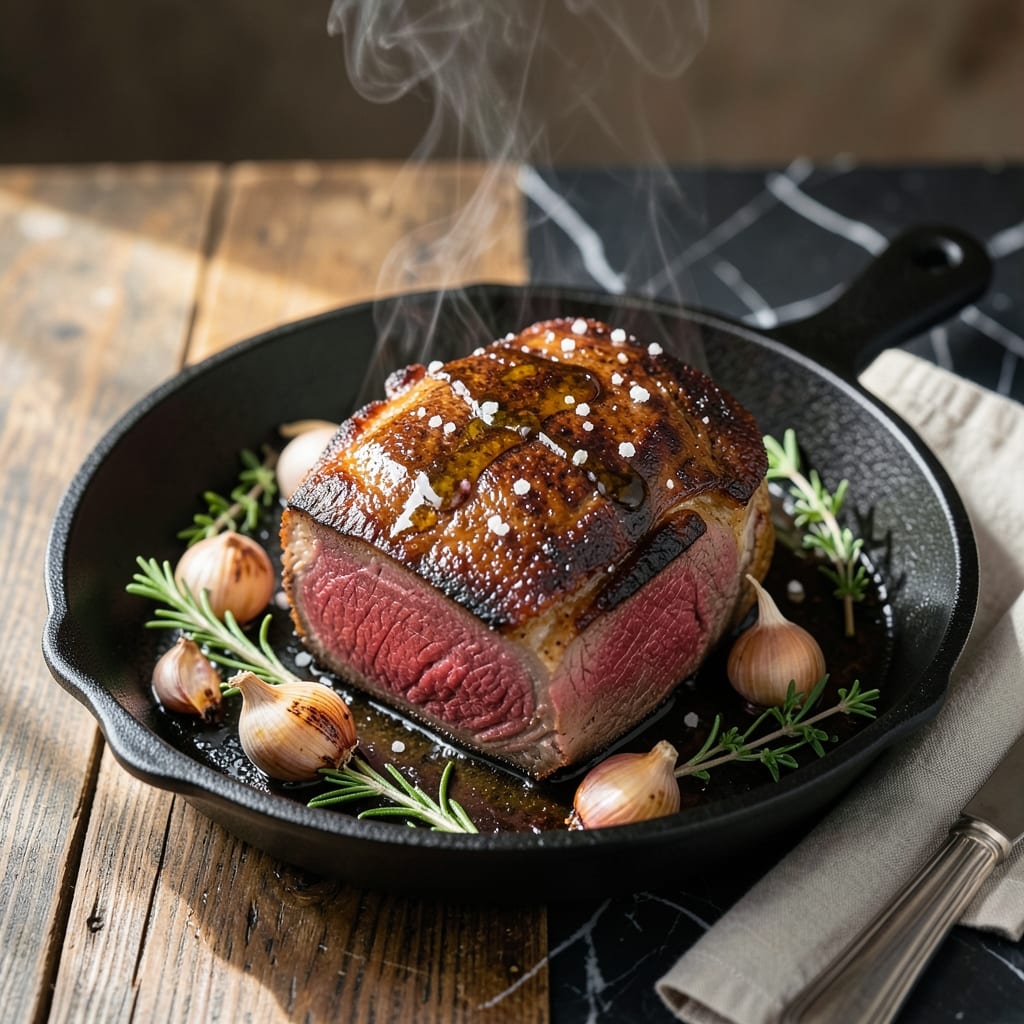
This reverse-sear method delivers perfectly even doneness for prime rib without a fancy roasting pan. I developed this technique after years of uneven results, finally achieving restaurant-quality at home.
The cast iron skillet provides superior heat retention, allowing you to sear then roast with precision. Starting low in the oven ensures the center reaches your desired temperature before the crust forms.
What you get is a beautifully crispy exterior with a rosy, juicy interior from edge to edge. The skillet’s versatility makes this possible with equipment you already own.
No more guessing or dry edges—just consistent, impressive results every time. This method works for any size roast.
Ingredients for Prime Rib Roast Recipe in Cast Iron Skillet
Quality beef and fresh herbs. That’s all you need for this showstopper.
| Ingredient | Amount | Notes |
|---|---|---|
| Prime Rib Roast 🥩 | 4 lb | Bone-in, well-marbled preferred |
| Kosher Salt 🧂 | 1 tbsp | Diamond Crystal or Morton |
| Freshly Ground Black Pepper 🌶️ | 2 tsp | Coarse grind preferred |
| Garlic Cloves 🧄 | 6 cloves | Smashed, unpeeled |
| Fresh Rosemary Sprigs 🌿 | 4 pieces | Woody stems intact |
| Fresh Thyme Sprigs 🍃 | 6 pieces | Woody stems intact |
| Extra-Virgin Olive Oil 🫒 | 2 tbsp | High smoke point variety |
| Unsalted Butter 🧈 | 2 tbsp | Softened at room temperature |
| Beef Stock 💧 | 1 cup | Low-sodium preferred |
| Red Wine 🍷 | ½ cup | Dry variety like Cabernet |
| Dijon Mustard 🟡 | 1 tbsp | For crust enhancement |
| All-Purpose Flour 🌾 | 1 tbsp | For optional thickener |
The prime rib is non-negotiable here. Grab a well-marbled, bone-in roast from a butcher you trust—Whole Foods or a local shop will have the best selection. Look for bright red color with white fat streaks throughout. The bone adds flavor, so ask for it to stay in. If you’re feeding more than four, scale up the weight (about 1 lb per person for bone-in).
No fresh rosemary or thyme? Dried herbs at one-third the amount work in a pinch, but fresh is ideal for that aromatic punch. Red wine can be swapped for extra beef stock, but the acidity in wine helps tenderize. Out of Dijon? Whole-grain mustard adds a nice texture. The butter is key for that final sear—don’t substitute margarine (trust me on this one).
Prime rib is best cooked the same day you buy it, but it’ll keep in the fridge for 2-3 days if wrapped tightly. Leftovers? Slice thin, pile on a sandwich with horseradish mayo, and thank yourself later. Freezes beautifully for 3 months.
Why You’ll Love This Recipe
- I’ll be real: the sandwiches I make with the leftovers might be even better than the original meal.
- One Pan Magic: I toss the prime rib in the cast iron, let the salt and rosemary do their thing, and the oven handles the rest—hardly any cleanup.
- Garlic-Rosemary Crust: That crust from the garlic and fresh rosemary? Ridiculously good, with every bite packed with flavor.
- Holiday or Tuesday: Honestly, this works for Christmas dinner or just because it’s cold outside and I want something cozy.
Step-by-Step Instructions for Prime Rib Roast in Cast Iron Skillet
Here’s the method I swear by for perfectly even doneness every single time.
Step 1: Season and Prep the Prime Rib Roast
Pat the 4 lb Prime Rib Roast completely dry with paper towels. This is non-negotiable—any moisture prevents proper browning. Rub the entire surface with the 1 tbsp Kosher Salt and 2 tsp Freshly Ground Black Pepper, pressing gently to adhere.
Make small slits in the fat cap and insert the 6 cloves Garlic Cloves (smashed but unpeeled) along with the 4 pieces Fresh Rosemary Sprigs and 6 pieces Fresh Thyme Sprigs. These will infuse flavor as the roast cooks. Let it sit at room temperature for 1 hour before cooking.
This resting period allows the salt to penetrate the meat and brings the roast to an even temperature, ensuring it cooks uniformly. Don’t skip this step—cold meat cooks unevenly.
Step 2: Reverse-Sear in the Oven
Preheat your oven to 250°F. Place the prime rib roast in a cast iron skillet (fat cap up) and drizzle with the 2 tbsp Extra-Virgin Olive Oil. Insert a meat thermometer into the thickest part of the roast, avoiding the bone.
Roast in the oven until the internal temperature reaches 115-120°F for medium-rare, which should take about 1.5 to 2 hours for a 4 lb roast. The low-and-slow method ensures edge-to-edge even doneness without a gray band. Check the temperature every 20 minutes after the first hour.
Step 3: Create the Crust in the Skillet
Remove the skillet from the oven and increase the oven temperature to 450°F. Place the skillet on the stovetop over medium-high heat. Add the 2 tbsp Unsalted Butter and let it melt, then brush the top of the roast with the 1 tbsp Dijon Mustard for extra flavor.
Sear the roast in the skillet for 3-4 minutes until the crust is deeply browned and crispy. The cast iron will get screaming hot—this is what creates that beautiful, flavorful crust. Baste the roast with the butter and pan juices during searing for extra richness.
Step 4: Make the Pan Sauce
Transfer the roast to a cutting board to rest for 15-20 minutes. Place the skillet back on the stovetop over medium heat. Add the 0.5 cup Red Wine and scrape up all the browned bits from the bottom of the pan with a wooden spoon.
Let the wine reduce by half, then add the 1 cup Beef Stock. Simmer for 5-7 minutes until slightly thickened. For a thicker sauce, mix the 1 tbsp All-Purpose Flour with a little water to make a slurry and stir it into the pan juices. Simmer for another 2 minutes until thickened.
Strain the sauce if you prefer a smooth texture, then serve it alongside the sliced roast. The sauce should be rich, deeply flavorful, and the perfect complement to the juicy, tender prime rib.
Pro Tips For Making Prime Rib Roast Recipe In Cast Iron Skillet
- Preheat the Skillet: Get that cast iron ripping hot before adding the roast—about 5 minutes on medium-high. I learned this the hard way after my first prime rib stuck miserably.
- Dry the Roast Well: Pat the prime rib completely dry with paper towels before seasoning. Sounds weird, but it works for getting that perfect crust every time.
- Skip the Overcrowding: If using garlic and rosemary, don’t stuff too much under the roast—it steams instead of sears. Two sprigs and three cloves max.
- Rest Before Carving: Let it rest 15-20 minutes under foil after cooking, no matter how hungry everyone is. My grandmother swore by this, and she was right.
Perfect Pairings for This prime rib roast recipe in cast iron skillet
Wine Pairings
Nothing complements this dish like a bold Cabernet Sauvignon—its tannins cut through the fat beautifully. I love a Napa Valley bottling for its dark fruit notes. For a budget option, Josh Cellars delivers consistent quality. 🍷
Craft Beer Options
A porter or stout works wonders with the rich beef flavors. Try Guinness or a local New England craft like Harpoon Chocolate Stout. The roasted malt notes mirror the crust’s depth.
Side Dish Ideas
Creamy horseradish mashed potatoes are my go-to—they balance the richness. Use 2 lbs Yukon Golds and ½ cup whole milk for best texture. For something lighter, try roasted Brussels sprouts with balsamic glaze.
Bread Pairings
A crusty sourdough or ciabatta from a local Italian bakery soaks up the pan sauce perfectly. I grab mine from Bova’s Bakery in Boston’s North End. Warm it for 5 minutes in the oven before serving.
Vegetable Sides
Asparagus or green beans with garlic butter add freshness. Toss 1 lb asparagus with 2 tbsp olive oil and roast at 400°F for 12 minutes. Finish with a squeeze of lemon. 💛
Sauce Enhancements
For extra flair, serve with homemade horseradish cream—mix ½ cup sour cream with 2 tbsp prepared horseradish. Or offer chimichurri for a bright, herby contrast to the rich beef.
Nutrition Facts
Frequently Asked Questions
What’s the ideal internal temperature for medium-rare?
Aim for 115-120°F before resting. The temp will rise to 125-130°F while resting, giving you perfect medium-rare edge to edge.
Can I use a different pan instead of cast iron?
A heavy oven-safe skillet works, but cast iron’s heat retention is ideal. Avoid thin pans—they won’t sear as well.
How long should I rest the roast before slicing?
Rest for 15-20 minutes after cooking. This lets juices redistribute for maximum tenderness and flavor.
Why is my crust not crispy enough?
Pat the roast completely dry before seasoning and ensure the skillet is screaming hot. Baste with butter during searing for extra crispiness.

- Pudding Recipe With Egg Yolks: Silky Smooth Custard in Minutes - November 3, 2026
- Pudding Pops Recipe Cook and Serve: Silky Frozen Treats Without the Machine - November 3, 2026
- Protein Ice Cream Recipe Blender Xanthan Gum: Ultra Creamy Texture Without the Guilt - November 3, 2026