
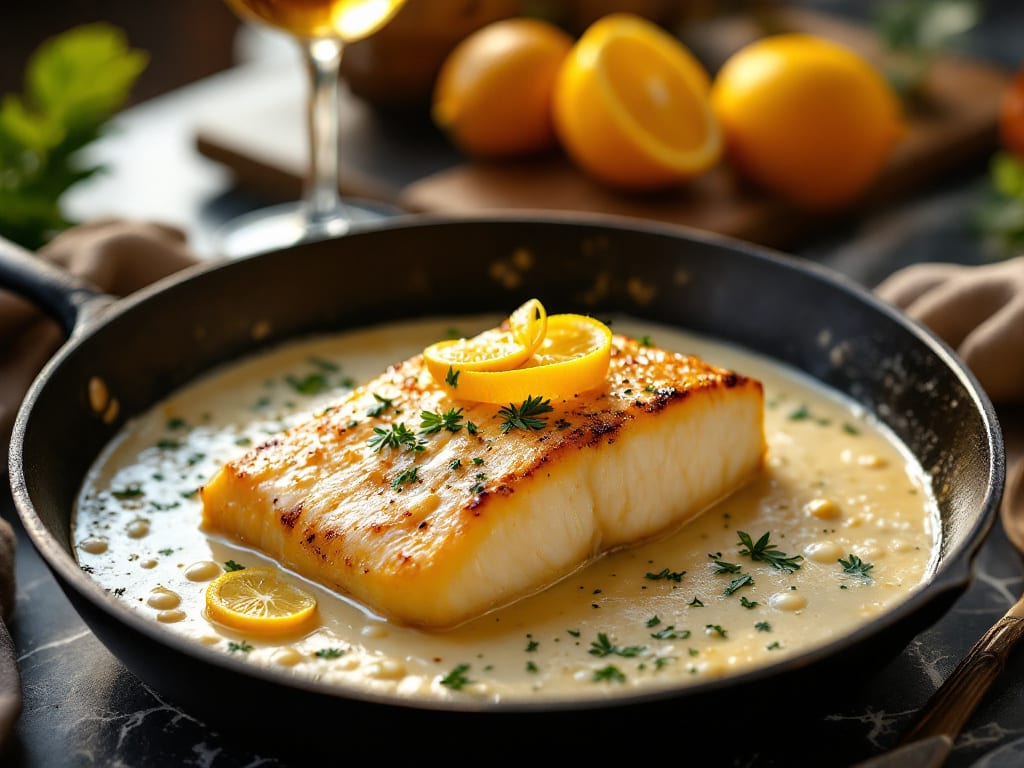
This cod in white sauce recipe delivers the perfect balance of delicate fish and velvety sauce that clings to every flake.
The secret lies in a light, buttery white sauce made with just a few ingredients—cream, lemon juice, and a touch of Dijon mustard—that enhances rather than overpowers the natural sweetness of cod.
I developed this dish after years of testing, and it consistently produces tender, flaky fish with a sauce so rich it feels like a restaurant-quality meal.
The process is straightforward but requires precision to ensure the cod stays moist while the sauce achieves that ideal velvety texture. You’ll start by seasoning the cod with salt and pepper, then searing it briefly in butter to create a golden crust before finishing it in a warm oven.
Meanwhile, the white sauce simmers on the stovetop, its ingredients combining to create a smooth, flavorful base that coats the fish perfectly. The result is a dish that’s elegant yet approachable, perfect for weeknight dinners or special occasions.
What makes this recipe truly stand out is how the sauce clings to the flaky cod, creating each bite into a harmonious blend of textures and flavors.
The sauce is light enough to let the fish shine but rich enough to feel indulgent, with bright lemon notes cutting through the creaminess. This dish pairs beautifully with steamed vegetables, buttery rice, or a simple green salad to round out the meal.
The presentation is effortless—just plate the cod over a bed of rice or vegetables and drizzle with extra sauce for a restaurant-worthy finish.
This recipe is designed to be both foolproof and flexible, making it ideal for home cooks looking to impress without stress. Whether you’re serving it to guests or treating yourself to a special dinner, the combination of tender cod and velvety white sauce will leave everyone asking for seconds.
Let’s get started on creating this timeless classic that feels like a hug on a plate.
Ingredients for cod in white sauce
Four delicate fillets and a handful of pantry staples transform into restaurant-quality cod in white sauce.
| Ingredient | Amount | Notes |
|---|---|---|
| Cod Fillets 🐟 | 4 whole | Skinless, 6 oz each, center-cut preferred |
| Unsalted Butter 🧈 | ½ cup | Cold, cut into 1-inch pieces |
| Heavy Cream 🥛 | 1 cup | Full-fat for best texture |
| Extra-Virgin Olive Oil 🫒 | 2 tbsp | For searing cod |
| Fresh Lemon Juice 🍋 | 2 tbsp | From 1 medium lemon |
| Dijon Mustard 🍯 | 1 tbsp | For depth of flavor |
| Shallots 🧅 | 2 whole | Finely minced |
| Garlic Cloves 🧄 | 2 cloves | Minced, not powdered |
| Dry White Wine 🍷 | ¼ cup | Sauvignon Blanc preferred |
| Fish Stock 💧 | ½ cup | Low-sodium preferred |
| Kosher Salt 🧂 | 1 ½ tsp | Adjust to taste |
| Freshly Ground Black Pepper 🌶️ | ½ tsp | Cracked peppercorns preferred |
| Fresh Parsley 🌿 | ¼ cup | Chopped, for garnish |
| Steamed Asparagus 🌱 | 1 lb | Optional side pairing |
| Jasmine Rice 🍚 | 1 cup | Uncooked, for serving |
The cod is the foundation, so center-cut fillets are non-negotiable—they stay together better during cooking. Whole Foods or local fishmongers carry the best quality, but any reputable grocery store’s frozen section will have suitable options. Look for fillets with a bright, translucent sheen and minimal brown edges. If using frozen, thaw overnight in the fridge—never at room temperature. The butter should be cold and cubed for proper searing, and the heavy cream must be full-fat to achieve that velvety texture. For the wine, Sauvignon Blanc adds brightness, but a dry Pinot Grigio works equally well.
No white wine? Fish stock with a splash of lemon juice mimics the acidity. The shallots can be swapped for 1 small onion, finely chopped, but they add a subtler sweetness. Fresh parsley is ideal, but dried parsley at one-third the amount works in a pinch. The Dijon mustard is key—it balances the richness of the cream, so don’t skip it. For the fish stock, low-sodium versions like Knorr or homemade are best to control seasoning. If you’re avoiding dairy, coconut cream can replace the heavy cream, though the texture will differ slightly.
The cod and sauce reheat beautifully—store them separately in airtight containers for up to 2 days in the fridge. The sauce thickens as it cools, so stir in a splash of warm water or milk when reheating. For longer storage, freeze the sauce in ice cube trays for 3 months—perfect for quick weeknight dinners. The rice and asparagus can be prepped ahead and reheated separately. Garnish with extra parsley just before serving to keep it vibrant.
Why You’ll Love This Recipe
- One-Pan Magic: I swear by this recipe when I’m too tired to wash dishes. The cod sits right in the same pan where the sauce thickens—no extra bowls, no stress. Just melt butter, sear the fish, pour in the cream, and let it simmer. That’s it.
- Bright & Creamy Balance: The lemon juice cuts through the richness of the butter and cream like a fresh breeze. You get that velvety sauce without it tasting heavy, and the cod stays tender but flaky—like a hug from the sea.
- Leftover Heaven: This dish reheats like a dream, making it my go-to for busy mornings. Pop it in the microwave for 30 seconds, and you’ve got a restaurant-quality lunch. (Yes, even on a Tuesday.)
- Budget-Friendly Luxury: Cod’s affordable, and a little butter plus cream stretches further than you’d think. I’ll be real—it feels fancy, but the grocery bill won’t make me cry. Perfect for when you want to impress without breaking the bank.
Step-by-step instructions for cod in white sauce
Here’s the method for achieving perfectly flaky cod with a velvety white sauce that clings beautifully.
Season and Sear the Cod Fillets
Pat the 4 whole cod fillets dry with paper towels—this ensures a better sear. Season both sides generously with 1.5 teaspoons kosher salt and 0.5 teaspoon freshly ground black pepper, pressing the seasoning into the flesh. Let them sit at room temperature for 10 minutes while you prepare the pan.
Heat 2 tablespoons extra-virgin olive oil in a large skillet over medium-high heat until shimmering. Place the cod fillets in the pan, skin-side down if they have skin, and cook undisturbed for 3-4 minutes until the bottoms develop a golden crust. Flip carefully and cook for another 2-3 minutes until the centers are just opaque and flake easily when tested with a fork. Remove the fillets and set aside on a warm plate, tented with foil to keep warm.
Build the White Sauce Base
Reduce the heat to medium and add the 0.5 cup unsalted butter to the same skillet, allowing it to melt and foam. Once the butter has fully melted, add the 2 whole shallots and 2 cloves garlic cloves, cooking for 2-3 minutes until the shallots soften and become translucent but don’t brown. This step ensures the sauce develops a subtle sweetness without bitterness.
Pour in the 0.25 cup dry white wine, scraping up any browned bits from the bottom of the pan with a wooden spoon. Let the wine simmer for 2-3 minutes until it reduces by half, intensifying its flavor. This reduction is key to creating a rich, well-balanced sauce that won’t taste flat.
Thicken the Sauce with Cream and Stock
Lower the heat to medium-low and gradually whisk in the 1 cup heavy cream, ensuring it doesn’t curdle. Stir in the 0.5 cup fish stock and 1 tablespoon Dijon mustard, then bring the mixture to a gentle simmer. Let it cook for 5-7 minutes, stirring occasionally, until the sauce thickens enough to coat the back of a spoon. The sauce should be smooth and velvety, with a glossy sheen that indicates proper emulsification.
Taste and adjust the seasoning with additional kosher salt or black pepper as needed. The sauce should be rich but not overly salty—balance is everything. Remove the skillet from heat and stir in the 2 tablespoons fresh lemon juice, which brightens the flavors and cuts through the richness of the cream.
Combine Cod and Sauce
Return the cod fillets to the skillet, spooning the sauce over them and gently turning to coat evenly. Let the fillets sit in the sauce for 2-3 minutes, allowing the heat to gently cook the sauce further and infuse the fish with its flavors. The cod should be fully heated through but still tender—overcooking at this stage will make it tough.
Garnish each serving with 0.25 cup chopped fresh parsley just before plating. The parsley adds a fresh contrast to the rich sauce and cod, elevating the dish visually and adding a subtle herbal note. Serve immediately with 1 cup cooked jasmine rice and 1 lb steamed asparagus on the side for a complete meal.
Pro Tips For Making Cod In White Sauce
- SEAR THE COD FIRST: Hit the pan with olive oil on medium-high—don’t rush the heat—and lay the cod skin-side down. Let it develop a golden crust for 2-3 minutes before flipping; this locks in moisture and keeps the fillets from falling apart when they hit the sauce. (Yes, even if you’re impatient like me, resist the urge to poke it early.)
- USE COLD CREAM: Chill your heavy cream in the fridge for 10 minutes before adding it to the butter. Warm it just enough to melt the butter, then remove from heat—this prevents curdling and keeps the sauce silky. I learned this the hard way after watching my sauce separate like a bad milkshake.
- SALT THE COD TWICE: Season the fillets generously with salt before searing, then again after they come out of the pan. The first layer gets absorbed into the flesh, while the second ensures the sauce carries that briny depth. Skip this, and your dish tastes flat, no matter how fancy the cream.
- DEGLLAZE WITH LEMON: After removing the cod, immediately add a splash of fresh lemon juice to the pan and scrape up those browned bits—this adds instant acidity and depth to the sauce. No need for wine or stock; the lemon brightens everything while cutting through the richness. (Your future self will thank you.)
Pro cooking tips for great cod in white sauce
Perfect Searing Technique
Cod is delicate, so the key is a quick, hot sear to create a golden crust without overcooking. Use a large skillet (I prefer All-Clad) and heat the oil to 350°F—test with a drop of water that sizzles immediately.
Cook the fillets skin-side down first for 3-4 minutes until deeply golden, then flip briefly to 2-3 minutes for just-opaque centers. Overcooking turns cod rubbery—test with a fork for flakiness. 🔥
Sauce Emulsification Secrets
The velvety texture comes from proper emulsification. After adding the heavy cream, lower heat to medium-low and whisk constantly to prevent curdling. If the sauce breaks, whisk in 1 teaspoon cornstarch mixed with 1 tablespoon cold water to rebind.
The Dijon mustard is non-negotiable—it stabilizes the emulsion and adds depth. Taste frequently to adjust seasoning before combining with the cod.
Wine Reduction Matters
Don’t skip reducing the wine—it intensifies flavor by 50%. Simmer the Sauvignon Blanc until it reduces to 2 tablespoons (about 2-3 minutes). This step prevents a flat-tasting sauce. If you omit wine, use lemon juice + fish stock in a 1:1 ratio for acidity.
The reduction also removes alcohol, making it safer for kids or those avoiding alcohol. 🍷
Temperature Control
Keep the sauce at a gentle simmer (small bubbles, not rolling). Overheating causes curdling, while too-low heat won’t thicken properly. Use a thermometer to monitor—ideal sauce temp is 180-185°F.
When combining with cod, warm the fillets in the sauce for only 2-3 minutes to avoid drying them out. The residual heat finishes cooking gently.
Lemon Juice Timing
Add the lemon juice off the heat—this prevents the acid from breaking the sauce’s emulsion. Stir immediately to distribute the bright flavor evenly. If the sauce looks too thin after adding lemon, return it to low heat for 30 seconds to thicken slightly.
The acidity also helps balance the richness, cutting through the cream’s heaviness. 🍋
Garnish Like a Pro
Fresh parsley isn’t just for looks—it adds herbal brightness that contrasts the sauce’s richness. Chop it finely and sprinkle just before serving to keep it vibrant. For extra flair, add lemon zest or microgreens to the plate.
Avoid heavy garnishes like herbs that might overpower the delicate flavors. A drizzle of extra-virgin olive oil adds a final touch of elegance.
Nutrition facts
Frequently asked questions
Can I use frozen cod for this recipe?
Yes, but thaw it properly first. Place the frozen cod fillets in a sealed bag and refrigerate overnight for even thawing. Never thaw at room temperature, as this promotes bacterial growth. For a quick option, submerge the sealed bag in cold water, changing the water every 30 minutes until fully thawed (1-2 hours). Pat the fillets completely dry before seasoning to ensure a good sear.
What if I don’t have white wine?
No problem! Substitute with an equal amount of fish stock mixed with lemon juice (1:1 ratio) to maintain acidity. For example, use 0.25 cup fish stock + 2 tablespoons lemon juice instead of the wine. This keeps the sauce bright and prevents flatness. The dish will still taste delicious, though the wine adds a subtle complexity.
How do I prevent the sauce from curdling?
Curdling happens when the sauce overheats or acid (like lemon juice) is added too early. Always add the lemon juice off the heat and stir immediately. Keep the sauce at a gentle simmer (small bubbles) and whisk constantly when adding the heavy cream. If it starts to break, whisk in 1 teaspoon cornstarch mixed with 1 tablespoon cold water to rebind.
Can I make this dish ahead of time?
Cook the cod and sauce separately, then refrigerate in airtight containers for up to 2 days. When reheating, warm the sauce gently over low heat and stir in a splash of warm water or milk to restore thickness. Reheat the cod in the sauce for 2-3 minutes to avoid drying it out. Garnish with fresh parsley just before serving.
What’s the best way to serve this dish?
This elegant dish pairs beautifully with jasmine rice, steamed asparagus, or a simple green salad. For extra presentation, plate the cod over a bed of rice, drizzle with extra sauce, and garnish with parsley and lemon zest. Serve with a crusty baguette or warm dinner rolls to soak up the delicious white sauce.

- Baked Breaded Eggplant Recipe: Crispy Parmesan-Crusted Perfection - November 29, 2026
- Deep Fried Donuts Recipe: Crispy Shells and Pillowy Cores - November 29, 2026
- Cabbage and Cottage Cheese Recipe: Crisp-Tender Slaw With Creamy Tang - November 29, 2026