
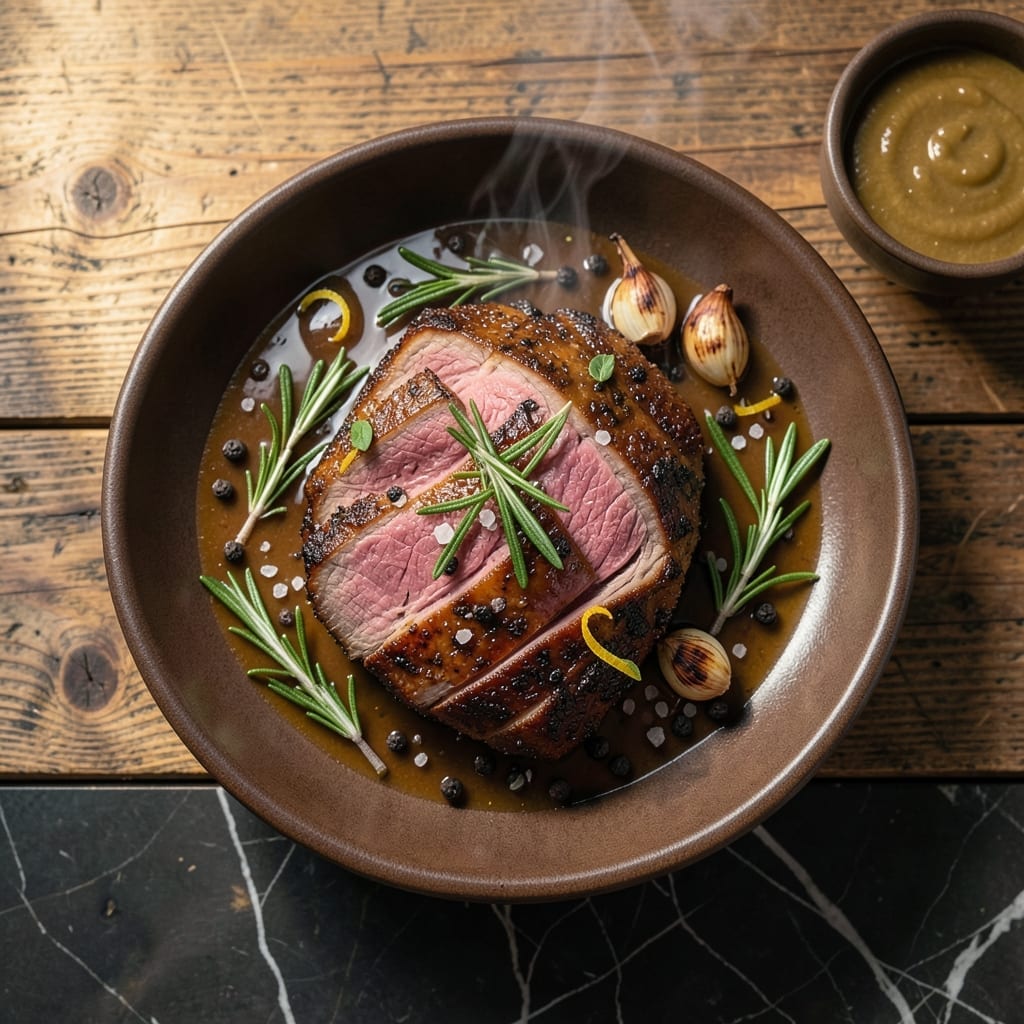
This prime rib recipe brings the rugged flavors of the Rockies to your dinner table with a signature herb crust.
I developed this method after years of perfecting the balance between tender meat and a crispy herb exterior. The secret is a low-and-slow roast followed by a high-heat finish, guaranteeing a perfectly pink center every time.
The herb blend—rosemary, thyme, and garlic—creates a crust that’s aromatic without overpowering the beef’s natural richness. It’s a showstopper dish that’s simpler to make than it looks.
Pair it with au jus and Yorkshire pudding for a complete, restaurant-worthy meal. Here’s how to nail it.
Ingredients for Colorado Cache Prime Rib
Quality beef and fresh herbs create this restaurant-worthy centerpiece with minimal effort.
| Ingredient | Amount | Notes |
|---|---|---|
| Prime Rib Roast 🥩 | 4 lb | Bone-in preferred for flavor |
| Fresh Rosemary 🌿 | 3 tbsp | Finely chopped for herb crust |
| Fresh Thyme 🍃 | 3 tbsp | Stems removed, chopped |
| Garlic Cloves 🧄 | 6 cloves | Minced for maximum flavor |
| Kosher Salt 🧂 | 2 tbsp | Diamond Crystal preferred |
| Black Peppercorns 🌶️ | 1 tbsp | Freshly cracked for best results |
| Dijon Mustard 🟡 | 3 tbsp | For crust adhesion and tang |
| Olive Oil 🫒 | ¼ cup | Extra-virgin for richness |
| Beef Stock 🥫 | 2 cups | Low-sodium for au jus |
| Red Wine 🍷 | 1 cup | Dry variety for depth |
| Unsalted Butter 🧈 | 4 tbsp | For finishing au jus |
| All-Purpose Flour 🌾 | 2 tbsp | For thickening au jus |
| Yorkshire Pudding Batter Ingredients 🥞 | 1 package | Store-bought mix acceptable |
The prime rib is non-negotiable—USDA Choice or Prime grade from a reputable butcher ensures optimal marbling. For the herb crust, fresh rosemary and thyme are essential; dried simply won’t deliver the same aromatic punch. I source my beef from local ranches when possible, but Whole Foods or Costco carry excellent pre-cut roasts with consistent quality. Look for deep red color with visible fat streaking.
No fresh herbs? Dried at one-third the quantity works in a pinch, though the flavor profile shifts slightly. For a wine substitution, beef broth with 1 tsp balsamic vinegar mimics the acidity. The Dijon can be swapped for whole-grain mustard if preferred. If avoiding alcohol entirely, omit the wine and boost beef stock to 3 cups—just reduce it longer for concentration.
The roast can rest at room temperature for 1 hour before cooking (don’t exceed this for food safety). Leftovers keep 4-5 days refrigerated or freeze for 3 months. Au jus reheats beautifully—just skim off any solidified fat first.
Why You’ll Love This Recipe
- Set It and Forget It: I rub the prime rib with rosemary, thyme, and garlic the night before, then let the oven do the work.
- Herb Crust Heaven: That crispy salt-and-herb crust with the juicy meat inside? Ridiculously good.
- Feeds a Holiday Crowd: One roast, zero stress—this is my go-to for Christmas dinner.
- Leftovers for Days: Honestly, the sandwiches I make with the leftovers might be even better than the first meal.
Step-by-Step Instructions for Colorado Cache Prime Rib
Master this technique for a perfectly cooked roast with a fragrant herb crust every time.
Step 1: Prepare the Herb Crust and Prime Rib
Finely chop the 3 tbsp Fresh Rosemary and 3 tbsp Fresh Thyme, then combine them in a bowl with the 6 cloves Garlic Cloves (minced), 2 tbsp Kosher Salt, and 1 tbsp Black Peppercorns (freshly cracked). This aromatic blend forms the foundation of your herb crust.
Pat the 4 lb Prime Rib Roast dry with paper towels—this ensures the crust adheres properly. Rub the 3 tbsp Dijon Mustard evenly over the surface of the roast, then press the herb mixture onto the meat, coating it completely. Drizzle with the 0.25 cup Olive Oil and let it sit at room temperature for 1 hour to allow the flavors to penetrate.
Step 2: Sear and Begin Roasting
Preheat your oven to 450°F. Place the roast bone-side down in a roasting pan and sear in the oven for 20 minutes to develop a rich, caramelized crust. This high-heat start is crucial for locking in juices and creating a flavorful exterior.
After searing, reduce the oven temperature to 325°F. Insert a meat thermometer into the thickest part of the roast, avoiding the bone. Continue roasting until the internal temperature reaches 120°F for medium-rare, which should take approximately 1.5 to 2 hours, depending on your oven.
Step 3: Prepare the Au Jus
While the roast cooks, place the roasting pan with drippings on the stovetop over medium heat. Add the 2 cups Beef Stock and 1 cup Red Wine, scraping the bottom to release the browned bits. Bring to a simmer and cook for 5 minutes to reduce slightly.
In a small bowl, whisk together the 2 tbsp All-Purpose Flour with 2 tbsp of the warm liquid from the pan to create a slurry. Slowly whisk the slurry back into the pan and simmer for another 3-5 minutes until the au jus thickens. Remove from heat and stir in the 4 tbsp Unsalted Butter for a silky finish.
Step 4: Rest and Serve
Once the roast reaches your desired temperature, transfer it to a cutting board, tent loosely with foil, and let it rest for 20 minutes. This allows the juices to redistribute, ensuring a moist and tender result when sliced.
Prepare the 1 package Yorkshire Pudding Batter Ingredients according to package instructions and bake while the roast rests. Carve the prime rib into thick slices, arrange on a platter, and serve with the warm au jus and Yorkshire pudding on the side.
Pro Tips For Making Colorado Cache Prime Rib
- Dry the Roast: Pat the prime rib completely dry with paper towels before seasoning—any moisture will steam the crust instead of searing it, and I learned this the hard way with a pale, sad roast.
- Crush the Herbs: Lightly crush the fresh rosemary and thyme between your palms before rubbing them on the meat to release their oils, or you’ll miss out on half the flavor.
- Skip Cold Meat: Let the prime rib sit at room temperature for 1-2 hours before roasting, or the center will cook unevenly while the outside overcooks.
- Rest Before Carving: Tent the roast with foil and let it rest for 15-20 minutes after pulling it from the oven—cutting too soon sends all the juices running onto the board instead of staying in the meat.
Essential Equipment for This Recipe
Roasting Pan Essentials
Invest in a heavy-duty stainless steel roasting pan with a rack—I use All-Clad for even heat distribution. The rack elevates the roast, allowing air circulation for a crispy crust. A 16×13-inch pan handles a 4 lb prime rib with room for drippings. 💡
Thermometer Precision
A reliable instant-read thermometer is non-negotiable for perfect doneness. I swear by ThermoWorks ThermaPen for ±0.7°F accuracy. Check the thickest part, avoiding bone, and aim for 120°F for medium-rare.
Herb Prep Tools
Use a sharp chef’s knife (8-inch Wüsthof is my go-to) for finely chopping herbs. A cutting board with a groove catches juices when trimming the roast. Fresh herbs release more aroma when hand-chopped versus food processor.
Au Jus Equipment
A whisk and fat separator are key for silky au jus. I use OXO’s fat separator to skim drippings efficiently. A medium saucepan reduces stock without scorching.
Resting Setup
Have a large cutting board and aluminum foil ready for resting. A meat carving set with a 12-inch slicing knife ensures clean cuts. Resting for 20 minutes prevents juice loss. 🔥
Yorkshire Pudding Prep
Use a muffin tin for popovers—I prefer nonstick with ceramic coating. Preheat the tin with ½ tsp oil in each cup for crispy edges. A wire whisk blends batter smoothly.
Nutrition Facts
Frequently Asked Questions
What’s the ideal internal temperature for medium-rare?
Remove the roast when it hits 120°F internally. It will rise to 125-130°F while resting, giving you perfect medium-rare. Use an instant-read thermometer for accuracy.
Can I use dried herbs instead of fresh?
Yes, but reduce the amount to one-third. Dried herbs are more concentrated. For best flavor, rehydrate them in a little olive oil for 10 minutes before applying.
How long should the roast rest before slicing?
Let it rest for 20 minutes after removing from the oven. This allows juices to redistribute, ensuring moist, tender slices. Resist the urge to cut early!
What if my au jus is too thin?
Mix 1 tbsp cornstarch with 1 tbsp cold water and whisk into simmering au jus. Cook for 1-2 minutes until thickened. Avoid over-reducing or it may become too salty.

- BBQ Sausage Recipe Oven: Smoky Depth Without the Grill - September 28, 2026
- BBQ Chicken Bowl Recipe Rice: Smoky Sweetness Over Fluffy Grains - September 28, 2026
- Beef Cutlet Recipe Ideas: Crispy Breaded Patties With Bold Seasonings - September 28, 2026