
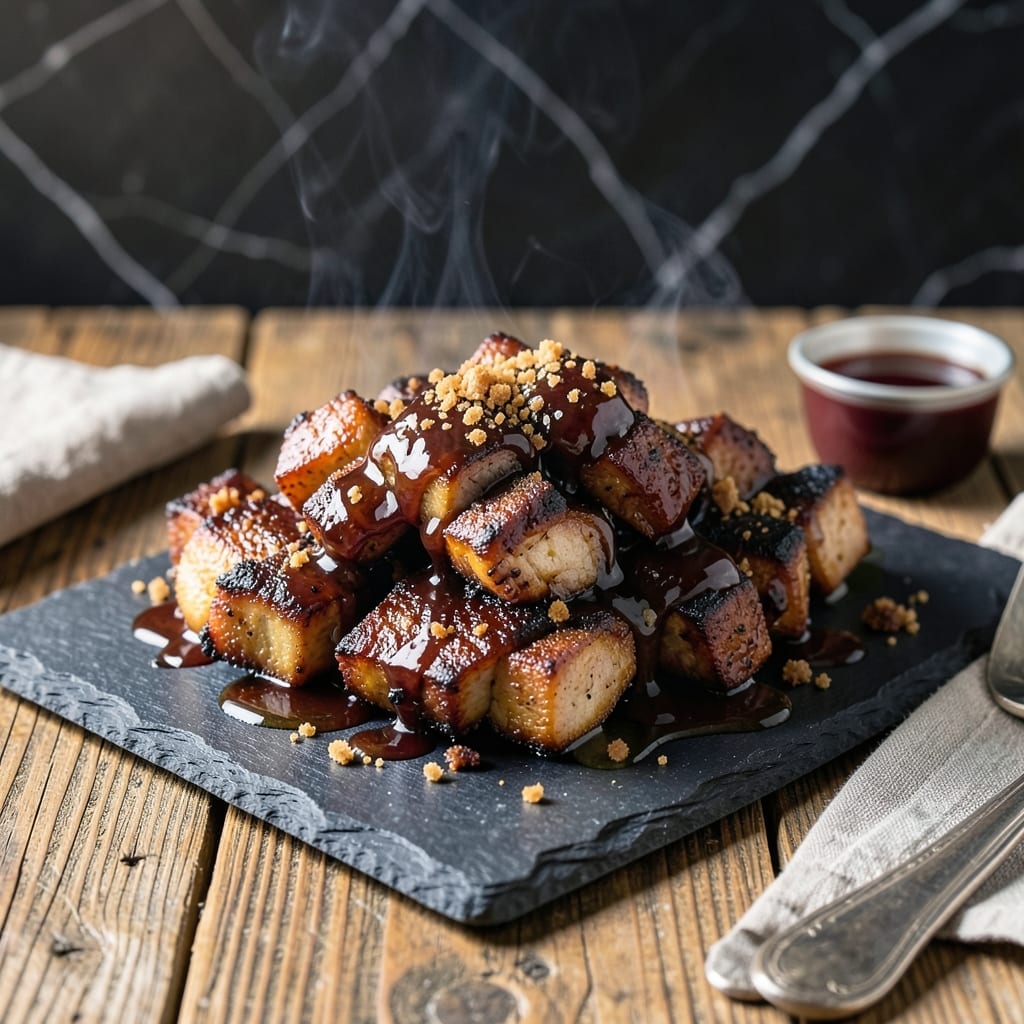
Achieving candy-like bark and melting tenderness in pork belly burnt ends requires precision and patience. This method transforms a humble cut into a showstopping dish with layers of smoky, sweet, and savory flavors.
The process involves smoking the pork belly low and slow, then cubing and saucing it for a final caramelization. The result is a perfect balance of crispy edges and fall-apart texture that defines great burnt ends.
I’ve refined this technique to ensure consistent results every time. The key is maintaining steady heat and timing the sauce application just right to build that signature bark.
This dish will elevate any backyard barbecue or special occasion. The rich, smoky-sweet flavor profile makes it a standout among smoked meats.
Ingredients for Smoked Pork Belly Burnt Ends
Transform humble pork belly into showstopping burnt ends with these carefully selected ingredients.
| Ingredient | Amount | Notes |
|---|---|---|
| Pork Belly 🥓 | 2 lb | Skin-on, even thickness preferred |
| Yellow Mustard 🟡 | ¼ cup | For binder, not flavor |
| BBQ Rub 🌶️ | ¼ cup | Store-bought or homemade blend |
| Brown Sugar 🍚 | ½ cup | Light or dark, packed |
| Apple Cider Vinegar 🍏 | ¼ cup | For tangy balance |
| Butter 🧈 | ½ cup | Unsalted, cubed for mixing |
| Honey 🍯 | ¼ cup | For sticky caramelization |
| Molasses 🍯 | 2 tbsp | Adds depth to sauce |
| Worcestershire Sauce 💧 | 2 tbsp | For umami complexity |
| Ketchup 🍅 | ½ cup | Base for finishing sauce |
| Garlic Powder 🧄 | 1 tbsp | For savory depth |
| Onion Powder 🧅 | 1 tbsp | Complements sweetness |
| Kosher Salt 🧂 | 1 tbsp | Adjust to taste |
| Black Pepper 🌶️ | 1 tsp | Freshly ground preferred |
| Hickory Wood Chips 🪵 | 2 cups | For authentic smoke flavor |
The pork belly is non-negotiable—skin-on, even thickness ensures consistent cooking. Source from Costco or a trusted butcher for quality marbling. The BBQ rub can be store-bought (Kingsford or Stubb’s are reliable), but homemade lets you control the sugar-salt balance. Hickory wood chips deliver the classic smoke profile; avoid mesquite as it can overpower the sweetness.
No pork belly? Pork shoulder works in a pinch but lacks the fat cap for true burnt ends. Swap molasses for maple syrup if needed, though the depth won’t be identical. Apple juice can replace cider vinegar for a milder tang. The sauce ingredients are flexible—adjust sweetness with more or less brown sugar to taste.
The pork belly can rest in the fridge 2-3 days before smoking. Sauce keeps 1 week refrigerated or 3 months frozen. Once cooked, burnt ends are best served immediately but reheat well wrapped in foil at 300°F for 15 minutes.
Why You’ll Love This Recipe
- Set and Forget: I just coat the pork belly in mustard and rub, then let the smoker do all the work for those fall-apart burnt ends.
- Sweet & Tangy Bite: The brown sugar caramelizes with the apple cider vinegar to create this ridiculous sweet-tangy crust on every cube.
- Crowd Pleaser: Honestly, these disappear faster than any appetizer I’ve ever served at backyard get-togethers.
- Budget Feast: A single slab of pork belly feeds a crowd, and leftovers reheat beautifully for sandwiches the next day.
Step-by-Step Instructions for Smoked Pork Belly Burnt Ends
Achieve competition-worthy results with this methodical approach to candied, melt-in-your-mouth perfection.
Step 1: Prep and Season the Pork Belly
Begin by trimming the pork belly to remove any excess fat, leaving a consistent ¼-inch layer. I prefer to keep the skin on for extra texture. Pat the surface completely dry with paper towels—moisture prevents the rub from adhering properly.
Apply a thin, even coat of yellow mustard as a binder; this creates a sticky surface for the seasoning without adding flavor. Immediately follow with an aggressive application of BBQ rub, pressing it firmly into all surfaces. The pork belly should look almost crusty with the rub. Let it rest at room temperature for 30 minutes while you prepare the smoker.
Step 2: Smoke at Low Temperature
Preheat your smoker to 225°F using the hickory wood chips for that classic smoke profile. When the smoker reaches temperature and produces thin blue smoke, place the pork belly directly on the grates, fat-side up. This orientation allows the rendering fat to baste the meat as it cooks.
Smoke undisturbed for 3-4 hours until the internal temperature reaches 165°F. Resist the urge to peek—every time you open the smoker, you lose heat and smoke, extending the cook time. The pork belly should develop a deep mahogany color and a firm bark on the exterior.
Step 3: Cube and Sauce for Burnt Ends
Remove the pork belly from the smoker and let it rest for 15 minutes. This allows the juices to settle and makes cubing easier. Cut into 1-inch cubes, trimming any large fat caps if necessary. Toss the cubes in a mixing bowl with brown sugar, honey, molasses, apple cider vinegar, Worcestershire sauce, ketchup, garlic powder, onion powder, kosher salt, and black pepper. The mixture should heavily coat each piece.
Return the sauced cubes to the smoker, spreading them out on a wire rack or in a disposable aluminum pan for easier handling. Smoke for another 1-2 hours at 225°F, stirring every 30 minutes to ensure even caramelization and prevent sticking.
Step 4: Finish with Butter and Serve
When the burnt ends reach an internal temperature of 203°F and exhibit a dark, sticky bark, transfer them to a heatproof dish. Dot with cubed butter and let it melt into the sauce, creating an ultra-rich glaze. This final touch adds luxurious mouthfeel and balances the bold flavors.
Serve immediately while hot. The burnt ends should have a candy-like exterior that gives way to impossibly tender, juicy pork inside. Each bite should deliver a perfect harmony of sweet, smoky, and savory notes with a slight tang from the vinegar. Rest assured, the tenderness promised in the title will be fully delivered.
Pro Tips For Making Smoked Pork Belly Burnt Ends
- Cube Evenly: Cut the pork belly into 1-inch cubes—any smaller and they’ll dry out in the smoker, any bigger and they won’t crisp up right. I learned this the hard way after a batch came out half burnt, half underdone.
- Bind the Rub: Use yellow mustard as a binder for the BBQ rub and let it sit for at least 30 minutes before smoking. Sounds weird, but it works: the mustard disappears, and the rub sticks like it’s supposed to.
- Skip the Rush: Don’t crank the heat to speed things up—pork belly needs low and slow (around 225°F) to render the fat without turning chewy. After burning three batches, I finally figured out patience is non-negotiable here.
- Sauce at the End: Toss the burnt ends in a mix of brown sugar, apple cider vinegar, and a little BBQ rub only after they’re smoked and cubed. This isn’t the prettiest method, but it’s the tastiest—coating them too early just burns the sugar.
Storing and Reheating This Recipe
Refrigerator Storage
Let your burnt ends cool to room temperature before storing. Transfer to an airtight container—I use glass containers with locking lids. They’ll keep in the fridge for up to 4 days, and the flavors actually deepen as they rest. ❄️
Freezer Storage
For longer storage, freeze in heavy-duty freezer bags or vacuum-sealed bags. Portion into meal-sized batches for convenience. They’ll maintain quality for 3 months without freezer burn if properly sealed.
Stovetop Reheating
Place burnt ends in a skillet with 2 tablespoons water or broth over medium-low heat. Cover and warm for 8-10 minutes, stirring occasionally to prevent sticking. This method preserves the bark while reheating the centers thoroughly.
Oven Reheating
Preheat oven to 300°F. Spread burnt ends on a baking sheet, add ¼ cup apple juice to the pan, and cover tightly with foil. Heat for 15-20 minutes until reaching 165°F internally. This restores that melt-in-your-mouth texture.
Microwave Method
For quick reheating, place burnt ends in a microwave-safe dish with a splash of water. Cover with a damp paper towel and heat on 50% power in 1-minute intervals, stirring between each. This prevents the sauce from drying out. 🔥
Nutrition Facts
Frequently Asked Questions
What’s the ideal smoking wood for this dish?
Hickory provides the classic robust flavor that pairs perfectly with pork. For a milder touch, try apple or cherry wood. Avoid mesquite—it can overpower the sweetness of the burnt ends.
Can I use a regular oven instead of a smoker?
Yes, but you’ll need to add liquid smoke to replicate the flavor. Set your oven to 225°F and place a pan of water in the bottom for moisture. The texture won’t be identical, but the results will still be delicious.
How do I prevent the sauce from burning during the final smoke?
Stir the cubes every 30 minutes and use a disposable aluminum pan. If the sauce starts darkening too quickly, tent the pan with foil to protect it from direct heat.
Why did my burnt ends turn out dry?
Overcooking is the most likely culprit. Pull them at 203°F internal temperature. Also, ensure you’re using enough fat—pork belly with a good marbling will stay juicier than lean cuts.

- Bread Recipe KitchenAid Mixer: Foolproof Loaf With Perfect Rise - September 28, 2026
- BBQ Oysters Recipe Grill: Smoky Garlic Butter Bliss - September 28, 2026
- Crock Pot Mac and Cheese Recipe Paula Deen: Ultra Creamy Southern-Style Comfort - September 28, 2026