
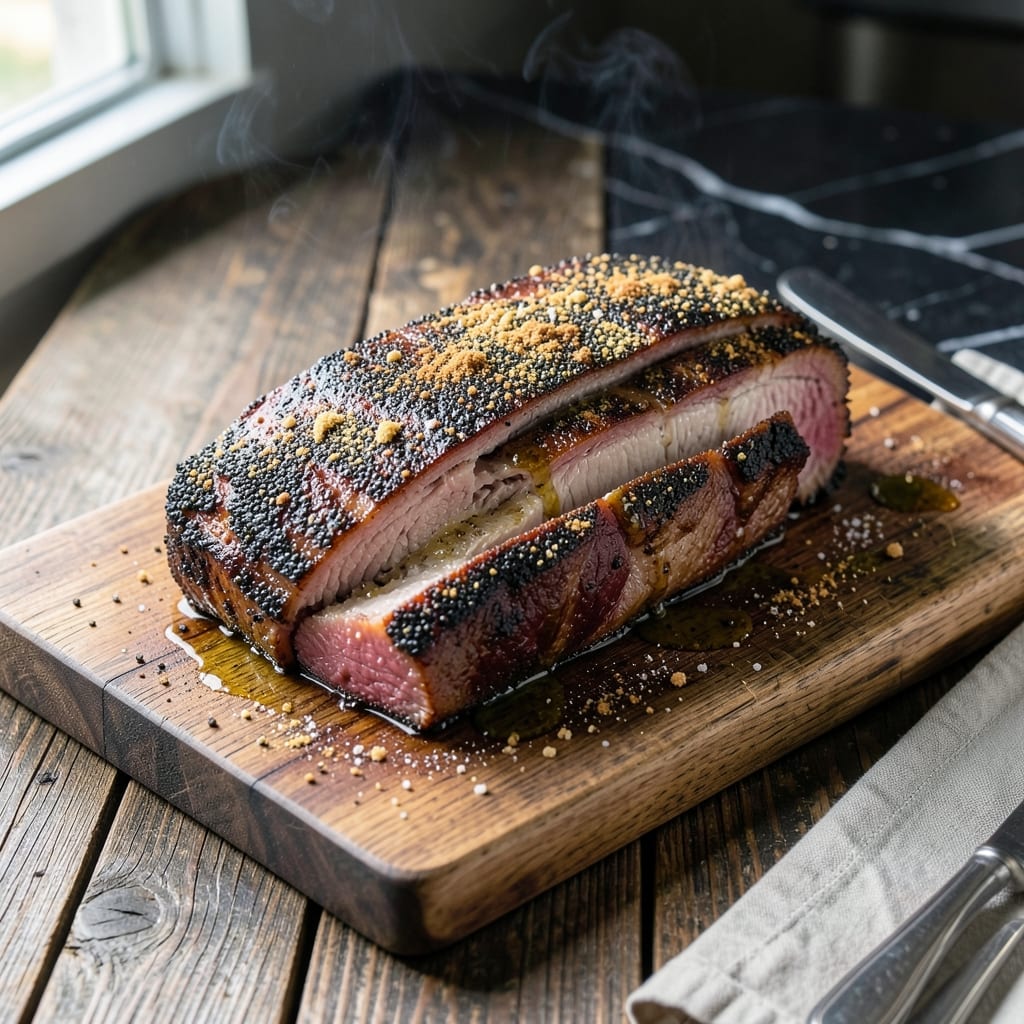
Mastering competition-level brisket requires patience and precision, not luck. This method delivers award-winning results through time-tested pitmaster techniques that transform tough meat into tender, flavorful perfection.
The secret begins with proper trimming to remove excess fat while preserving the marbling that keeps the brisket moist during the long cook. A carefully balanced rub and low-and-slow smoking at 225°F ensures deep flavor penetration without drying out the meat.
What separates good brisket from great is the resting period—wrapped and held for hours to allow juices to redistribute. This step is non-negotiable for achieving that fall-apart tender texture that competition judges reward.
These techniques have been refined through countless cook-offs and will elevate your brisket to championship caliber. The process demands attention to detail, but the payoff is unforgettable.
Ingredients for Competition Bbq Brisket Recipe Secrets
Award-winning brisket starts with premium ingredients and precise measurements for competition-level results.
| Ingredient | Amount | Notes |
|---|---|---|
| Beef Brisket 🥩 | 12 lb | Full packer cut, untrimmed |
| Coarse Kosher Salt 🧂 | ½ cup | Diamond Crystal preferred |
| Coarse Black Pepper 🌶️ | ½ cup | Freshly ground, 16 mesh |
| Garlic Powder 🧄 | ¼ cup | Fine grind, no additives |
| Onion Powder 🧅 | ¼ cup | Fine grind, no additives |
| Smoked Paprika 🌶️ | 2 tbsp | Sweet or hot variety |
| Cayenne Pepper 🔥 | 1 tbsp | Adjust for heat preference |
| Brown Sugar 🍚 | ¼ cup | Light or dark, packed |
| Mustard Powder 🟡 | 2 tbsp | Dry, not prepared |
| Apple Cider Vinegar 🍏 | ½ cup | For spritzing during cook |
| Beef Tallow 🧈 | ½ cup | Rendered, for moisture |
| Hickory Wood Chunks 🪵 | 4 lb | For smoking, soaked |
| Yellow Mustard 🟡 | ½ cup | Binder for rub adhesion |
| Butcher Paper 📜 | 1 sheet | Food-grade, for wrapping |
| Apple Juice 🍏 | 2 cups | For spritzing, optional |
The brisket itself is non-negotiable. Full packer cut from a reputable butcher—look for thick, even marbling throughout (not just on the surface). Certified Angus Beef or Prime grade delivers the consistent quality competition demands. Avoid pre-trimmed briskets; you need the full fat cap to manage during the cook. Most pitmasters order from Snake River Farms or Creekstone Farms for guaranteed consistency.
No hickory? Oak or pecan wood works well—avoid softwoods like pine. Out of beef tallow? Rendered bacon fat adds similar richness. The rub ratio is critical: equal parts salt and pepper by volume. For a sweeter profile, increase brown sugar to one-third cup. Mustard powder can be swapped for colman’s dry mustard if available. The vinegar spritz maintains bark formation—apple cider vinegar is standard.
Store the brisket unwrapped in the fridge for 12-24 hours before cooking to dry the surface. Keep wood chunks in a dry place until ready to use. The rub can be pre-mixed and stored in an airtight container for up to 3 months. Once cooked, brisket holds at 140°F for 4-6 hours before serving (the resting period is sacred).
Why You’ll Love This Recipe
- Low-Effort Rub: Honestly, it’s just salt, pepper, and a few powders—no fancy marinades or overnight soaks.
- Smoky Perfection: That coarse black pepper and garlic powder crust? It forms the most incredible bark on the brisket.
- Crowd Pleaser: I’ve served this at summer cookouts and holiday dinners—always disappears first.
- Leftovers Rock: Between us, the brisket tastes even better the next day in sandwiches or tacos.
Step-by-Step Instructions for Competition BBQ Brisket
Master these pitmaster techniques to achieve award-winning brisket with perfect bark and tenderness every time.
Step 1: Prepare and Season the Beef Brisket
Begin by trimming the 12 lb Beef Brisket fat cap to approximately ¼ inch thickness, removing any hard fat or silver skin. Leave enough fat to protect the meat during the long cook while allowing smoke penetration. I maintain the full packer cut integrity for optimal moisture retention.
Create the rub by combining the 0.5 cup Coarse Kosher Salt, 0.5 cup Coarse Black Pepper, 0.25 cup Garlic Powder, 0.25 cup Onion Powder, 2 tbsp Smoked Paprika, 1 tbsp Cayenne Pepper, 0.25 cup Brown Sugar, and 2 tbsp Mustard Powder. Apply the 0.5 cup Yellow Mustard as a binder to all surfaces, then generously coat with the rub mixture, pressing firmly to ensure adhesion.
Allow the seasoned brisket to rest at room temperature for 1 hour before smoking. This waiting period lets the rub penetrate and the meat cook more evenly.
Step 2: Set Up the Smoker and Begin Cooking
Preheat your smoker to 225-250°F using the 4 lb Hickory Wood Chunks. Soak the wood chunks beforehand to ensure slow, consistent smoke. Maintain this temperature range throughout the cook for optimal smoke absorption without overheating.
Place the brisket fat-side up on the smoker grates when you achieve clean, thin blue smoke. Position a water pan in the smoker to maintain moisture levels. Close the lid and resist opening it for at least the first 3-4 hours to establish a solid smoke foundation.
Step 3: Monitor and Wrap at the Stall
Smoke the brisket undisturbed until the internal temperature reaches 165-170°F, typically after 6-8 hours. This is when you’ll encounter “the stall” as moisture evaporates. Prepare the 1 sheet Butcher Paper and the 0.5 cup Beef Tallow for the next phase.
At this point, wrap the brisket tightly in the butcher paper, adding the beef tallow for moisture. This Texas crutch technique helps power through the stall while preserving the bark. Return the wrapped brisket to the smoker to continue cooking.
Step 4: Finish and Rest for Optimal Tenderness
Continue smoking until the internal temperature reaches 200-205°F and a probe slides in with no resistance, usually after another 4-6 hours. During this phase, spritz with the 0.5 cup Apple Cider Vinegar or 2 cups Apple Juice every 1-2 hours to maintain moisture and enhance bark development.
Once probe-tender, remove the brisket and let it rest in the butcher paper, wrapped in towels, for at least 1 hour. This resting period allows juices to redistribute throughout the meat, ensuring maximum tenderness. The internal temperature will continue to rise slightly during this time.
Pro Tips For Making Competition Bbq Brisket Recipe Secrets
- Trim the Fat Cap: Leave a 1/4-inch layer of fat—any thicker and it won’t render properly, any thinner and the brisket dries out. I learned this the hard way after my first few came out chewy.
- Season Overnight: Rub the brisket with salt, pepper, garlic powder, and onion powder at least 12 hours before cooking. The spices penetrate deeper, and the salt works its way into the meat for even flavor.
- Skip the Spritz: Resist the urge to spritz with water or vinegar early on—it washes off your rub and slows down the bark formation. Wait until the last 2-3 hours if you’re worried about drying out.
- Rest Under Wraps: After pulling it off the smoker, wrap the brisket in foil and a towel, then let it rest in a cooler for 2-4 hours. Sounds weird, but it works: the meat reabsorbs juices and stays hot for serving.
Regional Styles of competition bbq brisket recipe secrets
Texas Style
In the Lone Star State, we keep it simple with a salt-and-pepper-heavy rub—often just 50/50 coarse kosher salt and black pepper. The focus is on the beef quality, using Prime grade packer cuts from local ranchers. I’ve found Central Texas pitmasters swear by post oak wood for a cleaner smoke profile. 💪
Kansas City Style
Here, the rub gets sweeter with brown sugar and paprika taking center stage. Kansas City brisket often includes a tomato-based mop sauce applied during the cook. They wrap in foil instead of butcher paper, creating a steamed effect that speeds up the process.
Carolina Style
Eastern Carolina leans into vinegar-based sauces, but their brisket often features a tangy mustard-heavy rub. The cook is slower, sometimes at 200-210°F for a more tender result. I love the subtle heat from cayenne they often add.
Memphis Style
Memphis dry rubs are legendary, with garlic and onion powders as key players. They often use a combination of hickory and fruitwoods for a balanced smoke. The brisket is typically sliced thicker, showcasing the bold bark that forms from their spice-heavy approach. ✨
Nutrition Facts
Frequently Asked Questions
Why is trimming the fat cap so important?
Proper trimming to ¼ inch ensures even cooking and smoke penetration while protecting the meat. Too much fat prevents seasoning from adhering and can create a greasy texture.
How do I know when the brisket is done?
Use a probe thermometer: it’s ready at 200-205°F when the probe slides in like butter. The stall at 165-170°F is normal—just power through it.
Can I use foil instead of butcher paper?
Yes, but butcher paper preserves the bark better. Foil traps more steam, which can soften the crust. For competition texture, paper is the pitmaster’s choice.
What’s the secret to a perfect bark?
Maintain consistent 225-250°F and avoid opening the smoker early. Spritz with apple cider vinegar every 1-2 hours after the first 4 hours to build layers of flavor.

- BBQ Sausage Recipe Oven: Smoky Depth Without the Grill - September 28, 2026
- BBQ Chicken Bowl Recipe Rice: Smoky Sweetness Over Fluffy Grains - September 28, 2026
- Beef Cutlet Recipe Ideas: Crispy Breaded Patties With Bold Seasonings - September 28, 2026