
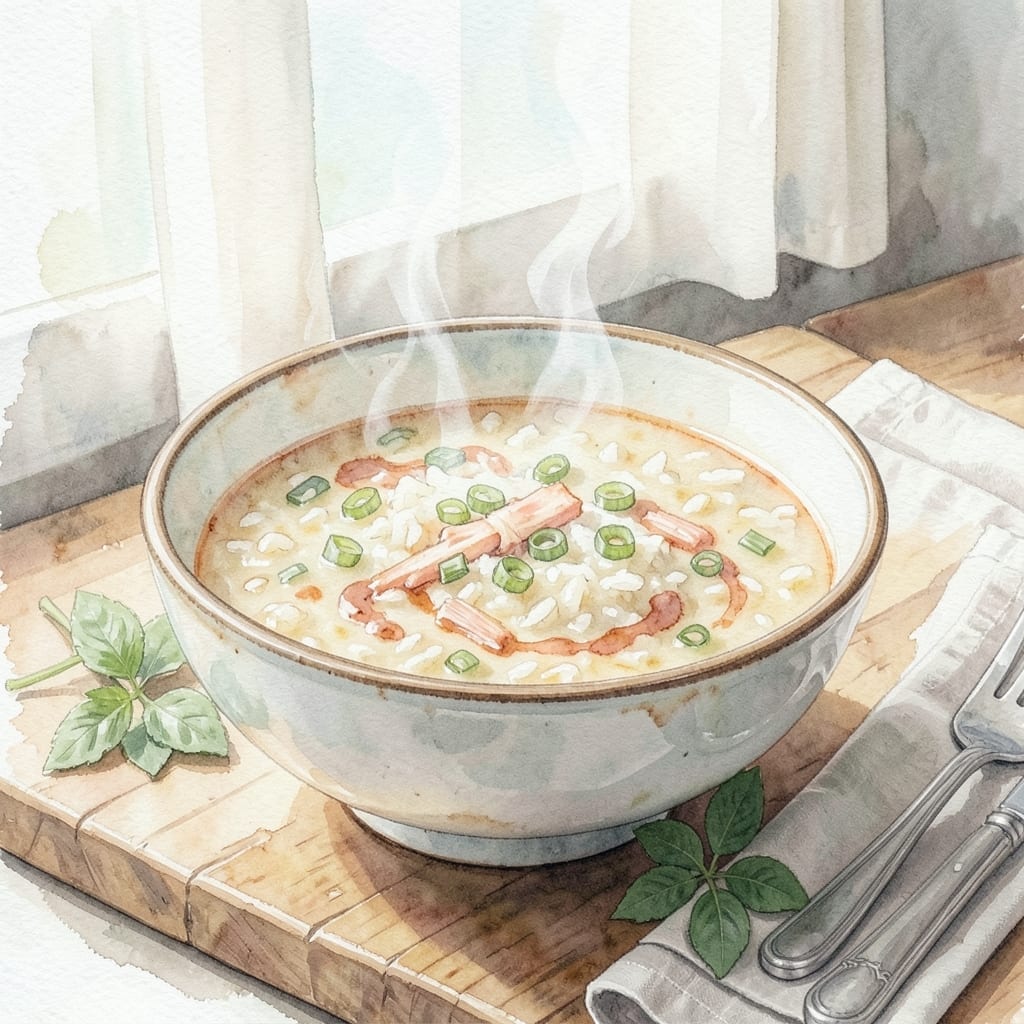
This method transforms leftover cooked rice into silky, comforting congee with minimal effort. No special equipment or long simmering required—just a simple technique that delivers perfect texture every time.
The beauty lies in the ratio: rice to liquid creates that signature creamy consistency. A gentle simmer breaks down the grains while infusing the porridge with flavor. It’s a foolproof way to make this Asian classic at home.
What you get is a smooth, velvety porridge that’s endlessly customizable. Add ginger, scallions, or your favorite protein for a hearty meal that’s as nourishing as it is satisfying.
Ready in under an hour, this recipe proves great congee doesn’t require all day at the stove.
Ingredients for Congee Recipe with Cooked Rice
Transform leftover rice into luxurious congee with these essential components for perfect texture.
| Ingredient | Amount | Notes |
|---|---|---|
| Cooked White Rice 🍚 | 4 cups | Leftover, day-old preferred |
| Water 💧 | 8 cups | Or light chicken stock |
| Fresh Ginger 🌿 | 1 piece | 2-inch, peeled and sliced |
| Garlic Cloves 🧄 | 3 cloves | Minced or thinly sliced |
| Scallions 🧅 | 4 whole | Thinly sliced, separated |
| Soy Sauce 🥢 | 2 tbsp | Low-sodium preferred |
| Sesame Oil 🫒 | 1 tsp | Toasted for aroma |
| Salt 🧂 | 1 tsp | Adjust to taste |
| White Pepper 🌶️ | ½ tsp | Ground for authenticity |
| Vegetable Oil 🫒 | 1 tbsp | Neutral flavor for sautéing |
| Dried Shitake Mushrooms 🍄 | ½ cup | Optional, for umami depth |
| Soft Tofu 🧈 | 8 oz | Cubed, for protein |
The rice is critical here—day-old cooked rice breaks down better than fresh. Use jasmine or short-grain for the creamiest result. For liquid, low-sodium chicken stock adds depth, but water works fine. Asian markets often carry high-quality ginger and scallions if your local store’s selection is lacking. Fresh ginger should be firm with smooth skin.
No fresh ginger? Ground ginger at one-quarter the amount works in a pinch. Swap scallions for chives or green onions—same family, similar flavor. For a vegetarian version, use vegetable stock and add mushroom powder for umami. The tofu can be firm if you prefer more texture, but soft tofu melts into the porridge beautifully.
Leftover congee thickens as it cools. Stir in a splash of water when reheating. Store in the fridge for up to 4 days or freeze for 3 months. The ginger and scallions can be prepped a day ahead to save time.
Why You’ll Love This Recipe
- One Pot Wonder: I just dump cooked rice, water, and aromatics in a pot and let it simmer—no fancy steps.
- Ginger-Garlic Magic: The fresh ginger and garlic infuse every spoonful with warm, cozy depth that’s impossible to resist.
- Breakfast to Dinner: I’ve served this for lazy Sunday brunch and as a light dinner when I’m not up for cooking.
- Stretches a Meal: A cup of leftover rice turns into a hearty bowl, so nothing goes to waste in my kitchen.
Step-by-Step Instructions for Congee with Cooked Rice
This method transforms leftover grains into a velvety porridge with minimal effort.
Step 1: Hydrate and Prepare the Aromatics
Soak the 0.5 cup Dried Shitake Mushrooms in 2 cups of the 8 cups Water for 20-30 minutes until softened. Meanwhile, thinly slice the 1 piece Fresh Ginger, mince the 3 cloves Garlic Cloves, and separate the 4 whole Scallions into white and green parts.
Reserve the mushroom soaking liquid—this adds depth to your congee base. Strain it through a fine-mesh sieve to remove any grit. The mushrooms should be plump and tender; slice them thinly once hydrated. This step ensures maximum umami extraction.
Step 2: Sauté the Flavor Foundation
Heat the 1 tbsp Vegetable Oil in a large pot over medium heat. Add the sliced ginger and white parts of the scallions. Sauté for 2-3 minutes until fragrant but not browned—you want to develop their essence without bitterness.
Add the minced garlic and sliced mushrooms, cooking for another 3 minutes until the garlic releases its aroma and the mushrooms begin to soften. This creates a robust flavor base that will infuse the entire pot as it simmers.
Step 3: Simmer Rice to Silky Perfection
Pour in the remaining 6 cups Water (or light chicken stock) and the reserved mushroom soaking liquid. Add the 4 cups Cooked White Rice, breaking up any clumps with your fingers. Stir in the 1 tsp Salt and 0.5 tsp White Pepper.
Bring to a gentle boil, then reduce heat to low. Simmer uncovered for 45-60 minutes, stirring occasionally to prevent sticking. The mixture should thicken gradually, with the rice grains dissolving into a creamy, porridge-like consistency. Watch for a smooth, velvety texture with visible swirls when stirred.
Step 4: Add Tofu and Finish with Soy and Sesame
Gently fold in the cubed 8 oz Soft Tofu during the last 10 minutes of cooking. The tofu will warm through and absorb the flavors without breaking apart. Avoid vigorous stirring at this stage to keep the tofu cubes intact.
Turn off the heat and stir in the 2 tbsp Soy Sauce and 1 tsp Sesame Oil. The soy sauce adds a salty depth, while the sesame oil contributes a nutty aroma. Taste and adjust seasoning if needed—remember, the flavors will meld further as it rests.
Step 5: Garnish and Serve
Ladle the congee into bowls and garnish with the reserved green parts of the scallions. The congee should have a glossy sheen and a consistency that coats the back of a spoon. Serve immediately while hot, as it thickens slightly upon cooling.
Each spoonful should deliver a balance of creamy rice, savory broth, and tender tofu with aromatic accents from the ginger and garlic. For best results, prepare this dish in advance—the flavors deepen after 1-2 hours of resting.
Pro Tips For Making Congee Recipe With Cooked Rice
- Simmer Low and Slow: Keep the heat at a gentle simmer—any higher and the rice will turn gluey instead of creamy. I learned this the hard way after ending up with a pot of starchy paste.
- Rinse the Rice First: Even though it’s already cooked, give the rice a quick rinse under cold water to remove excess starch. Sounds weird, but it works: your congee will be silkier, not gummy.
- Skip the Salt Early: Resist the urge to season the water at the start—ginger, garlic, and scallions will infuse enough flavor as the congee cooks. Add salt at the end to taste.
- Use Day-Old Rice: Freshly cooked rice breaks down too fast. My grandmother swore by this, and she was right: leftover rice holds its shape better and gives the congee a smoother texture.
Storing and Reheating congee recipe with cooked rice
Refrigerator Storage
Let your congee cool for no more than 2 hours before transferring to airtight containers. Store in the fridge at 40°F or below for up to 4 days. The flavors actually deepen as it rests. ❄️
Freezer Storage
For longer storage, freeze congee in quart-sized freezer bags for up to 3 months. Leave 1 inch of headspace for expansion. I recommend portioning into meal-sized servings for easy reheating.
Stovetop Reheating
This is my preferred method. Reheat in a pot over medium-low heat, adding ¼ cup water or stock to loosen the texture. Stir occasionally until reaching 165°F. Taste and adjust seasonings as needed. 🔥
Microwave Reheating
For quick meals, microwave individual portions covered with a damp paper towel. Heat on 70% power for 2-3 minutes, stir, then continue in 1-minute intervals until hot.
Texture Tips
Congee thickens as it cools. If too thick, stir in warm water or stock until desired consistency. For best results, reheat slowly over low heat to maintain that silky texture.
Nutrition Facts
Frequently Asked Questions
Can I use fresh rice instead of leftover?
Fresh rice works but takes longer to break down. Day-old grains absorb liquid better, creating that signature creamy texture in 45-60 minutes. If using fresh, rinse it first to remove excess starch.
Why is my congee too thick?
It thickens as it cools. Stir in warm water or stock, ¼ cup at a time, until reaching your desired consistency. Reheat gently over low heat to maintain smoothness.
What proteins work best?
Soft tofu melts beautifully into the porridge. For meat, try shredded chicken, ground pork, or shrimp added during the last 10 minutes of cooking. Avoid dense proteins that won’t absorb flavors.
Can I make this in a slow cooker?
Yes! Combine all ingredients except tofu and cook on low for 4-6 hours. Add tofu and seasonings at the end. This hands-off method yields excellent results.

- Chicken Breast Recipe Tender: Brine-Soaked Juiciness Without Overcooking - September 28, 2026
- Baked Chicken Recipe for Acid Reflux: Gentle Flavors for Sensitive Stomachs - September 28, 2026
- BBQ Lamb Rack Recipe Grill: Smoky Herb-Crusted Chops in Minutes - September 28, 2026