
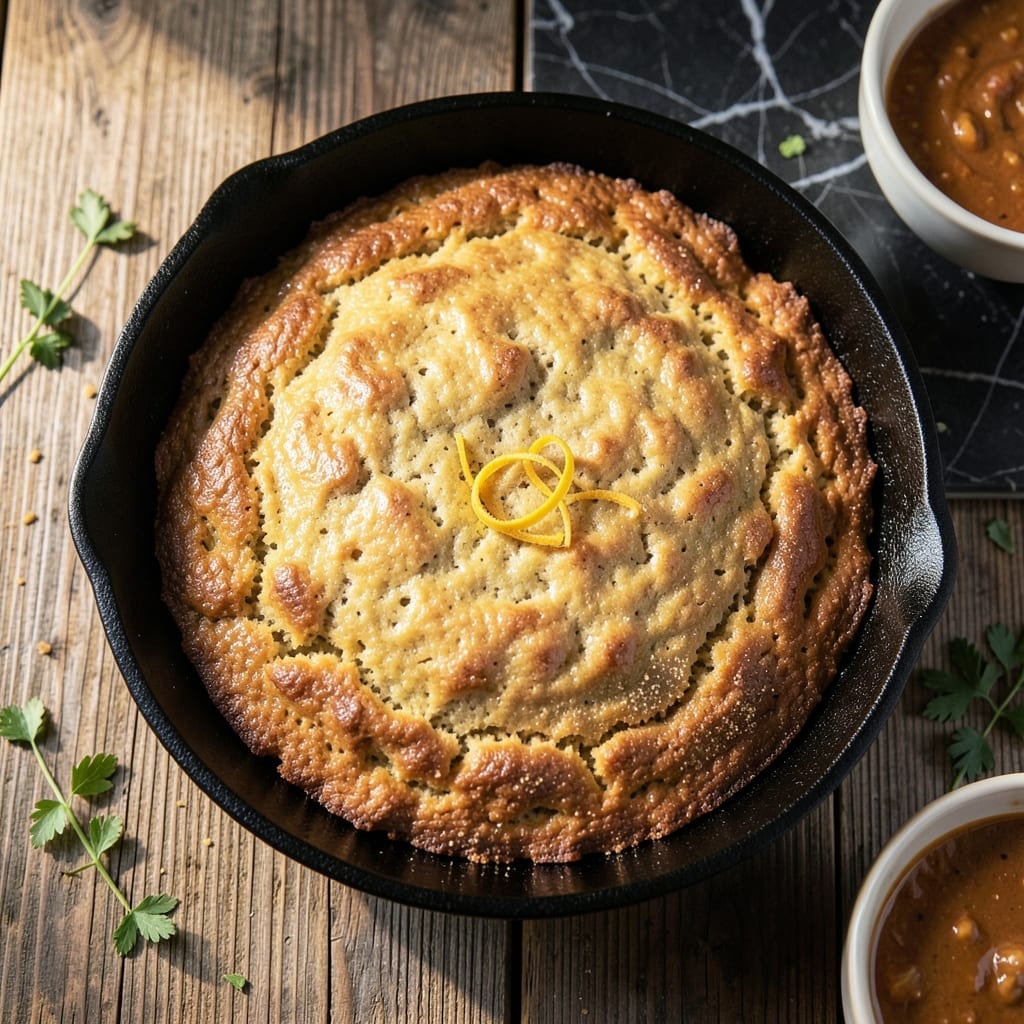
This dairy-free cornbread delivers the fluffy texture you crave without a drop of milk. I developed this recipe after realizing many traditional versions rely on dairy for moisture and richness.
The secret lies in using vinegar and baking soda for lift, while vegetable oil replaces butter. This creates a tender crumb that’s just as satisfying as classic cornbread. The method is simple, with no special equipment required.
You’ll get golden, slightly crisp edges with a soft, moist interior every time. The flavor stays true to traditional cornbread, with that signature sweet-savory balance.
Perfect alongside chili, soups, or as a snack on its own. This version proves you don’t need dairy for delicious results.
Ingredients for Cornbread Recipe No Milk
Pantry staples and a few basics make this dairy-free cornbread fluffy and delicious.
| Ingredient | Amount | Notes |
|---|---|---|
| Yellow Cornmeal 🌽 | 1 ½ cups | Fine or medium grind |
| All-Purpose Flour 🌾 | 1 cup | Unbleached preferred |
| Granulated Sugar 🍚 | ¼ cup | Adjust to taste preference |
| Baking Powder 🧂 | 1 tbsp | Ensures proper rise |
| Baking Soda 🧂 | 1 tsp | Reacts with vinegar |
| Salt 🧂 | 1 tsp | Fine sea salt preferred |
| Vegetable Oil 🫒 | ⅓ cup | Replaces butter for moisture |
| White Vinegar 💧 | 1 tbsp | Creates lift with baking soda |
| Large Egg 🥚 | 1 whole | Room temperature preferred |
| Unsweetened Almond Milk 🥛 | ¾ cup | Or any plant-based milk |
The cornmeal is the foundation here. Bob’s Red Mill is my go-to for consistent texture (the good stuff, not the coarse kind). Any fine or medium grind works, but avoid stone-ground if you want a tender crumb. The flour should be all-purpose—King Arthur if you’re feeling fancy. Most supermarkets carry these in the baking aisle, no specialty store required.
No almond milk? Any plant-based milk works (oat, soy, coconut—whatever’s open). Out of vinegar? Apple cider vinegar at the same amount gets the job done. The oil can be canola or melted coconut oil if that’s what you’ve got. Want it sweeter? Bump the sugar to one-third cup without changing the texture.
This keeps 3-4 days wrapped tightly at room temperature. For longer storage, freeze slices for up to 3 months. Reheat in a toaster or oven to bring back that crisp edge (don’t skip this part).
Why You’ll Love This Recipe
- One Bowl Wonder: I love that I can mix the dry ingredients—cornmeal, flour, and a touch of sugar—right in the same bowl I’ll bake from. No extra dishes, no fuss.
- Sweet Corn Crunch: The sugar caramelizes just enough to give that perfect sweet crumb with every bite of warm cornbread.
- Pairs With Anything: Honestly, it’s my go-to side for chili, soup, or even as a quick breakfast with honey drizzled on top.
- Pantry Staples Only: Between us, I always have cornmeal and flour on hand, so this comes together fast when I’m out of milk.
Step-by-Step Instructions for Cornbread Without Milk
Here’s how I achieve that perfect fluffy texture using simple plant-based swaps.
Step 1: Combine Dry Ingredients for Even Distribution
In a large mixing bowl, whisk together the 1.5 cups Yellow Cornmeal, 1 cup All-Purpose Flour, 0.25 cup Granulated Sugar, 1 tbsp Baking Powder, 1 tsp Baking Soda, and 1 tsp Salt. I always sift my flour first to prevent lumps, but whisking vigorously works too.
This step ensures every bite has balanced flavor and rise. The baking powder and baking soda will react with the vinegar later, so make sure they’re evenly incorporated. Don’t skip this—uneven leavening leads to dense spots in your finished product.
Step 2: Mix Wet Ingredients for a Smooth Base
In a separate bowl, combine the 0.33 cup Vegetable Oil, 1 tbsp White Vinegar, 1 whole Large Egg, and 0.75 cup Unsweetened Almond Milk. Whisk until the mixture is smooth and the oil is fully emulsified.
The vinegar and almond milk create a buttermilk-like reaction with the baking soda, which is what gives this dairy-free version its signature lift. I use room-temperature egg to help everything blend seamlessly. You’ll notice the mixture thicken slightly as the vinegar works its magic.
Step 3: Fold Wet and Dry Together Gently
Pour the wet mixture into the dry ingredients. Using a spatula, fold everything together just until the flour is mostly incorporated. There will be a few streaks of flour visible—that’s perfect.
Overmixing develops gluten, which makes cornbread tough instead of tender. I stop folding as soon as I see the batter come together, even if it’s not completely smooth. The batter should be thick but pourable, with a slightly lumpy texture.
Step 4: Bake Until Golden and Springy
Pour the batter into a greased 8×8-inch or 9×9-inch baking pan. Smooth the top with your spatula, then bake at 375°F for 20-25 minutes, or until the edges pull away from the pan and a toothpick inserted in the center comes out clean.
Look for a golden brown crust and a slightly domed top. If the center jiggles when you gently shake the pan, it needs more time. I rotate the pan halfway through baking to ensure even browning, especially if my oven has hot spots.
Pro Tips For Making Cornbread Recipe No Milk
- Preheat the Pan: I learned this the hard way—always heat your greased pan in the oven for 5 minutes before adding the batter. It guarantees a crispy crust even without milk to tenderize it.
- Use Fine Cornmeal: Skip the coarse stuff for this recipe; fine yellow cornmeal blends better with the flour and sugar, giving you a smoother texture that’s harder to achieve without dairy.
- Check Baking Powder Freshness: After a few flat loaves, I realized old baking powder was to blame. Test yours by dropping a spoonful in hot water—if it fizzes weakly, replace it before mixing the batter.
- Swap in Yogurt: Sounds weird, but it works: replace the missing milk with ½ cup plain yogurt. It adds moisture and a slight tang that balances the sugar, and no one will guess it’s not the original recipe.
Essential Equipment for This Recipe
Mixing Bowls
I always start with two stainless steel mixing bowls—one for dry ingredients and one for wet. A 3-quart bowl works perfectly for this recipe. Look for bowls with wide rims for easy pouring. Cuisinox makes durable options that won’t stain or absorb odors. 💪
Whisk and Spatula
A balloon whisk is essential for blending dry ingredients evenly. For folding, I use a silicone spatula with a flexible head to scrape every last bit of batter. The OXO Good Grips line has both tools at a great price point.
Baking Pan
An 8×8-inch or 9×9-inch metal baking pan gives the best crust-to-interior ratio. I prefer light-colored aluminum pans for even browning. USA Pan makes nonstick versions that release cornbread effortlessly without extra greasing.
Measuring Tools
Accurate measurements matter for consistent results. I use stainless steel measuring cups and spoons from Webake. A level surface for scooping ensures you’re not packing down flour or sugar. For liquids, a 1-cup glass measure with clear markings works best.
Oven Thermometer
Oven temperatures can be unreliable. I keep an oven thermometer on the middle rack to verify my oven’s true temperature. The Taylor Precision model is affordable and accurate. This small tool prevents under- or over-baking. 🌡️
Cooling Rack
After baking, transfer your cornbread to a wire cooling rack to prevent steam from making the bottom soggy. A 12-inch rack gives plenty of space. I like the Wilton Cooling Rack for its sturdy construction and easy cleanup.
Nutrition Facts
Frequently Asked Questions
Can I use water instead of plant-based milk?
Yes, but expect a slightly denser texture. Use 1 cup water with an extra 1 tbsp oil to compensate for missing richness. The vinegar will still create lift, but flavor may be less complex.
Why does this recipe use vinegar?
The 1 tbsp vinegar reacts with baking soda to mimic buttermilk’s acidity. This creates air pockets for a fluffier crumb. Without it, the bread may be flat and dense.
How do I make it extra moist?
Add 1/4 cup applesauce or 2 tbsp melted coconut oil to the wet mix. Both add moisture without dairy. Avoid overbaking—pull it out at exactly 20-25 minutes.
Can I bake this in a muffin tin?
Fill greased muffin cups 2/3 full and bake at 375°F for 15-18 minutes. Check with a toothpick—it’s done when it comes out clean.

- Peach Syrup Recipe for Ice Cream: Sweet and Silky Drizzle for Scoops - October 6, 2026
- Pav Bhaji Recipe Food Lab: Mumbai Street Food Magic at Home - October 6, 2026
- Peach Jelly Recipe Without Pectin: Naturally Set Sweet Spread - October 6, 2026