
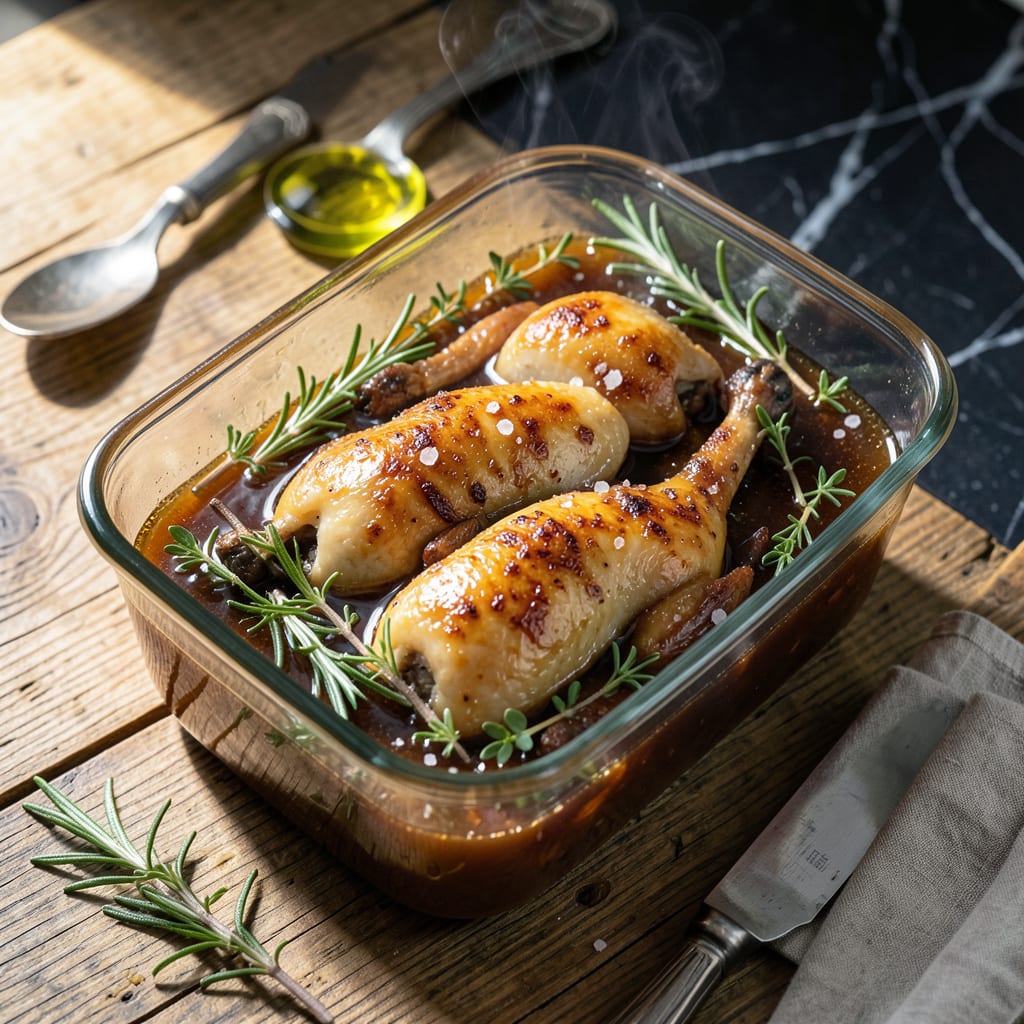
This brine guarantees moist, flavorful Cornish game hens every time. The herb-infused saltwater solution penetrates the meat, ensuring juiciness and enhancing natural flavors without overpowering them.
After brining, the hens roast to golden perfection with crisp skin and tender meat. This proven method transforms a simple bird into a centerpiece worthy of any dinner table.
Ingredients for Cornish Game Hen Brine
Eleven ingredients transform simple hens into a juicy, herb-infused centerpiece worth serving.
| Ingredient | Amount | Notes |
|---|---|---|
| Cornish Game Hens 🍗 | 4 whole | Thawed if frozen, giblets removed |
| Water 💧 | 2 cups | Cold, filtered preferred |
| Kosher Salt 🧂 | ½ cup | Diamond Crystal preferred for consistency |
| Brown Sugar 🍚 | ¼ cup | Light or dark works equally |
| Fresh Rosemary 🌿 | 3 sprigs | Stems intact for easy removal |
| Fresh Thyme 🍃 | 5 sprigs | Gently bruised to release oils |
| Garlic Cloves 🧄 | 6 cloves | Smashed, peeled for full flavor infusion |
| Bay Leaves 🍃 | 2 whole | Dried, whole for subtle depth |
| Black Peppercorns 🌶️ | 1 tbsp | Whole, lightly crushed |
| Lemon Slices 🍋 | 4 slices | Thin, with rind for brightness |
| Ice Cubes ❄️ | 2 cups | For rapid cooling after heating |
The salt is critical—Diamond Crystal kosher salt dissolves cleanly and seasons evenly without overpowering. For the herbs, fresh rosemary and thyme are non-negotiable; their oils infuse the brine beautifully. Most grocery stores carry Cornish game hens in the frozen poultry section—Whole Foods often has them fresh. If buying frozen, thaw completely in the fridge overnight before brining.
No fresh herbs? Dried rosemary and thyme at half the amount work in a pinch, but fresh delivers superior aroma. Substitute turbinado for brown sugar if needed, though the molasses notes in brown sugar add depth. The garlic can be pre-peeled for convenience, but smashing the cloves yourself releases more flavor. Bay leaves are subtle but worth including—don’t skip them.
Brined hens roast best immediately after brining. Discard brine after use—it’s not reusable. Store brined, uncooked hens in the fridge for up to 24 hours before cooking. Leftover roasted hens keep well for 3-4 days refrigerated.
Why You’ll Love This Recipe
- 5-Minute Setup: I just mix water, salt, sugar, and rosemary in a pot—no fancy steps, no stress.
- Juicy Every Time: The brown sugar in the brine gives the hens this incredible caramelized crust with tender meat inside.
- Dinner Party Hero: I’ve served this for Sunday suppers and holiday gatherings—always impresses with minimal effort.
- Budget Stretcher: One brine batch does two hens, and leftovers taste even better the next day in sandwiches.
Step-by-Step Instructions for Cornish Game Hen Brine
This method ensures maximum flavor penetration and moisture retention for perfectly succulent meat.
Step 1: Combine Brine Base Ingredients
In a large saucepan, combine the 2 cups Water, 0.5 cup Kosher Salt, and 0.25 cup Brown Sugar. Place over medium-high heat and stir until the salt and sugar dissolve completely. This creates the foundational brine solution that will season the meat deeply.
You’ll notice the mixture becomes clear as the crystals dissolve. Don’t allow it to boil—remove from heat as soon as the last grain disappears. The proper ratio of salt to water ensures optimal osmosis without making the meat too salty.
Step 2: Infuse with Aromatics
Add the 3 sprigs Fresh Rosemary, 5 sprigs Fresh Thyme, 6 cloves Garlic Cloves, 2 whole Bay Leaves, and 1 tbsp Black Peppercorns to the warm brine. The residual heat will begin extracting the essential oils and flavors from these aromatics immediately.
Gently bruise the rosemary and thyme with the back of a spoon to release more of their aromatic compounds. Let this mixture steep for 10-15 minutes off the heat, allowing the flavors to meld and intensify. The liquid should become fragrant and take on a light golden hue.
Step 3: Cool the Brine Properly
Add the 4 slices Lemon Slices and 2 cups Ice Cubes to the brine. Stir until the ice melts completely and the liquid cools to room temperature. This rapid cooling prevents the brine from cooking the meat when you add the hens.
Test the temperature with your finger—it should feel neither warm nor cold. Using ice cubes rather than cold water ensures you don’t dilute the carefully balanced salt concentration. The lemon slices will float to the top, releasing their bright citrus notes into the mixture.
Step 4: Brine the Hens
Submerge the 4 whole Cornish Game Hens completely in the cooled brine. Use a large food-safe container or a clean cooler. If the hens float, place a plate or other weight on top to keep them submerged. Proper submersion ensures even brining throughout the meat.
Refrigerate for 12-24 hours. The longer brine time allows for deeper flavor penetration, while the salt and sugar work together to break down muscle fibers, resulting in exceptionally tender, moist meat. Don’t exceed 24 hours or the texture may become mealy.
Step 5: Remove and Prepare for Cooking
After brining, remove the hens from the liquid and pat them completely dry with paper towels. This step is crucial—excess moisture on the skin will prevent proper browning during cooking. Discard the used brine; it’s not reusable.
Let the hens rest at room temperature for 30 minutes before cooking. This allows the surface to dry further and the meat to begin tempering, ensuring even cooking. The hens are now ready for roasting, grilling, or any cooking method you prefer.
Pro Tips For Making Cornish Game Hen Brine
- Brine Overnight: I learned this the hard way—give the hens at least 12 hours in the brine, or the rosemary and brown sugar won’t penetrate deep enough. Anything less and you’re just seasoning the surface.
- Dissolve Salt First: Always whisk the kosher salt and brown sugar into warm water first before adding cold water or ice. Sounds obvious, but I’ve seen grains cling to the hens like unwanted guests.
- Skip Table Salt: Stick with kosher salt—table salt will make your brine way too harsh and can over-cure the meat. The flakes dissolve evenly and give you better control.
- Pat Dry Thoroughly: After brining, pat those hens bone dry with paper towels before roasting. It’s the difference between soggy skin and that crisp, golden finish everyone wants.
Wine and Beer Pairings for This Recipe
White Wine Pairings
A crisp Sauvignon Blanc from New Zealand cuts through the richness beautifully, with its bright acidity and citrus notes complementing the herb-infused flavors. I recommend Kim Crawford or Oyster Bay for accessible options. 🍷
Red Wine Options
For red lovers, a light-bodied Pinot Noir from Oregon works wonderfully. The earthy undertones and red fruit flavors won’t overpower the dish. Eyrie Vineyards offers excellent bottles that pair perfectly with poultry.
Lighter Beer Choices
A Belgian-style witbier like Hoegaarden or Blue Moon brings citrus and spice notes that echo the brine’s rosemary and thyme. The effervescence cleanses your palate between bites. 🍺
Darker Beer Pairings
An amber ale with caramel malts and mild hops complements the brown sugar in the brine. Fat Tire by New Belgium is my go-to—its balanced sweetness and bitterness enhance the hens’ depth of flavor.
Non-Alcoholic Options
For a non-alcoholic pairing, try sparkling apple cider with a squeeze of lemon. The bubbles and sweetness mirror the dish’s brightness. Martinelli’s is a reliable brand for this. ✨
Nutrition Facts
Frequently Asked Questions
How long should I brine the hens?
Brine for 12-24 hours in the refrigerator. This timeframe allows the salt and herbs to fully penetrate while keeping the meat tender. Don’t exceed 24 hours or the texture may turn mealy.
Can I reuse the brine for another batch?
No, always discard used brine. Reusing it risks bacterial contamination and the flavors will be weakened. Make a fresh batch for each use to ensure food safety and optimal taste.
What if I don’t have fresh herbs?
Use dried herbs in a pinch, but cut the amount in half. Substitute 1 tbsp dried rosemary and 1 tbsp dried thyme for the fresh sprigs. Fresh herbs deliver better aroma, though.
Do I need to rinse the hens after brining?
No rinsing needed. Simply pat the hens dry with paper towels after removing them from the brine. Rinsing washes away flavor and doesn’t reduce sodium enough to matter.

- BBQ Sausage Recipe Oven: Smoky Depth Without the Grill - September 28, 2026
- BBQ Chicken Bowl Recipe Rice: Smoky Sweetness Over Fluffy Grains - September 28, 2026
- Beef Cutlet Recipe Ideas: Crispy Breaded Patties With Bold Seasonings - September 28, 2026